It has been said that the best laid plans of mice and men go awry. The same can be said of Superman IV: The Quest for Peace. When the film had been released to theaters on July 24, 1987, the anticipation for the fourth installment had quickly turned sour. Low attendance, coupled with an overall poor critical and commercial response, spelled the end of what had been one of Warner Bros.’ most popular film franchises. And yet its roots were anything but uncertain.
The origins of Superman IV go back to the development of the first two Superman films in 1977 under the supervision of executive producer Ilya Salkind, director Richard Donner, and screenwriter Tom Mankiewicz. Upon the casting of Christopher Reeve in the lead role, Salkind said in an interview with David Michael Petrou for his book The Making of Superman: The Movie, “…we had options for seven, possibly ten Superman movies, and a relative newcomer would probably be more believable to audiences and would grow into the part.” Even back then, the thought of a Superman IV seemed possible.
Donner also had similar thoughts about the future of the franchise that Salkind envisioned. In the audio commentary for the 2006 DVD release of Superman II: The Richard Donner Cut, he echoed the young producer’s sentiments. “If I and II were successful, we had a good film, we saw III and IV right then and there, and we were ready to do it,” he said. “I’d finish II, Tom would probably direct III, maybe I would do IV, it could have been a career. But the career was an exciting one because we had some wonderful stories in our minds. Everything seemed to work, the evolution of the characters was strong. It was a wonderful thing to look forward to. I’m sorry they did not have the sense to go with it…. If I had had the ability, III, IV, V, VI, and VII, but the producers chose to take me off the picture.”
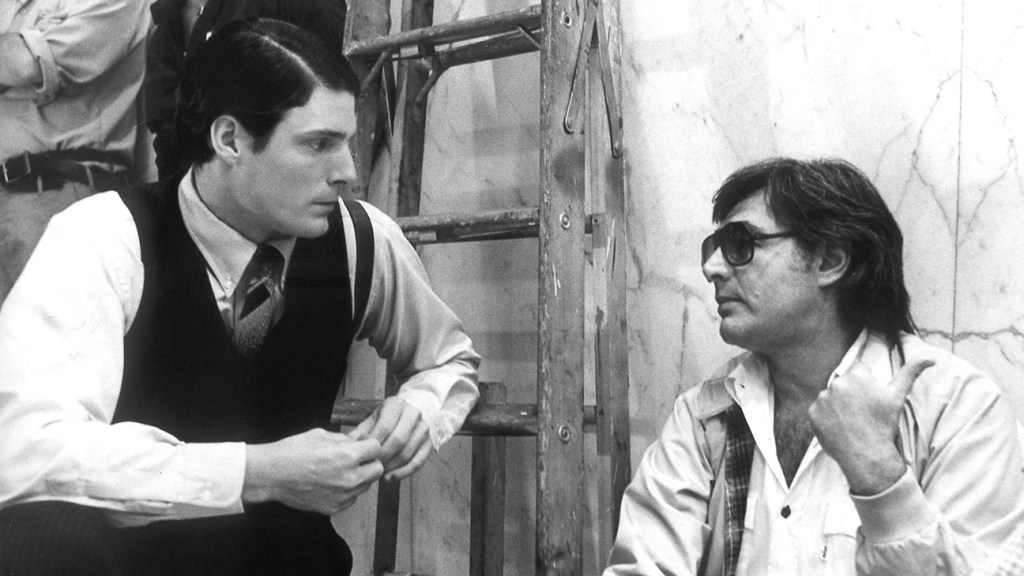
That would not come to pass, however, as Donner was released from completing II in March 1979 and Richard Lester was brought in to restructure the sequel and later go on to direct Superman III. Upon the release of III in June 1983, Variety conducted an interview with Alexander and Ilya Salkind that appeared in print less than a week after the film’s opening, in which they stated that should Superman III earn at least $40 million at the box office, they would look at producing Superman IV. Potentially, they had the opportunity. While the international gross remains unknown, the film would earn over $59.9 million in the United States alone in the summer of 1983, though Ilya Salkind may have verbally cushioned those numbers, saying, “Superman III made $100 million,” in the 2006 documentary Look! Up in the Sky – The Amazing Story of Superman.
In the 2006 documentary You Will Believe: The Cinematic Saga of Superman, Salkind continued, “I don’t think Cannon would have bought an option from us if (III) was a flop to do a Superman IV.”
Salkind’s longtime friend Pierre Spengler, who produced the first three films and the Supergirl spinoff film, echoed similar thoughts. “Having made Superman III we felt that we didn’t have the energy or the desire to make yet another Superman film. That was really both Ilya’s and my feeling.” Valid concerns indeed.
With the release of Supergirl in 1984, followed by Santa Claus: The Movie in 1985, the Salkinds’ concerns for a Superman IV seemed in jeopardy. Both films failed critically and commercially at the box office against larger scale budgets, though becoming fan favorites in later years. But for the Salkinds, the future of the Superman franchise seemed in jeopardy. They would eventually attend the Cannes Film Festival in May 1985 with the hopes of selling the film rights to Superman to anyone who would get the franchise up and running again.
Around that same time, Warner Bros. decided it was time to get the Superman franchise back on track after the middling response to Superman III and the failure of Supergirl. They turned to the two men who helped make the first two Superman films a huge success – Richard Donner and Tom Mankiewicz – with hopes of steering the movies to success once again. And they were told just one thing: “Name your price.” After considering the studio’s offer, Donner and Mankiewicz thought it over but ultimately turned down the potential lucrative prospect, having exhausted all of their ideas for the series several years earlier. In a 2001 online interview Donner stated, “It would have been just for the money.” (Donner would eventually go on to direct the first installment of the Lethal Weapon series, and Mankiewicz would direct and co-write the big screen version of Dragnet, both of which would be released in 1987, the same year as Superman IV.)
According to Spengler, Alexander Salkind released them to find a producer who would take the ball and run with it. “‘If you guys don’t make it, someone’s gonna make it, and we’re just not gonna let the property sleep.’”
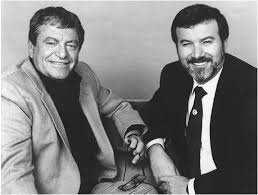
Enter an even more unlikely dynamic duo: Menahem Golan and Yoran Globus. The two Israeli-born cousins had made names for themselves as the heads of Cannon Films throughout the 1980’s, and it was not uncommon to turn on HBO, or go to your local video store on a Friday or Saturday night, and find a boatload of cheaply produced Cannon films that seemed to find some kind of audience. The Death Wish series with Charles Bronson, numerous action movies featuring Chuck Norris, and schlocky low-budget horror movies were churned out at a rapid pace in those days faster than the eye could blink. And who can forget that immortal classic Breakin’ 2: Electric Boogaloo? To Golan and Globus, blockbusters and awards were the farthest things from their minds. It was all for the love of the movies.
But by the mid 1980’s, they began considering more mainstream projects. They didn’t want to be seen as low-budget producers forever. And one of the projects that they set their eyes on was the Superman series. In the Look! Up in the Sky documentary, Ilya Salkind stated, “I said, ‘I don’t want to do Superman IV, so then we were able to sell the rights for an option to Cannon.” They would buy the rights from the Salkinds in May 1985 for a one-time deal with the hopes of crossing over into serious Hollywood fare. As with all of their other projects, they reached out to foreign backers to get financial support for the film. And they turned to the one man who they felt would guarantee their ticket to success: Christopher Reeve.
Golan said in a 2006 interview for the You Will Believe documentary, “We were lucky to get the rights, to succeed in getting the rights to Superman IV from Warner Bros. And I told Yoram, my cousin, the president of Cannon, ‘It’s time we do a comic book story.’”
Yoram Globus added, “We wanted to bring, I think, something new and fresh to Superman. And that’s why we decided to put Superman saving the world from nuclear weapons.”
Nearly three years had passed since Reeve had publicly stated that he was through with the role, and that he was more interested in pursuing serious film and stage roles. But enough time had passed, and even his resistance to the part had eased to the point where he felt that he could return to the series if, like Alexander Salkind before him, it would be done right. He agreed under the conditions that he would star in a project of his own choosing and that he would have a chance at story and directorial development. With Reeve back in the part, and his commitment to Street Smart in place, Superman IV began to take shape. Some of the original cast members – Gene Hackman, Margot Kidder, Jackie Cooper, Marc McClure, and Susannah York – returned to their roles, with new cast members in Mariel Hemingway, Sam Wanamaker, and Jon Cryer added to the lineup.
McClure stated in the You Will Believe documentary, “The only way there would be a fourth is if Chris wanted to do it. And you know, everyone wants to make money, and it’d be great to do another one to try to have everybody forget about number III. I think what happened in number IV is that Chris was doing something that he wanted to do. You know, become more involved in how Superman was shaped. I think that’s what got everybody back together. If it wasn’t for Chris, Superman IV wouldn’t have happened.”
The story, which Reeve developed with Lawrence Konner and Mark Rosenthal, focused on Superman’s attempt to end the nuclear arms crisis of the 1980’s and Lex Luthor taking advantage of the situation to find another way to destroy the Man of Steel. The core story had timely inspirations. Reeve had narrated a short film entitled A Letter to Our Parents, about a group of middle school students expressing their fears about living in a nuclear age. Around the same time, young Samantha Smith, who had piloted a plane from the United States to the Soviet Union on a mission of goodwill, had sadly died. And DC Comics had published an issue of the “Superman” comic in 1985 which similarly centered around his fears and worries regarding the nuclear arms crisis.
It seemed like a solid story at first, despite Tom Mankiewicz advising Reeve not to go through with the idea, feeling that Superman would not focus on shaping the destiny of his adopted home. Mankiewicz also said during the audio commentary on the Donner Cut, “Chris, God bless him, he was so altruistic in so many ways, and he wanted Superman IV to be the quest for peace about nuclear disarmament. And he came to me and Terry (Semel) because I was still at Warners, and Terry said, ‘Will you help on the script?’
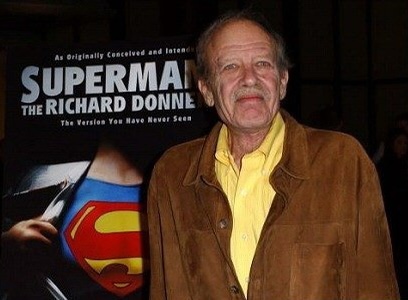
“And I said to Chris, ‘Look, I can’t get in your way about doing something that you obviously feel so deeply, but I can tell you as a writer, stay out of things that Superman can fix by himself. He doesn’t have to go to the UN, he can disarm the world. You cannot have a tsunami that kills fifty thousand people, or 100,000 people, in a Superman movie because he can stop a tsunami the way he stops the earthquake. He stops the water from reaching the school and saves the kids. Don’t get into famine. Superman can feed the world. Just stay inside what Superman is and the fun of it, and you can be as sentimental as you want to, and as meaningful as you want to, but don’t get into areas like the first draft of Batman…”
Screenwriter Mark Rosenthal stated in the You Will Believe documentary, “Chris mentioned that since they were trying to restart the series, and he felt Superman needed some special edge to it, this was the movie that asked the big question: why doesn’t Superman help us? And that made a very difficult equation to solve.”
Once Donner and Mankiewicz had declined the opportunity to return, the door was wide open for anyone to come in. Richard Lester was approached to direct IV, which he turned down, and Ron Howard was also considered. At one point horror director Wes Craven, best known for A Nightmare on Elm Street, was attached to the film, but his views on the film clashed with Reeve’s, and he eventually departed the film.
Eventually, Sidney J. Furie, who had helmed the 1965 spy thriller The Ipcress File and had a minor hit in 1986 with Iron Eagle, agreed to direct. Globus stated, “At least going in, all of us believed that Sidney Furie would be the right one.”
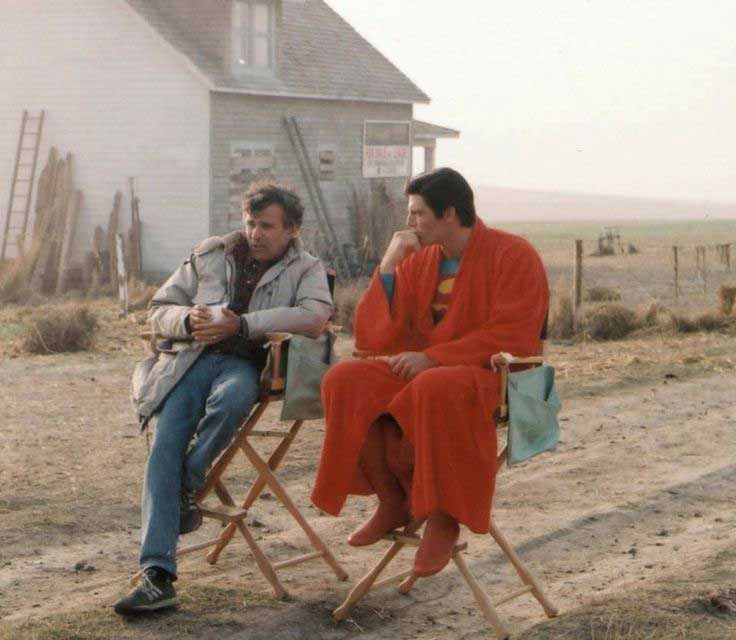
In an interview with Starlog, Furie recalled his meeting with Warner Bros. executives about taking on the task of directing Superman IV. “When I got hired, I mentioned to Warner Bros. about how bad Superman III was, and their response was, ‘Oh yeah, boy, was it bad. Fifty million dollars in film rentals. Give us half of that and we’ll be happy.’”
Photographing the film was Ernest Day, who had been a camera operator on Lawrence of Arabia two decades before. And Harrison Ellenshaw, who had worked on the original Star Wars ten years before, was tapped to handle the film’s many visual effects. Instead of Pinewood Studios, the film would be based out of Elstree Studios in England (which had also been one of the key production studios for Star Wars). Warner Bros. would handle the domestic release in the United States and Canada, while Cannon Films would handle the film’s international release in numerous markets, among them England, France, the Netherlands, and Japan.
With credentials like these, you would think that Superman IV would have been as fun and exciting as the first two films and even better than Superman III.
Wrong.
Where did Superman IV go wrong? Stay tuned…
 Superman: The Blog