When I first wrote this commentary back in 2017, it had come at a most difficult time with the passing of my mother. As I tended to her final arrangements and my return to Mississippi for her memorial service, this commentary became an escape for me at times. I was able to handle both accordingly: hence, the dedication. Since then, more information has come to light, which I have modified and updated accordingly, but I have retained the spirit of the original writing.
“Here in this… this fortress of solitude… we shall try to find the answers together.”
It is one of the most original and spectacular sets in the history of films. On screen it is an irregular combination of ice and crystal that is both earthly and otherworldly. But behind the scenes it was the brainchild of a talented group of artists, production designers, carpenters, and technicians that made it come to life.
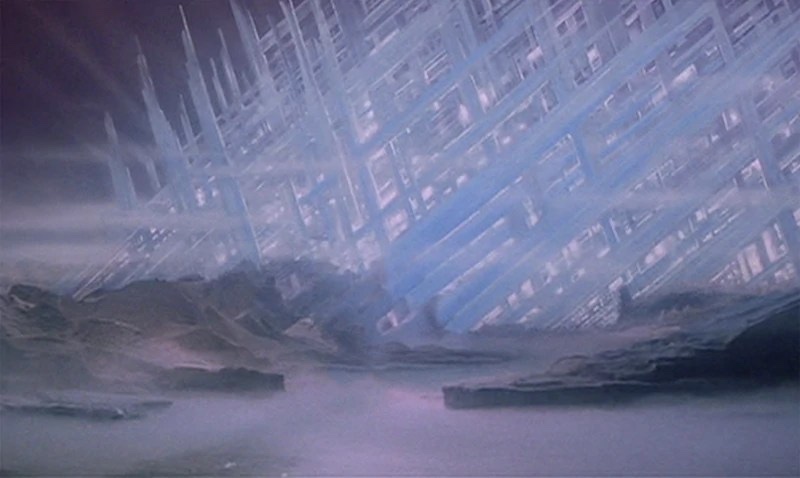
Until the production of Superman: The Movie and Superman II in 1977, the Fortress of Solitude had been a part of the Golden Age of DC Comics history. Behind its mountainous exterior lay a high-tech collection of computers, monitors, creatures from a thousand galaxies, a shrine to the history of Krypton, the bottled city of Kandor, and more than enough memorabilia to compete with the Batcave. Only a giant golden key could open it. For the better part of thirty years it was the first and most memorable rendition of the Fortress.
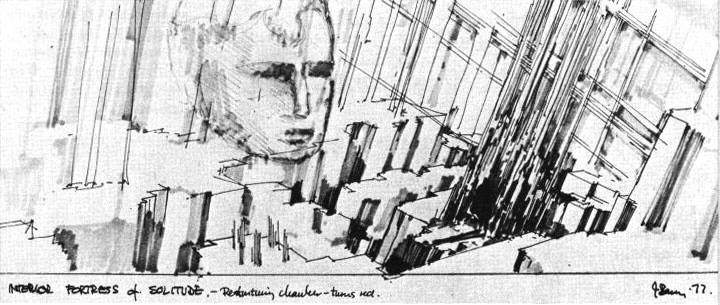
Enter John Barry. The soft-spoken, celebrated production designer who brought the first Star Wars film to the screen was tasked with bringing both a new vision of Krypton and the Fortress to life. No longer would it be a product of the Flash Gordon and Buck Rogers era. Barry conceived the environment to be a mixture of crystal and ice, a natural by-product of its home world, with organic and technological properties only imagined and assumed on film. The final result is both alien and earthly, where the environment is both freezing yet warm and comfortable at the same time.
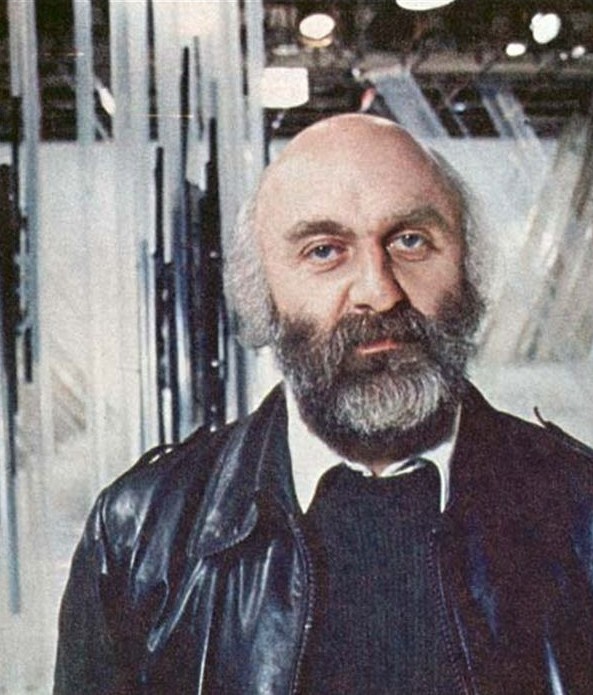
Not only did John Barry design the cavernous interior of the Fortress, he had to design its gigantic exterior as well. Work on the interior of the Fortress occurred at Shepperton Studios in England, while a portion of the Fortress’ gigantic exterior was constructed in the 007 Stage at Pinewood Studios in London. The rest would be filled in with a series of beautiful matte paintings that seamlessly blended with the sets.
Much has been discussed and debated about the filming of the Fortress sequences, leading some fans to incorrectly conclude that certain sequences were filmed at one point or another for the films. Let us look a little closer at the production history and set the record straight.
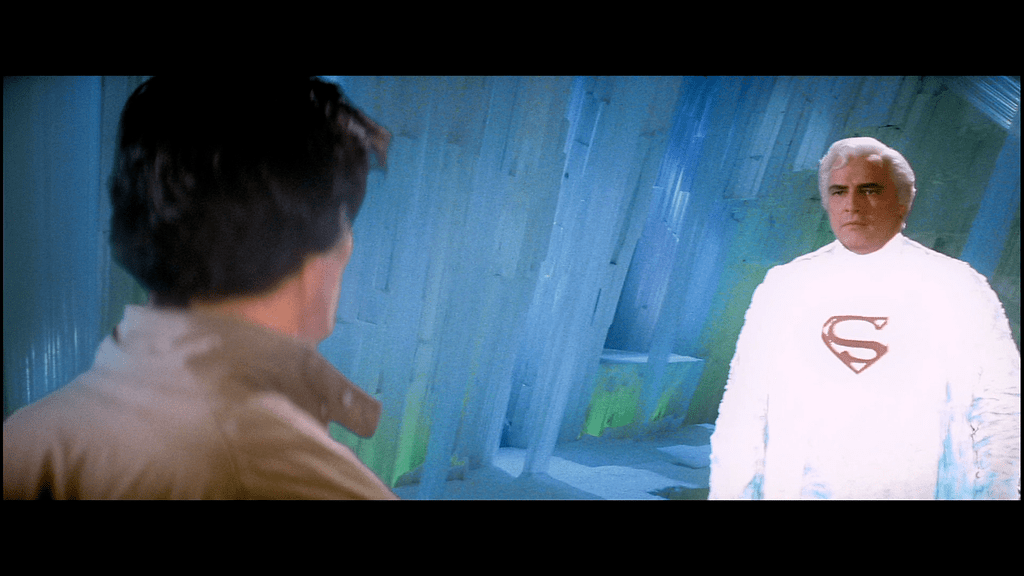
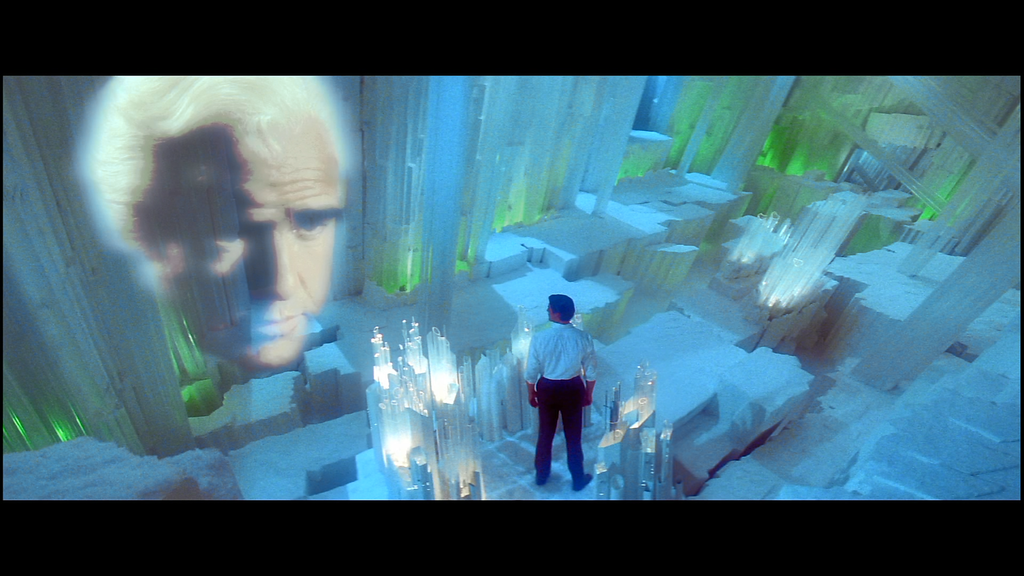
On 13 April 1977 Richard Donner worked with Christopher Reeve and Marlon Brando in bringing the first Fortress sequence to life, that of Jor-El sacrificing his last amount of energy in restoring Clark Kent’s powers. Ironically, this moment was not filmed in the Fortress set but on a relatively small blue screen set at Shepperton. The elements for this crucial sequence for Superman II would not be seen by the public at large, except for still photos in various media, for the better part of twenty-five years until November 2006 with the release of Superman II: The Richard Donner Cut, where the raw footage would be combined with visual effects and matte paintings to complete the illusion.
Throughout May 1977 Richard Donner filmed many of the Fortress interior scenes in the giant set at Shepperton Studios. It was here that Christopher Reeve and Margot Kidder filmed their costume and makeup tests on 2 May and 5 May, respectively. What is most notable about Reeve’s tests is that this marked the first time Reeve appeared on set in costume as Superman.
Simultaneously, Jeff East, who was cast as the young Clark Kent, filmed his first scene for the film of Clark entering into the interior of the Fortress and using the crystal console to activate the interactive lessons with Jor-El. Continuity photographer Bob Penn would produce a number of still photos of East inside the Fortress set.

Reeve would continue filming his portions of the scene of Superman sacrificing his powers for Lois, and of a beaten Clark returning to the Fortress, for two key scenes from Superman II, on 6-7 May 1977. Kidder would also shoot further makeup and costume tests on the Fortress set at the same time. Continuity photos and production photos would later attest to the sequences being filmed, though the footage itself would remain unseen until 2006 for the Richard Donner Cut of Superman II.
Reeve and Kidder would also shoot their portions of a key sequence from Superman II, in which Lois witnesses Superman’s willingness to give up his powers for her. A few production photos would attest to the sequence being filmed, though it would be discarded and reshot two years later.
On 12 and 15 May 1977, flying tests were conducted in the Fortress interior set of the villains’ arrival inside the Fortress for the key scene of their confrontation with Superman in Superman II. At this point, word was leaked out to the press of the uncertainty of the visual effects, causing executive producer Ilya Salkind to issue a memorandum stating that the film’s production would be kept top secret.
Another key sequence shot around this time was of Superman’s discussion with Jor-El over his feelings of vanity. Only Christopher Reeve was needed for filming, as Marlon Brando had filmed his portions the month before. Ultimately, the scene would be cut from the final film and remain unseen until 1994, when it was first shown in the longest known extended version of Superman on KCOP-TV in Los Angeles; and then later in 2001, when a slightly modified version was restored for the film’s first DVD release; and finally on the Warner Archive extended TV cut Blu-ray in 2017.
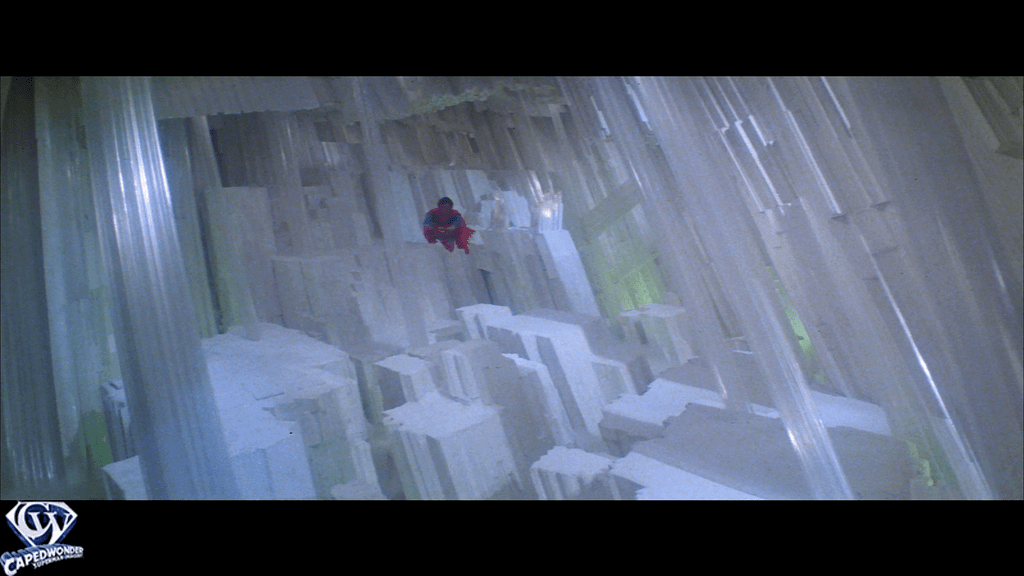
If the villains’ flight into the Fortress caused some concerns among the production crew regarding the flying effects, all of their concerns were laid to rest when Christopher Reeve took flight when he filmed his now-memorable scene of Superman’s departure from the Fortress. As Richard Donner put it in 2001 for the DVD’s documentaries, “It was Chris who made it work.” Instead of the rigid flying style used by George Reeves two decades before, Christopher Reeve, an avid pilot in his own right, banked his body at certain angles, giving Superman a believable flight that left the production crew in tears and cheers. They had succeeded in their objective of making a man fly.
In the second half of the month, Gene Hackman and Valerie Perrine would shoot their first scenes for the production, of Lex Luthor and Miss Teschmacher entering the Fortress for Superman II. Their portions of the scene were shot over multiple takes, with two or three versions of certain shots filmed and used in the 1980-81 theatrical version, the 1984 extended TV broadcast, and both versions of the Richard Donner Cut prepared in 2006.
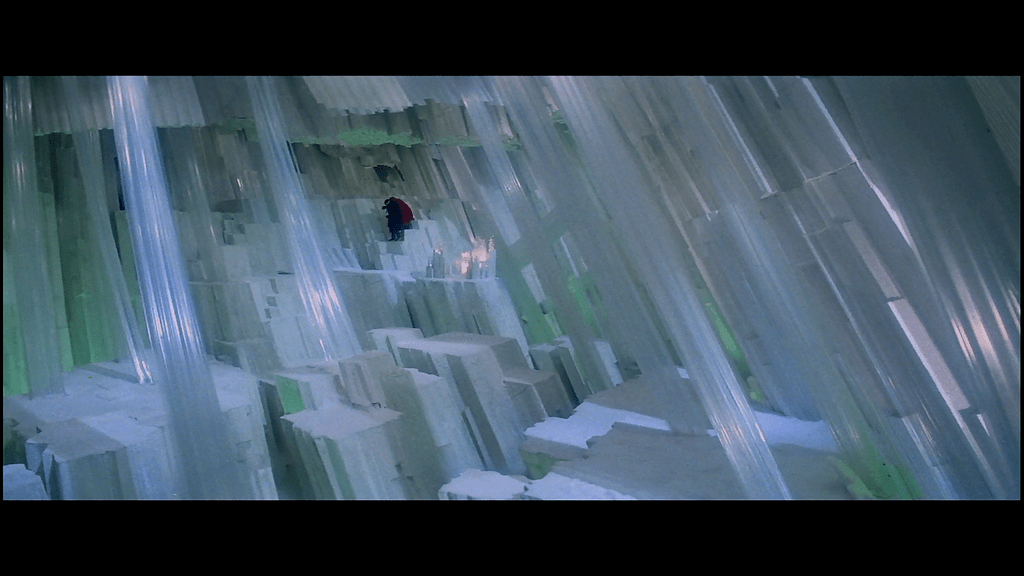
Hackman, Reeve, and Kidder would be joined by Terence Stamp, Jack O’Halloran, and Sarah Douglas for one of the sequel’s most dramatic scenes, the villains’ confrontation with Superman in the Fortress. Once again, a significant amount of footage from the sequence would be discarded and reshot in 1979, while the second half of the scene would be used for the theatrical version. Other portions would be included in the 1984 TV broadcast, while the Richard Donner Cut would see the majority of the scene restored, with alternate shots used in various places.
On 25 May 1977 continuity photos of Christopher Reeve as an unconscious Clark Kent by the crystal console were produced. It is possible that the scene may have been reshot. This would mark the final sequence that would be filmed in the interior Fortress set at Shepperton Studios. From there the Superman production crew would move to Pinewood Studios in London to continue filming.
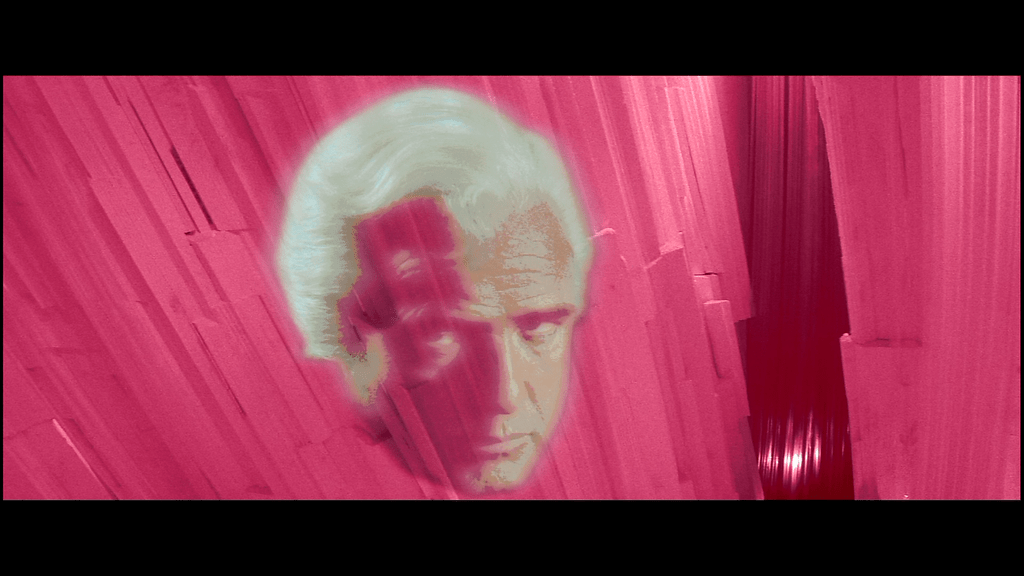
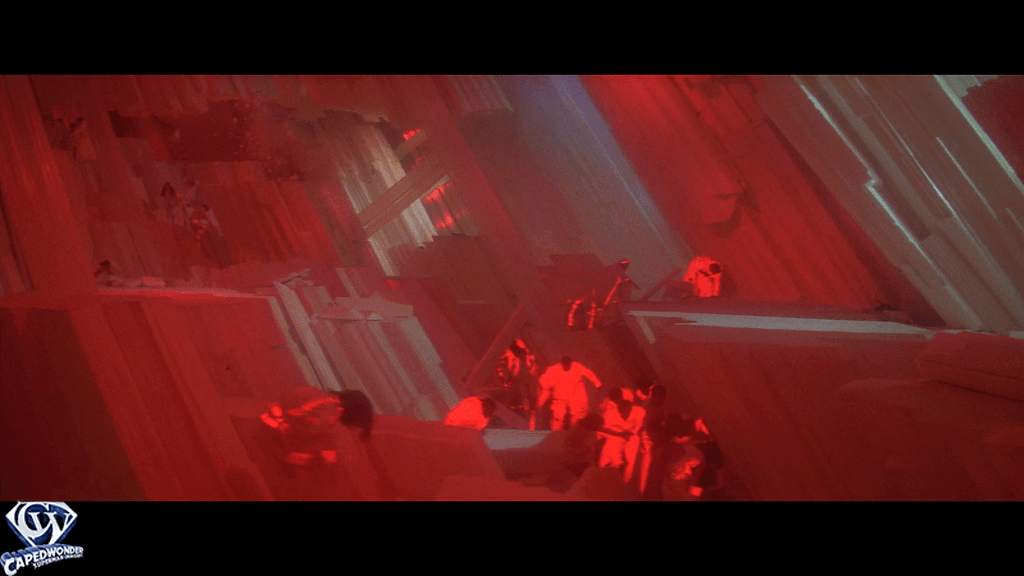
But that’s not all. Certain scenes of the destruction of Krypton, with some of the planet’s people trying to escape certain destruction, were filmed on the Fortress set around this time as well. The entire set was relit in red to convey the sense of destruction awaiting the entire planet. One only needs to notice the walls and the floorways of the set in the sequence.
Once shooting had been completed on a number of scenes on the Daily Planet and White House sets, construction work began on the massive exterior portions of the Fortress set in an equally massive soundstage, the 007 Stage at Pinewood. Commissioned only a year before for the gigantic submarine sequence for The Spy Who Loved Me, the 007 Stage would be used to great effect in portraying the Arctic Circle. A combination of backdrop paintings, styrofoam boulders and rocks, salt, water, and other materials, the exterior of the Fortress had to match what had already been filmed at Shepperton Studios. Once again, John Barry stepped up to the plate and delivered a fantastic set that would be enhanced with equally stunning matte paintings. One needs to really look hard to see exactly where the set ends and the painting begins.
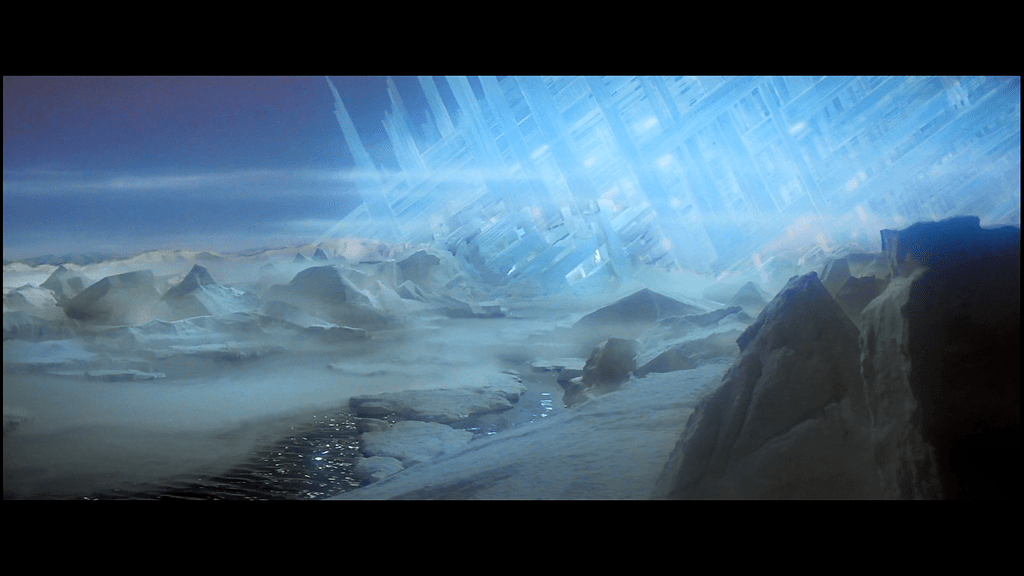
It would not be until October 1977 that Richard Donner and his cast would begin filming on the exterior Fortress set. All of Jeff East’s scenes of young Clark Kent’s arrival at the Arctic Circle, as well as his construction and approach to the Fortress, were filmed at this time. These shots would later be completed with detailed model work spotlighting the stunning construction of the Fortress for a memorable dramatic scene. (In an interview for the CapedWonder Superman Podcast in August 2019, Jeff East stated that it has been Richard Lester who directed him for this sequence. There is no proof that confirms his statement, but I cite this for historical reference.)
Donner also filmed all of the exterior Fortress scenes for Superman II during this time. These include the villains’ arrival with Luthor and Lois, Non’s failed attempt to break through, the villains’ successful attempt at breaking in, their arrest by the U.S. Arctic Patrol, Superman’s destruction of the Fortress, his discussion with Lois about the end of their relationship, and Luthor and Miss Teschmacher’s arrival at and eventual departure from the Fortress. Surprisingly, most of this footage would not be used in the theatrical version except for a brief portion of the villains’ arrival, Superman and Lois flying away, and a quick shot of Luthor and Miss Teschmacher arriving at the Fortress. The remainder of these scenes would be included in the various extended TV broadcasts around the world, while the Richard Donner Cut restored only a portion of these moments, relegating the uncut versions of the scenes in a supplemental section on the DVD and Blu-ray releases.
For most of the cast and crew, their work on the numerous Fortress scenes were completed, with the exception of Christopher Reeve and Margot Kidder. They, along with Richard Donner and cinematographer Geoffrey Unsworth, would return on 15 March 1978 for additional work (possibly a reshoot) on a portion of the Fortress exterior set. Later that day, they would meet with Steven Spielberg over lunch. This is where it gets further complicated.
Exactly one year later, the Salkinds would send Richard Donner a telegram informing him in no uncertain terms that his services on Superman II were no longer needed. They brought in Richard Lester, who served as a go-between to both parties, to rewrite and reshoot much of the sequel, eventually earning him sole directorial credit on II, even though some of Donner’s footage would be used in the final film. All of Marlon Brando’s footage was cut as a result of a lawsuit due to unpaid royalties. In his place, Susannah York and John Hollis were brought in to reshoot two of the three Brando moments.
However, when work resumed on Superman II, two key creative personnel were no longer alive. Geoffrey Unsworth had passed away on 28 October 1978 after suffering a heart attack in Paris, France, while working on Roman Polanski’s film Tess. Superman would be dedicated to his memory. On 31 May 1979, while serving as a second-unit director on The Empire Strikes Back, John Barry succumbed to a 104-degree fever and passed away the following day, 1 June 1979, from meningitis. Their deaths were a tragic blow to the Superman family, so the Salkinds and Richard Lester brought in Bob Paynter and Peter Murton to fill the two slots and help complete the work on II. They were tasked with continuing what Unsworth and Barry has begun, and to their credit they did an admirable job not only in emulating their styles but also bringing their own sense of direction to the sequel. This extends to the different Fortress scenes as well.
Much of Hollis’ and York’s work for the revised scenes were essentially reworded versions of the original Brando line readings shot against blue screen and superimposed against a haphazard interactive monitor designed to replace all of Brando’s “floating head” discussions which had been filmed in April 1977. These shots were then inserted into the Donner footage of Luthor and Miss Teschmacher in the Fortress from May 1977 to form the first of the Fortress scenes for II. As of this writing it is not known exactly when these scenes were filmed, but it is believed to be circa October 1979.
The new scenes of Superman and Lois at the Fortress were shot at the same time as well. The dinner sequence, in which Superman and Lois “abandoned the orange juice for once,” was filmed on 18 October 1979, and the segment of Lois looking for a place to change was omitted from the theatrical version but restored for the TV broadcasts. When you compare the Murton set design and the Paynter photography, the differences are obvious, especially in the lighting and camera arrangements.
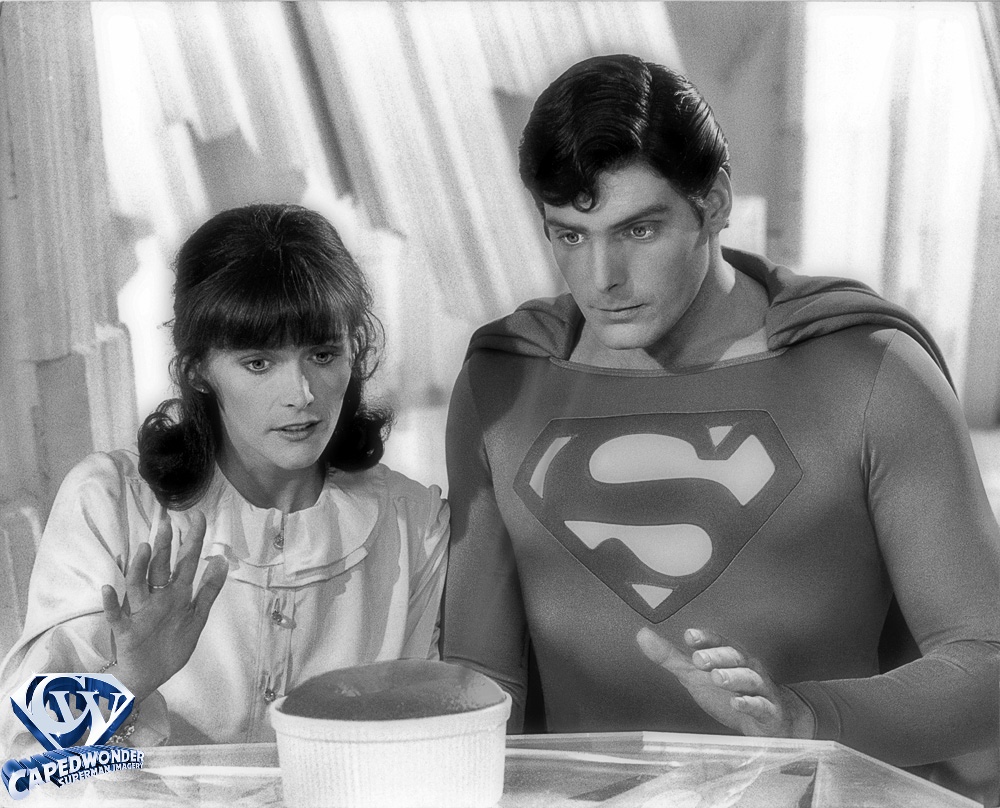
Also around the same time, Superman’s discussion with Lara about his love for Lois was filmed. In this reshot sequence, we see a new version of the crystal chamber that replaced the original, more mysterious chamber used on the Shepperton set from May 1977. The shot of Lara “emerging” from the interactive monitor was lifted from the moment in which Jor-El appears before Clark and sacrifices the last of his energy. All of the shots of Superman in the crystal chamber and the division into two beings were a replacement of the more mysterious and implied moments of him losing his powers in the original version of the scene.
Another original set design from Murton is Superman’s bed, which was also filmed around this time. It had been reported that some of the footage of Superman and Lois making love was so sensual, it would have given the film an R rating. Instead, we have a tastefully handled moment of the two simply asleep. An unused outtake of Lois momentarily opening and closing her eyes was used in the 2006 Donner Cut.
Next, we have a powerless Clark’s return to the darkened Fortress, which was also shot under Lester’s tenure around this time. Here, Christopher Reeve delivers a more subdued performance as Clark tries to reach out to his parents and soon finds the green crystal. Some have suggested that Reeve’s performance had matured by this time, as opposed to the somewhat awkward delivery from two years before.
Finally, we come to the confrontation between Superman and the villains in the Fortress. The showdown, while showcasing unusual powers such as energy beams, disappearance, replication, and holographic trickery, was filmed on the new Murton set in the fall of 1979. In these moments a body and voice double for Gene Hackman was used, as he was no longer needed for the reshoots. The majority of the reshoot constituted the first half of the sequence, up to the point of Luthor pointing at Superman and asking, “Him?” For the reshoot, Terence Stamp used the same line readings he had used two and a half years before on the original Shepperton set. Portions of the scene were cut from the theatrical version but would be restored for the TV broadcasts. Insert shots at the end of the sequence were also filmed, of Superman entering and exiting the crystal chamber, of Superman and Lois embracing after winning the fight, and a quick exchange as Luthor attempts to talk his way out. This would mark the last of the Richard Lester scenes filmed on the revised Fortress set in October 1979. But the story doesn’t end there.
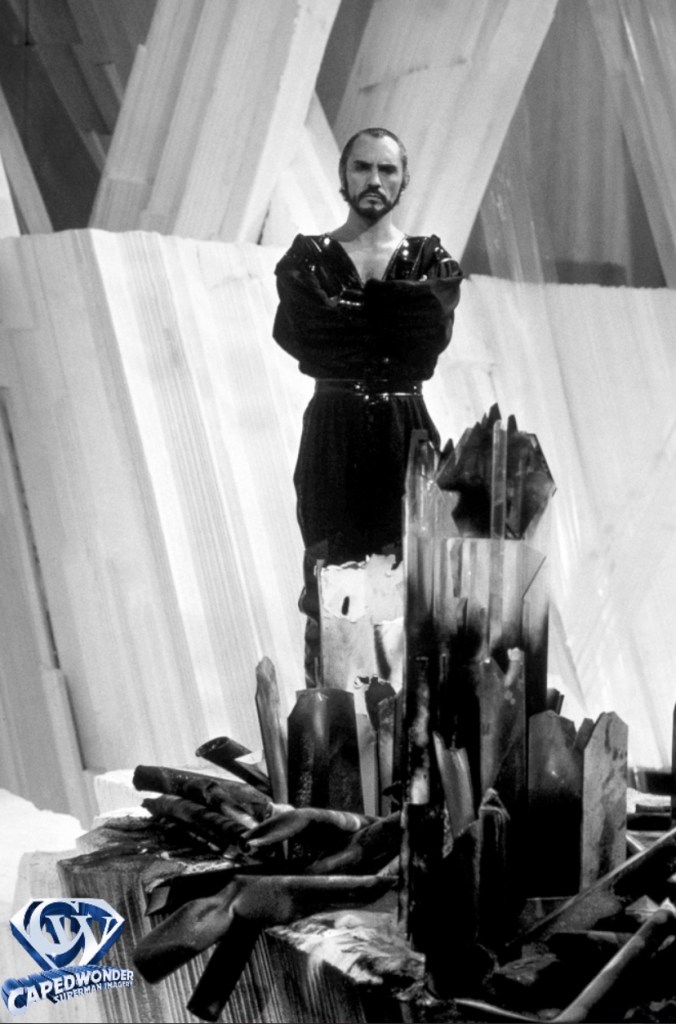
Once Bryan Singer purchased the rights to the unused Marlon Brando footage from II for usage in Superman Returns, the door was opened for a complete restoration of Richard Donner’s original version of II in 2006. Under the supervision of Michael Thau (who had overseen the restoration of the first Superman film for its DVD release in 2001), screenwriter Tom Mankiewicz, and Donner, nearly all of Donner’s original footage from 1977 was restored, including many of the original Fortress sequences. Some scenes, however, Donner was unable to shoot because of the differences with the Salkinds, which left Donner feeling hurt in the process. This included some of the Fortress scenes that were filmed in October 1979. They had no choice but to use those scenes to bridge necessary gaps in the film’s narrative.
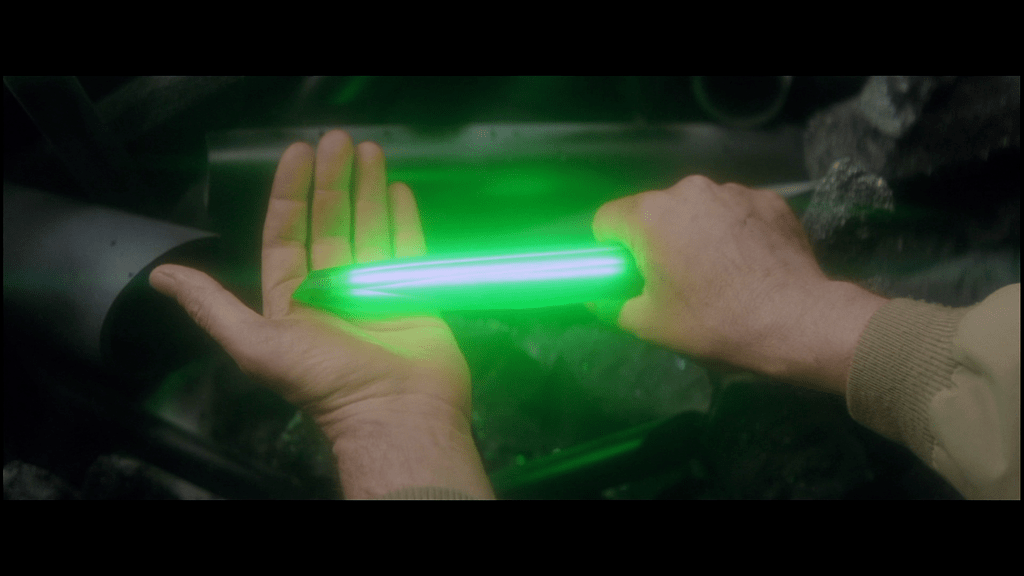
For several needed insert shots of Superman inside the crystal chamber, Thau used a body double wearing a latex mask and wig designed to resemble Christopher Reeve, as Donner had not shot any footage of Reeve inside the chamber. This also required a newly constructed version of the crystal chamber to resemble the original version used in the May 1977 shoot. To this day we do not know the identity of the body double, as he may have requested that his identity be kept secret as his way of giving to the film without any credit to himself.
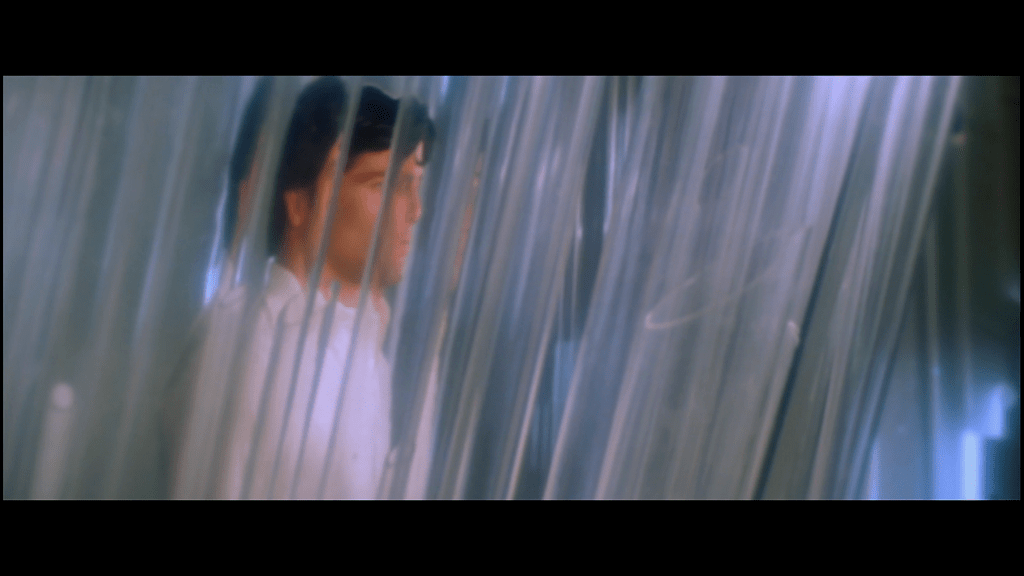
For the key sequence of Jor-El sacrificing his energy to restore Clark’s powers, other portions of the Fortress set were rebuilt for needed insert shots. In some instances of hand close-ups, it is Michael Thau’s own hands in the shots. For the final version, new CGI effects were inserted to give all of the Fortress scenes a look and style similar to the pre-digital effects from 1978.
When examining the sequences of the Fortress of Solitude for Superman and Superman II, it becomes clear who shot what and when. To this day, the original design work by John Barry has inspired others to follow in his footsteps, with similar approaches used in the Superboy TV series (1988-92), Smallville (2001-11), Superman Returns (2006), and many of the DC Comics publications from 2006 to modern times. And, like young Clark Kent, one only needs to look at the Fortress to find the answers.
(Some of the photographs and screenshots in this commentary are courtesy of CapedWonder.com.)
 Superman: The Blog