“You had one job!” How many times have we seen memes or gifs of comical mistakes or huge gaffes that cause us to laugh? Like seeing a Star Wars pendant in Star Trek packaging? Or the guy who drives a forklift into a shelf and causes multiple shelves and products to tumble down like a row of dominoes, and it gets caught on camera? Which in my nutty mind produces this response…
Menahem Golan and Yoran Globus of Cannon Films had one job: breathe new life into the Superman franchise. They bought the film rights from the Salkinds and had one shot to bring back the quality that Christopher Reeve, Richard Donner, and company had given to the first film, while steering the franchise back in the right direction after the middling reception of Superman III. The end result was like watching a train wreck in front of you, turning into a critical and commercial disaster.
By the fall of 1988, things had changed, Cannon was out as a result of their unfortunate bankruptcy, and the rights to the Superman franchise had come back into the hands of the people who had breathed life into the franchise in the early 1970s: the Salkinds.
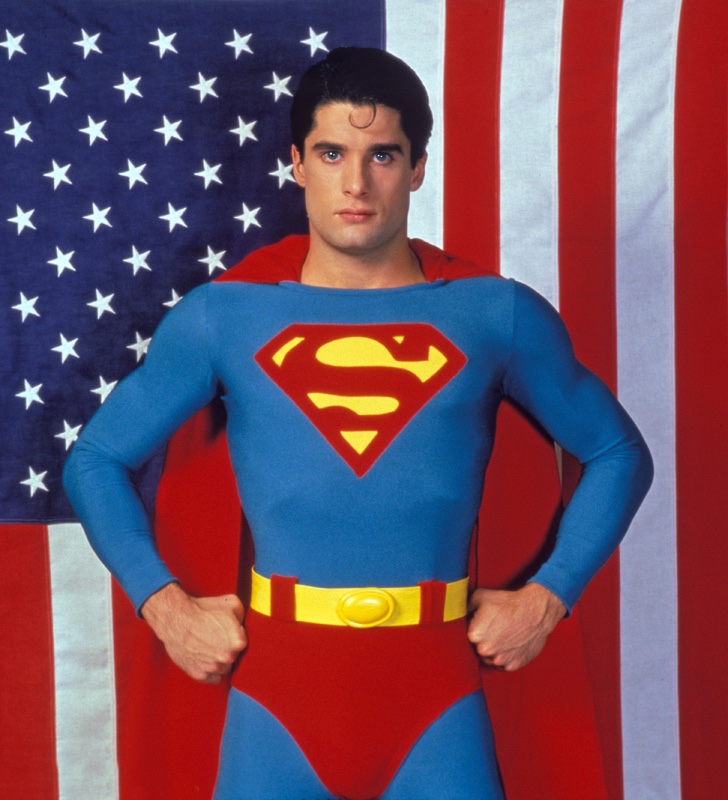
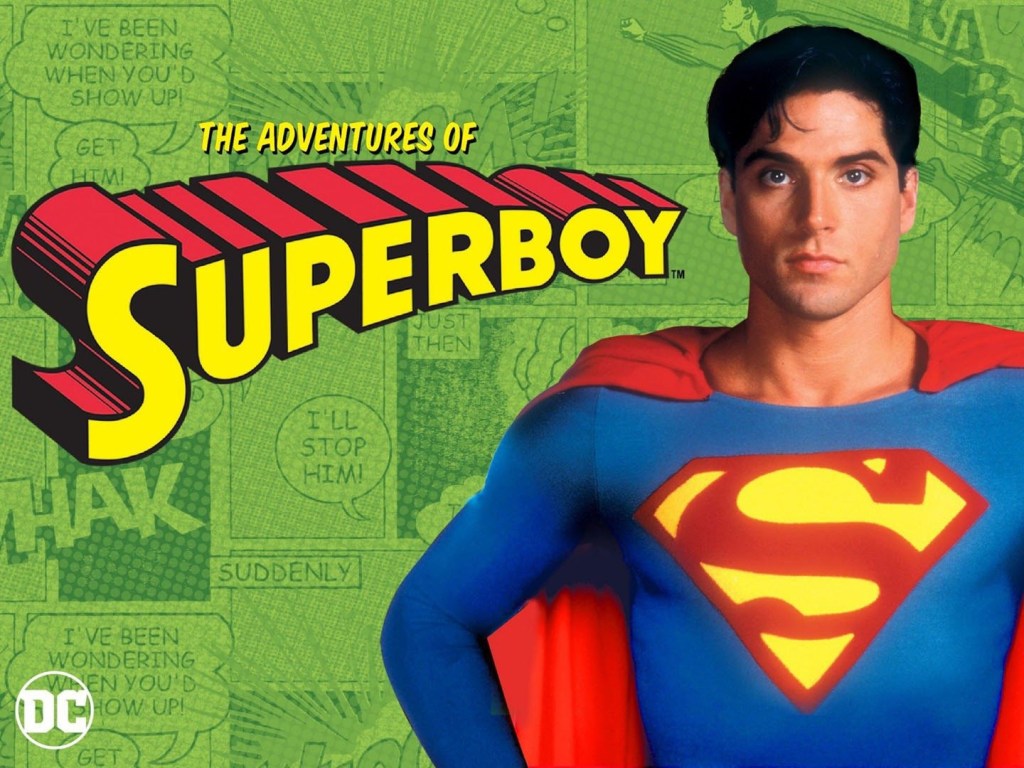
In October 1988 the first season of the Superboy television series debuted in syndication, produced by the Salkinds with relative newcomer John Newton in the lead role. The series’ first season focused on a college-bound Clark Kent in his days at Shuster University, and while the first half of the season was a bit rough around the edges at times, the show picked up speed and became more successful as time went on. Superboy came at a time when first-run syndicated dramatic television series were a new thing and had been proven successful as a result of Star Trek: The Next Generation, and before long more dramatic series went straight to first-run syndication, some with success and some not so successful. I remember Superboy running on Sunday afternoons at 12:00 on the local Fox affiliate WDBD-TV 40 in Jackson, Mississippi, usually after TNG and pared with lesser fare (Super Force, anyone?), and if I didn’t remember to set the VCR to record it while I was at church, I would have missed it altogether.
By 1989 the Salkinds began considering bringing Superman back to the big screen, and some of their early ideas included a film with an ecological theme, and a Young Superman film with John Newton. That concept changed in 1989 with Newton’s departure from the series as a result of salary disputes, and Gerard Christopher was brought in to replace Newton for the second season of Superboy that fall.
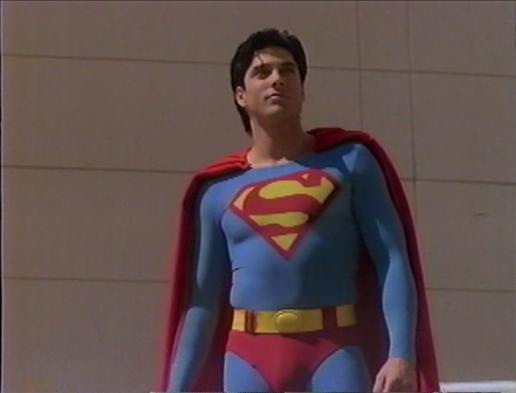
As the Superboy series grew in popularity and took on a darker tone as a result of the success of Batman, the Salkinds again started considering a fifth Superman film, which they called at the time Superman: The New Movie. Ilya Salkind began working with Mark Jones and Cary Bates, two of the writers on the Superboy series, to develop a script which would have brought the villainous Brainiac to the screen, though it was not the first time this had been tried. Salkind’s original treatments for Superman III back in 1980-81 had centered on Brainiac, and he was determined to bring him to screen.
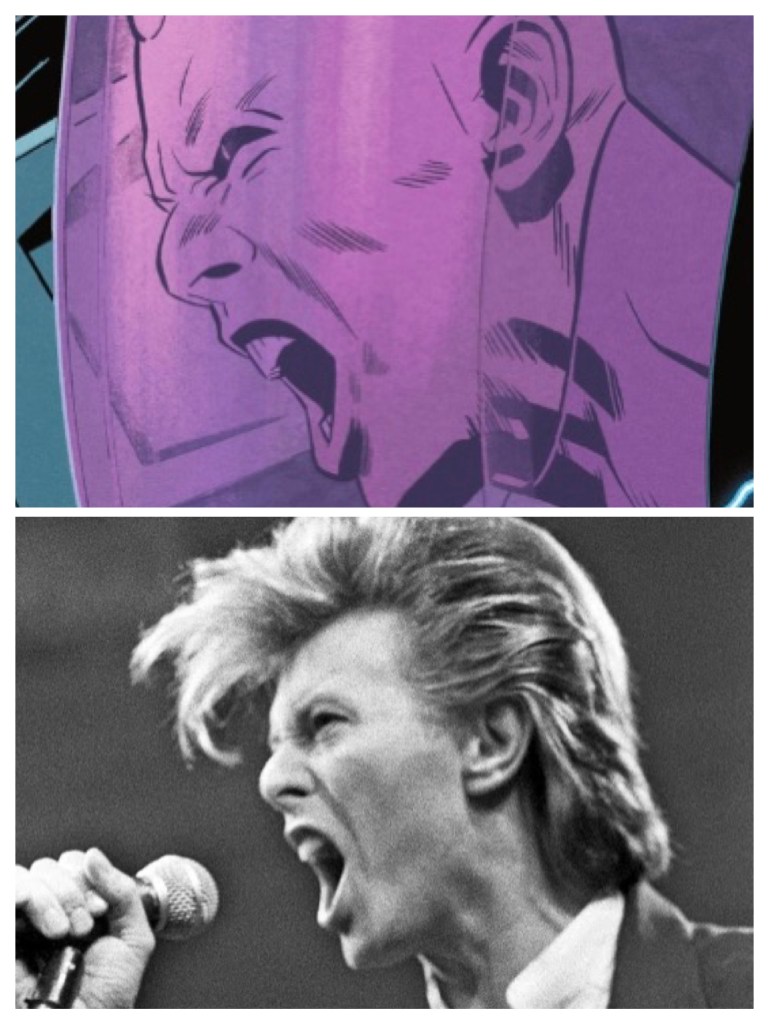
The new script, now known as Superman Reborn, also focused on Clark Kent’s relationship with Lois Lane, as well as the bottle city of Kandor, along with one element that would have repercussions in the Superman franchise a few years later, of which we have recently noted the 30th anniversary of its occurrence: the death of Superman.
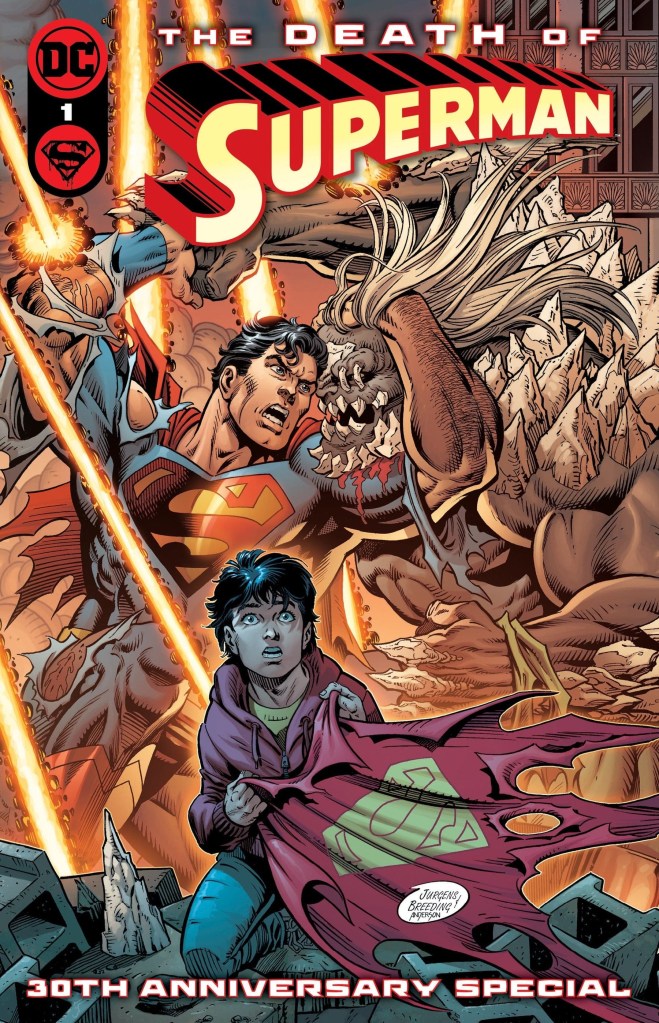
The script also had a very controversial element included that would have seen Lois Lane become pregnant and give birth to the new Superman, who would grow up to maturity as a 21-year-old young man. That element would not have gone over well with a number of longtime Superman fans, although in the 2006 film Superman Returns we find out in one freak, not-so-surprising moment that Lois’ son Jason is in fact Superman’s son as a result of their time together in Superman II.
Unlike Cannon Films’ poor attempt at a film, this version made more headway. The script went through no less than three separate passes, with the first draft dated July 23, 1990, and a later third draft dated August 23, 1992. Cary Bates would later state in an interview with the Comic Book Movie website, “The intent was to leapfrog over Superman III and especially IV, and return the series to the high mark achieved in 1 and 2. It was our desire to do a fully developed, balls-out science fiction story pitting Superman and Brainiac against each other mano a mano.”
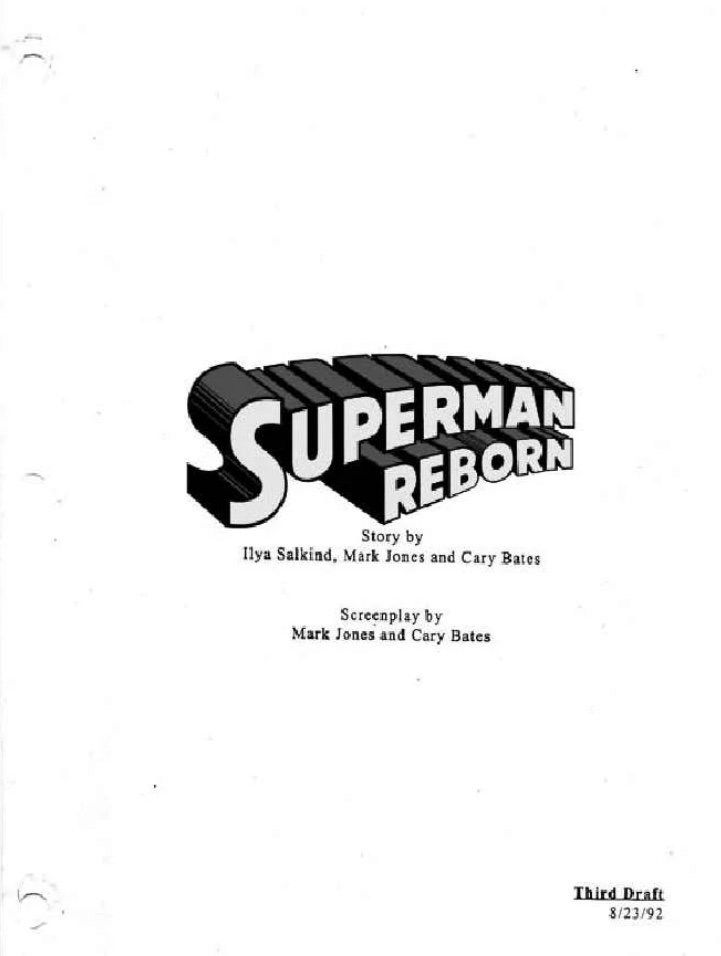
In February 1990, Ilya Salkind announced at a press interview that pre-production had begun on not one but two new Salkind film projects: Superman Reborn, and a new film account on the voyage of Christopher Columbus. Both projects would be helmed in Florida, and the Christopher Columbus film would be released in 1992 to commemorate the 500th anniversary of Columbus’ voyage to the Americas, while Superman Reborn was slated for a Christmas 1991 release, thirteen years after the release of Superman: The Movie.
While the Columbus project steamrolled forward with returning Superman veteran Marlon Brando as Torquemada, and a script by Mario Puzo, Superman Reborn seemed to make some further progress later in the year. It was budgeted at a healthy $35 million, which, according to Pierre Spengler, was essential to handle the visual effects. At this point the script was under development, the project was under the banner of “Kandor Productions”. And a visual effects team was in place, headed by Richard Edlund, who had worked on the original Star Wars trilogy, Star Trek: The Motion Picture, the original Battlestar Galactica, Raiders of the Lost Ark, Ghostbusters, and even Cannon Films’ Masters of the Universe. (Imagine what kind of work he could have done for Superman IV instead!)

Along with Edlund, the visual effects team included Don Fly, Ellen Somers, Ned Krepeta, Dave Jones, Jim Rygiel, and Mary Johnston. Rygiel would go on to help design many of the spectacular visual effects for Peter Jackson’s Lord of the Rings trilogy a decade later. Greg Vonseca was tapped as the film’s production designer, and Bruce Miller was brought on board as the film’s art director. In a memo dated October 22, 1990, the team had met to discuss the film’s visual effects, and Vonseca had hired a design team to work on a starship model that would be delivered a couple of days later, on October 24, 1990. What that ship design was, nobody knows, but I’m concluding that it was likely a ship design for Brainiac.
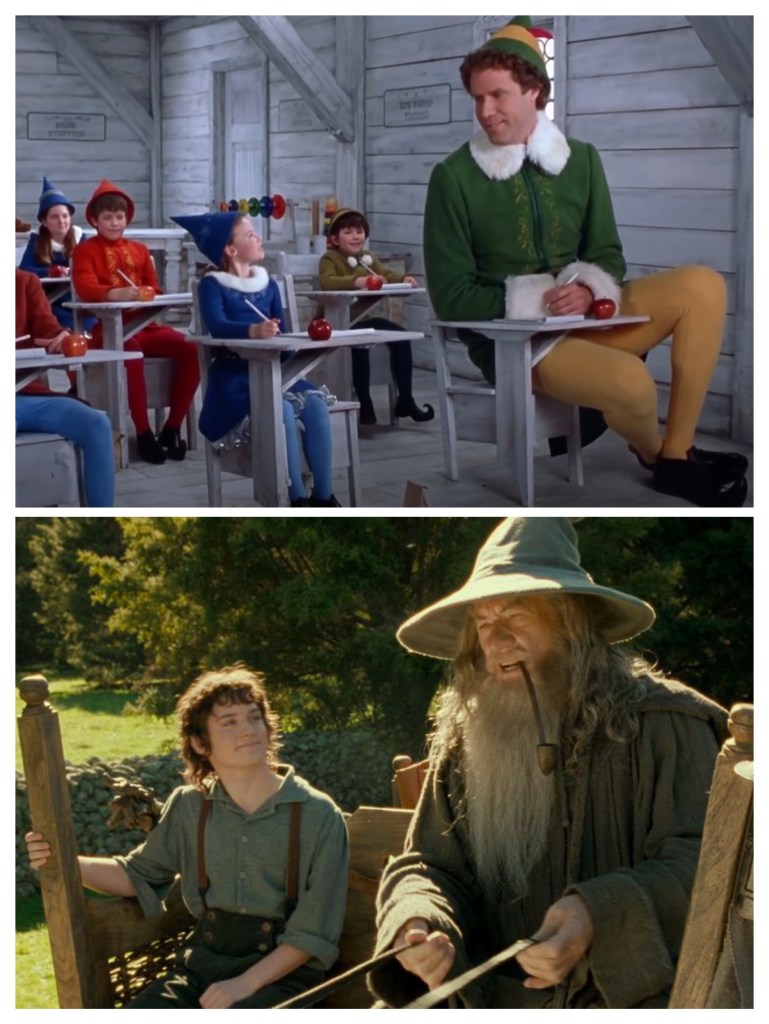
The team also discussed the final showdown between Superman and Brainiac. According to the memo, they had rejected the notion of putting a man in a suit. Instead, they would have shot the fight in the style of the Biblical story of David versus Goliath. At the time it would have required compositing the images of the actors in the camera frame to achieve such an effect. Set positioning and placement of the actors and any needed props in films such as The Lord of the Rings or Elf, and filming everything in camera practically, can achieve similar effect without having to resort to optical effects.
Legal discussions between executives from DC Comics and Warner Bros. moved forward at a brisk pace, and before long Mark Jones and Cary Bates began to make revisions to the script that met with everyone’s satisfaction. Gone I believe was the controversial element of Lois giving birth to the new Superman. Instead, Superman would be brought back to life in the bottle city of Kandor.
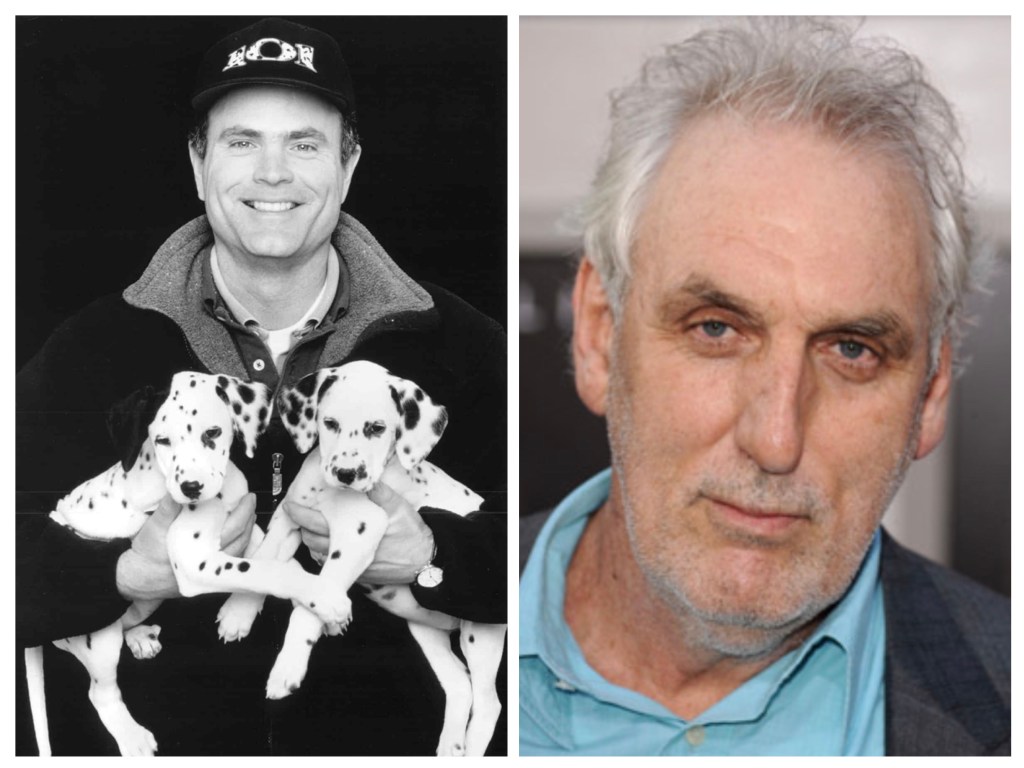
In addition, there was no director attached to Superman Reborn at the time, though there were two names on the short list: Phillip Noyce and Stephen Herek. The Welsh-born Noyce had directed such films as Dead Calm and Blind Fury by that time, and he would later go on to direct the adaptations of the Tom Clancy novels Patriot Games and Clear and Present Danger with Harrison Ford as Jack Ryan. Herek was best known at the time for Bill and Ted’s Excellent Adventure, and he would later direct the dramatic classic Mr. Holland’s Opus and the live-action version of Disney’s 101 Dalmatians. Both directors were known for their work with visual effects, so obviously Ilya Salkind and Warner Bros. saw a good thing about them.
By November another member of the Superman film crew was back: Robert Simmonds, who had worked as a production manager and location manager on the first three films, as well as a line producer on Superboy and a co-producer on the Salkinds’ Christopher Columbus movie. On November 1, 1990, he received a fax from a visual effects company regarding price quotes for projected visual effects work on the newest Superman film. We do not know which studio had sent the fax, unfortunately.
It was during the film’s development process in early 1991 that Ilya Salkind met with Christopher Reeve over lunch at the Carlisle Hotel in New York to discuss the possibility of returning to portray Superman once again, and Salkind’s offer to Reeve was, “Name your price.” Reeve obviously had his concerns. He had been burned by the entire debacle of Superman IV, and his career was changing from leading actor to featured actor. In a People magazine interview from May 1995, shortly after his tragic accident, Reeve had jokingly commented a few years earlier about a potential return to the role: “I’m in fantastic shape. But it’s obvious nobody wants to see a spare tire hanging over Superman’s belt.”
But Reeve had more realistic comments about the story, which he shared with Salkind and later stated in an interview: unless the script returned to the quality of the first film, he couldn’t see himself returning to the role. And he had said in a Superman IV press junket in 1987, “Superman is supposed to be permanently 30 years old, and I’m starting to slide well past that.” Age wouldn’t have been an issue. Kirk Alyn was nearly 40 when he first played Superman in the serials. George Reeves played the role from 38 until well in his mid-40s. And Henry Cavill recently returned to the role in the post-credits scene of Black Adam at age 39. So it was not about age but about the script. It was at that point that Reeve walked away from the project altogether, and it would be the last time that Ilya Salkind would see Reeve walking.
Christmas 1991 arrived, and no Superman Reborn. The Salkinds would push the release date ahead to some point in 1994.
By the summer of 1992 the landscape had changed once again. The Superboy series had ended, and USA Today had posted a quick news blurb announcing that a series of reunion movies were in the works. Around the same time Starlog Magazine posted a news blurb about who they thought would be cast in the next Superman film: a possible unknown, Gerard Christopher, or an actor who had not only starred in the role but was also interested in writing and directing the film. The Starlog blurb ended, “Or does Christopher Reeve really want to return?” Nothing materialized from either report.
(Interestingly enough, when Warner Bros. announced their plans to launch Lois and Clark: The New Adventures of Superman, Gerard Christopher auditioned for the role. When the producers and casting director learned that he had previously played Superboy, he was quickly rejected. It’s a shame. I for one would have enjoyed seeing him graduate from Superboy to Superman.)
Even into the spring of 1993, the film was still in pre-production. The budget had increased to $40 million, and it was under the banner of “Great Krypton Productions”. And despite the critical and commercial failure of Christopher Columbus: The Discovery, which earned only $8.2 million at the box office, they continued to push forward with their plans for Superman Reborn.
But the Salkinds soon faced serious problems from none other than Warner Bros. themselves. The studio had filed a lien against the Salkinds to reclaim certain property rights to the Superman franchise and produce Lois and Clark and future Superman films. Ultimately, Warner Bros. took back full control to produce all future Superman film and television projects, including live-action and animation, and in November 1993 the studio released a full-page advertisement in Variety announcing their intentions.
As a result of the Warner Bros. takeover, Ilya Salkind and Studio Canal retained the rights to the Superboy series, while Warner Bros. held the home video and international distribution rights to the series for years. In 2006 we finally got the first season of Superboy on DVD, and it would be several more years before the remainder of the series would be made available for video on demand (VOD) from the Warner Archive and on streaming platforms such as Amazon.
With the Salkinds’ rights to the Superman films at an end after twenty years, and three films, a Supergirl spinoff movie, and 100 episodes of Superboy under their belt, it would be another thirteen years before the Man of Steel would make his long-awaited return to the big screen. But the development of Superman V, aka Superman Reborn, was long and languished at that, and remains a lost final chapter to the Christopher Reeve series.
How would it have played out? This video pretty much says it all…
 Superman: The Blog