Picture, if you will, going back in time to your local movie theater in the middle of January 1978. You choose a movie of the time that you’re interested in seeing, such as The Bad News Bears Go to Japan, Coming Home, Corvette Summer, Ice Castles, Same Time Next Year, Thank God It’s Friday, or Sgt. Pepper’s Lonely Hearts Club Band, to name a few. There’s probably some successful holdovers from 1977 still playing, such as Saturday Night Fever, Close Encounters of the Third Kind, or that game-changing blockbuster that’s still electrifying audiences, that little science fiction film called Star Wars.
You sit down with your overpriced Coke and bag of popcorn, and several movie trailers play before the start of the movie. Among those trailers, this one plays…
Everyone begins to cheer around you, and maybe some people even get up and leave, having been fully satisfied with the teaser trailer and not caring about the feature film to follow. That’s all there is to this trailer, just the sky and a listing of the actors, and that logo blazing across the screen. And not even one piece of footage from the film whatsoever.
It’s the middle of January, and the film has another eleven months before it opens in theaters. And yet everyone’s appetites is more than whetted, because they know that Superman is coming.
So what made this teaser trailer so successful?
It was the usage of a piece of film footage that was shot from the head of an airplane soaring through the clouds that began to generate excitement and anticipation for the film, the thought of flying through the air. According to Tom Mankiewicz, in the 2001 documentary Making Superman: Filming the Legend, “Richard Greenberg, who’d been hired by Dick (Donner), found this wonderful piece of footage which was taken from the nose of a jet flying through clouds. Audiences were just cheering. And it made everybody feel so great.”
In his book The Making of Superman: The Movie, David Michael Petrou recounted how the months of production on both Superman and Superman II had led to countless amounts of tensions among the cast and crew, and a death and a near death on the Air Force One set. But, as Petrou pointed out, “spirits lifted later in the week as word reached Pinewood that the teaser was already running in theaters in America and receiving highly enthusiastic response.”
It was the sweeping cast credits that blazed onto the screen over the clouds. Never in the history of cinema had a film had so many cast credits zooming onto the screen in succession like that. As Marc McClure recounted, “Greenberg later adapted the trailer’s title design for the film’s innovative opening title sequence.”
And then there was the S shield.
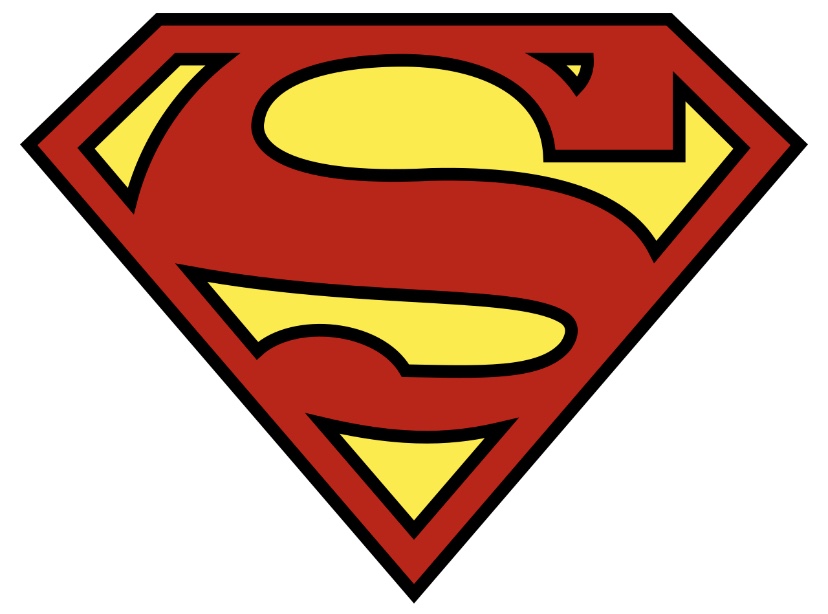
This version of the S shield had been designed only a few years earlier and had become the most recognizable version of the Superman shield in not only comics but also in pop culture in the 1970s. So when the teaser trailer featured the S shield streaking across the screen, it didn’t need to tell the moviegoers much else about the movie. That logo simply said it all. The animation of the logo would be the same as it would appear in the final film and numerous other trailers and TV spots, although at different varying speeds.
The final piece of the trailer was the title logo itself. Greenberg incorporated the comic book style logo that had graced many issues of the Superman comic book for decades, but even then it seemed to be a relic of the past. This new version of the classic story needed something new, something captivating, something that would usher in a new era for the character. It would take several months before that logo would be unveiled to the public. To this day it is synonymous with the film itself.
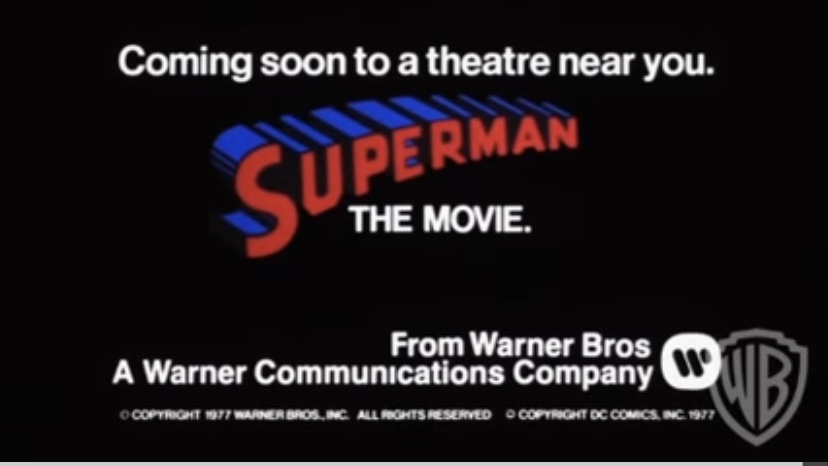
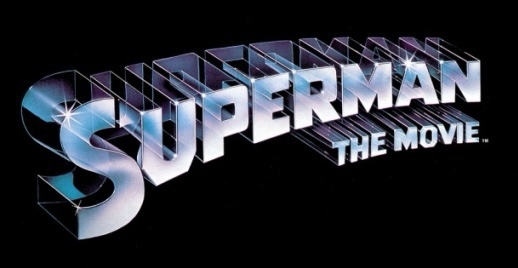
I never saw that teaser trailer in the theaters. It wouldn’t be until the special edition DVD release in 2001 before I would have a chance to see it for the first time. But even then, the minimalist approach worked. To this day it ranks alongside the teaser trailers to Gone With the Wind, Citizen Kane, and the 2009 Star Trek as one of the best trailers to use this “less is more” approach without spoiling any final footage within the trailer. More movie trailers could learn from this approach.
 Superman: The Blog