Since the news came out this past week that the Superman 5-film collection on 4K Ultra HD would be released in April 2023, the news has been received with a mixture of responses across the board. A number of fans are excited that all of the Christopher Reeve films are coming to 4K this spring, and fans are believing for a solid upgrade to Superman: The Movie from its previous release in 2018. I for one am anticipating the release. Other fans are disappointed that other versions of the films—particularly the 2001 special edition cut and the extended versions of all four films—are not making their way to 4K this year.
Let me remind you that at this point only the theatrical releases are scheduled for 4K this year. The 2001 special edition and the 2017 extended TV cut are still currently available in a two-disc set from the Warner Archive. And there is no word yet on when the extended TV cuts of Superman II and Superman III, and the original 134-minute version of Superman IV, are coming from the Warner Archive, even though they have admitted that prints exist in their vaults. When word comes out, I will pass that information on to you as soon as it becomes available.
But I want to turn my attention to Superman II: The Richard Donner Cut.
After sixteen years the film still holds up pretty well and is a good summary of what Donner and screenwriter Tom Mankiewicz had originally envisioned for the film until filming on the sequel ended in October 1977. By that time some 80 percent of the film had been completed. (Jack O’Halloran, who played Non in the two Superman films, would later say in interviews and chat sessions that Donner had filmed as much as 85 percent of the sequel.) The remaining gaps would be filled in by Richard Lester and screenwriters David and Leslie Newman in 1979, along with rewriting and reshooting many of the scenes.
We are familiar with the history and the troubles that Donner faced with producers Alexander and Ilya Salkind and Pierre Spengler—the arguments, the fights, the negative barbs that were said in interviews upon the release of the first Superman film at the end of 1978—which led to Donner’s dismissal in March 1979. And there are certainly enough points to weigh in favor of, and even against, both sides, and there is enough accountability to be held on both sides. Pick your choice; either one fits.
But that is not what I wish to discuss here. Rather, my thoughts are about the final product itself, the 116-minute final cut that was issued on DVD, HD-DVD, and Blu-ray in November 2006. (This commentary will not focus on the 122-minute original cut that was submitted to Richard Donner in 2006 prior to the final edit, and was later released on a number of streaming services such as Vudu and Amazon Prime a decade later, as the same concerns about the recut affect both versions, so I will focus primarily on the final cut.)
Specifically, my concerns about the film pertain to how certain visual effects in the film will hold up on 4K UHD. Granted, I’m not a technical expert, just a fan who will approach all of this in layman’s terms.
As much as I love the Donner Cut (and my personal preference is the Vudu cut), after sixteen years some of the visual effects simply do not hold up in comparison to the theatrical releases of the four Superman films. With CGI massages on the sequels, particularly III and IV, a number of those visual effects look better than they did in their original theatrical releases, particularly the wire effects in the flying scenes. But this goes further beyond just flying. Let me show you what I mean.
In one behind the scenes clip, restoration producer Michael Thau says to Richard Donner and Tom Mankiewicz, “Well, we do have a budget.” This is clearly evident in an early shot of the Phantom Zone drifting through outer space. Pay particular attention to the background plate of the stars and planets in the shot.
Do the stars and planets featured in this shot look convincing to you? It doesn’t to me. It’s clear that this is budget-rate indeed. In his review of the film from 2006, Bill Hunt of the Digital Bits admitted that the visual effects were clearly budget rate. When you compare shots like this to other science fiction films and series, whether Star Trek or Star Wars or either version of Battlestar Galactica, or even the original Superman, it becomes clear that the visual effects don’t hold up.
Let’s look at another element: the rocket as it goes through space. What stands out here?
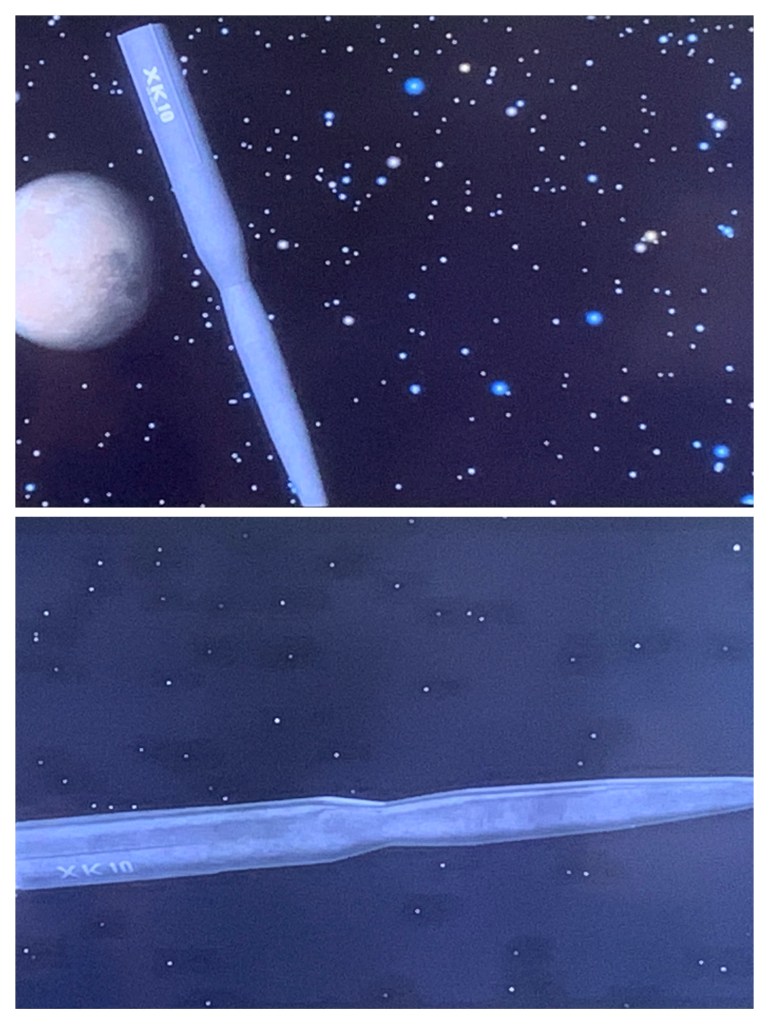
If you said the identification on the side of the rocket, you would be right. It should read XK-101, not XK-10. This is something that should have been caught early on during the editing process and corrected but wasn’t.
Now pay attention to the star field in these next two shots.
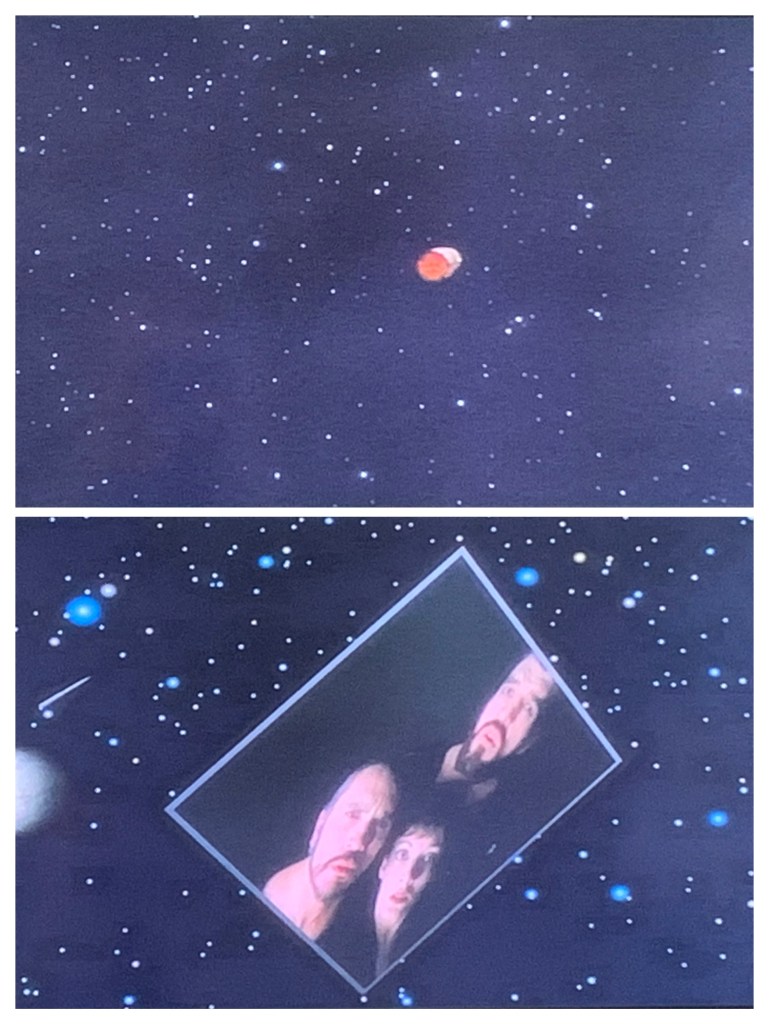
In the above shot, as the rocket’s propulsion dies out, the space background looks pretty good here. But afterwards, once the rocket drifts off into space, and the Phantom Zone enters into the shot, we are again given the same budget-rate space background that we were first shown earlier in the film. The background does not look natural as opposed to the above counterpart.
And again in these two shots once the rocket explodes, we have a difference in the outer space backgrounds.
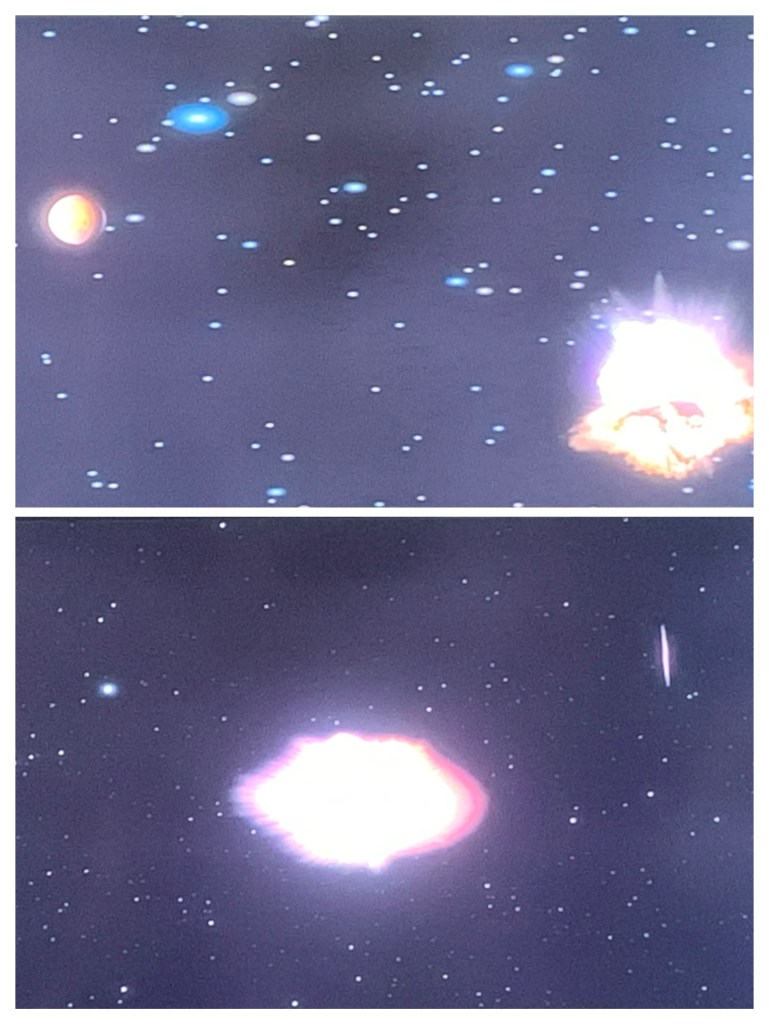
Now let’s turn our attention to the explosion of the Phantom Zone itself and the animation effect used for the Donner Cut.
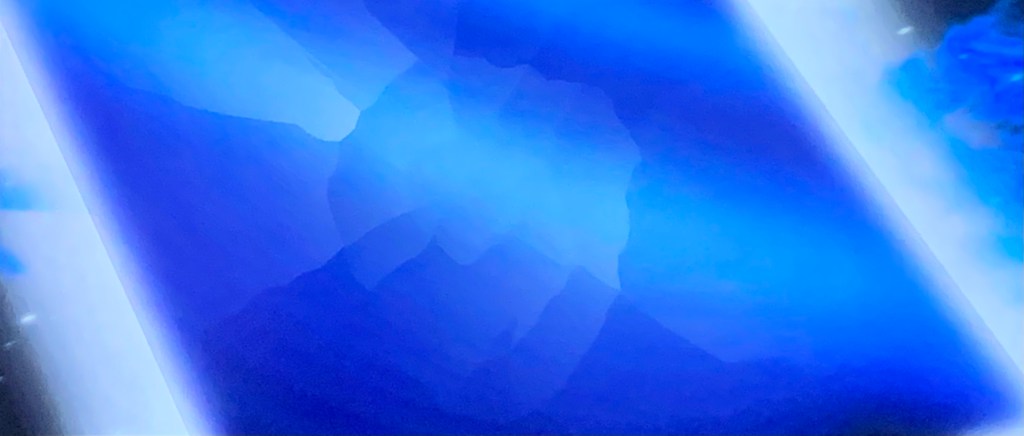
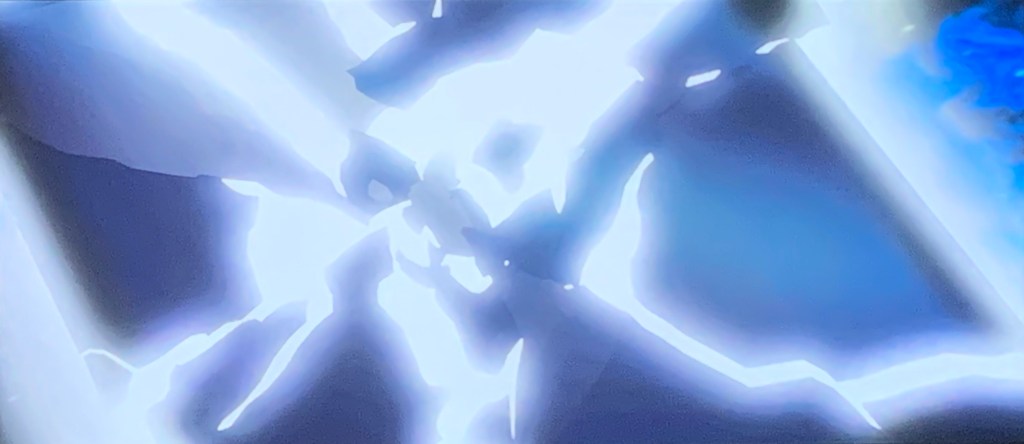
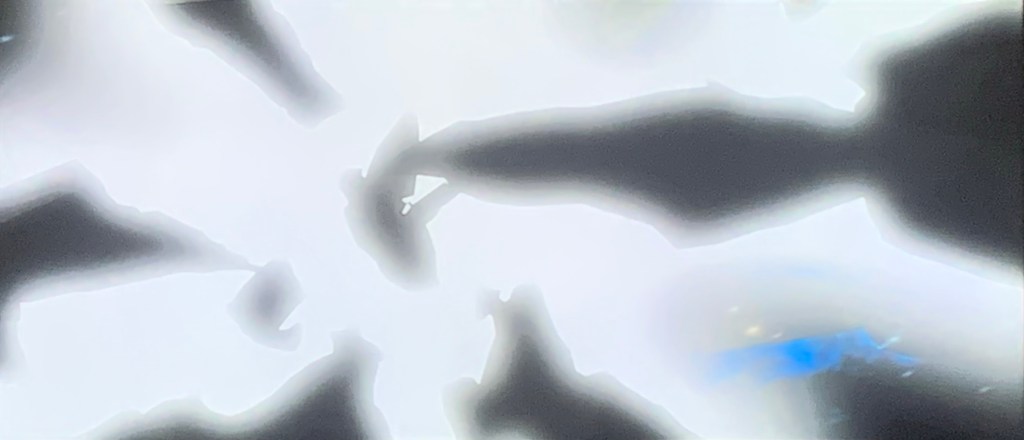
The CGI animation for the explosion effect is decent enough, but once you slow down the video it becomes apparent that even by 2006 standards the effect is rudimentary at best. It’s basic and far from perfect, and more time could have been spent in developing a better explosion effect. Compare it to the explosion effect seen in the theatrical version of Superman II, and you’ll see a vast difference in quality.
Now let’s look at something that could have and should have been corrected in the editing process but was missed, and yet became a focal point for the remastering of the sequels for the 2011 Blu-ray anthology release: wire harness removal.
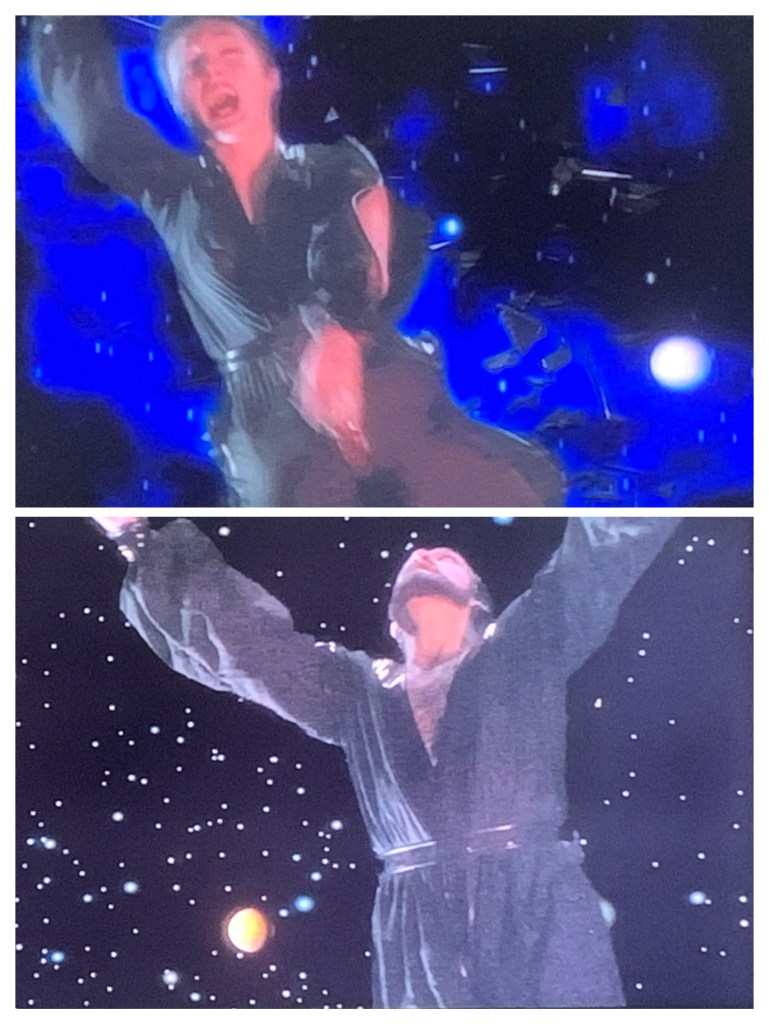
Here you can clearly make out the wire harnesses on the sides of Sarah Douglas’ and Jack O’Halloran’s costumes. This is especially noticeable against the budget-rate background plates, and it should have been corrected in post-production.
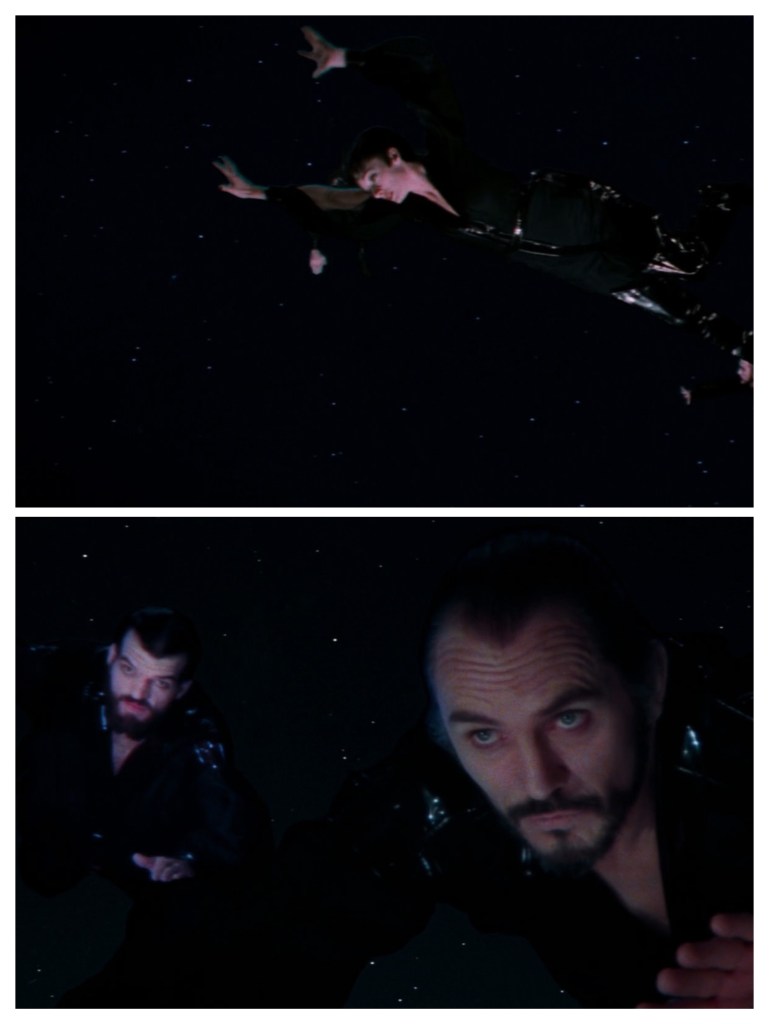
Now let’s analyze the matting of the villains against the outer space backgrounds. The original flying elements were shot in 1977, and with a better background plate the matting of the villains in space would have held up better. Instead, we have this…
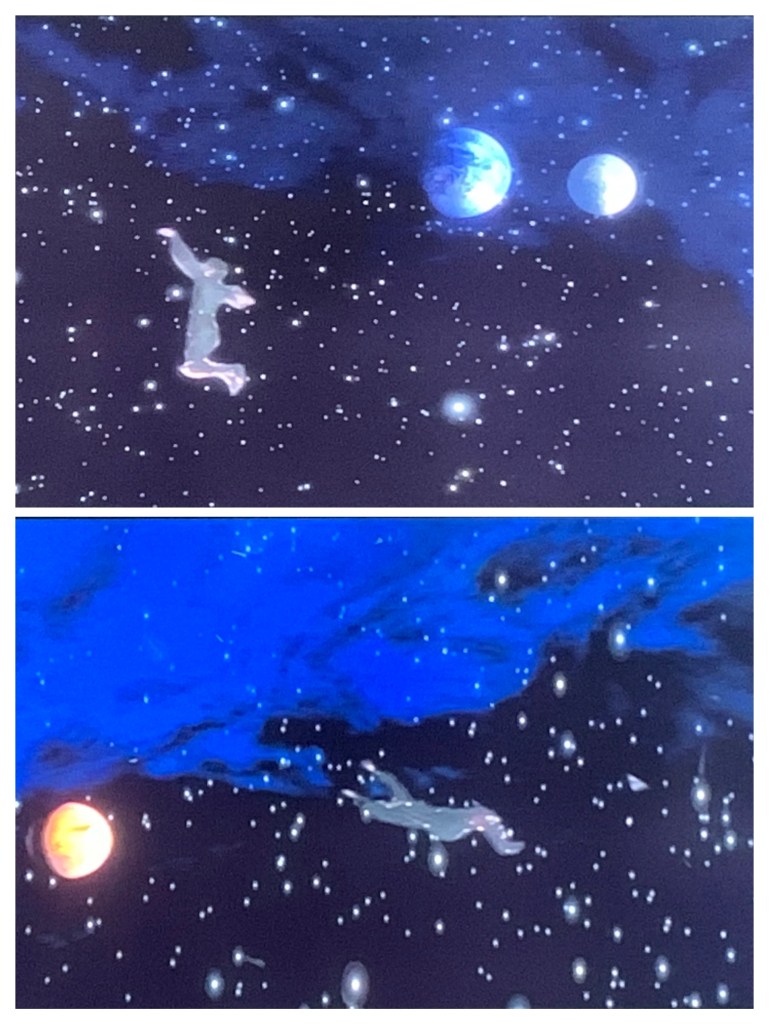
Again, when you compare it to the theatrical version, and you see the flying elements of the villains as they drift in space and start their descent to the moon, you can clearly see which version looks better.
Now let’s go further into the film and look at the key scene that ties both films together. When a powerless Superman returns to the Fortress of Solitude to find a way to get his powers restored, he finds the green crystal amid the wreckage of the crystalline console. Once he uses it, he triggers a final recording from his biological father Jor-El, and in an act of sacrifice he expends all of his energy in restoring Superman’s powers to him. It’s the most important scene of the sequel, but even here there are some visual flaws to it. Let’s look at them one at a time.
First of all, pay attention to the shot of Superman finding the green crystal in the wreckage.
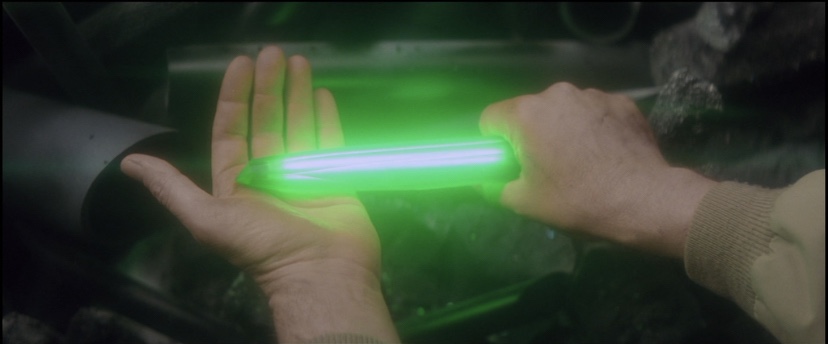
The footage was obviously shot with a digital camera, as opposed to the kind of camera used by Geoffrey Unsworth and camera operator Peter MacDonald back in 1977. There’s a certain crispness in the Unsworth footage, and while the insert shot looks good, it contains a certain haziness that differs from the rest of the footage, and it should have retained that same, or even similar, crispness that the original 1977 footage contains.
Now let’s look at a 20-second piece of footage of Jor-El counseling and admonishing his son for the decisions he made in sacrificing his powers in the name of love. Pay specific attention to the floating head as it is included in the sequence.
There are two particular shots that I want to focus on here. First, when Jor-El says, “…the crystal source from which our communication has begun,” and second, “…you did this of your own free will, in spite of all that I could say to dissuade you.” Pay specific attention to how the camera pushes in as Marlon Brando says these lines. In both of these instances, as the camera pushes in, the floating head of Jor-El remains stationary and unmoving, as opposed to the shot when he says, “You have made a dreadful mistake, Kal-El.” In that shot, we can clearly see his head correctly moving in as the camera moves in. This is particularly noticeable if you move your copy of the DVD or Blu-ray forward at 1.5x or 2x the normal running speed of the disc. The floating head element should have been caught and corrected in post-production. It’s a subtle element, to be sure, but even the most subtle things shouldn’t escape attention.
Now let’s look at another quick insert shot: the moment when Jor-El physically places his hand on Kal-El’s shoulder.
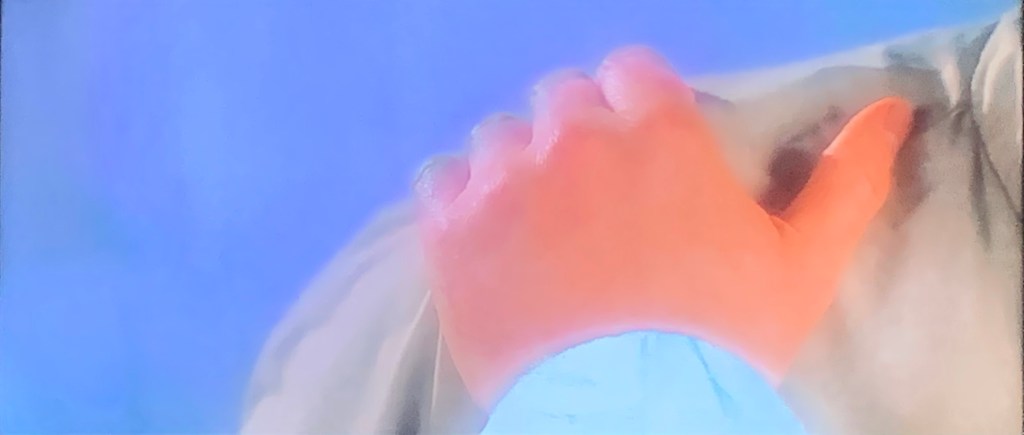
As with the earlier shot of finding the green crystal, this insert shot was filmed with a digital camera. The haziness of the shot does not exactly match the crispness of the Geoffrey Unsworth footage, as it appears too smooth.
Finally, there’s one more shot that I want to address. During the climax of the film, as Superman turns back time, one of the things that happens is that the villains are returned to the Phantom Zone (which, story wise, could have set up their return down the road). As with the shots from the start of the film, this involves matting of the actors, CGI animation for the Phantom Zone, lighting for the shots, and a budget-rate background for outer space. Lighting is particularly important to the overall success or failure of a scene, no matter how brief or how long, and in a shot like this the lighting is much brighter than with similar moments that appear in the theatrical release.
I know there certainly are more moments that I could address, but here we have enough to bring us to the question: what can be done to the Donner Cut to bring the film into alignment with the other Superman films for a proper 4K release?
There are certainly a number of answers to that question, but one answer that I want to address is a most important one: a proper restoration of the visual effects. This means a better composition of all of the elements for those scenes. This means recomposing Brando’s floating head so when the camera moves in, the floating head moves in as well in every shot. This means creating better background effects for all of the outer space scenes. This means correcting the markings on the rocket so they properly read XK-101 and not XK-10. This means digitally removing the wire harnesses from the actors. This means aging the insert shots and giving them more crispness to come into alignment with the 1977 Fortress footage. And so on.
More importantly, this requires facilitating a proper budget and proper time to make the necessary fixes, and make it right, so the film looks its very best for 4K release. The template for how a film of this nature can be properly upgraded, all of its visual effects redone, and remastered to 4K release, is last year’s release of Star Trek: The Motion Picture – The Director’s Edition. That is a perfect example of how to remaster a film and its visual effects to 4K quality, and do it right. Even the extended TV cut saw a glaring error from its 1983 broadcast corrected and properly updated, the long shot of Captain Kirk descending from the Enterprise. Look at the visual effects in these clips, and you’ll see the difference a proper remastering makes.
Superman II: The Richard Donner Cut deserves the same kind of treatment for its 4K release. Will we get it? That’s the big question. For now, all we can do is wait.
 Superman: The Blog