It came out of the blue on Monday, and it was something that I had not seen coming. But there it was on Facebook: my friend Jim Bowers had acquired what is certainly a pair of Holy Grail pieces for any collection – both of Mario Puzo’s original 1975 scripts for Superman!
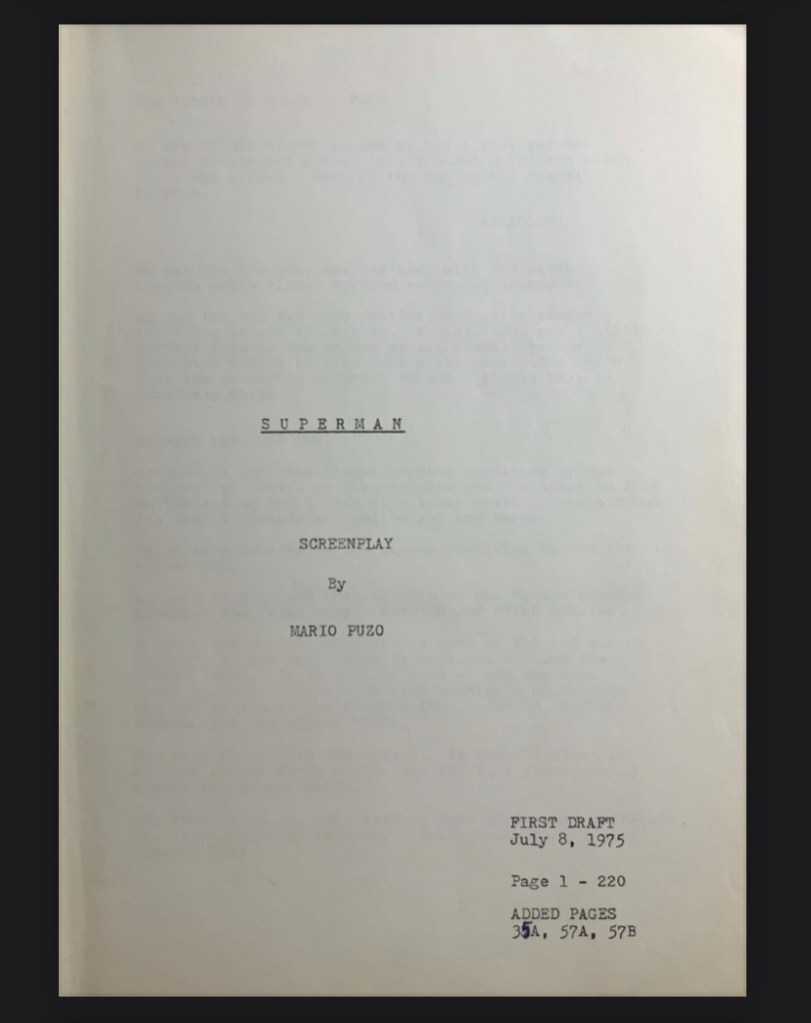
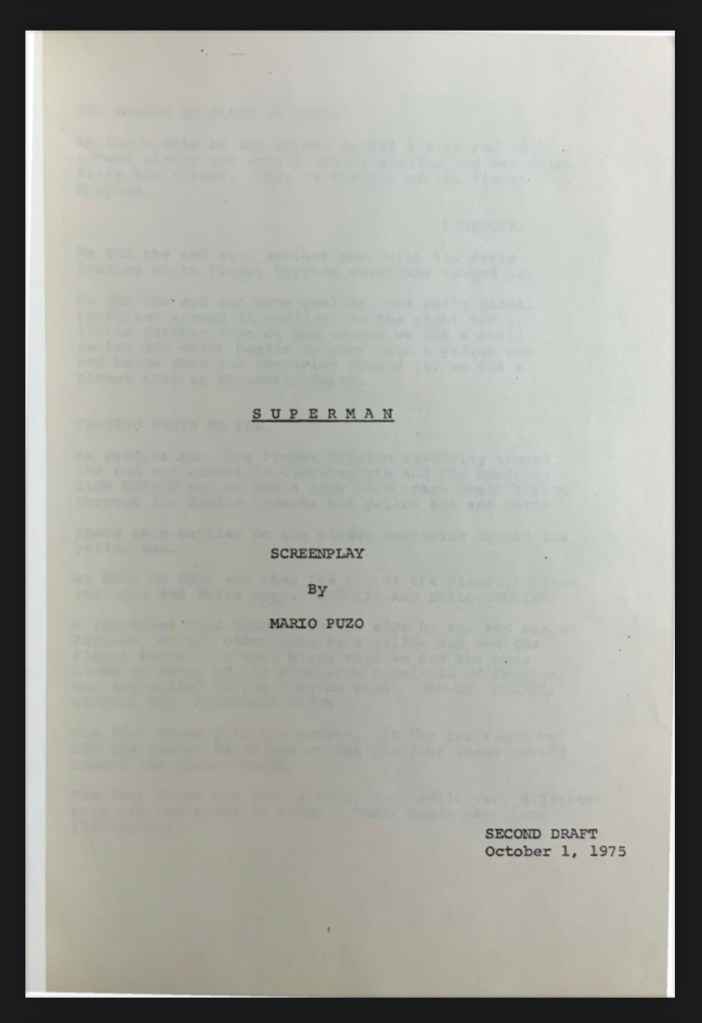
The scripts had almost become the stuff of legend. Puzo, the celebrated novelist and screenwriter of The Godfather and its sequel The Godfather Part II, had been chosen by Alexander and Ilya Salkind in the early part of 1975 to write the screenplay for their multimillion dollar production of Superman. This came after writers such as Leigh Brackett (The Empire Strikes Back) and Alfred Bester (who wrote for Superman and Green Lantern for DC Comics) were mentioned, and Exorcist screenwriter William Goldman had been interviewed but turned down the proposal.
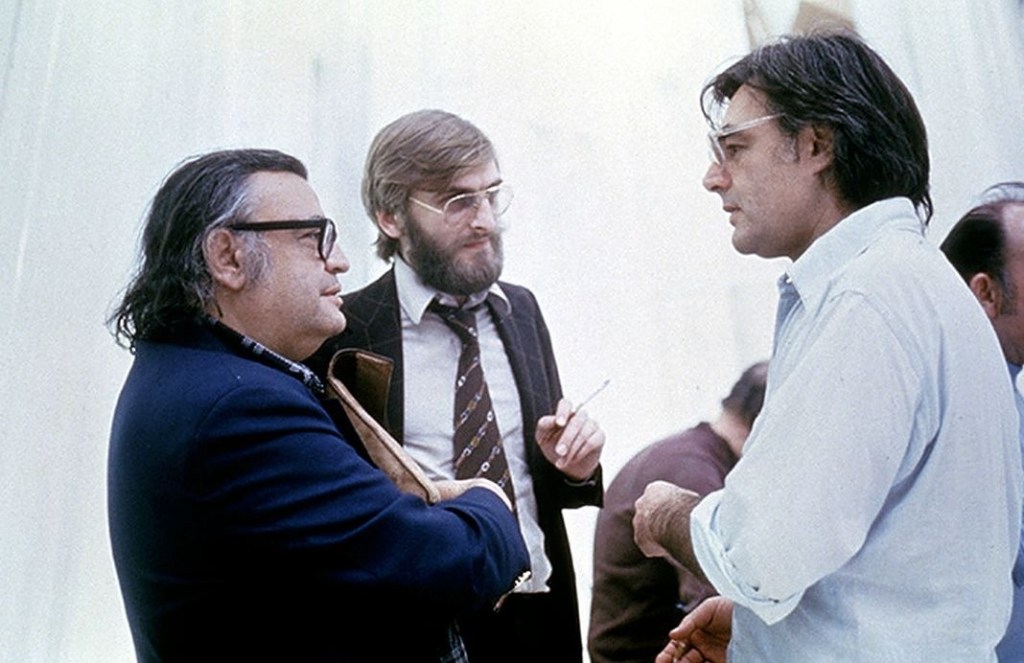
Then they turned to Mario Puzo. According to a re-enactment that was filmed for the recent Paramount+ series The Offer, the Salkinds had offered Puzo one million dollars to write the Superman screenplay.
In an interview for the 2006 documentary You Will Believe: The Cinematic Saga of Superman, Ilya Salkind recounted their meeting with Puzo. “Mario comes in, talks…slow, smoked big cigars. Italian, a bit,… and he says, ‘I like it.’” He later added, “That was a 500-page script. It was gigantic… and definitely two movies.”
DC Comics writer Elliot S. Maggin shared his recollections of meeting Puzo. “I came to the office one day and there’s Mario Puzo in the library looking through old Superman stories. So they introduced me to him,” Maggin said in the 2006 documentary Look! Up in the Sky – The Amazing Story of Superman. “Cary Bates, another writer and I spent two days sitting, smoking Havana cigars with Mario, in the conference room and talking about who Superman was. And his eyes started to shine, and he said, ‘Wow, this is a Greek tragedy.’”
Pierre Spengler added, “So the elements of Mario Puzo that stayed in the movies are the use of Krypton (and) the use of the Fortress of Solitude.”
But what exactly did Mario Puzo write in his Superman scripts, what elements of those scripts survived into the final films, and what elements did he write that did not make it beyond these early stages in 1975? What I will do in these blogs is break down the Puzo scripts, identify specific elements, compare and contrast them against their final film versions, and separate fact from legend.
Before going any further, I wish to point out that my analysis of the Mario Puzo scripts are my own thoughts and may differ from other people’s conclusions.
The first thing I want to focus on is the specific length of the scripts. According to Ilya Salkind, the length of the Puzo script was approximately 500 pages, enough material for two movies. When we look at the exact page count of the scripts, the first draft script dated July 8, 1975, totaled 220 pages in length. The second Puzo draft script, dated October 1, 1975, totaled 309 pages and expanded upon a number of elements from the previous draft. The combined length of both scripts totals 529 pages in all, so it is likely that this is where Ilya Salkind concluded that the Puzo script was around 500 pages long. Some details and memories do tend to get fuzzy over time, and that’s something that happens to all of us, and we cannot fault him for that assumption.
Now let’s turn our attention to the opening sequence on Krypton from the July 1975 script, as the first seventeen pages cover the opening credits, Jor-El and the Kryptonian council, and the events leading up to the planet’s destruction.
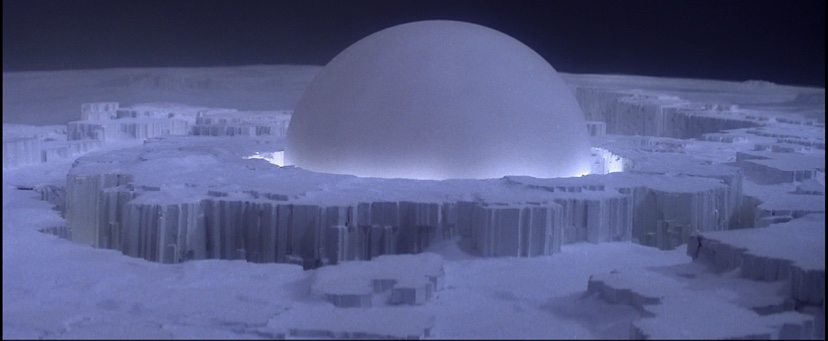
The opening credits as described by Puzo appears to be a montage of moments from the story itself – specifically, the planet Krypton itself, Kal-El’s starship as it approaches Earth, the images of four villains inside the Phantom Zone, the appearances of Superman and Lex Luthor, and the first detailed look of Krypton’s chief city. All of these moments are conveyed in the first two pages of the script and are revealed in quick bits and pieces, as if to reveal a summation of the events that will unfold in the story. This seems to be down and dirty, and it almost seems inconceivable to simultaneously cut between the main title credits and moments from the story itself. (Oddly enough, this summary approach would be utilized for the main title sequence of the theatrical version of Superman II in 1980-81. By then it seemed perfect, but for the beginning of the first film it wouldn’t have worked in my opinion.)
There is no trial of the villains, only a quick mention of their names: General Zod, Jax-Ur, Professor Vakox, and Kru-El. They are all described as having long flowing hair and in agony in the Phantom Zone. Of these four, Zod and Jax-Ur are taken from their appearances in the Superman comics, while Vakox and Kru-El are original characters created by Puzo. There is no reason why all four criminals have been exiled; they are already in the Phantom Zone at the start of the script. Only Zod will appear in later drafts and into the final film.
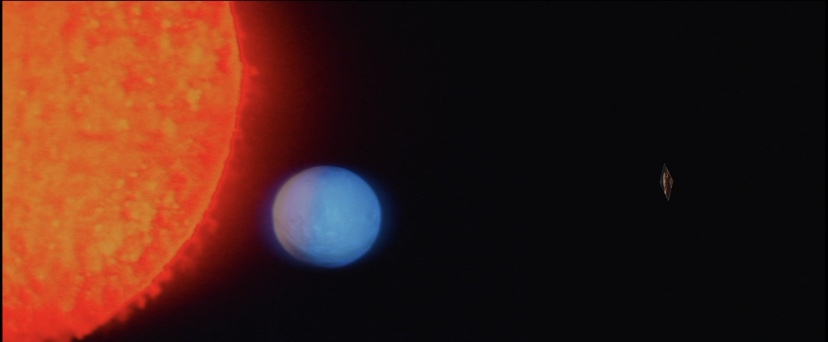
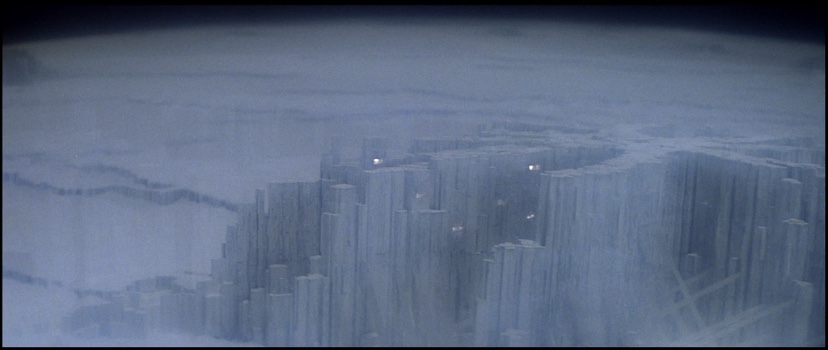
From there Puzo describes the capital city of Krypton as completely glass in nature. Everything is made of glass – the windows, the buildings, the lawns and gardens, the walkways, you name it. It’s from this early description that the planet itself would later evolve from glass into crystal both in the 1976 and 1977 script treatments and in the final films themselves, an element that continues to this day in later comics, television series, and films.
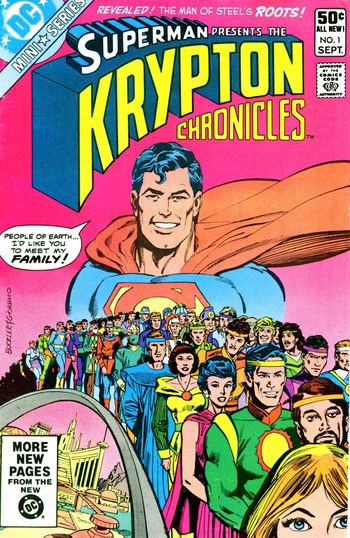
We are then given the scene of Jor-El’s discussion with the Kryptonian council about their planet’s impending destruction. As opposed to the glass nature of the planet, the description of the council is much more modern in today’s times, with computer banks and display consoles that might resemble something out of modern Star Trek films and series. Everyone is depicted as having blonde hair and fair complexions, each one wearing headbands and outfits similar to what Superman will wear on Earth. Part of these descriptions are taken from the Kryptonians’ looks in the comics of the 1970’s.
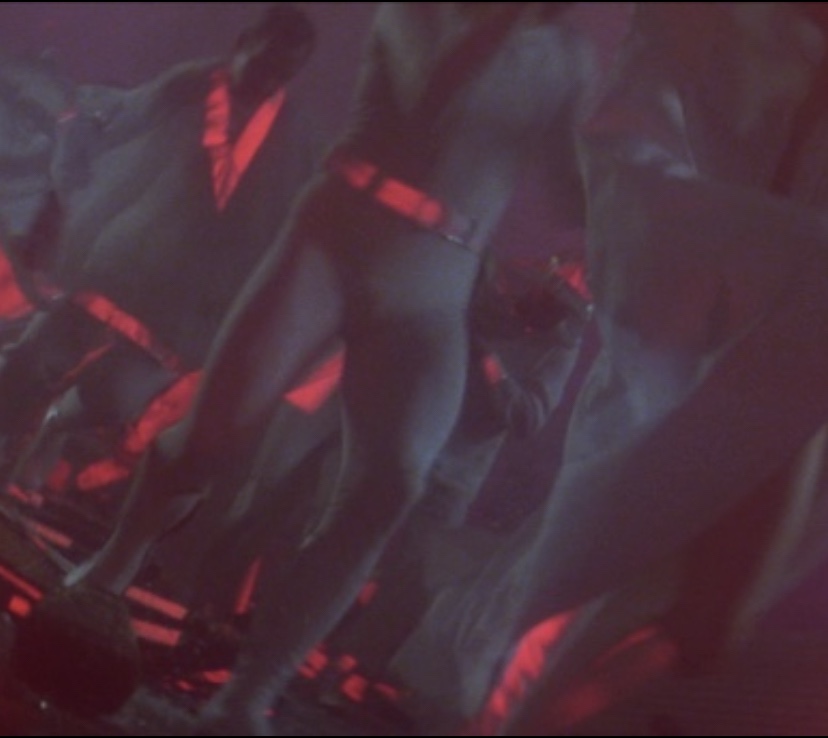
Over the next eight pages, the exchange between Jor-El and the council is almost similar to the final version, as three of the councilmen urge Jor-El not to pursue any mention of the planet’s impending destruction, considering any such talk as an act of insurrection and the punishment endless imprisonment in the Phantom Zone. One slight difference is the earlier mention that Krypton would explode in ninety days, and that giant arks to transport the planet’s citizens be completed within thirty days. Also, there is no Vond-Ah present in this early treatment. Otherwise, the general beat of the scene is fairly similar to what we would see in the final film.
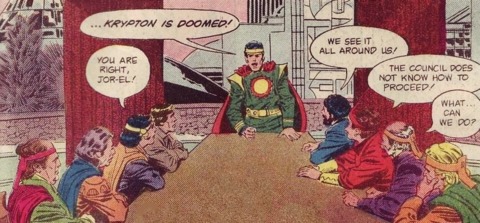
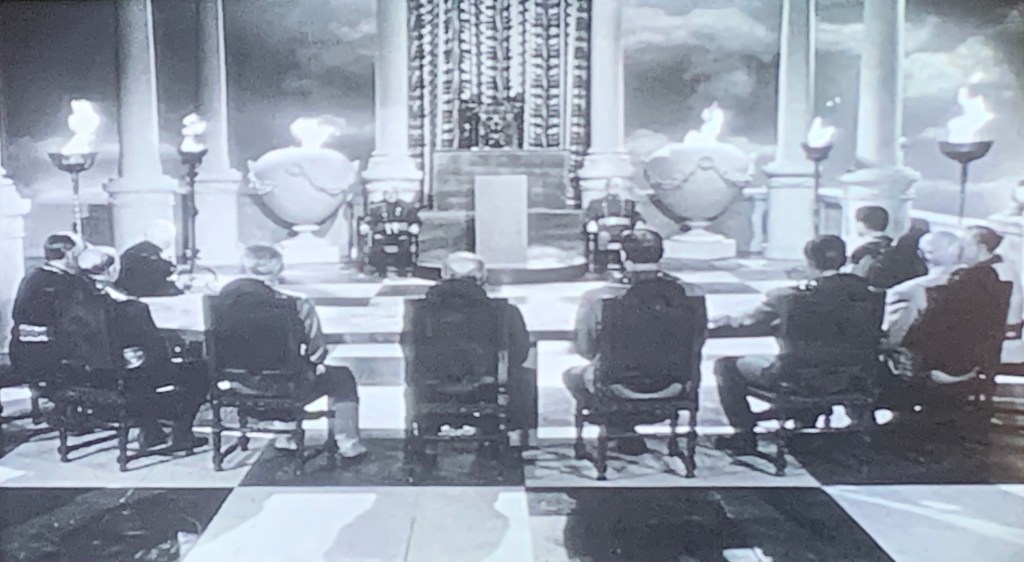
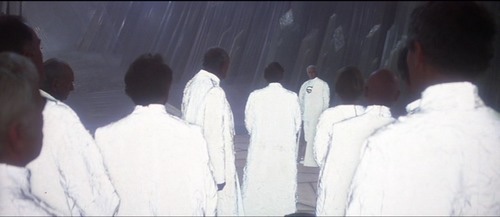
Before going further, there is one note that I wish to address. On page 3 of the script, Puzo states, “This sounds expensive but the city of Krypton will make at least four or five appearances through the film and justify its cost…” In looking at both the final film, the extended TV cut, and Superman II: The Richard Donner Cut, the capital city of Krypton appears a total of twenty different times altogether. Clearly, they got their money’s worth and more.
The next scene I wish to address is one that is referenced on pages 13 and 14 in the Puzo script and then finally in the 1982 extended TV cut and the 2001 special edition, of the council receiving the news that Jor-El is expending an excessive amount of energy and data to build a rocket for escaping from Krypton’s destruction. Here the council orders Jor-El to be arrested, and a team of police officers travel to Jor-El’s residence to arrest him. Once they arrive, all of the officers are killed from falling debris as a result of the earthquakes affecting the planet prior to its destruction. Except for differences in dialogue and execution, the scene as written here is remarkably similar to the final filmed version.
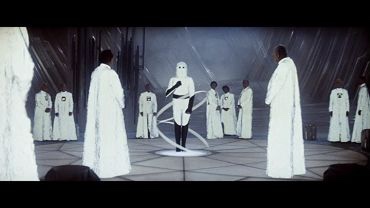
Now let’s look at the final moments involving Jor-El and Lara as they place their infant son Kal-El in the rocket ship, sending it out just before Krypton’s destruction. This is the climactic moment of the entire Krypton sequence, and as seen on pages 10-12 and 14-17 of the Puzo script it bears much similarity to the final version as well as some differences. As noted earlier, there are no references to crystals, but both Jor-El and Lara place a number of electronic information booklets, as Puzo calls them here, into the rocket. In addition, Jor-El places a number of blankets in the rocket, all of which contain either the Krypton emblem or the Superman emblem on them. This is the first time in this script that the Superman emblem is directly mentioned. However, there is no farewell speech from Jor-El in this first draft, and it would not appear in the script until later drafts.
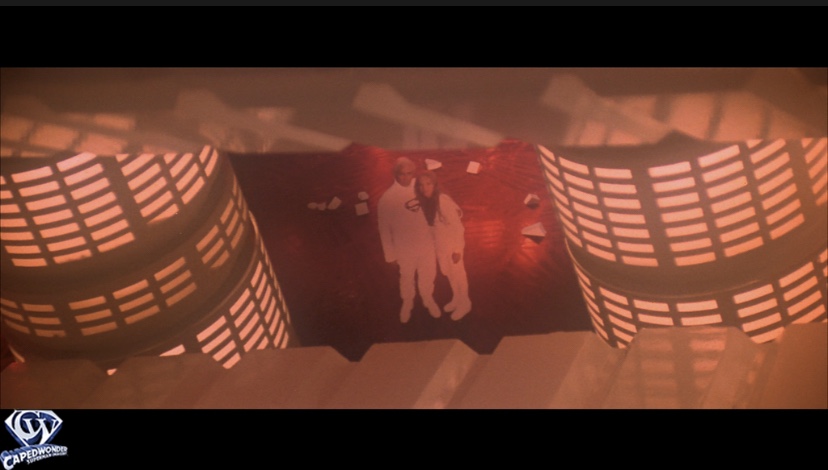
In conclusion, the opening moments on Krypton are fundamentally similar to what will appear in the final film.
I do have one thought that I wish to address as I bring this installment to a close. According to Puzo’s contract at the time, there was a reference which stated that if any version of his depiction of Krypton appeared in any medium other than the film—whether in comics, in print, or on television—he would receive a settlement from such depictions. While the Superboy series from 1988-92 would feature George Lazenby and Britt Eklund as Jor-El and Lara, bearing more than a passing resemblance to Marlon Brando and Susannah York, it would not be after Puzo’s death in 1999 that his depictions of Krypton would appear in further incarnations of the Superman franchise. This includes the crystalline version of the Fortress of Solitude beginning in the fifth season of Smallville in 2005, then in DC Comics’ flagship title Action Comics and in Superman in 2006. The earliest storyline I can recall is the “Last Son” saga written by Geoff Johns and Richard Donner and illustrated by Adam Kubert. A similar crystalline Fortress would also appear in the 2006 film Superman Returns. And I’m sure there are also other uses as well. Since all of these uses occurred after Puzo’s death, it’s a safe bet to say that the Puzo estate was content with its usage now.
Next time I’ll address the Smallville scenes and the Fortress of Solitude before leading in to the Metropolis portion of the script. All I can say is buckle up, because it gets busy from here!
(Some of the screenshots appearing in this blog are courtesy of CapedWonder.com.)
 Superman: The Blog