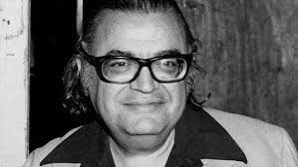
After the completion of the first draft script in July 1975, it becomes clear that Mario Puzo had laid a decent amount of the framework for the final versions of Superman and Superman II at this early stage. Every story has to start somewhere, and the story of the two Superman films begins with this essential first draft. In looking at the script, I would estimate that approximately thirty-five percent, possibly forty, of the Puzo script survived into the final films. This includes scenes, moments, bits of dialogue and action, essences of scenes, and more. Granted, I’m simply making a rough estimate at this point, and maybe I’m being a bit more generous here than I should be, because a lot would change between here and the Newman-Benton draft in 1976, the Tom Mankiewicz drafts in 1977, the Newmans’ 1979 rewrite of Superman II, and, of course, the final films.
But even with that much of Puzo’s initial story that survived in one form or another, so much more didn’t survive into the final films. For example, the Kryptonian villains of Jax-Ur, Professor Vakox, and Kru-El. The computerized nature of Krypton. A teenaged Clark Kent being a star athlete in high school. Superman’s cabin in the woods approach to the Fortress of Solitude. The characters of Morgan (Martin) Edge and Steve Trevor. Making Clark, Lois, and Jimmy TV reporters. Investigating petty crimes in Metropolis. Luthor Lux as a petty criminal at the start. The action scenes in Iran, the Army installation in Nevada, and Rome. The fantasy scene of Lois imagining she has the same powers as Superman. A powerless Clark getting beat up by three truck drivers. Superman using the same method of making the powerless villains forget that he had used on his friends. And more.
There’s a lot that needed to be either corrected or removed altogether, and while Puzo had a good start with this first draft, it just seemed incomplete and even inaccurate in places. The story needed to be fixed and corrected. No writer can get the final polished draft of anything completed in his or her first attempt. Plot holes needed to be filled in. Characters needed to be added or removed. Scenes needed to be added, clarified, changed, moved around from one place to another, rewritten, tightened, trimmed, you name it. This is simply the nature of writing, whether a novel, short story, stage play, TV episode, or feature film.
And that would lead to a second draft.
Puzo would then go back and rewrite the script for Superman immediately upon completion of the first draft, working for another three months until the second draft script was completed on October 1, 1975. If the first draft was massive at 220 pages, the second draft was even more massive, coming in at a whopping 309 pages.
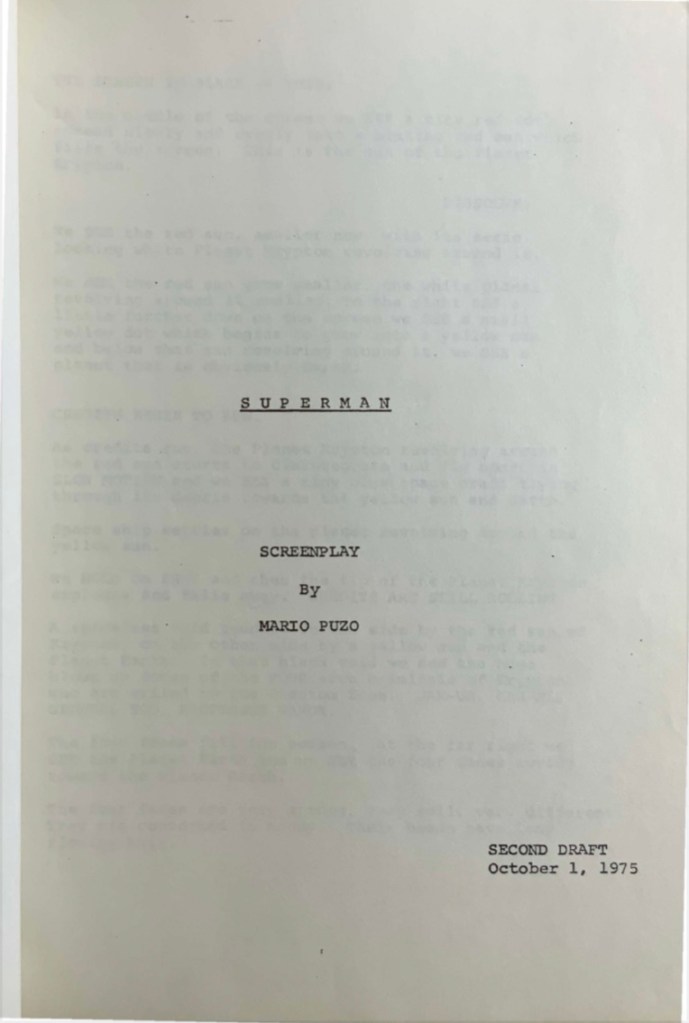
It is this second draft script that David Michael Petrou had access to as he was writing The Making of Superman: The Movie. According to Petrou, “The final shooting script of Superman incorporates most of Puzo’s initial story. There is considerable fascination in reading through the original and seeing what concepts did not make it.”
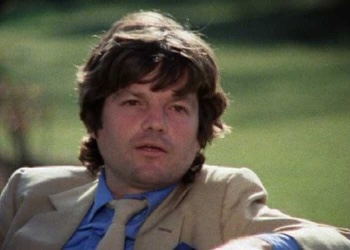
Petrou interviewed Ilya Salkind for the book, who offered up his own thoughts on the script. “It was an incredible script—an amazing achievement, really. The main problem, though, was the considerable length. It was over three hundred pages long—it would have made a six-hour movie! Quite honestly, it was more of a novel than a screenplay.”
As we begin moving into the second draft, we see that the opening moments are identical to the first draft script. Puzo drafted a mixture of the main title credits and moments from the entire story into the opening three or four minutes, focusing on the confrontation between Superman and the Phantom Zone villains, with Lex Luthor standing in the wings. This is one key correction that Puzo has made to this script, referring to the principal villain as Lex Luthor and not Luthor Lux. Perhaps Puzo caught this error after the script was completed, or perhaps someone brought it to his attention. Whatever the outcome, this is one fix that benefits the second draft.
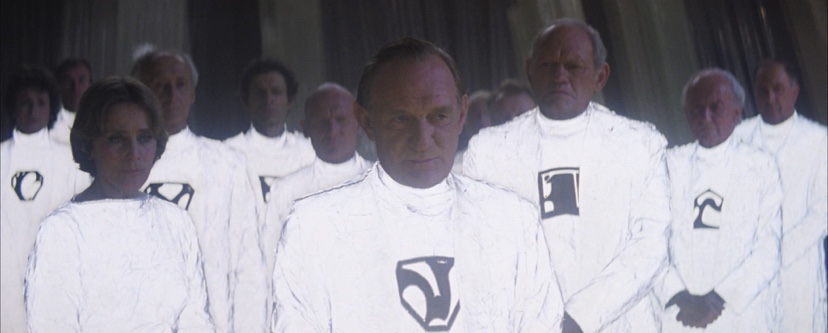
From there we move into the depiction of Krypton’s capital city and the science council. And it is here that Puzo makes a scene revision which Petrou references in his book. According to the script, “all the Elders of Krypton wear the futuristic letter ‘S’ on their clothes, as does Jor-El. There should be a huge futuristic letter ‘S’ design on the wall of the Council Chambers.”
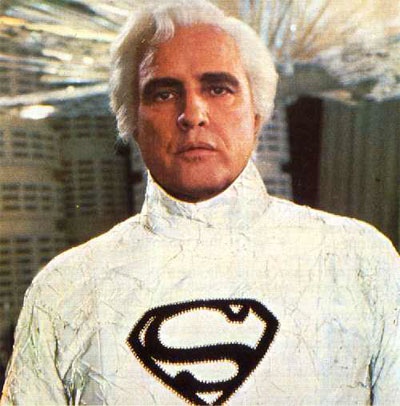
But there is another aspect to Jor-El that Puzo adds to the second draft that is quite intriguing. As he wrote, “Jor-El should be played by the same actor as Superman. Since he is Superman’s father this will seem natural. Also gives the star a chance to come into the film right away, rather than wait till we are half an hour into the film…. After Krypton explodes, the next time we see the star will be as Superman in the Fortress of Solitude.”
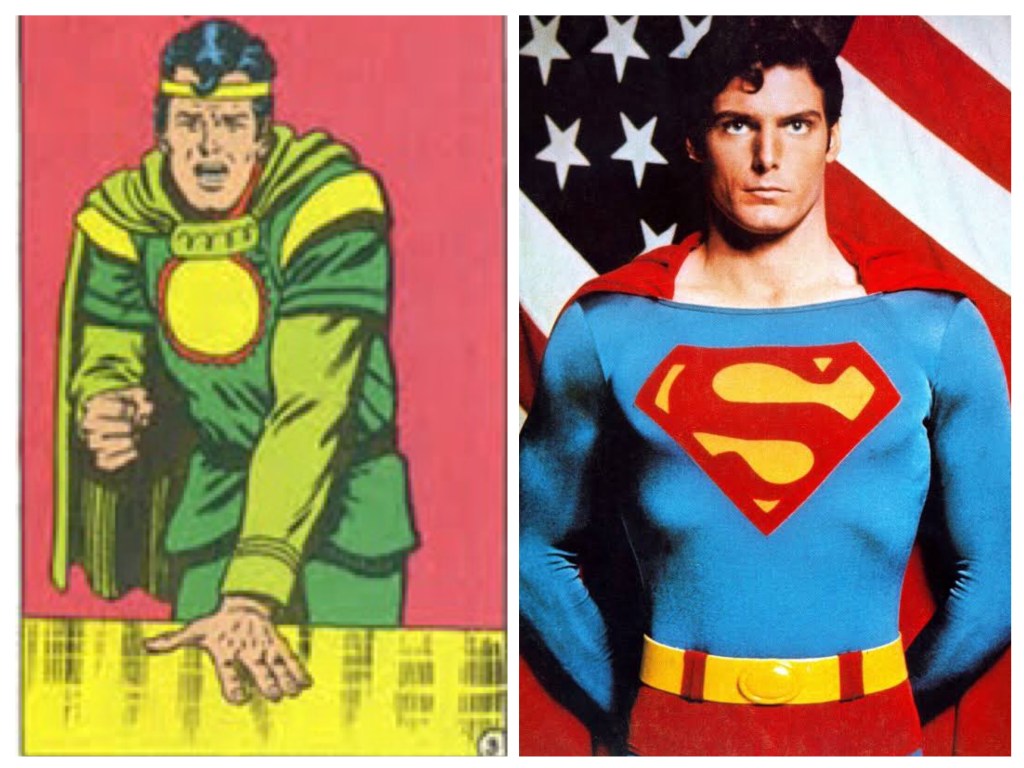
There is another note early on in this added script that Puzo makes. “Therefore, it follows that Superman as a young man in Smallsville (sp?) and when he leaves Smallsville will be played by another actor.” This is one script note that came true in the final version of the film.

Backing up a little bit, let’s look at Puzo’s note, “the next time we see the star will be as Superman in the Fortress of Solitude.” This is another note that came true in the final film as well.
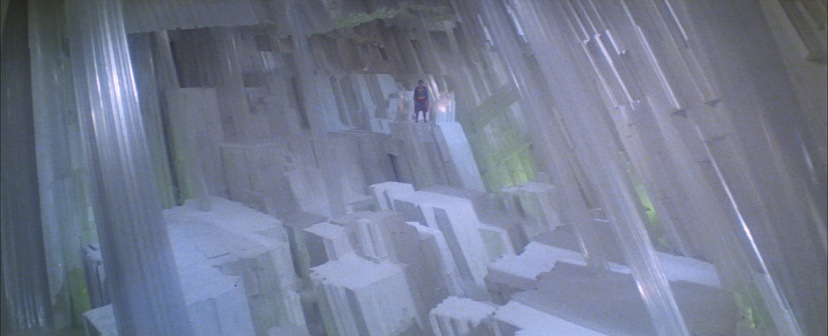
From there the second draft is virtually identical to the first draft where the Krypton sequences are concerned. A few things stand out: the First Elder’s judgment towards Jor-El is similar to what he says in the film: “If you persist, if you try to build spaceships, if you defy this Council, you will be treated as other rebels. You will be exiled to the Phantom Zone…”
From there we are given a new sequence of numerous civilians attempting to board one of Jor-El’s spaceships and leave Krypton. The police arrive and arrest the civilians, ordering them to stand down.
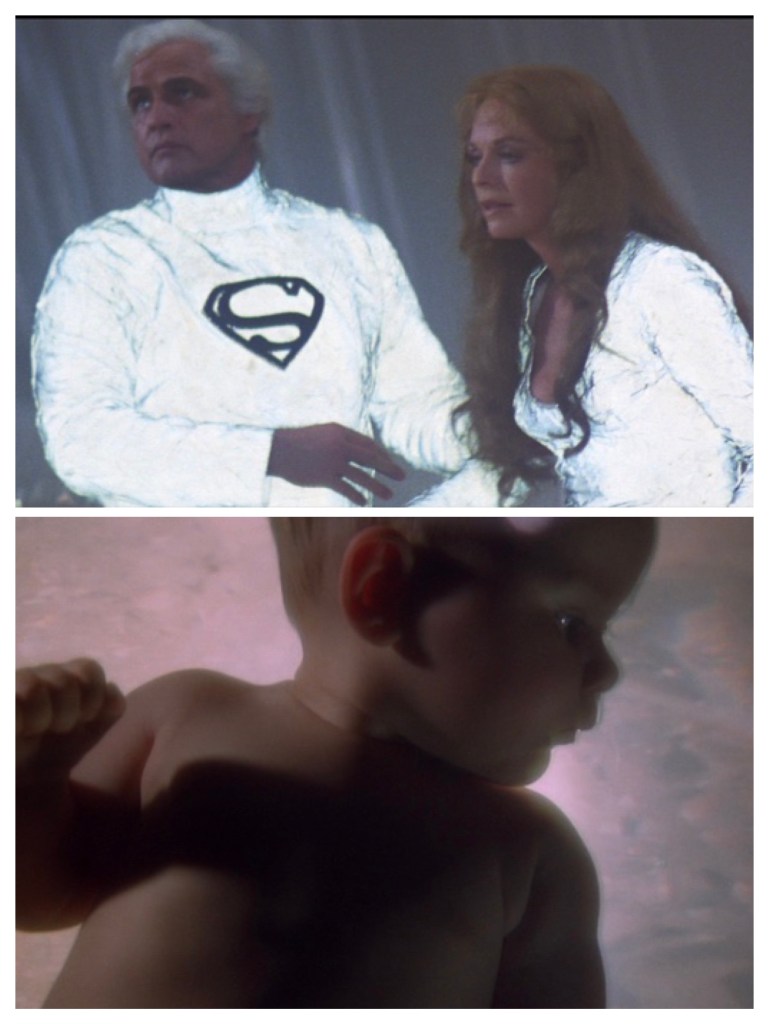
After the council’s decision towards Jor-El, Puzo embellishes on further descriptions of his home. Here we see that a futuristic looking S shield is inside his house, across the books, and “on the exterior of the spacecraft when it finally takes off.”

As Jor-El and Lara prepare the spaceship, he tells her something that will be revealed in the final film: “The trip to Earth will take three years. The computer will be wired to his head. For three years his brain will be educated as he sleeps.”
As the destruction of Krypton falls all around the planet’s inhabitants, we are given a written montage of moments as the people attempt to escape the destruction all around them. The following is taken from page 19 of the second draft script:
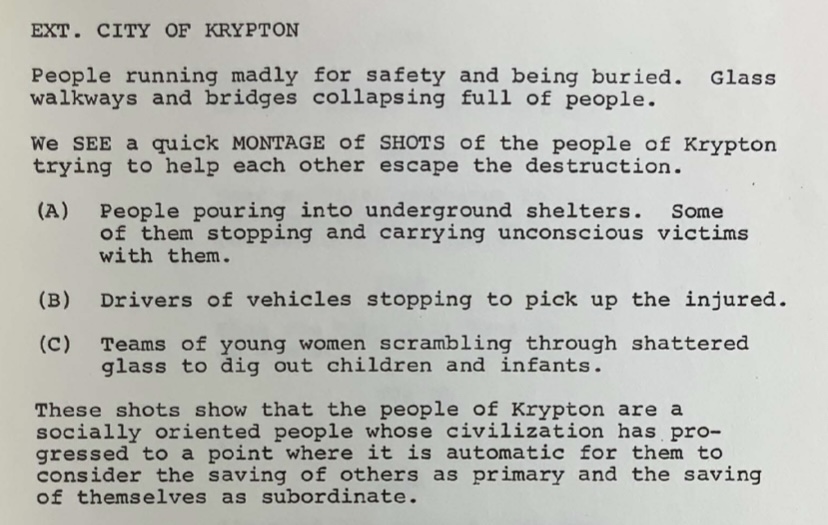
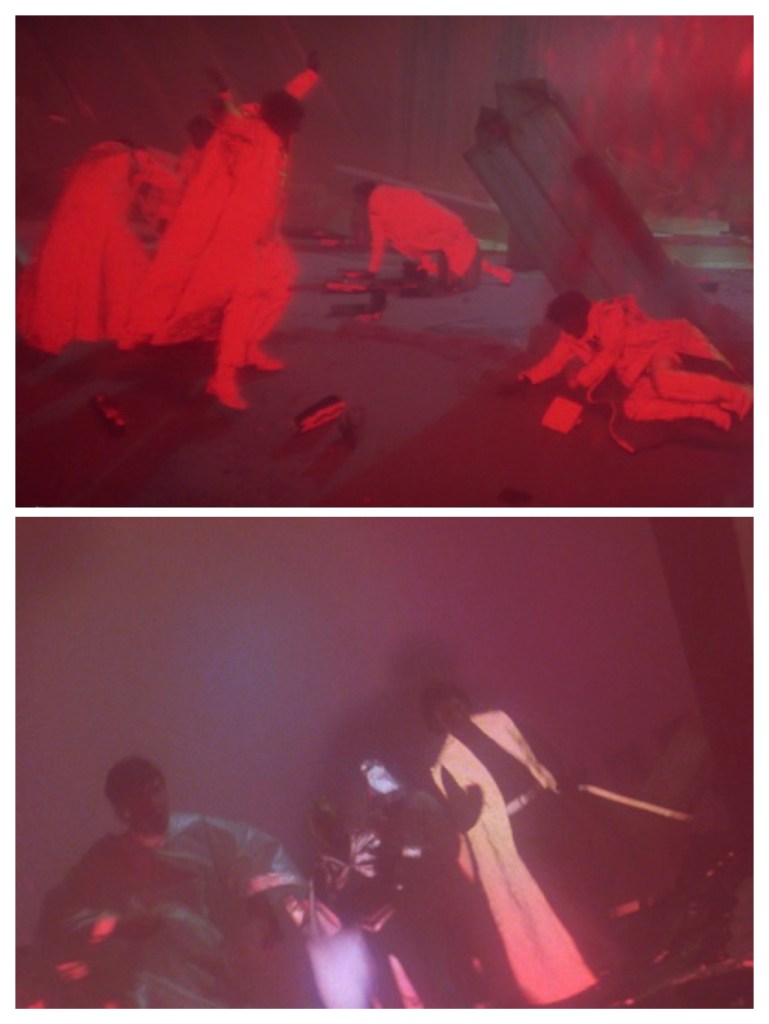
Details like these further prove Ilya Salkind’s statements true, that Puzo has begun to flesh out the script with background information about Krypton and its people, and that it reads more like a novel. We would have seen this in a montage similar to the shots in the film and its extended TV version of the people futilely attempting to escape the planet’s destruction.
Next time I will return to Smallville and the Fortress of Solitude for more insights into the second draft.
(Some of the screenshots in this blog are courtesy of CapedWonder.com.)
 Superman: The Blog