The month of May always brings about changes. The transition of weather from spring to the first hints of summer, graduations from high school and college, the start of the summer film season in theaters when those first big films that have been heavily awaited are released. Vacations planned or taken. The list goes on and on.
The Superman films had lots of activities occurring in the latter half of the month of May, so let’s take a look at a few of them over the years…
1977
As production on the first two Superman movies moved forward, filming had occurred at Shepperton Studios on all of the Krypton sequences and the Fortress of Solitude interior scenes. By the latter half of May 1977, filming was nearing an end at Shepperton, and the production crews were transitioning to Pinewood Studios, moving various departments to their new home over the month. But filming was still ongoing at this time on one critical sequence for Superman II.
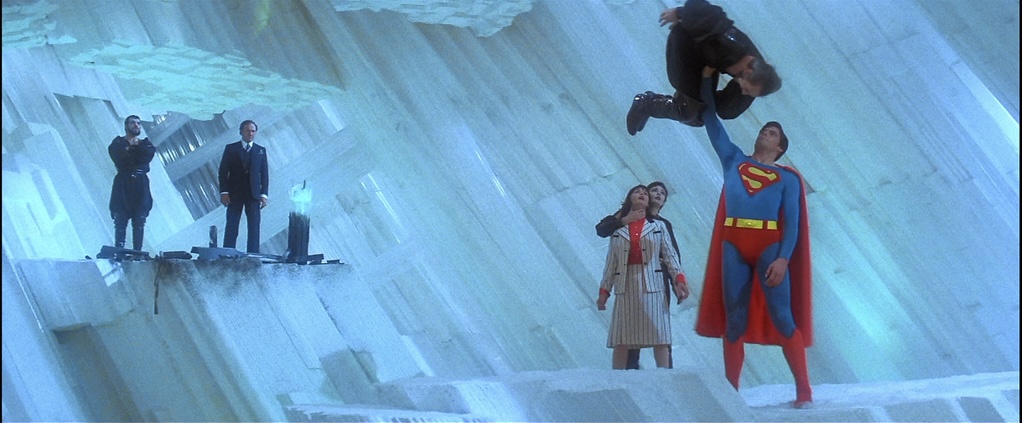
The final confrontation between the Man of Steel and the three villains from the Phantom Zone was one of the last major scenes filmed on M Stage at Shepperton before the production had fully shifted to Pinewood. The sequence called for wire work, stunt work, and carefully executed filming, with multiple takes of certain shots filmed from May 18-20 that year. About half of the sequence would make it into the final theatrical version of Superman II, while some trims and added pieces would later be included in the extended TV cut in 1984. (To this day we still await word from the Warner Archive of a complete Blu-ray release of the extended version.) The full version of the sequence would later be freshened up with alternate angles and the rest of the footage for inclusion in Superman II: The Richard Donner Cut in 2006. I personally prefer the version in the Donner Cut, as it has more psychological appeal to the verbal confrontation between Superman and General Zod.
But that would not be the final scene shot at Shepperton in May 1977.
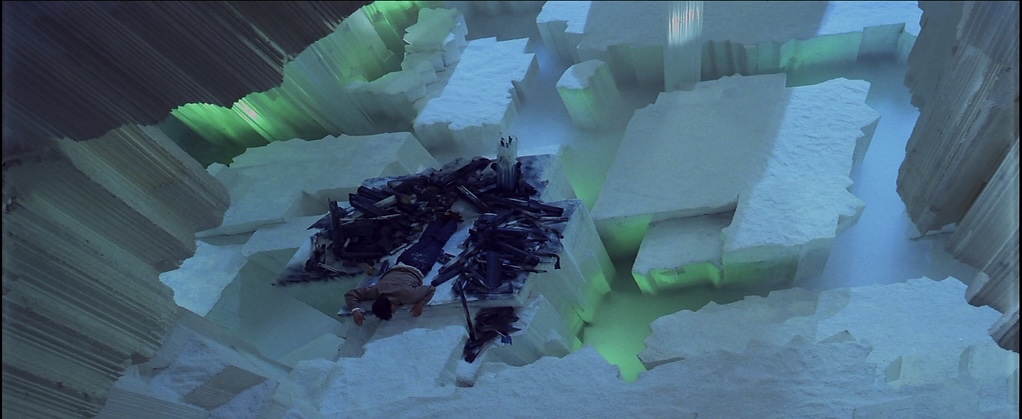
A few days later, on May 25th, Richard Donner would shoot some pickup shots of Christopher Reeve as an unconscious Clark Kent, having had his powers restored by the sacrifice of his father Jor-El, on the Fortress set. The rest of the scene had been shot the previous month, in April 1977, with Marlon Brando reading all of his lines against black velvet, followed by Brando and Reeve filming their portion together against a blue screen, followed by Reeve as a battered Clark Kent in the Fortress. All that remained were a few insert shots that were later done with Michael Thau’s hands in 2006 for the Donner Cut.
After that, the magnificent set of the Fortress interior was taken down, and the last of the crew and cast would make their way to Pinewood to continue work on the Superman films. Of course, other things across the pond were transpiring on the same day, as a little known film started making its way across US movie theaters, which had a certain influence on Superman and forever changed the way we viewed movies in the modern era. You know which one I’m talking about.
1978
By May 1978, filming on Superman II had been shelved and was due to resume production after the release of the first film. Shooting was nearly completed, and the Salkinds had flown yet another plane across the Cannes Film Festival announcing that principal photography on Superman was finished. But not by a long shot. There was the film’s ending that needed to be completed. Many of the film’s elaborate visual effects still needed to be finished. Insert shots, pickup filming, plate filming, editing, music, the list went on and on, all to get the film out for its theatrical release in December 1978. The race was on.
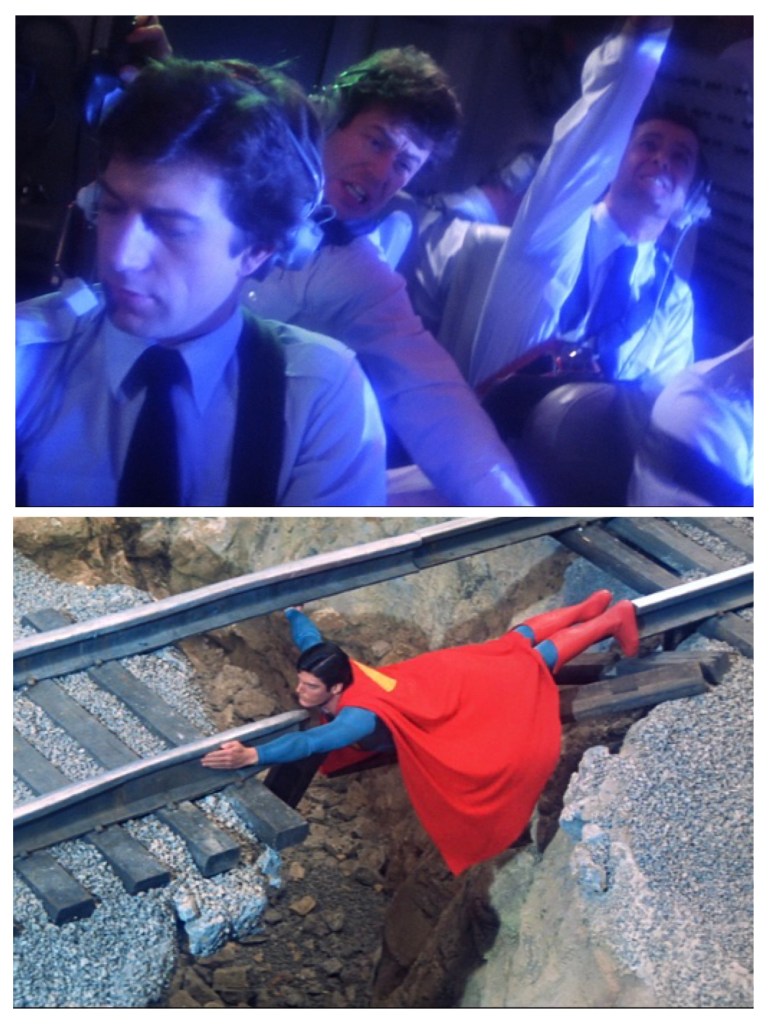
By the latter half of the month, Richard Donner had already filmed the interior portions of the Air Force One cockpit and the live action portions of Superman holding up the railing of the broken train tracks. (The background plate for the latter shot would be filmed a few months later.)
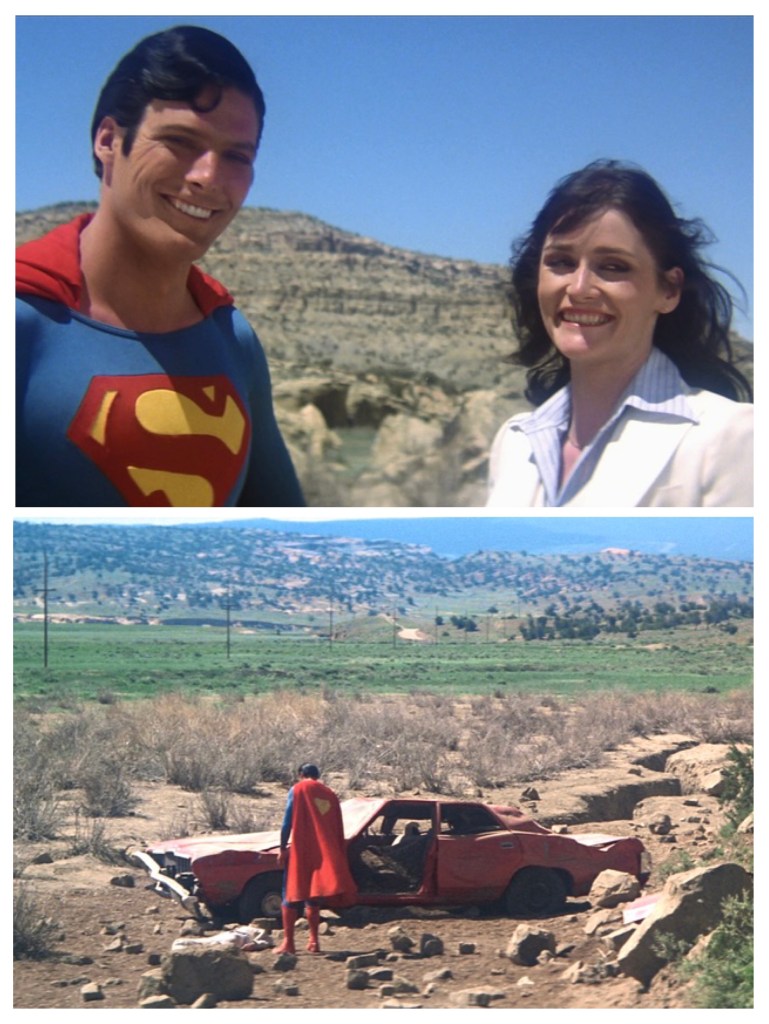
Now Donner was preparing to go out on location again, this time to Gallup, New Mexico for several spectacular shots that would comprise the film’s stunning climax. Months earlier, Tom Mankiewicz had rewritten the ending to the film to allow for the death of Lois Lane and for the most spectacular climax of the two films—Superman turning back time—to be moved to the end of the first film, thereby allowing an emotional payoff. Donner and Mankiewicz agreed that when they returned to work on Superman II, they would create a new ending for that film.
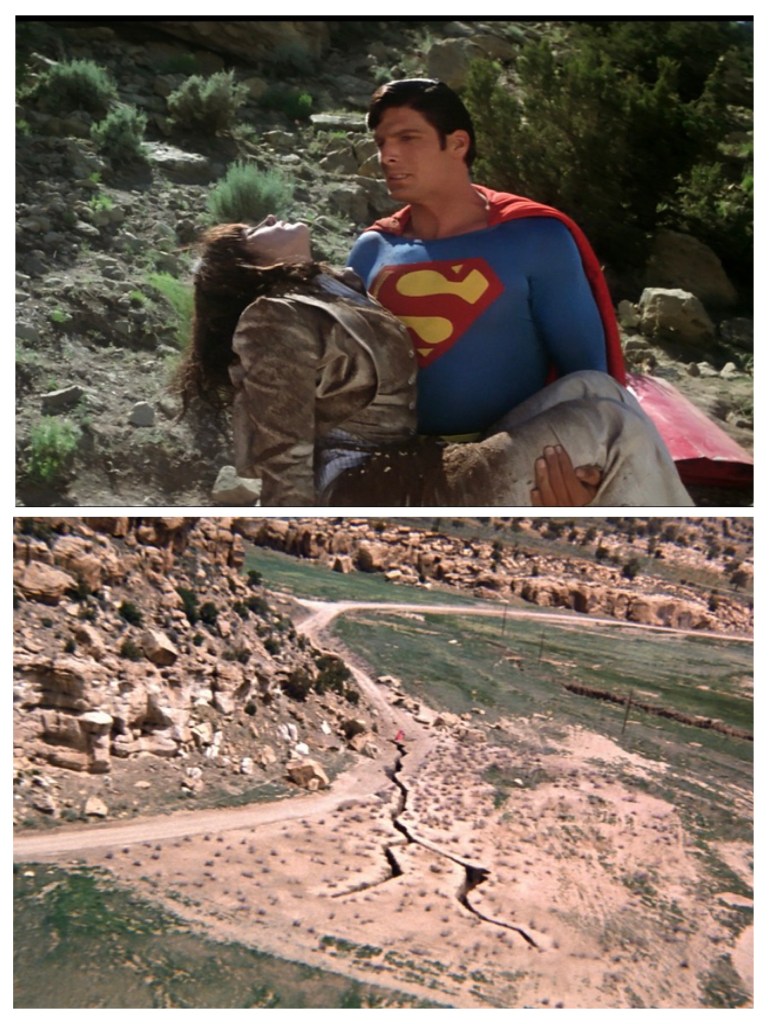
Donner, Christopher Reeve, Margot Kidder, Marc McClure, cameraman Robert Collins, still photographers Bob Penn and Curt Gunther, and a small team would travel to New Mexico for several days of on location filming for the ending, which further grounded the film in that sense of verisimilitude that Donner had strived for since he first entered the project. Today the location is known by fans as Superman Canyon.
1979
In May 1979, production had resumed on Superman II. The first film had proved to be a massive success, far beyond everyone’s expectations, and all of a sudden movie studios were like, “Get me one of those!” Which still further proves why Superman is the gold standard for the superhero film genre to this day.
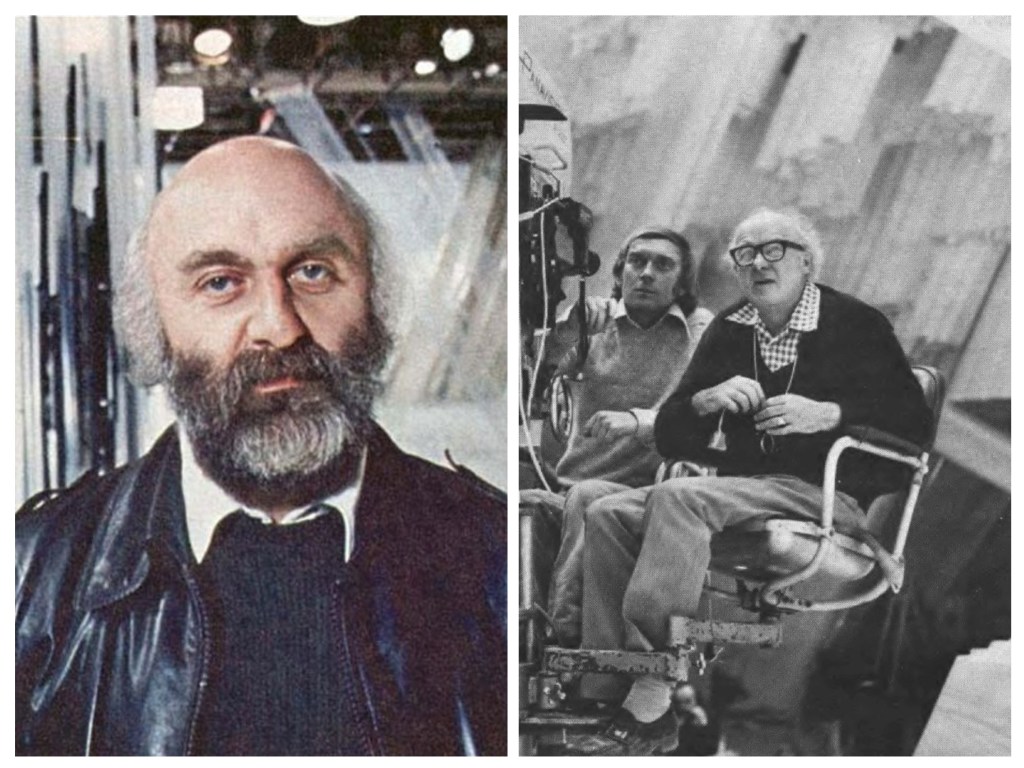
But things had changed. Richard Donner was out, and Richard Lester was now in the director’s chair. Tom Mankiewicz refused to return for the sequel, citing his friendship with and loyalty to Donner. Marlon Brando had sued the Salkinds for licensing issues, and he would be written out of the sequel. Gene Hackman had chosen not to return as well, citing his loyalty to Donner as well. The ripple effect of Donner’s firing had affected the entire production crew. In addition, cinematographer Geoffrey Unsworth had sadly passed away before the release of the first film, and by June 1, 1979 production designer John Barry would pass away from meningitis while working as a second unit director on The Empire Strikes Back. (To this day I wonder which clips of that film were Barry’s.) Richard Lester had the unenviable task of bringing in Peter Murton and Robert Paynter to fill those roles, and we have to give credit where it is due, they had huge shoes to fill, and part of the success of Superman II is due to their work.
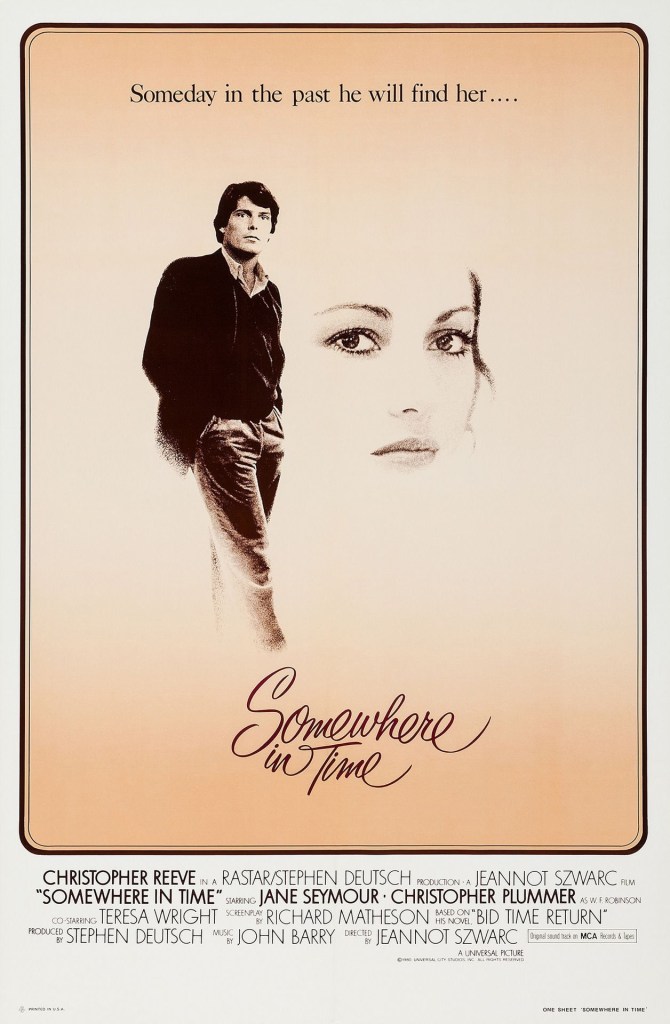
By this time David and Leslie Newman had submitted a revised outline for the script, which incorporated portions of the Mankiewicz script that were needed along with new material, and stunt coordinator Paul Weston began to sketch out ideas for the various flying sequences that would occur in the film, particularly the battle scenes in Metropolis. And Christopher Reeve had traveled to Mackinac Island, Michigan, to begin six weeks of filming his next film, a low budget romantic period piece that would become the timeless classic Somewhere in Time, before returning to work on Superman II.
It would take several months through 1979 and into the first quarter of 1980 to bring the film to completion, and to this day fans and critics are divided between the different uneven styles of direction. And now with both versions of the film ready for viewing—four, if you count the extended TV cut and the longer 122-minute version of the Donner Cut on Amazon Prime—the debate is one that continues to draw comparisons and contrasts to this day.
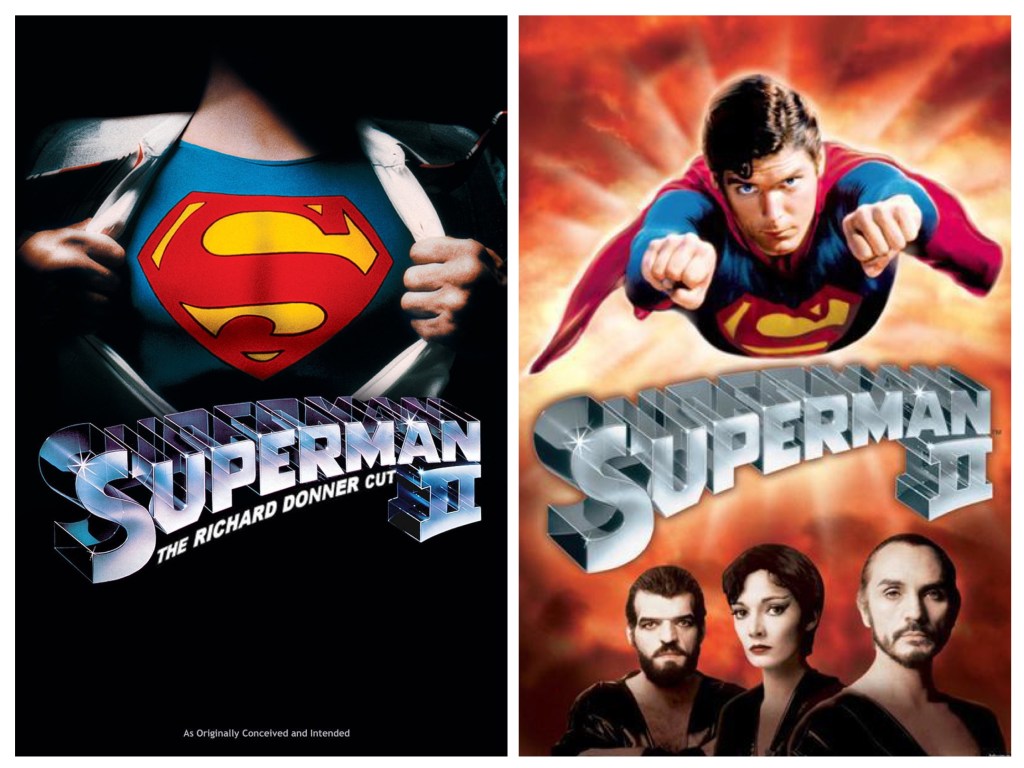
Three years into the life of filming on the two Superman movies. How time flies by indeed. And this is just a small sample.
 Superman: The Blog
One response to “In the Very Merry Month of May…”
Well researched and intriguing details for this newbie!
LikeLike