
With the release of the latest issue of the Superman ‘78: The Silver Curtain, it’s got me thinking about another popular comic book series that took its inspiration from the Christopher Reeve films in ways both heartfelt and even subtle.
I picked up the trade paperback of the landmark DC Comics graphic novel Kingdom Come for my birthday last year. This highly popular and acclaimed four-part 1996 series, written by Mark Waid and lavishly painted by Alex Ross, translates the Book of Revelation into the comics medium and sets it in a possible future where super powered beings run amok across the Earth, and it takes bringing the big three—Superman, Batman, and Wonder Woman—out of retirement for one final battle that will determine the fate of the planet.
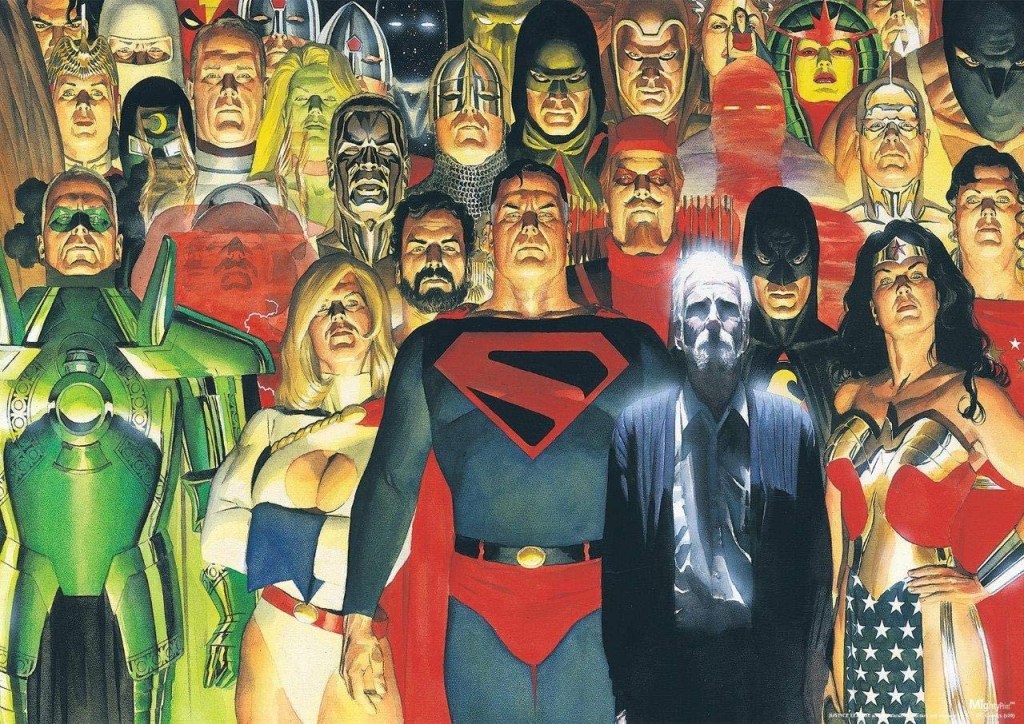
At the heart of the tale is Norman McCay, an elderly widowed minister clearly inspired by Ross’ own father, the Reverend Clark Norman Ross, who must bear witness to all of the calamity, and who is tasked with making the judgment of who is at fault for all that has gone wrong in the world. McKay sees the world unravel and eventually warns the heroes of the horror that is about to come, quoting from Revelation as his warning. Ultimately, Norman McCay must convince Superman to, as he puts it in one seminal moment, “make the right choice, and make it as a man.” But even as the forces for good prepare for a super-powered Armageddon, so do a collective of the world’s greatest supervillains led by Lex Luthor, who has an ace up his sleeve and a mole in his midst.
Of course, it goes without saying that Ross’ take on the Man of Steel was clearly inspired by Reeve. In an interview on the Smallville second season DVD in 2003, Ross offered up his thoughts about how Reeve’s casting and portrayal would inspire his artwork:
“Christopher Reeve’s casting in the Superman film is such a pivotal point in comic history as well as film history in that such an appropriate actor was put into the suit of a fictional character, that he really electrified the legend of the character even more by his attractiveness as a male model type of guy, but his clarity of performance, the physicality of course he brought to it, and then of course he’s the first guy actually playing two separate people in these roles. (He) tried to make it convincing that you could be mistaken as to knowing Clark Kent and not thinking that’s the same guy, and he pulled it off.”

And Alex Ross’ success is well deserved indeed. His photo realism throughout his comics and covers have brought him numerous awards in the comics industry, putting him on a level comparable to the great Norman Rockwell and his decades of artwork for the Saturday Evening Post.
If you were to sit down with a copy of Kingdom Come, you would find a world rich in detail and inside jokes and references to the history of DC Comics and its many decades of film, television, and animation. And there’s lots of them indeed! Not to mention Ross’ tip of the hat to DC Comics’ creators, his own mother and artist Lynnette Ross (who makes two appearances throughout the tale), Carroll O’Conner, Linda Hamilton, the elderly couple from Grant Wood’s American Gothic, Fat Albert and the Cosby Kids, Bjork, and the Beatles. Look very carefully and you’ll find references to Sgt. Pepper’s Lonely Hearts Club Band and even a character called Nowhere Man in the story!

When the series was first released, it came out in four 48-page volumes originally published under the Elseworlds banner. Later collections would see the entire series published in one book and expanded by twelve pages, with a four-page sequence of Superman on the planet Apokolips in the second chapter and an eight-page epilogue in which Ross would unleash a plethora of Easter eggs left and right. This would be followed by a trading card series from Skybox that included six pieces of exclusive artwork along with panels from the story, as well as a novelization of the series. Later volumes would be expanded to feature original covers, sketches, character descriptions, essays about the series, a three-page takeoff of the series, and original story and script treatments for the first issue. That’s how big this story has taken off and taken a life of its own, rightfully earning five Eisner and Harvey awards in the comics industry.
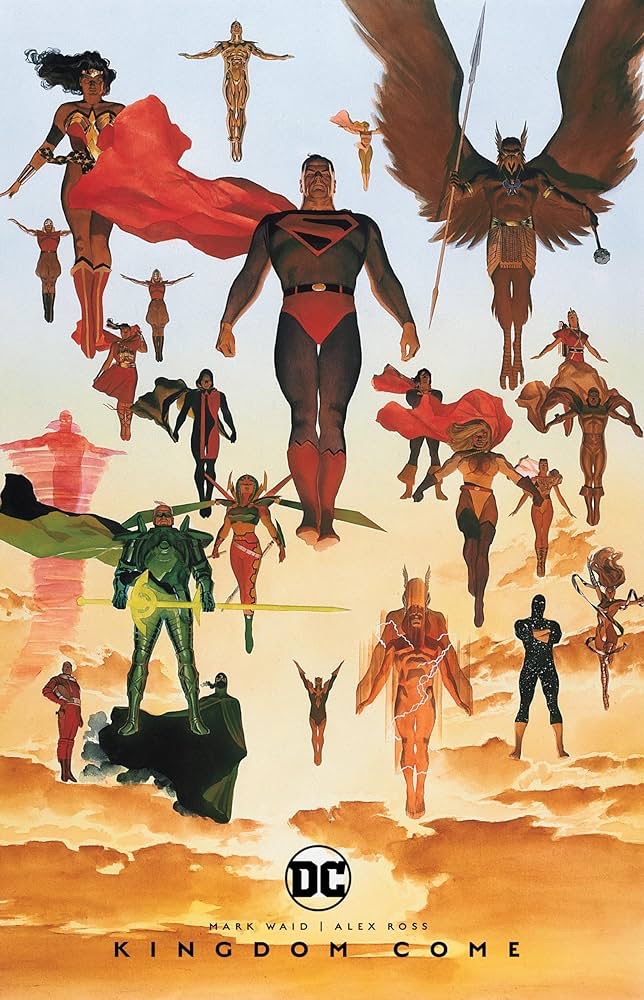
So where can the Superman film references be found in Kingdom Come? Let’s find out, shall we?
First, we have a very fitting tribute to Christopher Reeve at the start of the volume. While it wasn’t at the beginning of the original first issue, all collections since then have included this simple tribute at the start.

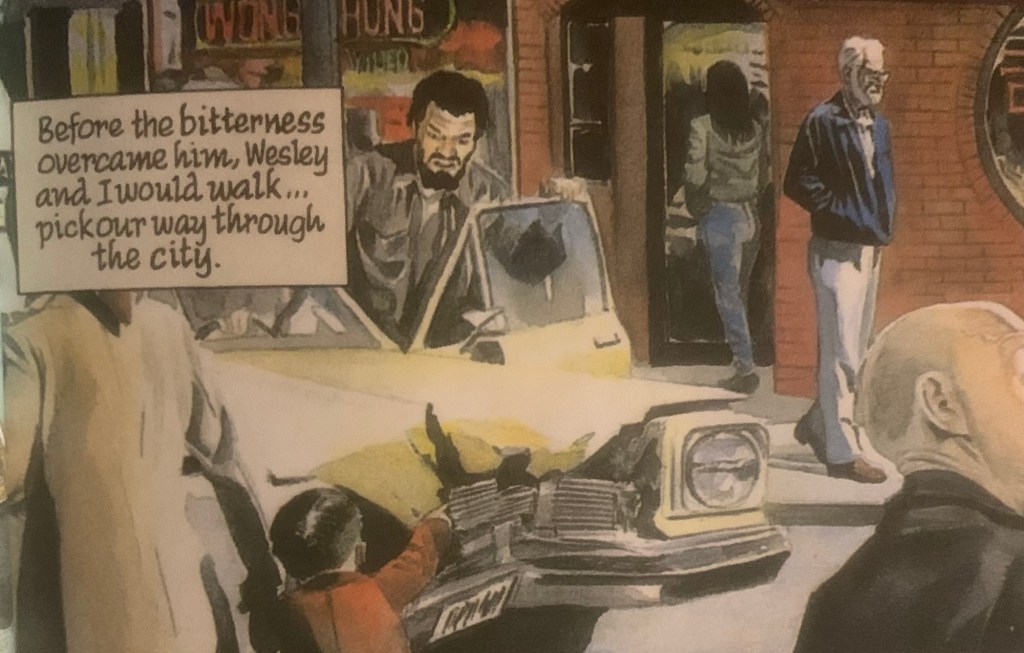
Next up we have a two-for-one special that occurs very early in the first chapter. As Norman McCay walks along the streets of Metropolis, he passes by a wrecked taxi, and its driver looks fit to be tied. Does that taxi driver look familiar? He should… it’s none other than Jack O’Halloran, best known as Non from the first two Superman films! And that wrecked taxi is clearly inspired by its run-in with a certain mild-mannered reporter. I guess Non eventually made his way into society without his powers after all!
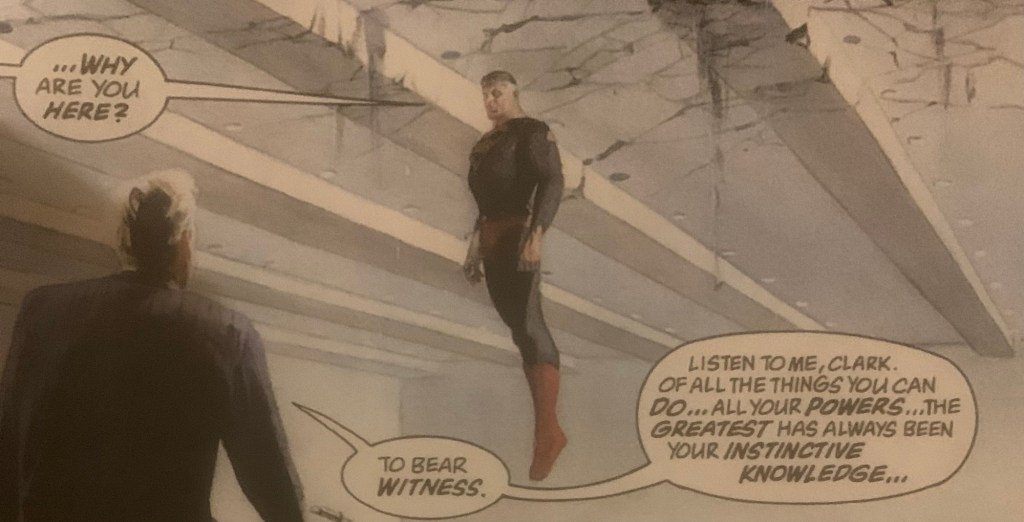
Towards the end of the story, once the war is over, Norman McCay confronts Superman once again at the United Nations building (which looks suspiciously like the Hall of Justice from the Super Friends animated series). He explains to the Man of Steel what needs to be done next. And his very words are a throwback to an iconic moment in Superman: The Movie when a young and broken-hearted Clark Kent stands at his adopted father’s grave:
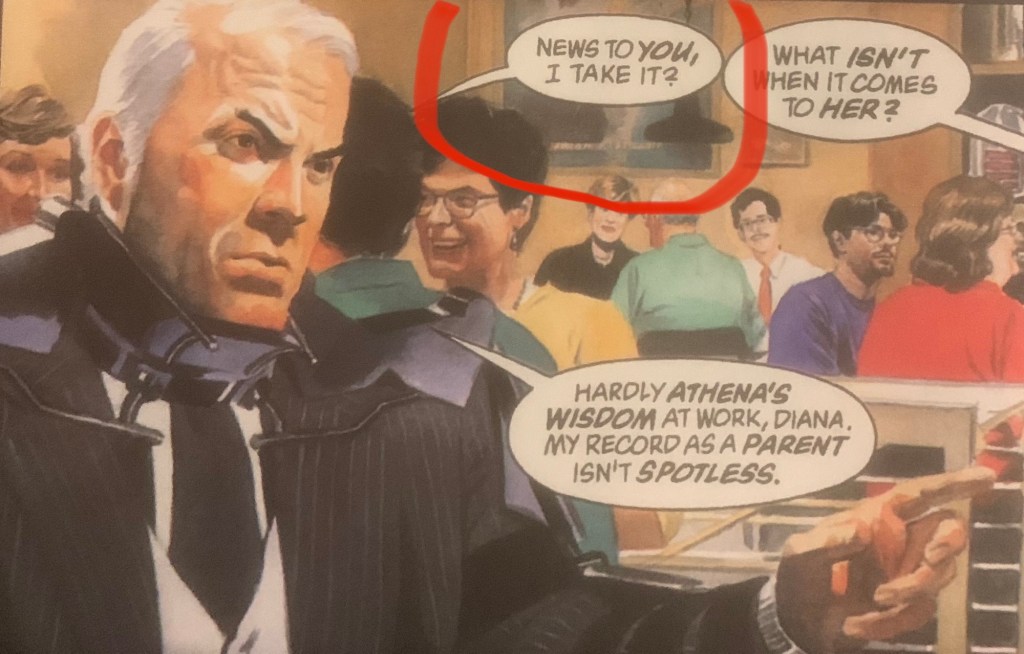
The final inside joke comes at the end of the story in the epilogue, which takes place one year later. Here, Clark Kent and Princess Diana meet Bruce Wayne in the clearly inspired restaurant Planet Krypton to catch up and share some news. It’s in this epilogue that Alex Ross clearly lets everything hang out, with dozens of cameos and inside jokes left and right across the eight pages. He even managed to work himself into the story as an angry long-haired guy pointing his finger at several people!
But buried in the background of the epilogue is another reference to the Superman films, and unless you have really good super peepers, or if you looked at the list of references in the epilogue, much less the entire book, you’ll notice part of a certain film poster cleverly worked into the story.
These references are prime examples of the films’ influences on Alex Ross and one of the most seminal stories of the 1990’s. It’s a must own for any movie and comic book fan.
 Superman: The Blog