-
Back on the Big Screen Again!
Thomas Wolfe once wrote, “You can’t go home again.” Or can you?
The first time I saw Superman on the big screen was on its opening night on December 15, 1978, at the then-brand new Metrocenter Cinema 4 in my hometown of Jackson, Mississippi. I was all of twelve years old when I went with my parents. The crowds that night were crazy long. We had tried to get tickets for the 7:00 showing, but it was all sold out, and we had no choice but to wait until the next showing, which was around 10:00 that night, I would say. My mom had asked the theater manager to give her a print of the theatrical one-sheet poster to give to me, but he wouldn’t let her have it. And that’s a story for another time. I wound up seeing it at least five times at the Metrocenter Cinema 4 alone. And then I would see it in second-run showings at other theaters in Jackson through the first half of 1979, for at least ten or twelve showings altogether.
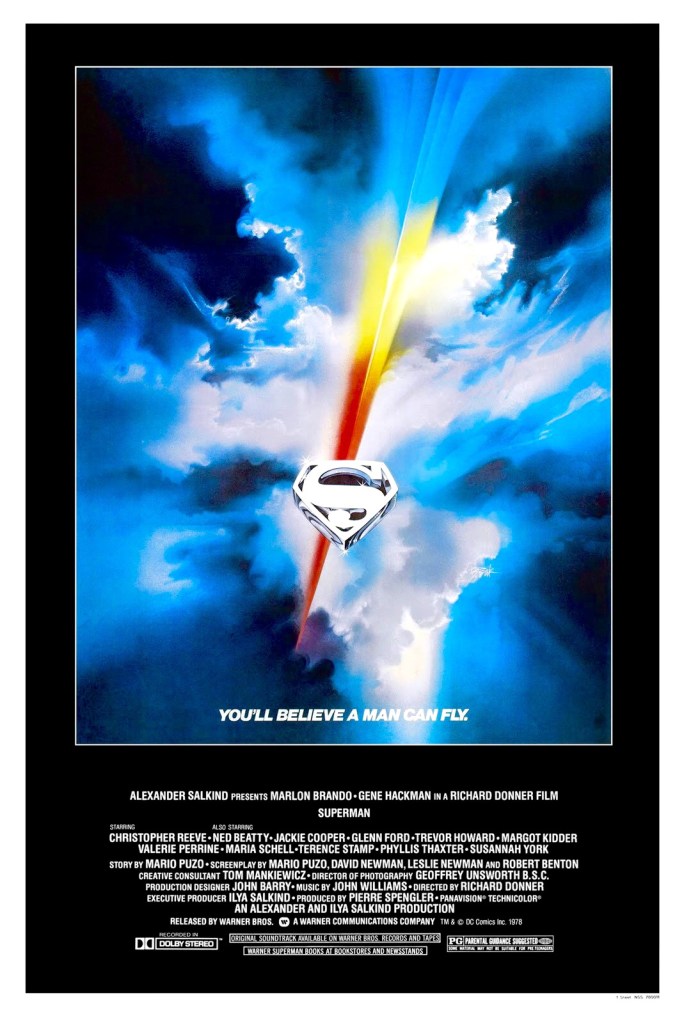
Over the years that followed, there would be three more films. There was that first VHS release, sped up, poorly panned and scanned, edited, and cut to fit all in one tape. I spent $70 at Camelot Music in Jackson buying that tape. It would be another four years before we had our first VCR – talk about buying the cart before the horse! But I didn’t care. It was Superman, and that’s all that mattered. There was the HBO broadcast in October 1980 – if anyone out there has a recording of that broadcast, please let me know. There was the extended TV cut on ABC in 1982 – the excitement of more footage! There would be the laserdisc, more VHS releases to follow, the KCOP broadcast in May 1994 with the longest known cut of the film shown on TV at that time.
Then there was Christopher Reeve’s tragic accident in May 1995, and for a while I couldn’t bring myself to watching the Superman movies again. It didn’t seem right. The actor who defined the Man of Steel for my generation, now unable to move or even breathe without assistance. What was wrong with this world? Or maybe it was me.
The next time I saw it was in Atlanta, Georgia. I want to say that it was either May or June of 1998, I forget which one it was. I had driven all the way from Clinton, Mississippi, where I lived at the time. I had gone that weekend to see my girlfriend, who was in Atlanta that weekend, so everything was working out perfectly. Or so it seemed.
Superman had been included as part of a series of nationwide roadshow screenings that year to mark the 80th birthday of Warner Bros., but originally it had not been included in the roadshows. Fans wrote to Warner Bros. and emailed them across the then-relatively new medium called the Internet, asking the studio to include Superman in the lineup for the 80th anniversary roadshow screenings. When it finally arrived, it looked in pretty bad shape. The print that arrived in Atlanta looked faded and sounded almost as bad. It was as if someone at Warner Bros. just got hold of whatever was laying around and sent it on its way, while other Warner films were given much better and more preferential treatment.
That screening was memorable only because of the presence there of a Superman fan who would go on to bigger and better things online and in the Superman community altogether in the years that would follow. His name was Jim Bowers. And in time our friendship would grow even stronger, which happily endures to this day. That would be the last time for a long time I would ever see the film on the big screen. The rest of that weekend was one that I would prefer not to discuss.
Flash forward twenty-five years into the future.
The Superman films would gain new life in the 21st century thanks to DVD and Blu-ray. We would see restorations of the films for home video, followed by the advent of many 4K UHD and digital streaming platforms. These formats would allow fans to view the film series and numerous alternate versions in their own homes.
And then something happened along the way. Anniversary screenings of films began to occur. People who grew up enjoying certain films could now see them again on the big screen, along with newer audiences who had yet to see these classics for the first time. Superman had returned in 2018 for its 40th anniversary, in time for its debut on 4K UHD. I didn’t get to go somehow. I forget why. Maybe it was because I had the DVDs and the Blu-ray of the extended TV cut, and I could watch it in the comfort of my home. Maybe it was the cost of the tickets at that time. I honestly forget why, but all are valid reasons.
But for some reason, this year, something clicked inside me and said, “Go see it.” And I did. The tickets were crazy cheap this time around, only five dollars! I can’t remember the last time I saw a movie at the theater for five dollars.
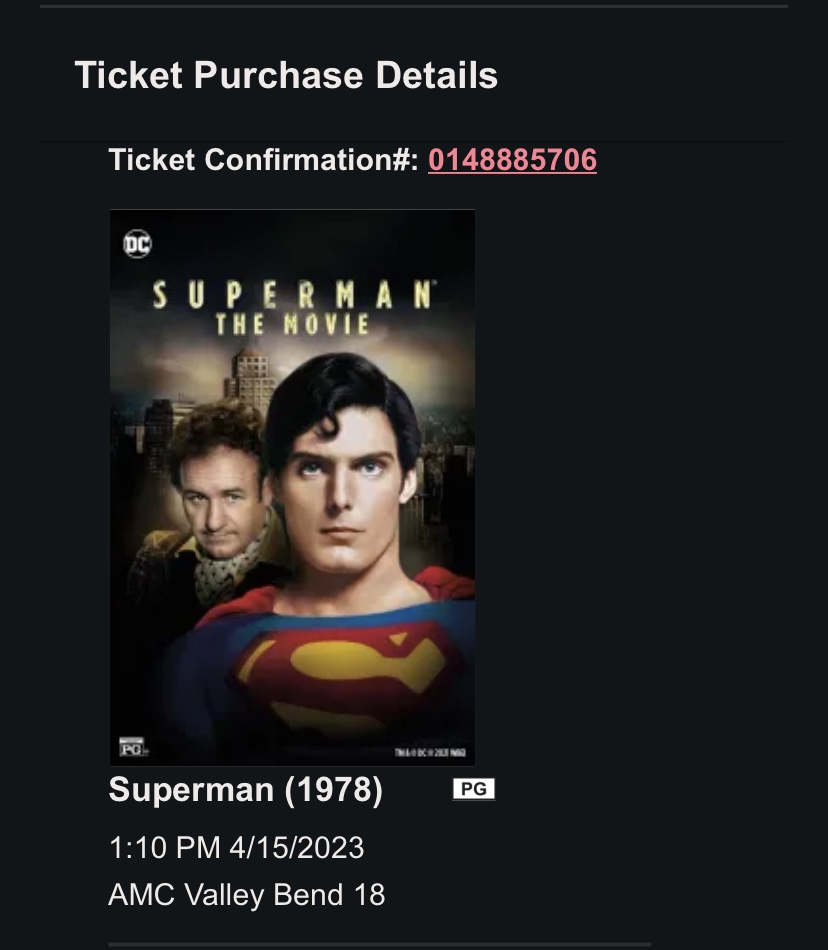
My reservation. The closest showing was at the AMC Valley Bend 18 in Jones Valley in south Huntsville, about an hour away from me. When I was married and living in Huntsville, my wife and I would go to the movies there. The biggest one I remember was seeing Avengers: Endgame with a packed house and reservations only. Now it would be the first time back to the theater in two years since the divorce.
One of the people who would be there for the anniversary screening was my friend Matthew Morelli. He’s a fellow member of the Superman Autograph group and the CapedWonder group, and he lives in Huntsville, so it was great to finally get to meet him and his fiancée Emma.
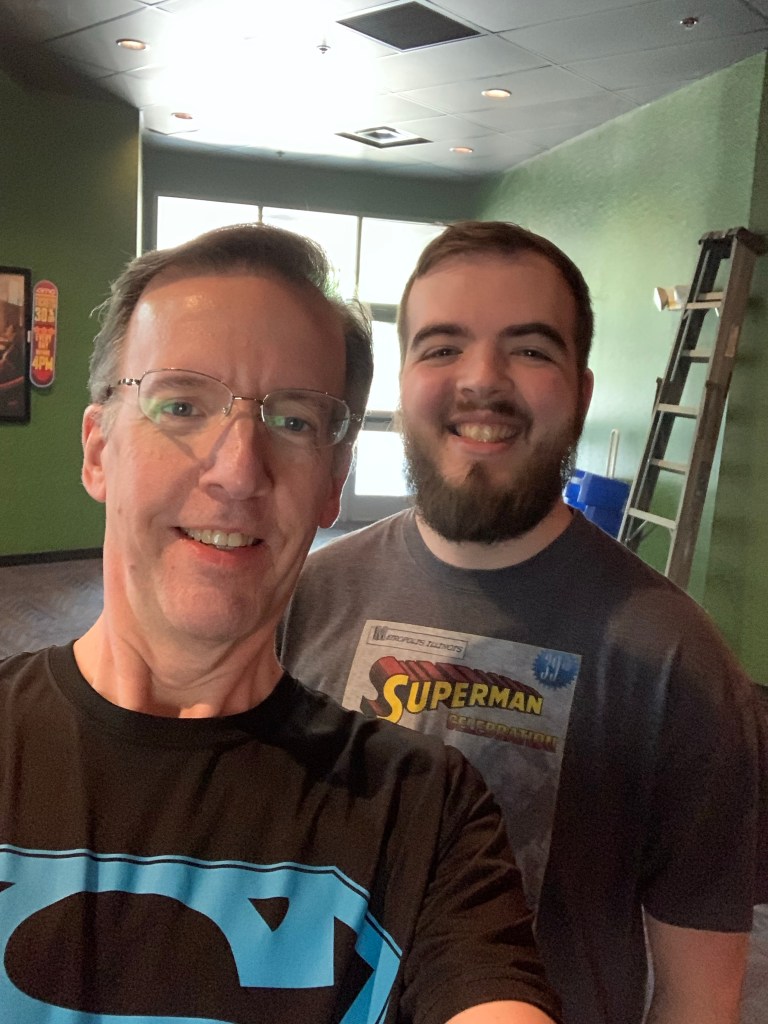
CapedWonders unite! Then the lights went down and the movie started.
Right away I could tell that it was what I had seen a couple of people post on Facebook a few days earlier: this was the original theatrical version but with the 2001 special edition sound mix. The details are particularly noticeable when you hear the almost muted curtains part at the start of the film, the hard crash when the S shield hits the screen, the changes in the swooshes of the title credits, and so forth. It had been a long time since I’d seen the film with the 2001 sound mix, as I’m more of a purist myself that prefers the original 1978 sound mix in the theatrical release and the extended TV cut.
But there’s nothing like hearing that classic John Williams music on the screen again. Possibly one of the greatest opening film themes ever, if not the greatest. Hearing the sound mix through the film was a little unusual this time around, as the music tended to overpower incidental dialogue in several places, including the helicopter rescue and the super feats montage toward the end of the film. Basically put, some of that incidental dialogue that made the film so believable originally is now gone in this mix. I don’t know if it’s the 4K mix, but this is definitely something that I found myself missing in the film.
On the other hand, in places the sound mix is encompassing. In the moment when Lex Luthor reaches out to Superman with his sonic greeting, the sound of the dogs barking really fills the theater all around. That’s a nice little improvement in my book.
As far as the picture quality goes, the colors of Superman’s costume really leaps out like never before. Bright blues and reds as the costume should be, no teal whatsoever. This is a nice improvement in the film and one area that the colorists got right. And when Superman pushes the rocket into outer space, the image of Superman inside the rocket exhaust is extremely detailed and noticeable, the most I’ve ever seen in the film.
I had also seen a couple of people on Facebook comment that the image quality of the scenes on Krypton had changed somewhat, but I honestly cannot be sure of that. During the first thirty minutes I found myself crashing and nodding off unfortunately. Maybe it was due to the fact that I was awake at 5:30 in the morning and ready for this day. Or maybe it was the two cups of orange lemonade that I drank before the film began. So I cannot honestly comment about the Krypton scenes or the first thirty minutes, and that’s my fault.
The Smallville and Fortress scenes looked great, as did most of the film, and flesh tones were for the most part good in this transfer. There were a few moments when it did come off a little waxen, as skin and facial nuances were no longer there, and in a couple of places they actually looked a little darker. I’m not a technical expert, I’m just calling them in layman’s terms.
Overall the quality of the film looked pretty good in my opinion. And at the end of the film, seeing the final title card “Next Year: Superman II” was perfect, meaning that the remastering team cared enough about the film to preserve the original film as much as possible. But it was that musical re-editing as that title card appeared, as the film went to black, that left me scratching my head. They’d removed the special edition end credits that listed how Michael Thau had produced the restoration back in 2001, but the musical extension was still there. That’s something that should have been corrected by the remastering team to preserve the true quality of the film.
Shockingly, there were only seven or eight people who were there for the screening, including me, Matthew and Emma, and a few others. Why a film of this caliber got such a near empty audience is beyond me. It reminded me of when I got tickets for the opening day showing of Star Wars: The Force Awakens and there were only four or five people at most in the theater. Maybe the appeal of Super Mario Bros. was more interesting than Superman. Maybe more people didn’t know that it was showing. I can’t answer that question.
But one thing stood out above them all. For this fan, seeing Superman on the big screen again after all of these years made me believe once again in the magic of filmmaking that I did when I first saw the film at the young age of twelve. It made me think of simpler times in my life. And it made me think about my parents again.
Afterwards, Matthew and I had messaged each other and commented that Warner Bros. needs to do something big for the film’s 50th anniversary in 2028. I hope they do a full-on anniversary release and not a couple of screenings. Superman more than deserves it. Granted, they may be all about this new technology and storytelling and everything, but they need to honor the legacy that the Salkinds, Richard Donner, Tom Mankiewicz, Christopher Reeve, and the cast and crew gave this film back then. If Kevin Feige can encourage his teams in the Marvel franchise to go back and watch Superman to see how they got it right, then DC and Warner Bros. should do likewise. It’s still the measuring stick for all comic book films, DC and Marvel alike. It always will be.
-
“Superman IV” in 4K on iTunes
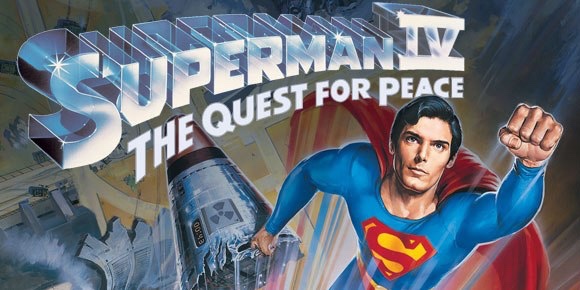
As we await the forthcoming 4K UHD release of the Christopher Reeve Superman films from Warner Home Video in standalone, regular box set, and steelbook box set editions (which have been delayed a few weeks from the middle of April to early May), some of the films are going straight to 4K digital releases on numerous streaming platforms. One of the films that has garnered quite a bit of attention is the new version of Superman IV: The Quest for Peace on iTunes.
Right from the start this is more than just a change to the Warner Bros. logo at the start of the film (as with the new digital version of Superman III). This film has undergone several major changes and a few minor modifications.
Right from the start it showcases the original Warner Bros. logo that was included in the film’s original release in 1987. The most previous home video release utilized the CGI-developed logo that was included at the start of Superman II: The Richard Donner Cut and Superman Returns, so this is a nice fix to say the least.
But as soon as the logo appears on screen, the first of the major changes occurs. The film’s original Prelude is replaced with a similar sounding alternate Prelude featuring a solo horn.
Once it goes into the main title credits, an extremely awkward sounding version of the Main Title March plays over the film’s opening credits. At first I was like, “Where did this version come from?”
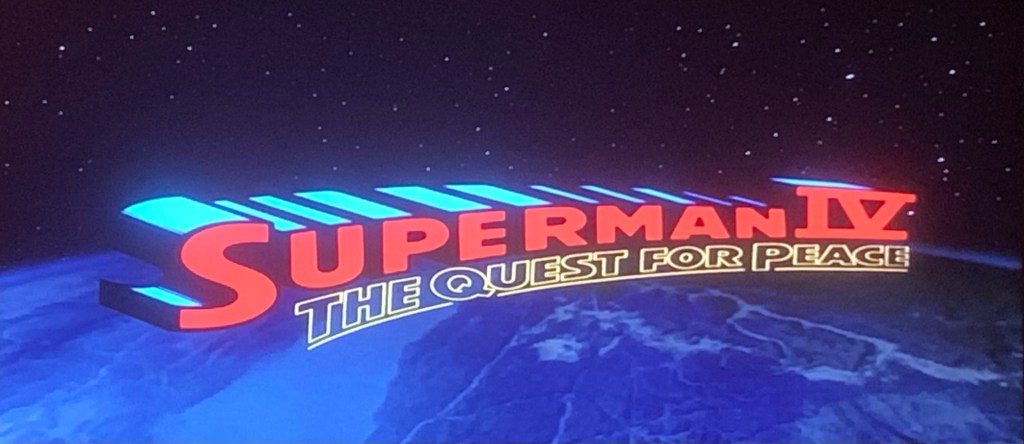
The final version of the main title theme has all of the quality of a high school marching band performing the cue, right down to several noticeable hiccups and variations that occur throughout.
These are not the only musical differences in this version of the film. There are also different versions of the tracks “Space Saver” (which is particularly noticeable when Superman returns the Russian cosmonaut to the space capsule), “Back in Time”, “Fresh Air” (which was first heard on disc two of the Superman IV soundtrack album), “Confrontation”, “Volcano”, and “Statue of Liberty Fight”. These alternate tracks are part of the original recording sessions held in Germany in the middle of May 1987.
According to Mike Matessino, who had restored all of the Superman film scores for the Film Score Monthly CD box set in 2008 and the individual CD releases from LaLaLand Records in 2018-19, the German orchestra did well in performing a number of incidental underscores but had difficulty with some of the larger pieces of the score. It was recommended that recording be halted, and a week later sessions resumed in England, where these cues and the remainder of the score were recorded for the film.
But a few questions remain unanswered. How did these alternate German tracks make it into this version of Superman IV? Where have these tracks been all of these years? And who was responsible for the music replacement of these alternate tracks into the 4K version of the film? The answers are unknown as of this writing. It has been suggested that this is due to licensing issues with the final score. These questions are currently being pursued for a report to be presented in the near future.
But that is not all.
One upside to this new 4K version of the film is the increased sound quality throughout. Dialogue and sound effects are punched up to the foreground, making the film sound cleaner and clearer than ever. It’s a vast improvement over previous home video releases of the film.
However, in the iTunes version, this new sound and music mix is solely in the English language version of the film. Some people have commented that the French and Spanish language versions contain the previous sound mix with the original music. I myself cannot confirm this, but I list this note here for reference.
Image quality is also somewhat improved through the film, particularly in moments with people on the ground throughout the film. Color is also richer in places as well, and the colors of Superman’s costume appear to be more vibrant in some scenes, such as the closing moments when he speaks to reporters about his mission.
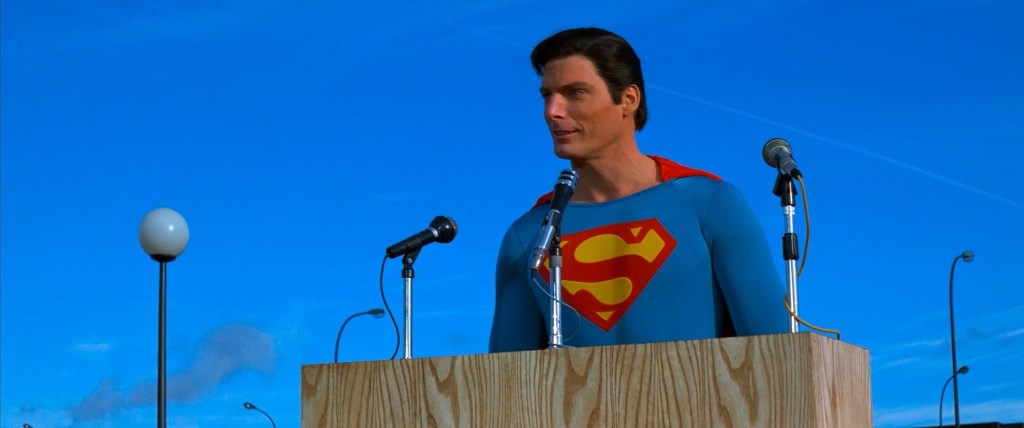
At other times the image quality is a bit darker in some places, with the yellows and flesh tones appearing almost washed out. It may be my monitor.
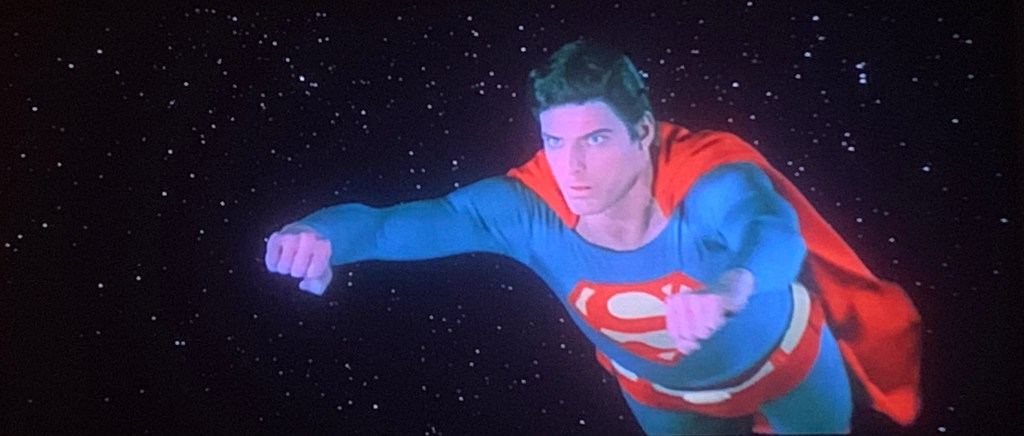
In some places the visual effects are improved in the 4K transfer, with some wires eliminated and the obvious glass plate where Superman and the Nuclear Man fought also removed from the shot.
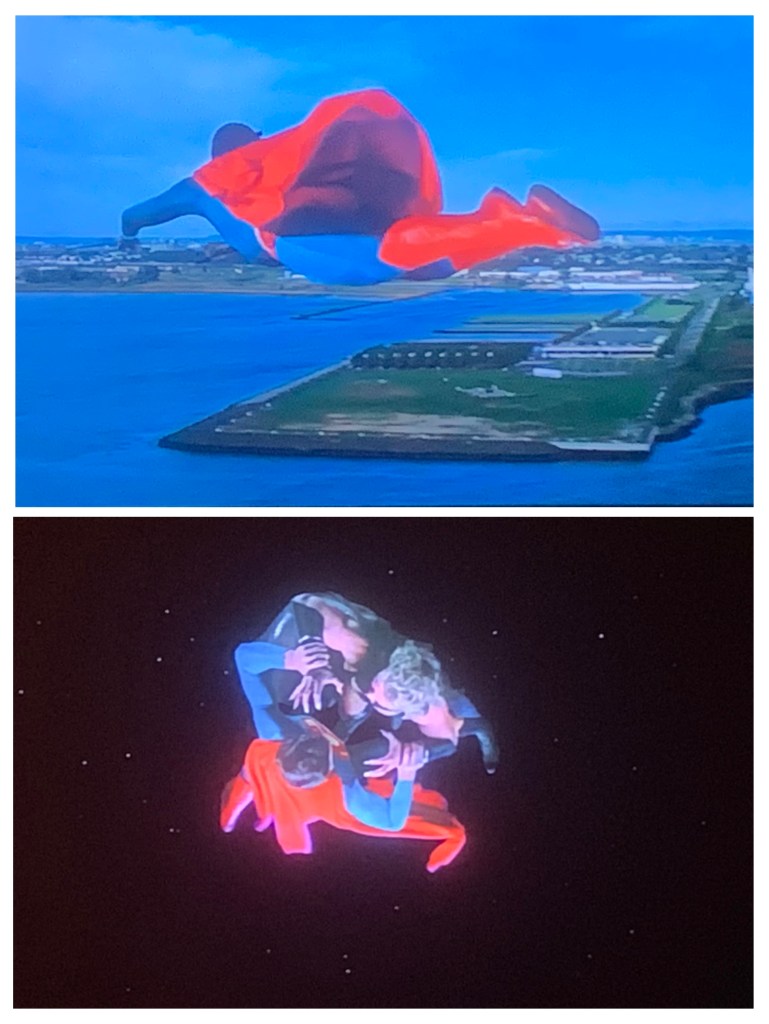
These effects are a bit more believable now. Still, other visual effects are sorely obvious and in need of attention, as in the shot of Superman falling at the Statue of Liberty and the Nuclear Man landing beside him. After all of these years, the animation used to paint out the wires are still obvious.
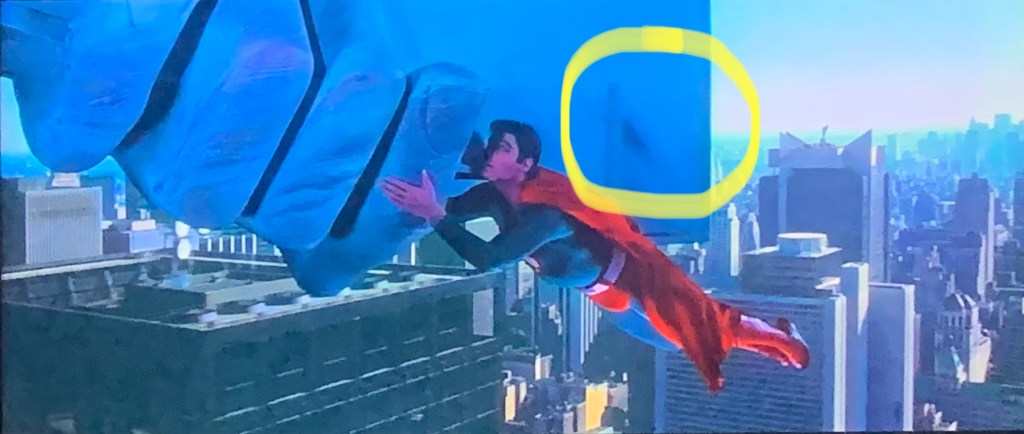
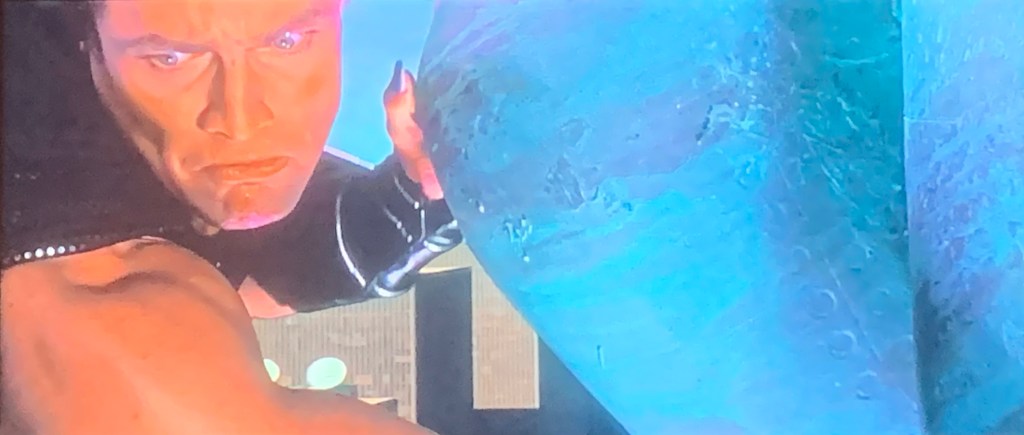
In this shot of Superman flying the Statue of Liberty back, the blackened animation above Christopher Reeve is still there. In other places, flesh tones are darker and almost waxen, as in this shot of the Nuclear Man.
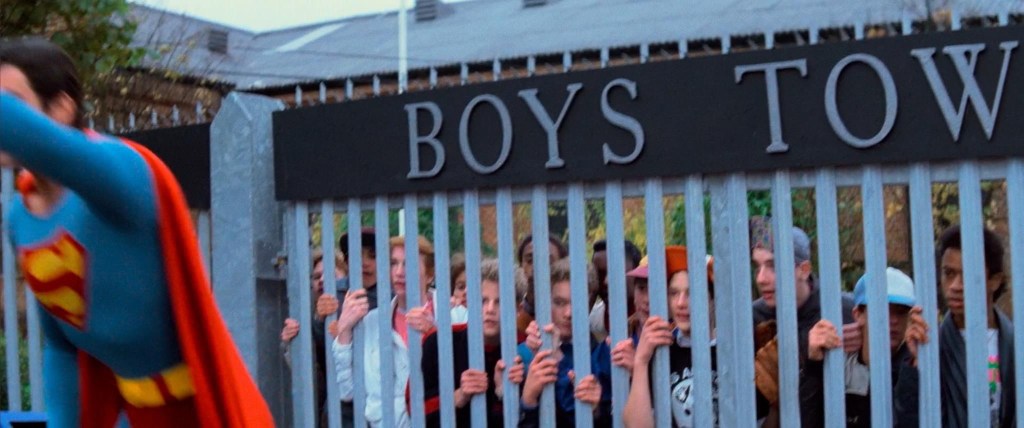
One clip that received a brief enhancement is the shot of Superman taking off from Boys Town. The camera now digitally moves in in order to hide the obvious platform Christopher Reeve is standing on. It’s a brief enhancement that adds to the believability of the moment.
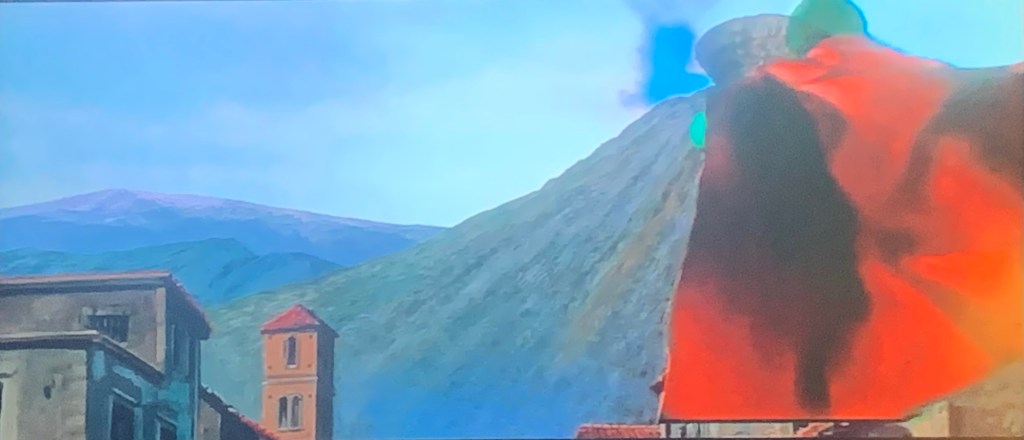
Still in other places, matte paintings are more obvious than ever, almost as if they’ve been freshly painted. One case in point: the shot of Superman flying away from Italy. And after careful analysis of the shot, a glaring error in the visual effects matting now appears. Look at the bottom of the image.
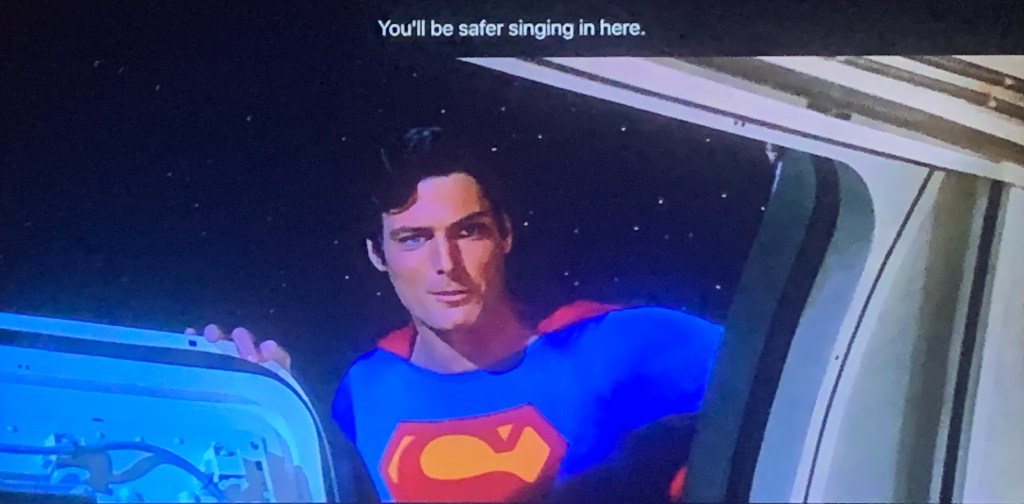
On the flip side, English subtitles are now placed at the top of the screen and no longer superimposed onto the film itself, in the cases of Russian and Italian dialogue spoken by Superman and other characters.
I know that these things are all in layman’s terms, and there’s more qualified people who are more versed in the technical jargon of 4K ultra high definition video than I am. But sometimes you gotta call a spade a spade. I recently had a great discussion with my friend Aaron Price about the quality of the 4K film, and his sentiments echo mine.
One final thing that I must note: this new 4K version is exclusive to iTunes only. It is not currently available on Amazon Prime, Vudu, Google Play Movies, or Movies Anywhere. I have checked all of these streaming services myself, and every one of these carry the previous version of the film. Whether or not they will update their services to carry the new version of the film is unknown at this time.
The new 4K version of Superman IV is a mixed bag at best, given the change in soundtrack cues and the varying image quality throughout. I’d love to say that this is the best that this film has looked and sounded in years, but with glaring things that stick out like a sore thumb, that’s all I can really say. Whether this iTunes version is going to be featured on the upcoming 4K disc release or not is unknown at this time. But once the 4K discs are released in May, we’ll all find out for ourselves.
(Some of the screenshots in this blog are courtesy of Jim Bowers and CapedWonder.com.)
Update to the blog: super fan and blog follower Dan Kampling alerted me to another variation of the new 4K release that is currently available on YouTube. This version contains the altered music throughout the film, but the subtitles in the Russian and Italian scenes are in fact superimposed at the bottom of the screen as in the original theatrical version. He also provided this screenshot from the YouTube version that this is indeed the case.
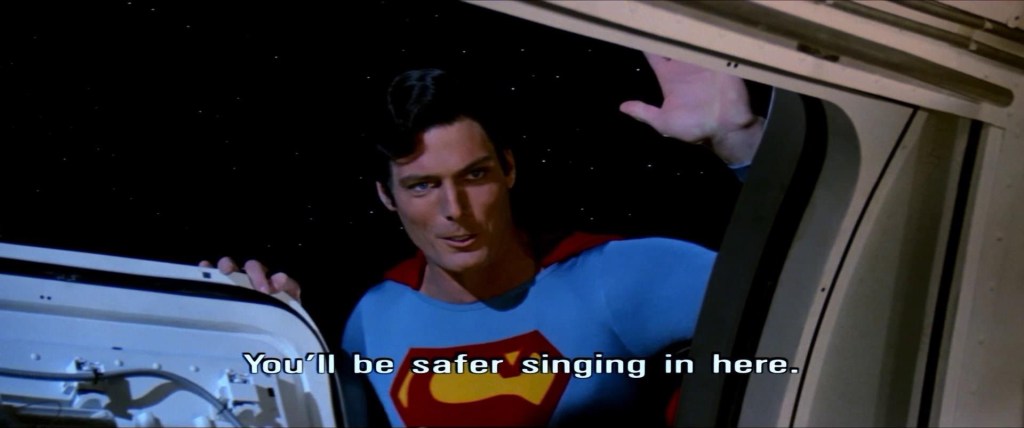
Whether or not this will be the case on the 4K UHD disc, again, we will find out when the set comes out next month. Thanks, Dan!
-
The Mystery of Norman Enfield
Last time I completed my analyses of the two Mario Puzo scripts from 1975, and I noticed a comment from David Michael Petrou in his book The Making of Superman: The Movie that the Salkinds then turned to David and Leslie Newman and Robert Benton to streamline the second Puzo script and turn it into two scripts for Superman and Superman II.
But before the Newman-Benton script, another writer took a shot at writing the script. His name is Norman Enfield.
Very little is known about his writing career, but what is known is that he contributed to five of the Salkinds’ films during the 1970’s. His first film was the 1971 movie Kill! On that film, written and directed by Romain Gary, Enfield served as a dialogue coach on the film’s story about Interpol’s investigation into the freelance killings of drug and porn dealers.
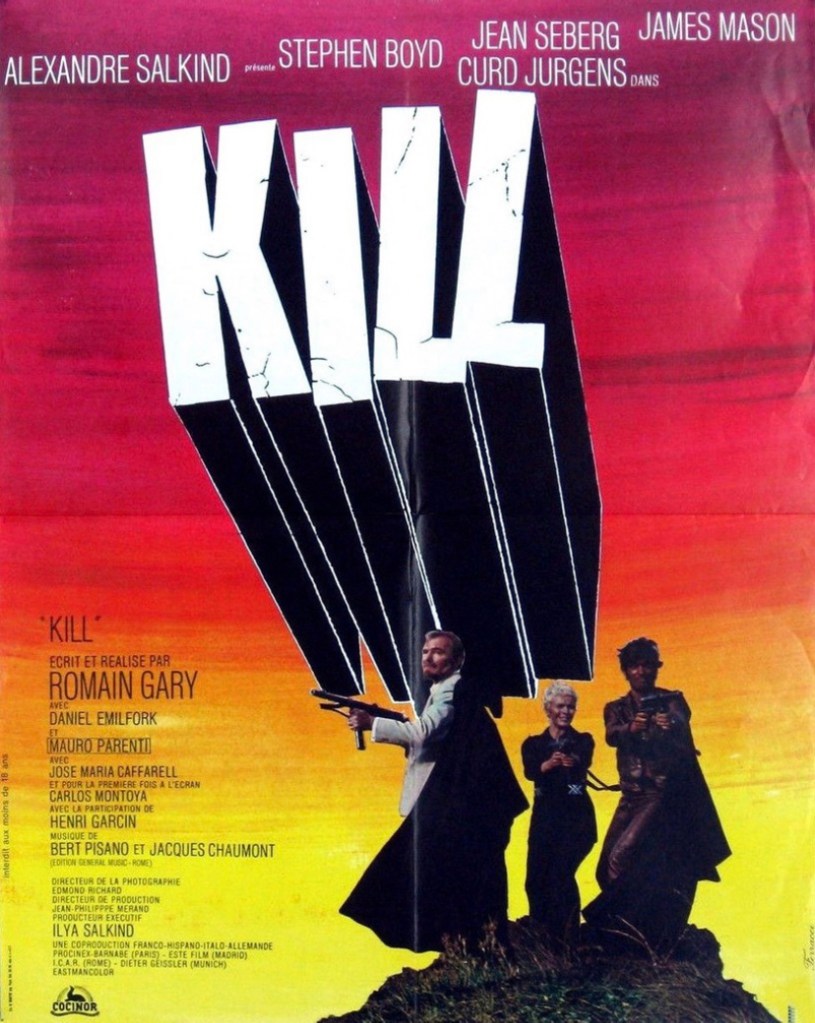
That producer’s name at the top of the poster looks awfully familiar, doesn’t it? And so does that executive producer fella too! Enfield would then serve as a publicity assistant on the Salkinds’ 1973 adaptation of The Three Musketeers (also known as The Queen’s Diamonds) and its ready-made 1974 sequel The Four Musketeers (also known as Milady’s Revenge).
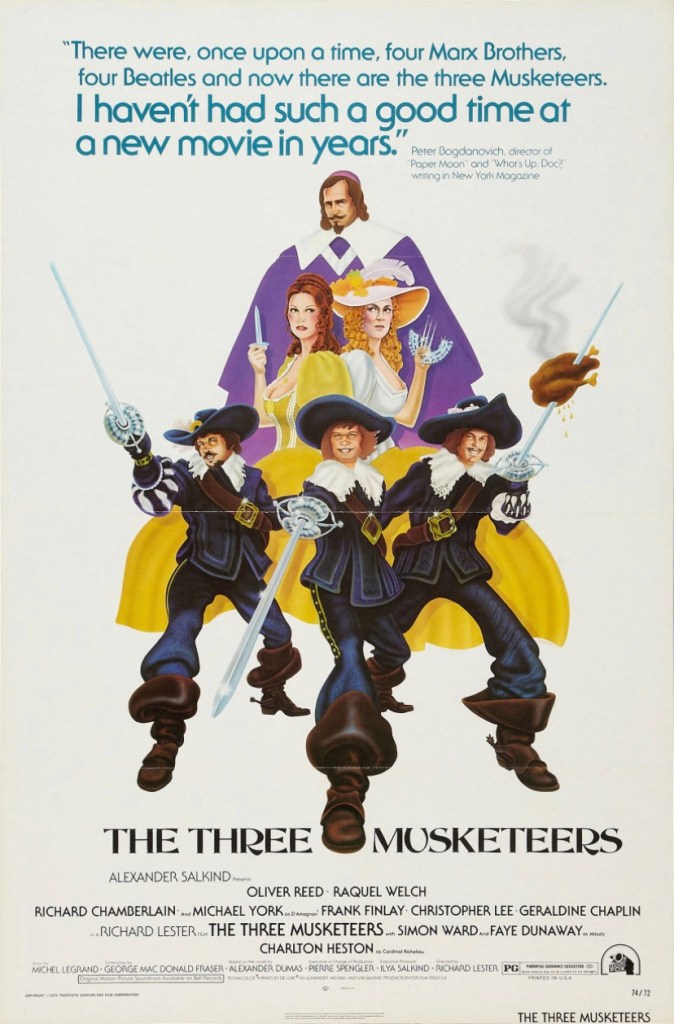
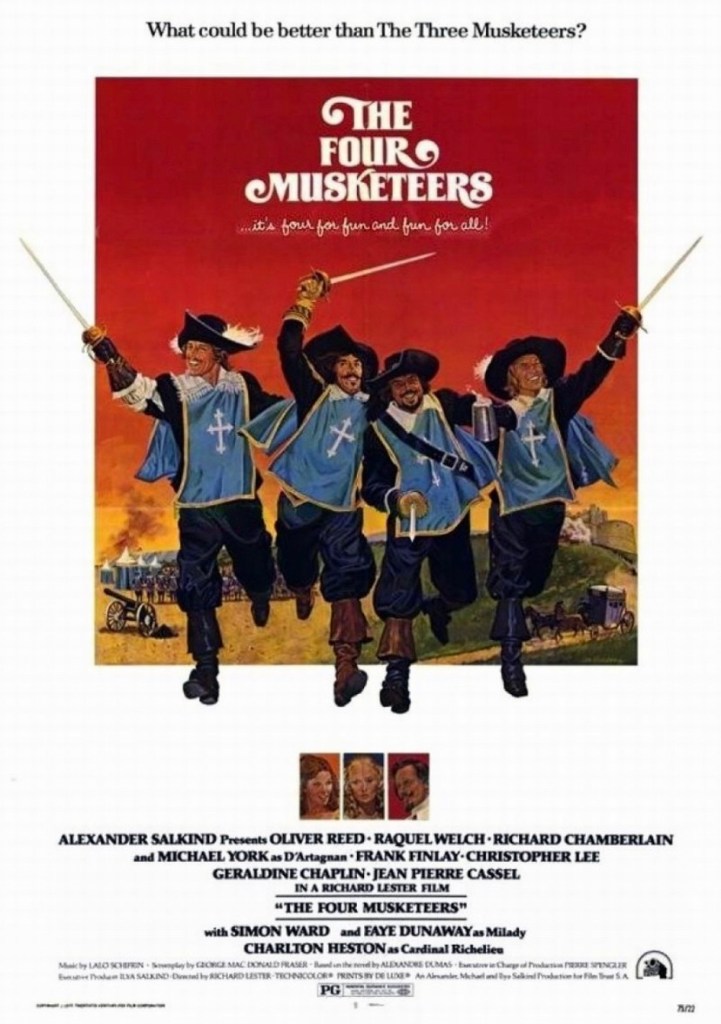
Produced by the Salkinds, directed by Richard Lester (Superman II and III), featuring Simon Ward and Faye Dunaway (who would both appear in the Salkinds’ 1984 film version of Supergirl), Richard Chamberlain, and film legends Oliver Reed, Christopher Lee, and Charlton Heston, no less! What could wrong with that? This led to the development of the Salkind Clause, which would go into effect with the two Superman films and afterwards. Then, Enfield would contribute to the story for The Twist (also known as Folies Bourgeoises), a 1976 French comedy about bored aristocratic Parisian couples who who begin affairs with each other and only find trouble as a result. The film would feature Bruce Dern, Ann-Margret (one of the leading candidates for the role of Miss Teschmacher in the Superman films), and Maria Schell (who would go on to play Vond-Ah in the Krypton council scene in Superman), among others.
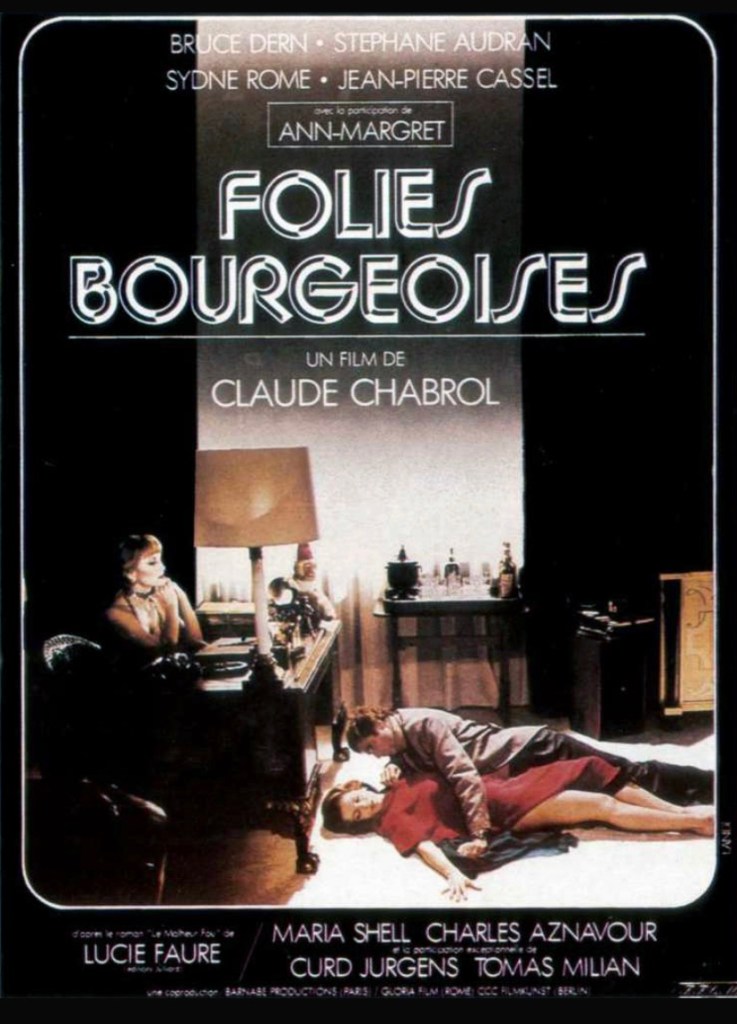
Produced by a couple of guys you may know… do the names of Salkind and Spengler ring a bell? Then came Superman.
After Puzo departed the project in October 1975, the Salkinds brought in Enfield to begin rewrites on the script. Enfield worked quickly, adapting the first half of the Puzo script into a 115-page treatment and turning it in on December 19, 1975.
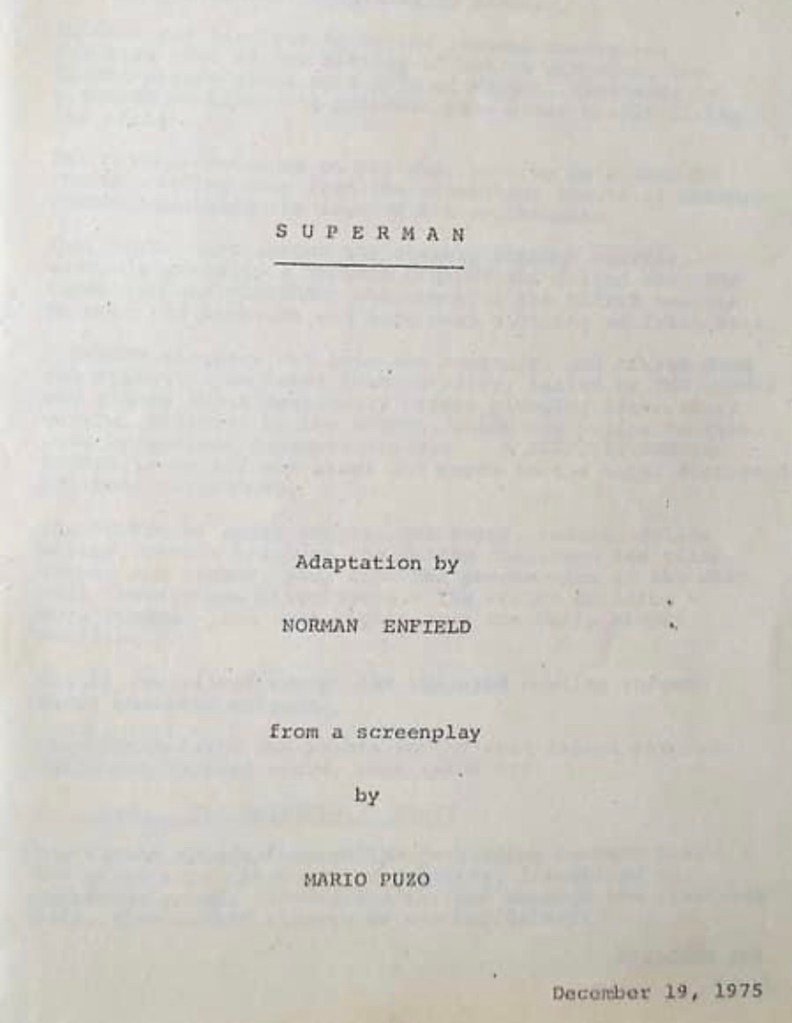
The front page to the Norman Enfield script. One concept that would later change would be steering Clark Kent away from being a TV reporter and returning him to his more familiar career as a newspaper reporter. In an interview conducted by Brian McKernan on February 26, 1988, to commemorate Superman’s 50th birthday, longtime DC Comics editor Julius Schwartz made this observation:
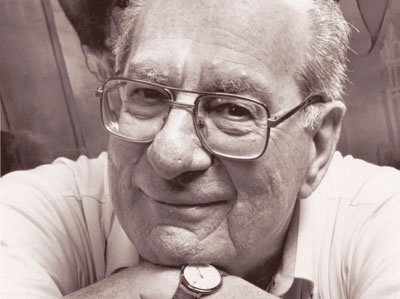
Julius Schwartz (1915-2004). During his tenure at DC Comics he oversaw the Superman comics line and even appeared in a special issue commemorating his birthday. The DC Comics staff went to great lengths to keep the surprise story a secret from Schwartz. “What happened is that they decided to do sort of a ‘man on the street’ interview and they went around asking people, ‘Who is Clark Kent?’
“And everyone said, ‘He’s a reporter for the Daily Planet.’
“And so they said, ‘I think we made a mistake,’ and they rewrote the script, taking him out of the television, and putting him back as a reporter.” Given the time frame of Schwartz’s comments in the context of rewriting the Puzo script, this didn’t happen until later. Thanks to a fellow reader named Dan Kampling, we now have some interesting new information into the script. According to page 55 of the Enfield script, we find that Lois Lane is still a television news reporter and that the news van is still in play in the story. Here is the scene in question, uncut and unedited.
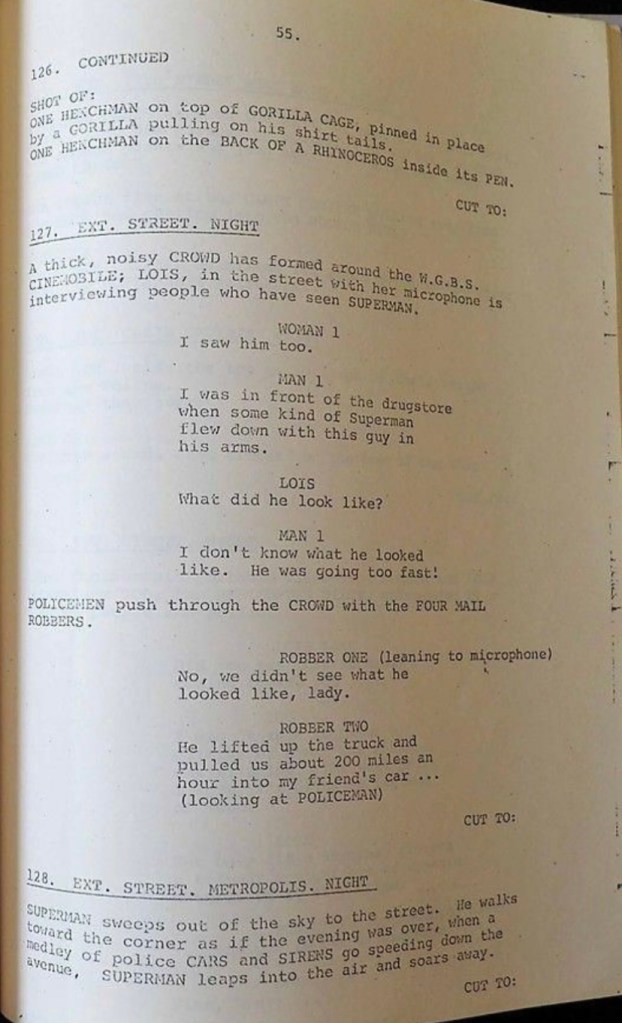
After that, Enfield would depart the project, and the Newmans and Benton would come in in early 1976 to begin their rewrites. And it is during the Newman-Benton script that we would see Clark Kent and Lois Lane return to being newspaper reporters.
Little is known about Enfield’s whereabouts or career after his departure from the project in 1975. Three years later, on December 10, 1978, Enfield was one of the cast and crew members who attended the Special Olympics premiere screening of Superman: The Movie at the Eisenhower Theater of the Kennedy Center in Washington, D.C., along with Richard Donner, Christopher Reeve, Margot Kidder, Gene Hackman, Phyllis Thaxter, and Marc McClure, among many other notable celebrities, athletes, and politicians. At one point someone managed to capture a picture of Enfield with Richard Donner that night. I clearly remember seeing the picture online somewhere, but at this time I cannot remember exactly where it was.
After the December 1978 Special Olympics premiere, Norman Enfield disappeared completely off the grid. Superman would be his last featured film contribution.
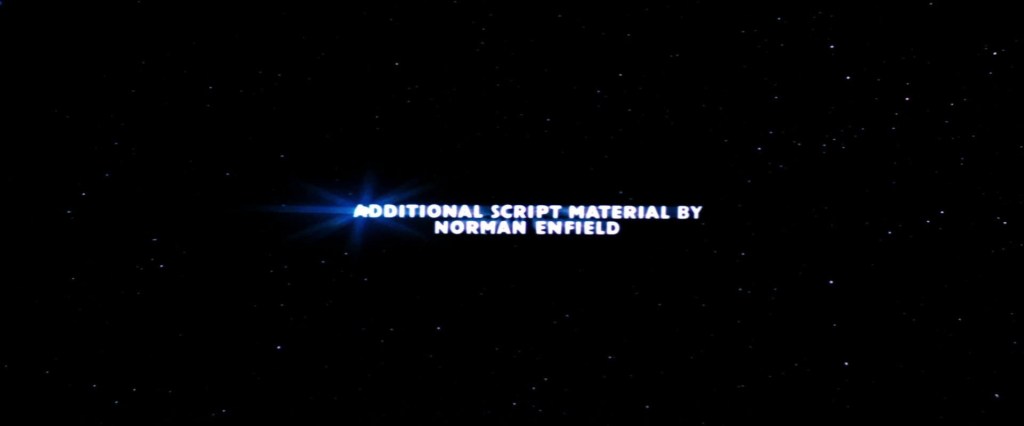
Some years ago a copy of Enfield’s script was up for auction on an auction website. I want to say that it was PropStore or Hake’s, but I cannot specifically remember which. I do recall that it was around 115 pages in length. What specific material the script contains is largely unknown at this point, but it was apparently enough to warrant the title card “Additional script material by Norman Enfield” at the end of the film. As to which portions of the script survived into the later rewrites, again nobody knows. It has been reported that some of the Enfield material that was used in the later scripts were scenes set on Krypton. Again, it is unclear.
Every attempt is being made to secure a copy of the script for archiving and investigation, and once that happens, I will break down the script and present my findings to you. We don’t know when that will be, or when it will happen, but when it does, I will let you know.
-
The Puzo Scripts – Part 24: Showdown Redux, Aftermath, and Wrapping Up
Before I get started with the newest blog, I would like to apologize for its delay. This week has been a stressful one for me on the home front, as I have been dealing with some personal issues. But I am determined not to let them stop me from bringing you the newest content possible.
Now I come to the conclusion of the analyses of the two Mario Puzo scripts for Superman. This has been a fascinating journey into the development of the story that would lay the groundwork for the two Superman films, and there have been some interesting plot points and details that have astounded a number of you as they have me. And what about that revelation from last time? (If you haven’t read my previous blog, stop and do so now before going any further.)
Beginning on page 286, we find Superman confronting the four villains from Krypton along the streets of Metropolis. Never mind that they were just in Australia. It seems like every new threat that comes along, it always heads straight for Metropolis.
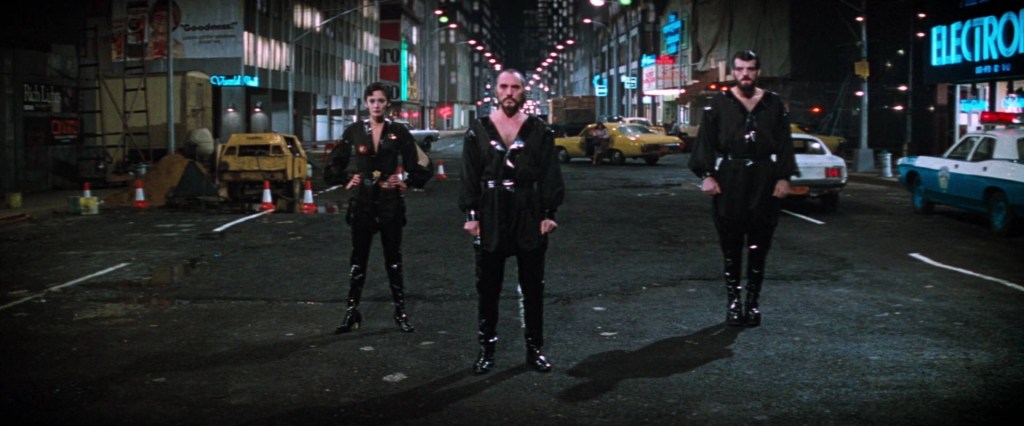
From Metropolis to Lex Luthor’s lair to the Fortress of Solitude, everything in these last 20-25 pages is exactly the same as in the previous script. There are no changes in the story at all. Superman enlists Luthor’s help to defeat the four villains.
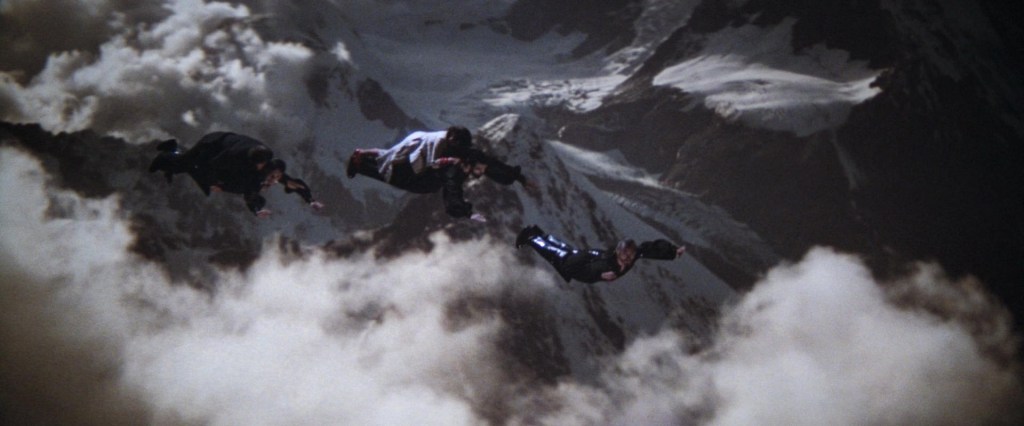
Luthor convinces them to take him to the Fortress of Solitude, where Superman pulls the ultimate double cross and the villains wind up powerless in the process.
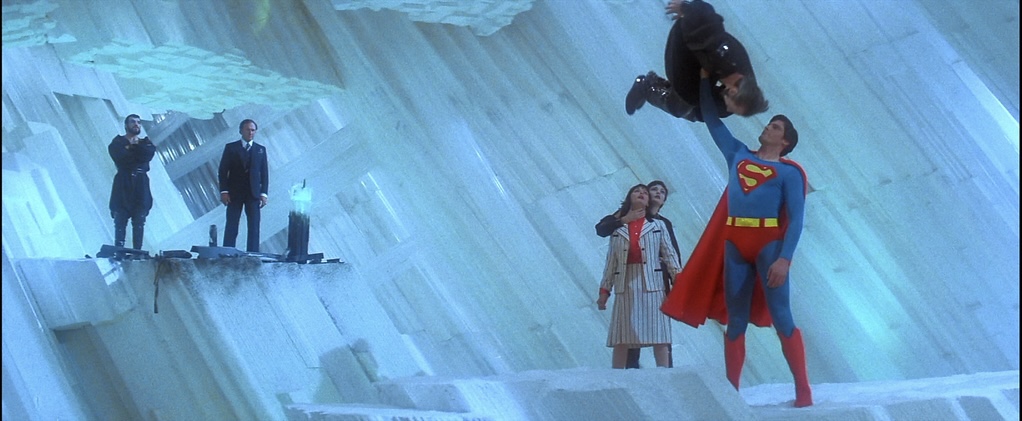
Afterwards, Superman pulls the same drugged drink on the powerless criminals that he used on Lois, Jimmy, and Steve to make them forget everything that happened in the Fortress.

“Hey, I think this guy’s trying to slip me a Mickey!” The script then continues with the same concluding sequence of Clark Kent delivering the final news report of the film. But then Puzo adds a final two-page sequence of Luthor and Eve talking a new plot with the powerless Kryptonian criminals. “Gentlemen, I have a proposition for you. I have conceived a plan that will make us all rich. In all fairness I must warn you that there is some element of risk.”
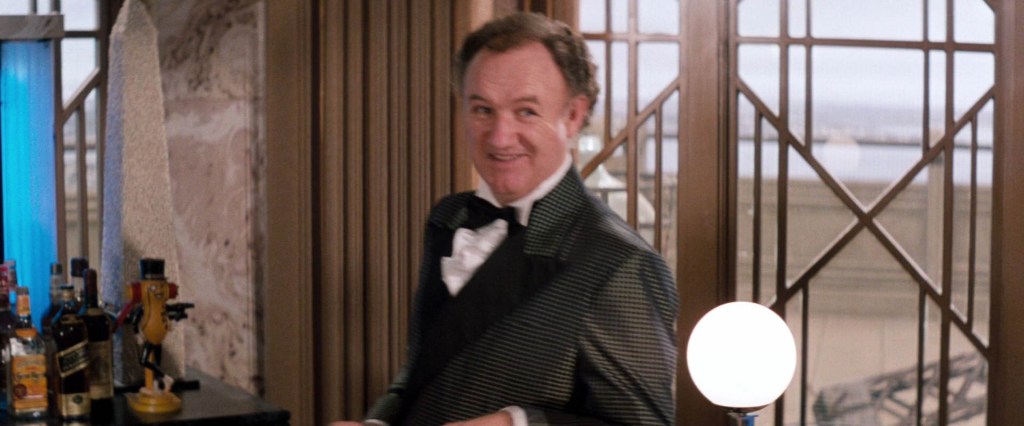
Leave it to Lex Luthor to come up with a new plan. The criminals soon ignore Eve and listen as Luthor discusses his new plan. Eve has the last word in the script as she says to herself, “Criminals will be criminals.”
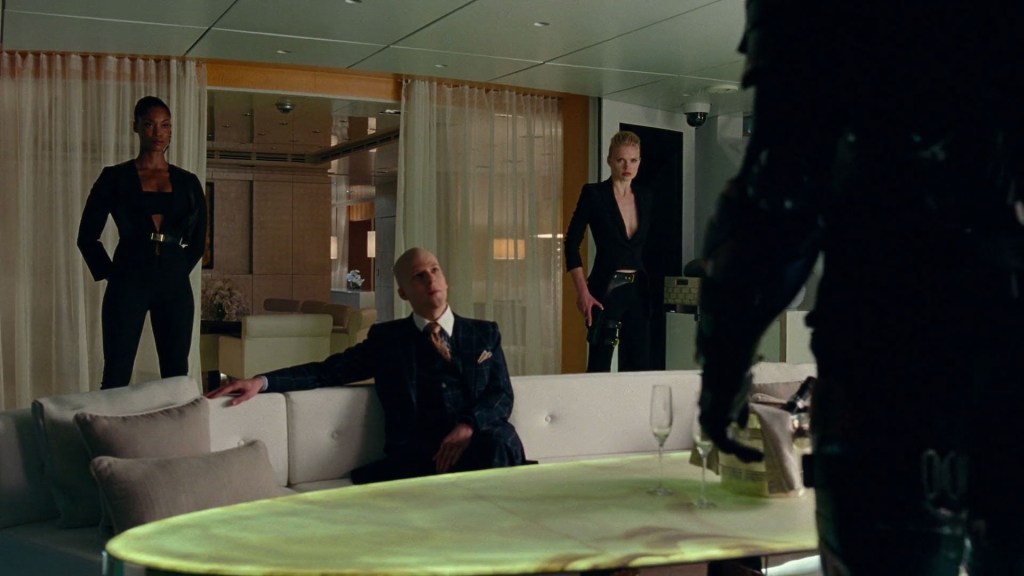
The idea of Lex Luthor conferring with other criminals is something that would be revisited four decades later at the end of Joss Whedon’s version of Justice League in 2017. So now we have come to the end of Mario Puzo’s scripts for Superman. Once Puzo completed his second draft on October 1, 1975, he was thoroughly drained and couldn’t be convinced of contributing anything more to the project. As Ilya Salkind stated in David Michael Petrou’s book The Making of Superman: The Movie, “We took the second draft, read it carefully, and though we were basically thrilled with the ideas, we felt it needed a few changes and a great deal of editing. We went back to Puzo. By this time, he had thoroughly drained himself on Superman and was already involved in other projects, so he suggested that it might be wiser to get someone else to do the rewrites.”
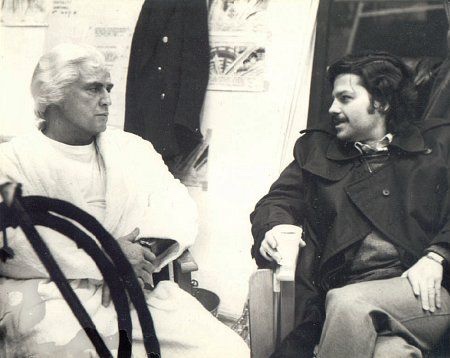
Ilya Salkind with Marlon Brando in between takes on the set of Superman, circa late March to early April 1977. One plot point, however, that never got addressed properly was the idea that Superman had come up with the secret identity of Morgan Edge. Why did Superman do so? Was it to shape the way that media should be properly represented? Was it to throw both the reporters and the viewers off? We will never know the reasons behind such a decision. We can only come up with our own conclusions.
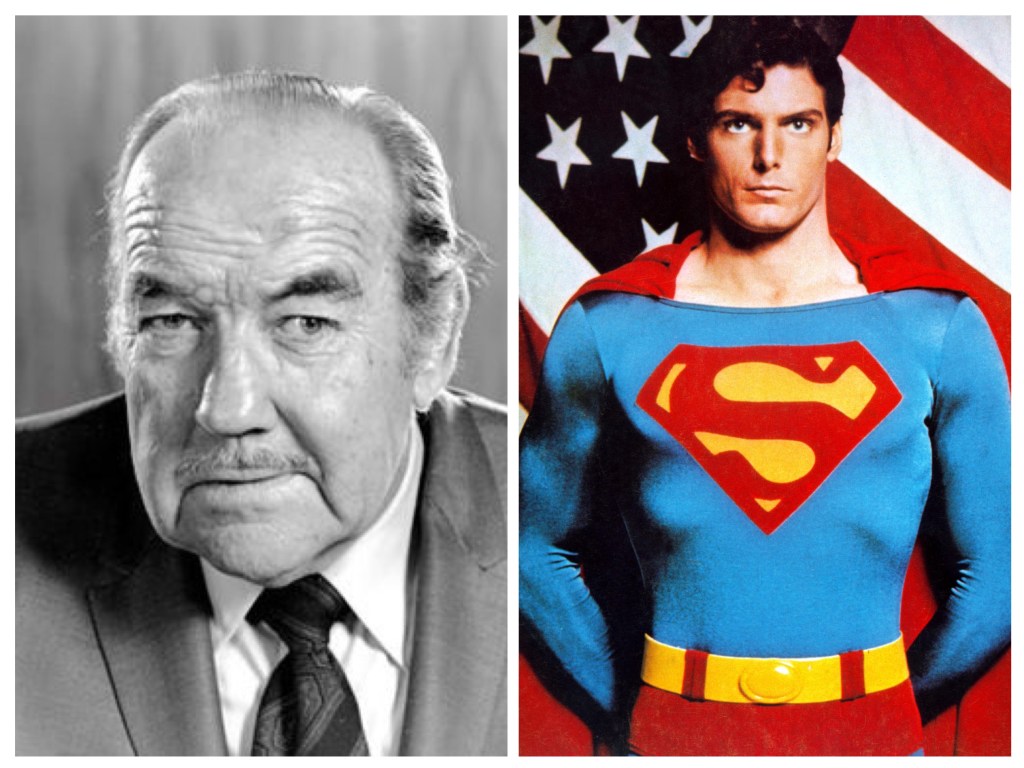
What are your theories? Ilya Salkind continued, “We then went to one of the top teams in Hollywood, Robert Benton and David and Leslie Newman,… They basically streamlined the Puzo script and introduced new elements too. But it was still far too long. And there were certain campy features to the script that just didn’t fit if we were going to play it a hundred percent straight.”

Robert Benton, David Newman, and Leslie Newman. The three writers would make further additions and revisions to the scripts, with Benton working only on the script for the first Superman film and the Newmans writing and rewriting the scripts for the first, second, and third films in the series.
But there is another writer who is overlooked by and large in the production of Superman and was completely overlooked by David Petrou in his book.
Enter Norman Enfield.
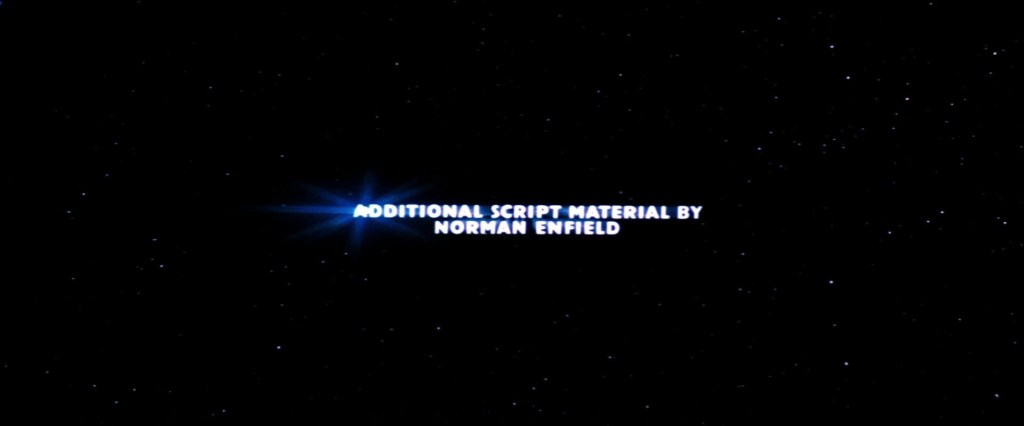
This title card at the end of the film always left my head scratching for years. And that’s what I will discuss next time.
(Some of the screenshots in this blog are courtesy of CapedWonder.com.)
-
The Puzo Scripts – Part 23: Attack on Australia, and A Secret Revealed
Can you believe that we’re now into the final thirty-plus pages of the second draft script? This has been quite a thrill ride for me to break down these scripts and share the lowdown with all of you of what Mario Puzo had written back in 1975, and how much of it would form the basis for Superman: The Movie and Superman II.
As we begin on page 269, we are given new material involving Clark and Perry watching Jimmy’s news report on the failed Trident submarine hijacking, and Perry wants to know where Clark was in all of this. “I was on the roof of my building,” Clark responds in a somber voice, “watching the stars.”
At that point Lois, Jimmy, and Steve all come into Perry’s office and again attempt to convince Clark to stay on at Galaxy Communications. Clark is still adamant about resigning his position. “I’m sorry to say this, but I have to resign,” he says.
Then the voice of Morgan Edge pipes into the office yet again, blaring from out of nowhere about another major news story occurring and nobody is covering it.
And again all they get is a distorted image. Perry is about to blow his cork. “Clark is just about to quit, and I will too if you don’t keep your nose out of the news business.”
Edge just continues. “A whole continent is being wiped out by some strange force. … Australia has been wiped out, its cities destroyed, its people killed. We have to know what’s going on.” He then orders Clark and his team to go to Australia and cover the story, but Clark is nowhere to be found.

The script then resumes with material from the first draft script, as Superman heads back to the Fortress of Solitude to consult the Kryptonian memory banks on the history and construction of the Phantom Zone.
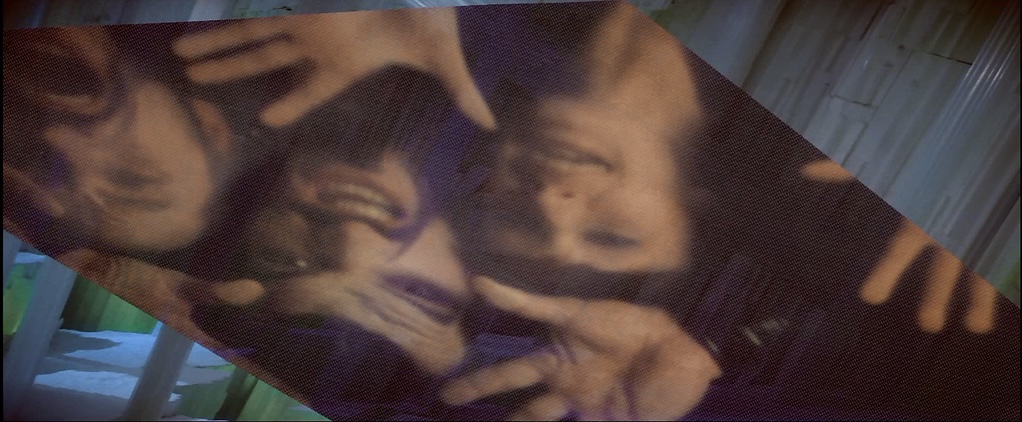
Over the next several pages we see how Puzo intercuts the script material from the first draft with all new material of the Kryptonian villains wreaking havoc and destruction across the Australian continent.
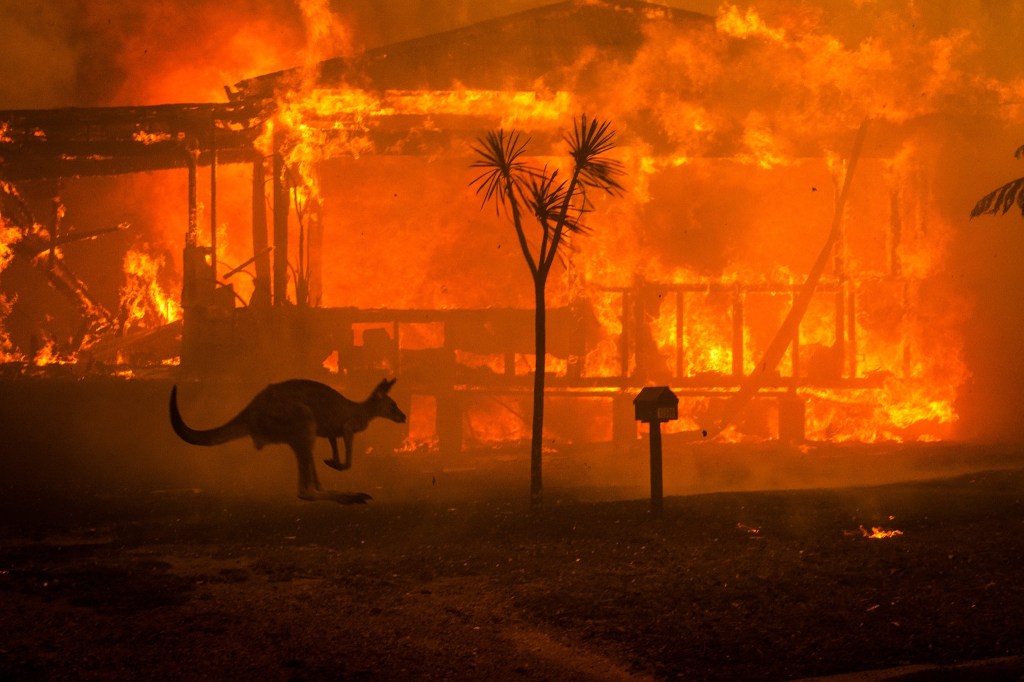
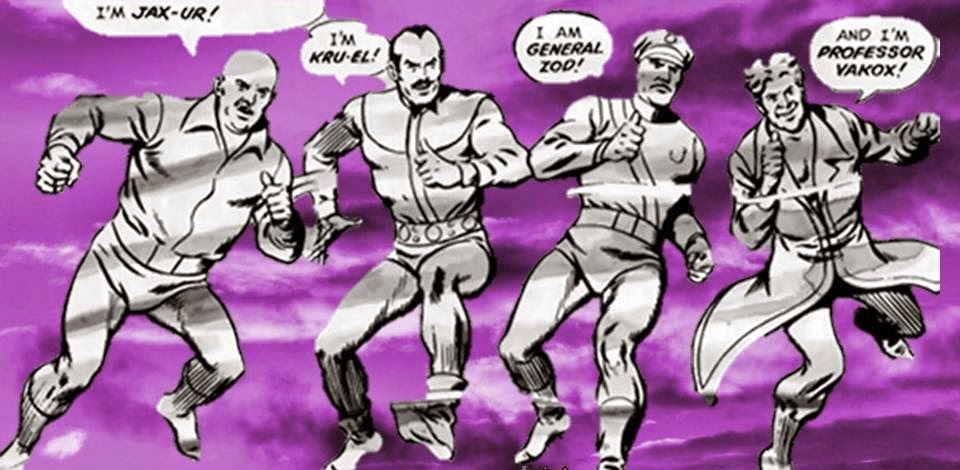
I have to admit, such fictional destruction could never replace the horror of actual brush fires across the Australian landscape. And looking out over the Pacific Ocean are Zod, Jax-Ur, Professor Vakox, and Kru-El, enjoying their handiwork and ready to take their path of destruction elsewhere.
Later, in a new sequence, Clark says goodbye to Lois. She figures out that he’s going to Australia to help Superman in his fight against the Kryptonian villains, and she is concerned that Clark could be killed in the process.
Clark then gives her an envelope and says, “If something should happen to me, use the information in this envelope. It gives you the power of attorney in my affairs.”
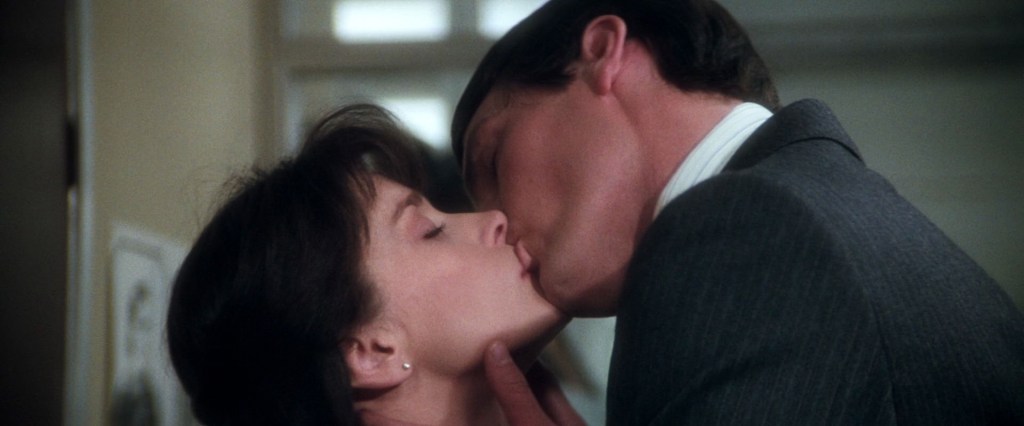
Clark then gives Lois a goodbye kiss. Then this happens.
Without any further comment I present this script excerpt from page 284, uncut and uninterrupted.
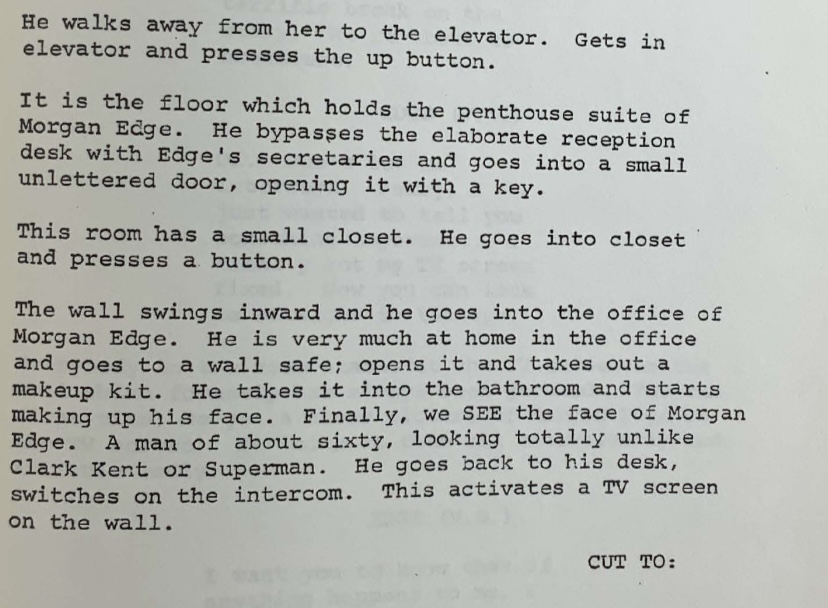
That’s right. The mystery of Morgan Edge has now been revealed. It’s been a secret identity for Superman all along.
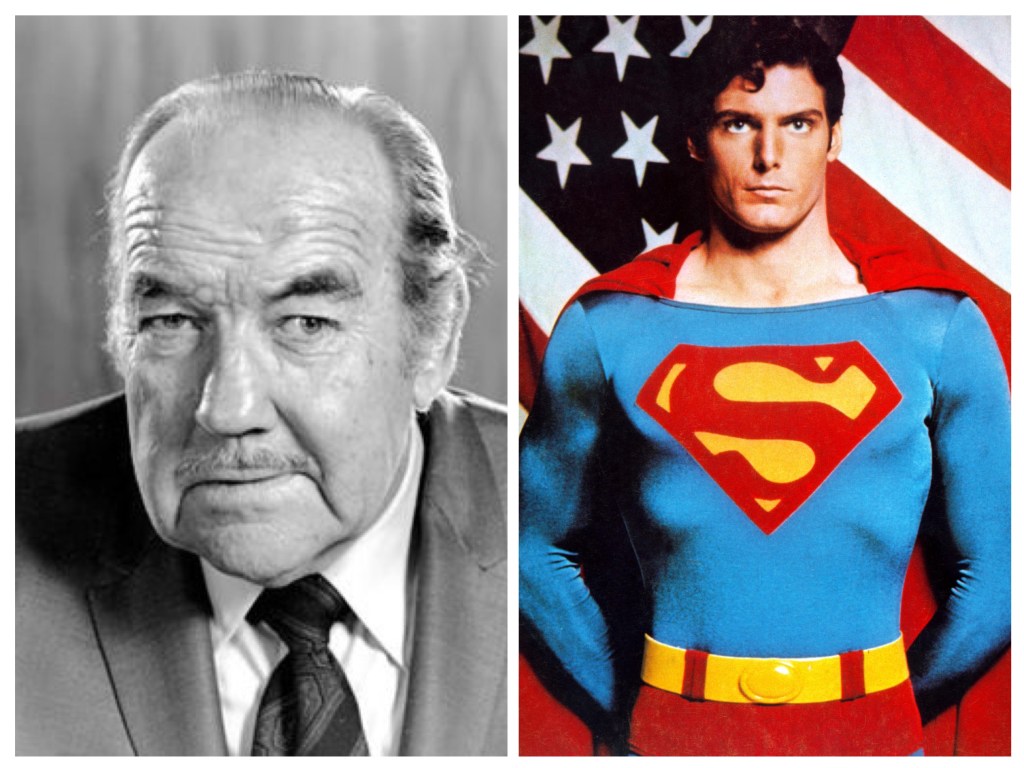
So now the next question is how and why? Whenever we saw Clark in the office at the same time “Edge” spoke to the staff, I can only conclude two things. One, Clark was using his super speed to go back and forth between the staff offices and Edge’s office. Two, Clark had prerecorded all of the Edge dialogue for use in those moments. Those are my theories. I’d enjoy hearing yours.
Then on pages 285 and 286, “Edge” speaks to his staff and makes his physical presence known to them for the first time in the script. Instead of the gruff, mysterious owner we thought him to be, he is now benevolent and a little sad. “I want you to know that if anything happens to me, I have left the Galaxy Communications Empire to my employees, and Perry White will be the president,” he says.
Clark then changes from his other secret identity of Morgan Edge into Superman. Superman then takes off and goes into battle against the villains from the Phantom Zone.
Next time: the ultimate showdown.
(Some of the screenshots used in this blog are courtesy of CapedWonder.com.)
-
The Puzo Scripts – Part 22: Hijacking the Trident
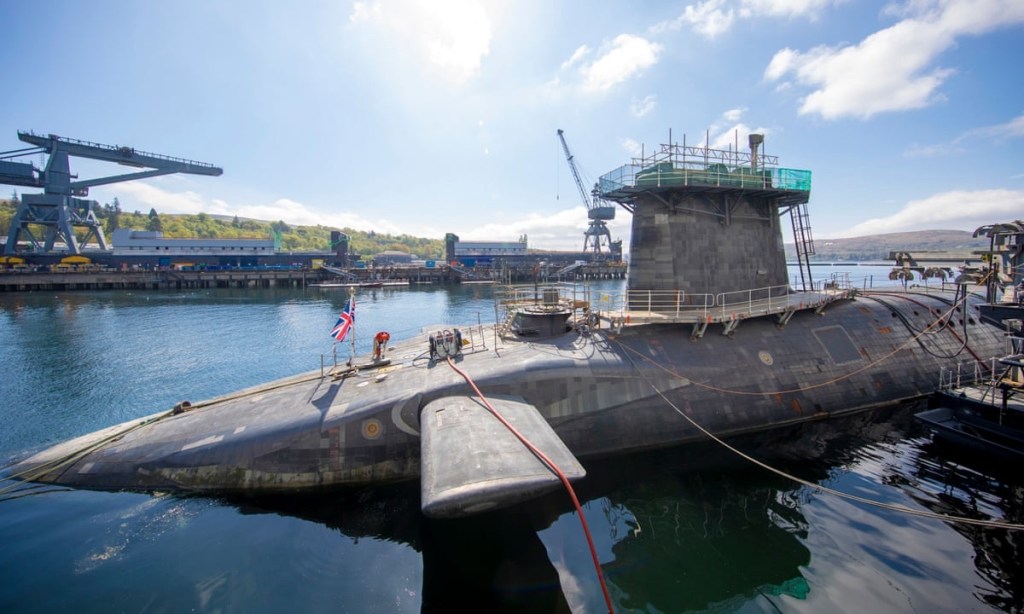
As we move onto page 251, we find that Lois Lane, Jimmy Olsen, and Steve Lombard are participating in a news conference at a Navy Trident nuclear submarine that is scheduled to be manned by an all-female crew. Jimmy goes into a detailed description of the Trident submarine’s capabilities, when Lois spots a familiar figure in a Naval uniform.
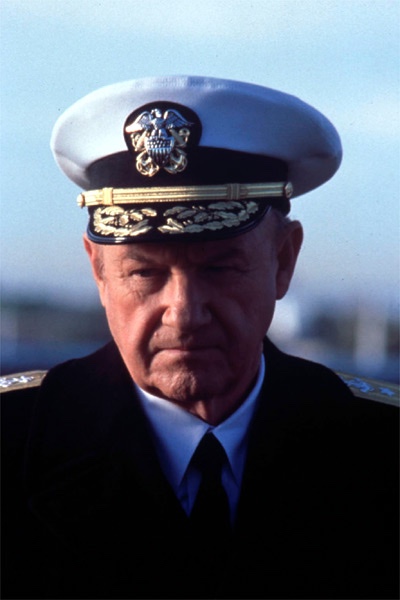
Somehow, Lex Luthor has crashed the press conference. Before long, Luthor and Eve—both in full naval uniforms—make their way to a secret compartment where they intend to hack into the submarine with three steel briefcases. At that same moment, drill sirens go off, interrupting Luthor’s plans, and the Trident submarine reaches the surface of the ocean.
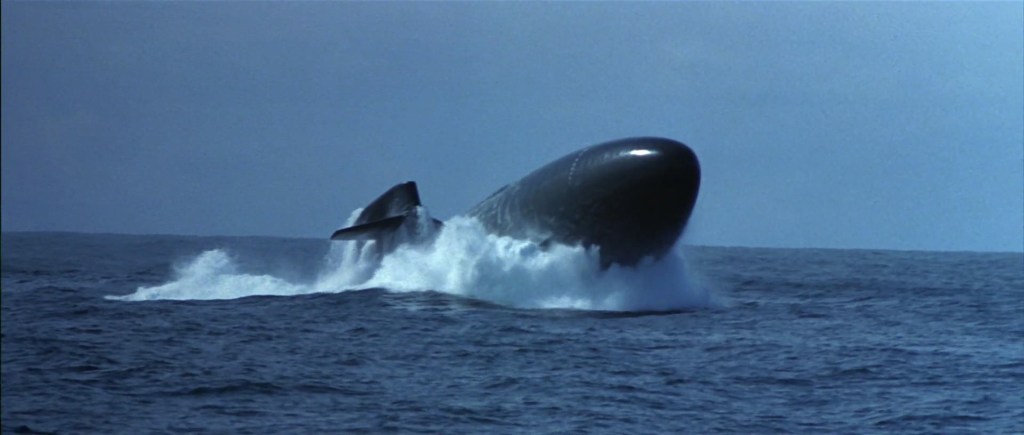
From one of the greatest action thrillers of the early 1990s, The Hunt for Red October. All over the submarine, Naval officers scramble to arm the firing computers and get the missiles prepared for launch.
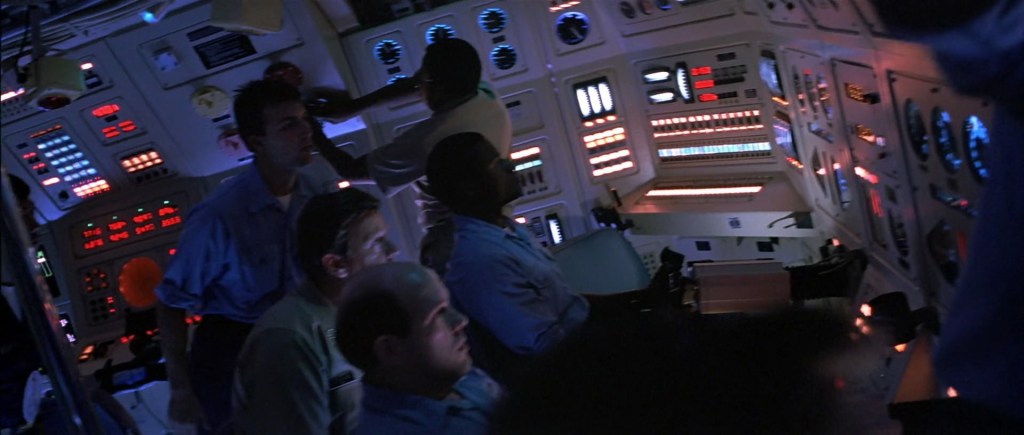
Before long, Superman arrives on the scene and investigates what’s going on with the Trident sub.
It’s then that Eve realizes what Luthor is up to. He had intended to use his briefcases to obtain the military’s secret codes to override and take control of the Trident’s computers so he could launch the sub’s missiles himself. In the process he and Eve knocked out the sub’s personnel with gas pellets from the security briefcases and make their own getaway.
Superman uses his x-ray vision and notices dozens of bathyspheres about to be launched from the submarine into the ocean.
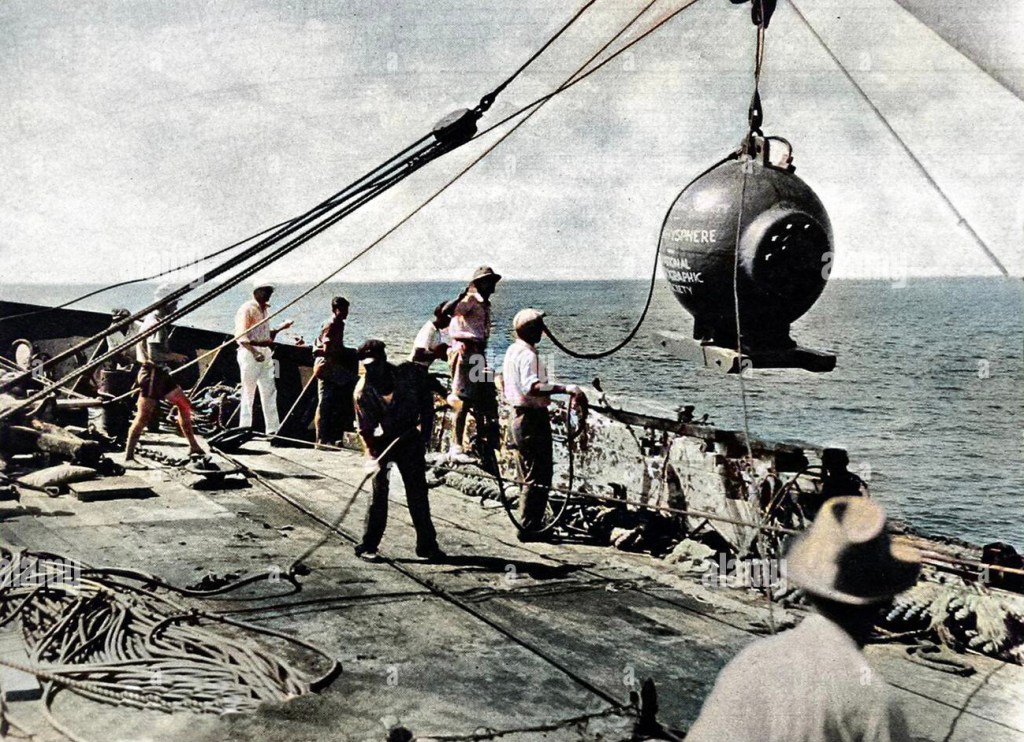
Superman then descends into the ocean and retrieves all of the bathyspheres, returning them to the submarine. He then gets into one of the bathyspheres as it ascends back to the submarine.
By this time Luthor has subdued all of the naval officers and replaced them with men loyal to him. He then begins broadcasting his demands to the President, but is soon stopped when Superman arrives to the bridge and smashes one of the consoles.
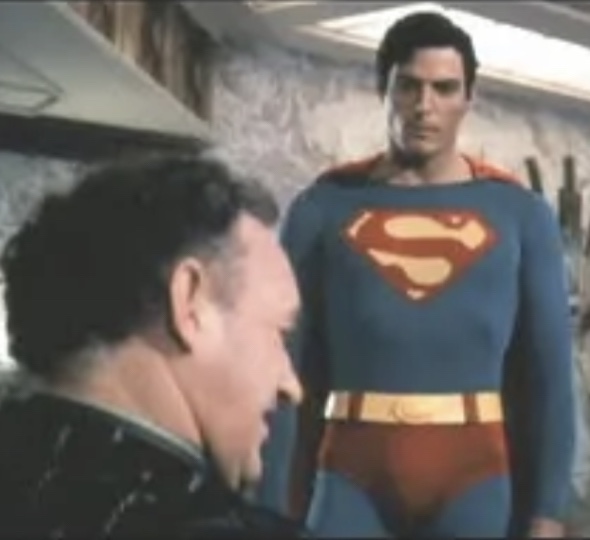
But Luthor is one step ahead of the Man of Steel. He has his finger on the trigger console that will fire nuclear missiles towards the United States. “Just one flick of the eyelid on your part and I pull this trigger, and half of the United States gets wiped out.”
“You’ll never get away with this,” Superman responds.
“I have my plans. My brains against your brawn.”
Superman is forced to leave the submarine, but once under the sea he begins to pull the submarine towards the bottom of the ocean floor, and this time there is no escape for Luthor and his crew.
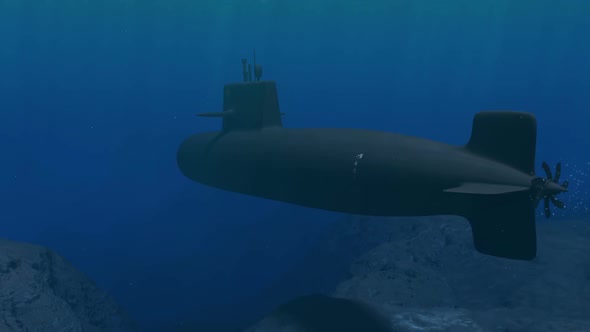
Luthor is left with no choice but to negotiate. The next day, Jimmy Olsen broadcasts on WGBS that Luthor would give up his prisoners in exchange for amnesty for himself and his henchmen. It turns out that Luthor had served in World War II and rose to the rank of Vice Admiral in the Navy and becoming a skilled negotiator in the process. How he went from being an accomplished Naval officer to a great criminal genius is beyond me.
Next time: an even greater threat to the world, and a secret revealed…
-
The Puzo Scripts – Part 21: Hostage Crisis, Luthor’s Second Big Plot Revealed
What does the greatest criminal mind of the modern era have up his sleeve this time? After moving the nuclear heist and threat from the second half of the script to the first, it was up to Mario Puzo to create two new sequences for the second half of his second draft script to the Superman films. This is presumably because he may have felt that the first half of the script lacked a bit of action and needed something to punch it up a bit.
Beginning on page 237, we immediately pick up from the assassination attempt with all new Puzo material. Steve informs Clark that Morgan Edge wants him and Lois to travel to Florida to cover a missile launch to Mars.
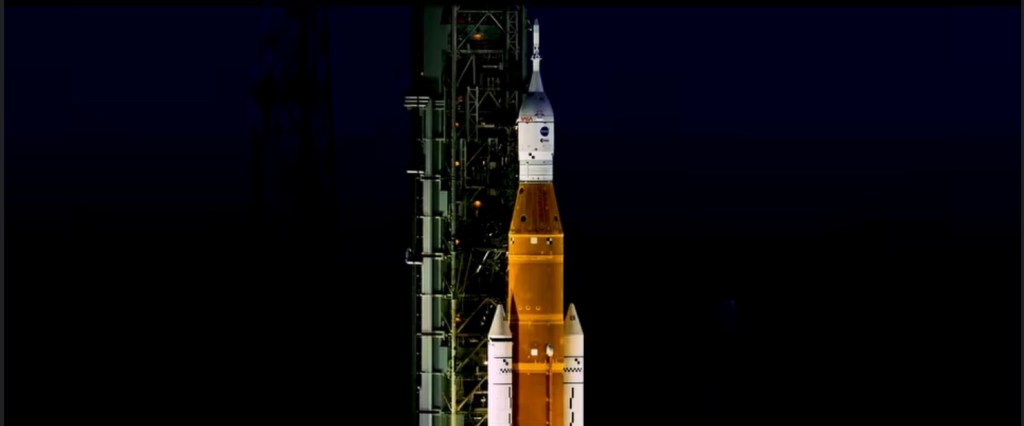
This image is from a recent NASA video that said that on April 3, 2023, we would get to meet the astronauts of the Artemis II mission. All I can say is that their names better not be Andy, Nate, and Boris, because we all know what happened to them… “Why doesn’t he want our eyewitness report?” Lois asks.
“Because he still thinks you were in Geneva at the time, where you were supposed to be,” Steve responds.
As the reporters part ways, Clark observes Jimmy and Steve boarding their plane. He also notices four men take up arms, start shooting inside the airport, and take hostages to a waiting 747. Before long, two more terrorists join the group, making a total of six altogether.
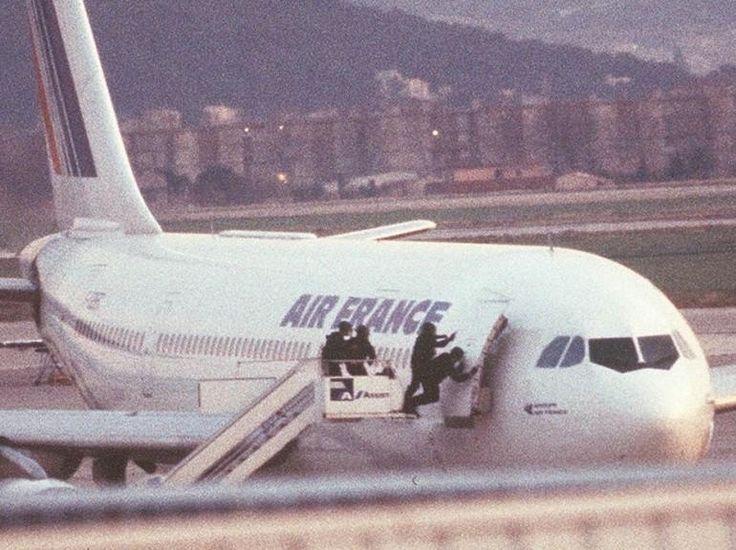
The Air France hijacking from Christmas Eve 1994. Clark and Lois hide behind a security partition, waiting for the police to arrive. She takes off, thinking Clark to be a coward. Clark, however, looks for a nearby passageway so he can change into Superman and go into action. Before long, Superman boards the waiting 747, subdues the terrorists, and frees the hostages.
Afterwards, Lois continues to eye Clark coldly and think him to be a coward, even as he says that he’s filed the story with their superiors back home. Steve tries to reassure Lois, saying, “Take it easy. He saved the Pope. That’s enough for one week.”
Jimmy adds, “Yeah, there was nothing he could do except become another hostage.”
“Unless he’s Superman.” Everyone laughs, but Lois again considers Clark and wonders if it’s possible.
This is another nicely paced action sequence, but over time it’s very likely that fans and viewers would have had a more difficult time viewing the film with this sequence, given the Iranian hostage crisis of 1979-81, other airplane hostage situations in the 1980s and 1990s, and most importantly the tragic events of 9/11. Even one of my favorite action films of the early 90s, Die Hard 2, is hard to watch now in that same context.
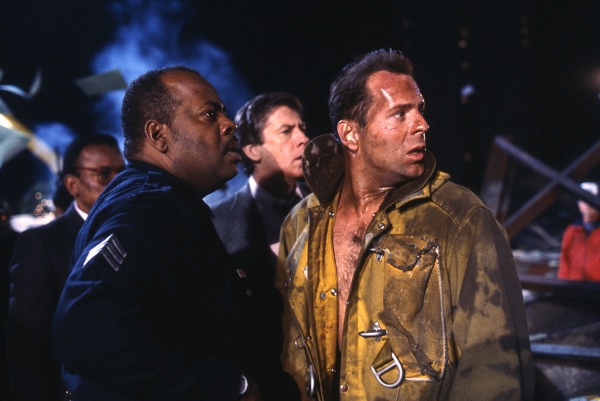
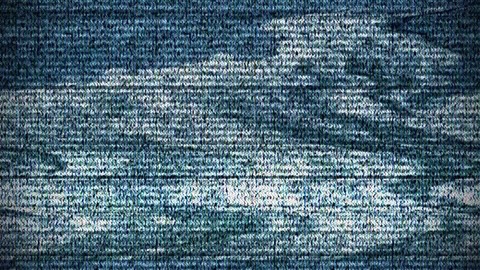
Maybe I need to remind myself, “It’s only a movie… it’s only a movie…” But art imitating life imitating art sometimes hits a lot harder than it should. Later, at Galaxy Communications, Morgan Edge congratulates the reporters on their stories and promotes them to cover a new upcoming story. Again, Edge’s face is blurred out by wavy lines.
Clark reaches over to fix the image, and for a brief second he observes Edge’s face. But Edge quickly ducks off screen.
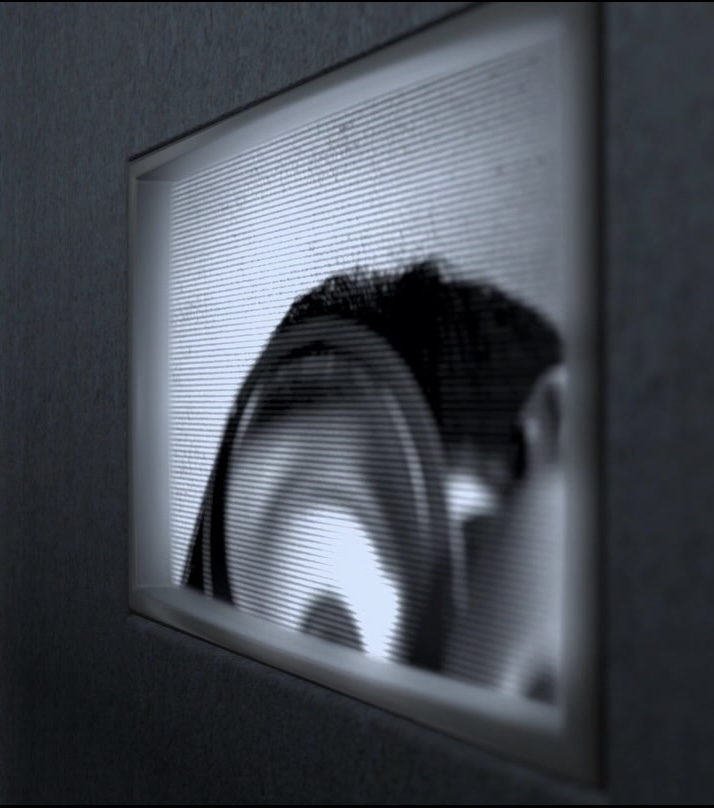
What secret is Morgan Edge keeping from his reporters that he doesn’t want anyone to see his face? Clark then startles everyone by saying that he wants to step down and just be an ordinary reporter. Everyone is shocked by Clark’s comments. “Clark, you’re the only one who has any common sense,” Steve says. “We’d be lost without you.”
Jimmy adds, “And you’re lucky. Whenever you’re on a story, something terrific breaks.”
Even Lois is apologetic about her judgments regarding Clark. “Clark, don’t. I know you’re not a coward.”
But Clark is steadfast in his decision. Edge then tells him to take the next month off with full pay and consider his options.
Later on we find Superman consulting the Kryptonian memory banks and seeking Jor-El’s advice about how to balance his responsibilities as a reporter with the duties he has in his secret identity as Superman, particularly when it comes to the incoming threat of the four villains from the Phantom Zone. This is something that neither Jor-El nor Lara have the answers to. “It lies in the area of ethics and philosophy,” Jor-El says.

Here we learn that six months have passed since Superman hurtled the nuclear bomb into outer space, accidentally freeing Zod and his companions, and he now has about two months to prepare for what’s coming.
Meanwhile, Lex Luthor reveals his second great crime to Eve and his henchmen. He plans to hijack a Trident nuclear submarine from the United States Navy and sell it off to Russia or China in the hopes of getting $100 million dollars for it.
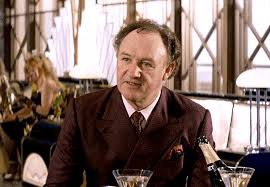
Even back in 1975, Lex Luthor was making the world safe for war profits. The henchmen, however, think he should consider selling the Trident submarine to the Arabs, the Israelis, or the Italians. Luthor, oddly enough, says, “We don’t want to sell them to somebody who will use them irresponsibly.”
And from there we will pause and see next time what Luthor has in store with his second great crime.
(Some of the screenshots in this blog are courtesy of CapedWonder.com.)
-
The Puzo Scripts – Part 20: “Superman II”: The Mario Puzo Cut Begins (…Swear to God, This Time We’re Not Kidding!)
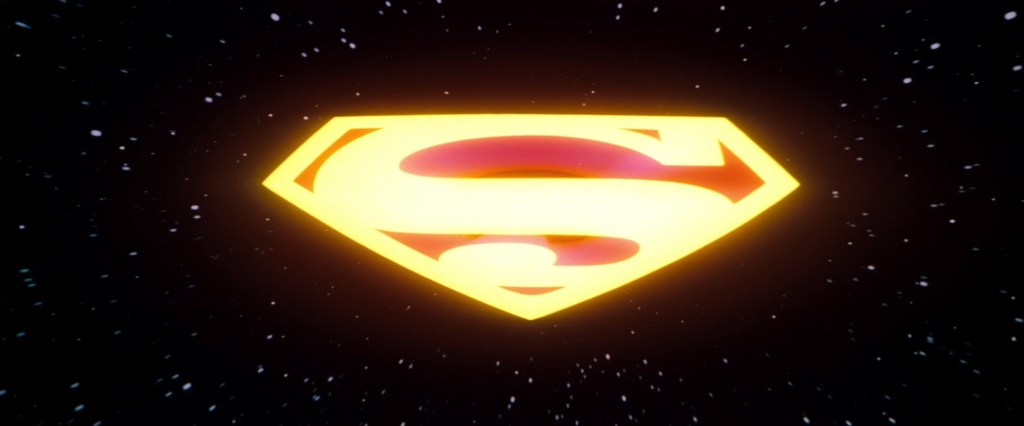
I’ve always liked how they used the S shield at the start of the main title sequence for Superman II. Now we’re getting into the final 100 pages of Mario Puzo’s second draft script, and this time he has intentionally set the final third of the script to outline his groundwork for what he saw Superman II to be about. While it is clear that the true dividing line occurred earlier, after the action in Iran, here I plan to honor Puzo’s dividing line in his script and see what he expanded in the script itself.
Beginning on page 212, we find Lex Luthor, Eve, and the four henchmen watching Clark Kent deliver a news report stating that federal authorities have launched a nationwide search for Luthor. Then, changing gears, Clark mentions how WGBS plans to send a news team to the Vatican in Rome and cover the installation of the new Pope of the Catholic Church.
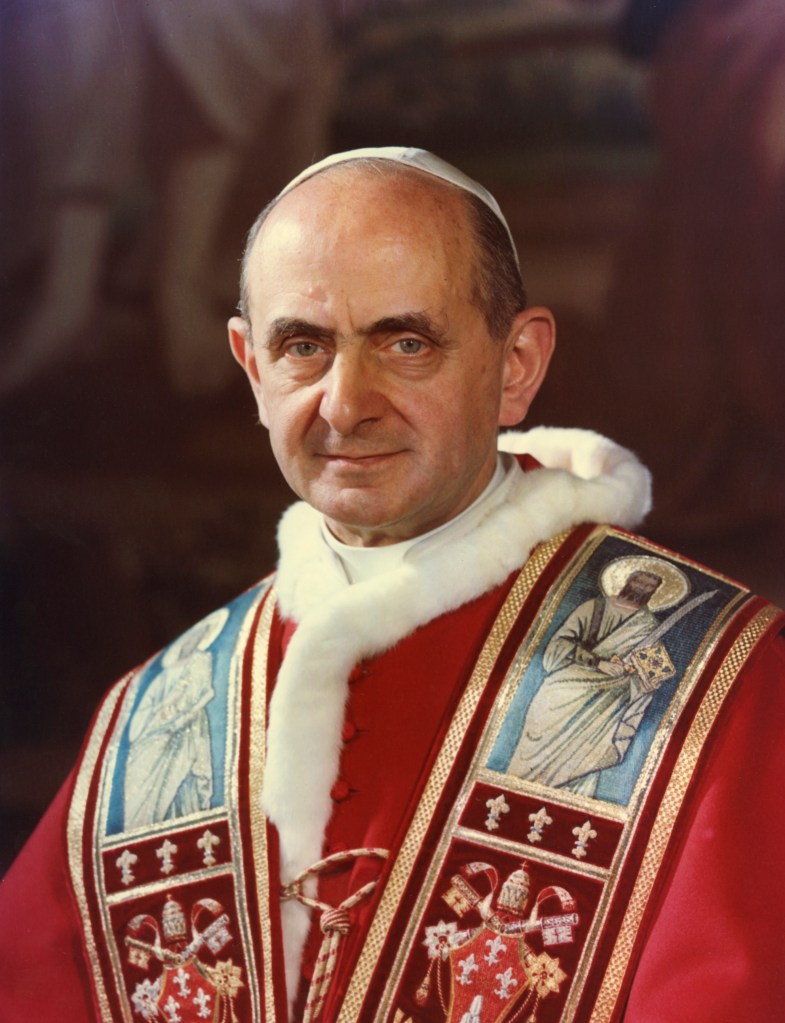
He’s back! Wait a minute here… didn’t we see back on page 166 that moment when Jimmy Olsen mentioned to Clark about “that Pope thing” earlier on?
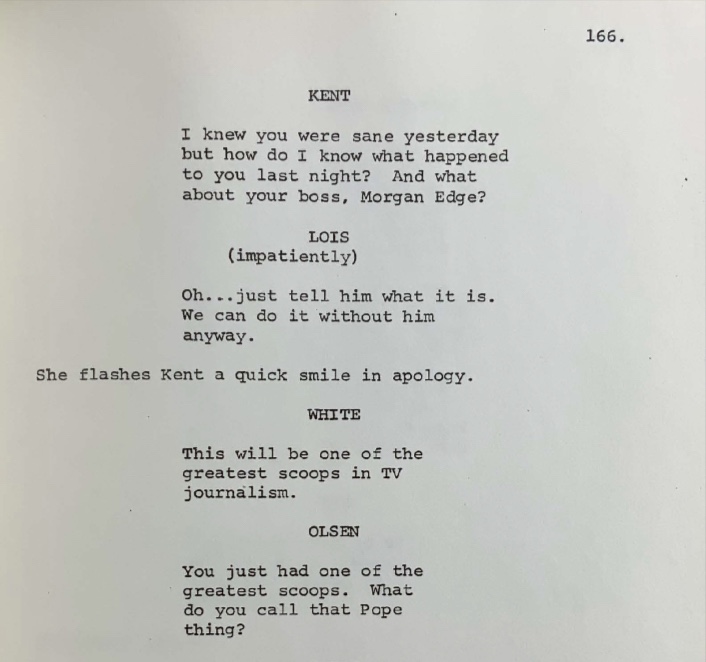
You’re not seeing things… he did. Over the next six pages Luthor describes his three great crimes to his henchmen and how the first of these crimes will be to travel to Rome and assassinate the new pope.
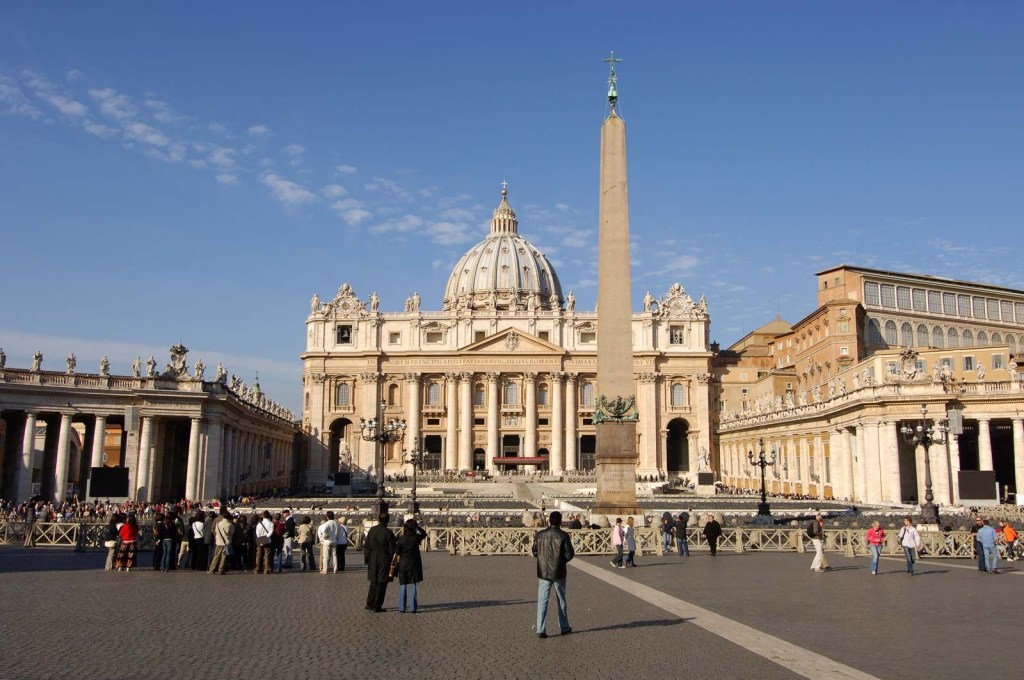
Now we know what happened to this plot point. Mario Puzo moved it from the first half of the script to the second half to fill out the action for Part II. However, in doing so, he forgot to edit Jimmy’s dialogue from page 166, thereby creating a continuity error in the process.
Puzo then adds a new bridging sequence of Morgan Edge assigning Jimmy Olsen and Steve Lombard to cover the story in Rome. Again, we can only hear Edge’s voice and not see him on any of the TV monitors in Perry White’s office.
From the second draft script: “The TV screen that is supposed to show Edge is filled with static lines.” Edge assigns Lois to go to a monetary conference in Geneva. “It may decide the fate of gold,” Edge comments. “That has to be covered, too. Render Caesar what is Caesar’s, remember?” Edge then gives a crazy laugh that is possibly not unlike the Joker’s in the 1989 Batman film or in the 2008 film The Dark Knight.
Perry then says, “I don’t think that monetary conference needs covering.”
Edge counters by saying that he doesn’t want Lois or Clark anywhere near Rome. “People who are always around other people to get them out of trouble never get any gratitude,” he says. “They just get known as a jinx.”
But Perry sticks up for his reporters. “The Rome assignment is a plum. I think it’s only fair that Lois and Kent get to go.”
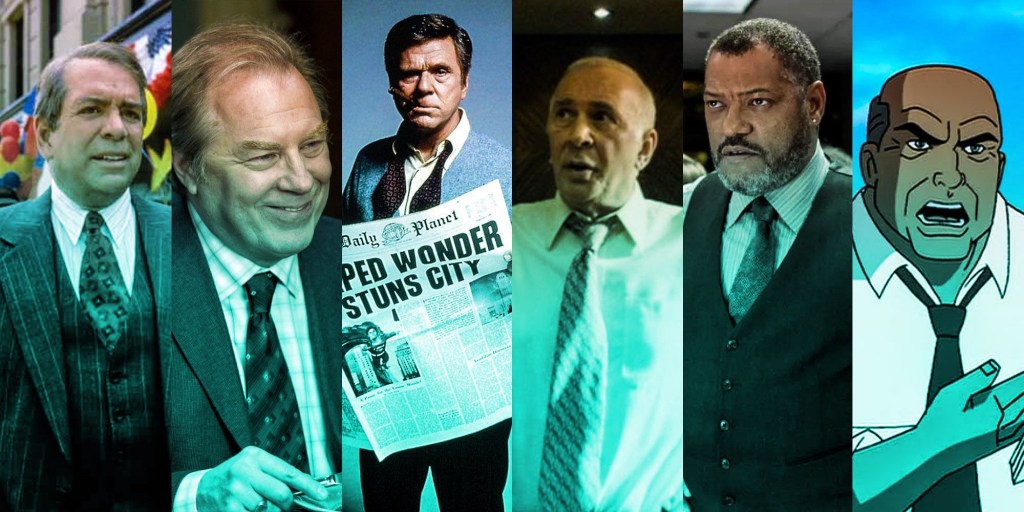
Which is your favorite portrayal of Perry White in the Superman franchise? Edge then snaps back, saying, “What is this fair stuff? In my forty years in business I never heard the word fair.” His image disappears from the TV screen at that point. It appears that Perry has done all he can for his reporters.
Then we hear an even creepier laugh, followed by this comment:
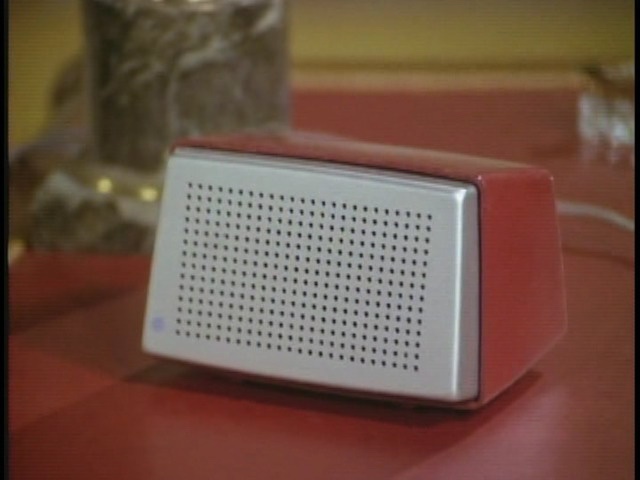
“Go look at the cuckoo clocks.” Some time later, all four reporters arrive in Rome. Jimmy expresses his concern to Lois and Clark, saying, “You two are going to get in a lot of trouble being here.”
Steve echoes Jimmy’s sentiments, adding, “What if Gold fumbles the ball?”
But Lois is confident that she and Clark have made the right decision. “Don’t worry about us. White and Edge will never know.”
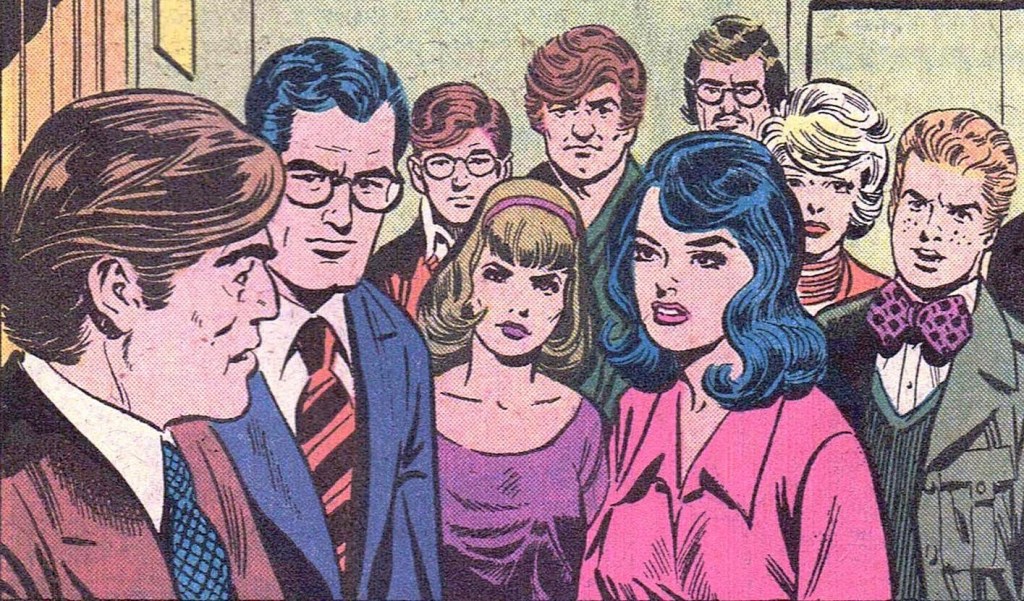
Or will they? The scene then continues with Lois and Clark heading to check into a nearby hotel, when a local boy steals Lois’ purse. Clark attempts to go after him, then turns into a nearby alley and catches up with the boy at super speed.
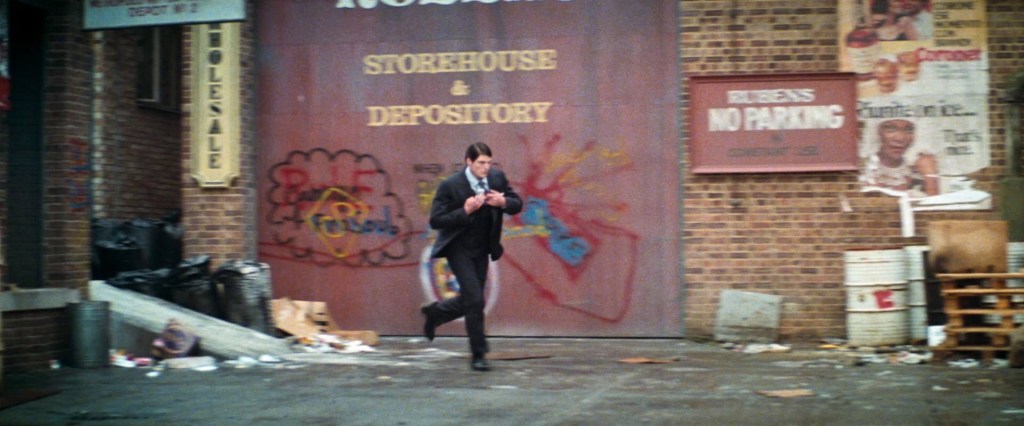
This brief bit from the script of Clark running at super speed through a deserted alley makes it into the final film in a revised format. Puzo has modified this part of the script, as in the first draft Clark was powerless to catch up to the boy. Now his powers are back in full force, as he returns Lois’ purse to her. She comments, “Either he fell down or you’re Superman.”
Clark replies, “He fell down.”
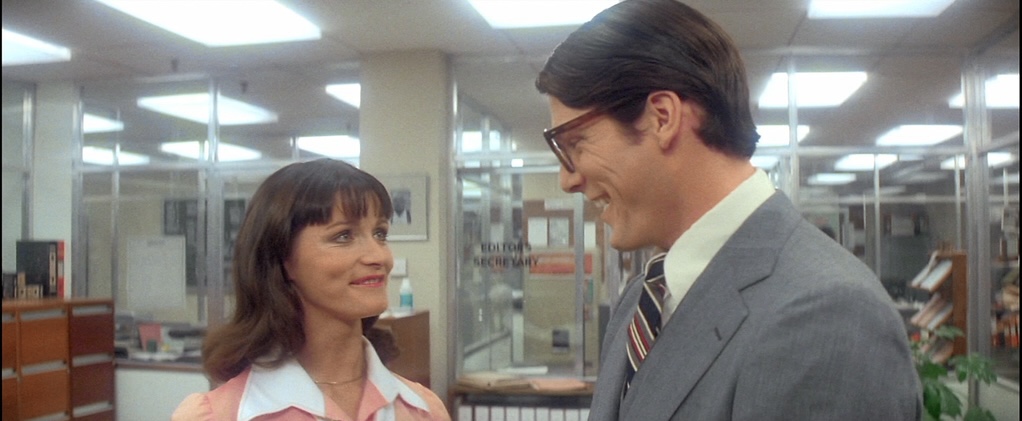
Kinda makes you wonder if Lois knows or suspects at this point… As he continues with the Rome sequence, Puzo has removed all of the references to Clark being powerless, as he has moved the sequence to the second half of the film. Interesting how this was fixed and not the reference on page 166.
Puzo then adds a new bridging sequence to the script. As the four reporters walk through Rome, they come upon a small church and hope to enter in and get some good pictures for their story. A priest stops them and says, “On the day of the Pope you take pictures? Blasphemy! Get inside and make your confessions. Make your souls pure for this day.”
Jimmy tells the priest that he is Catholic, and the priest allows him inside, while Clark, Lois, and Steve remain outside.
Jimmy goes inside and enters into a confessional booth to make his confession to the waiting priest.
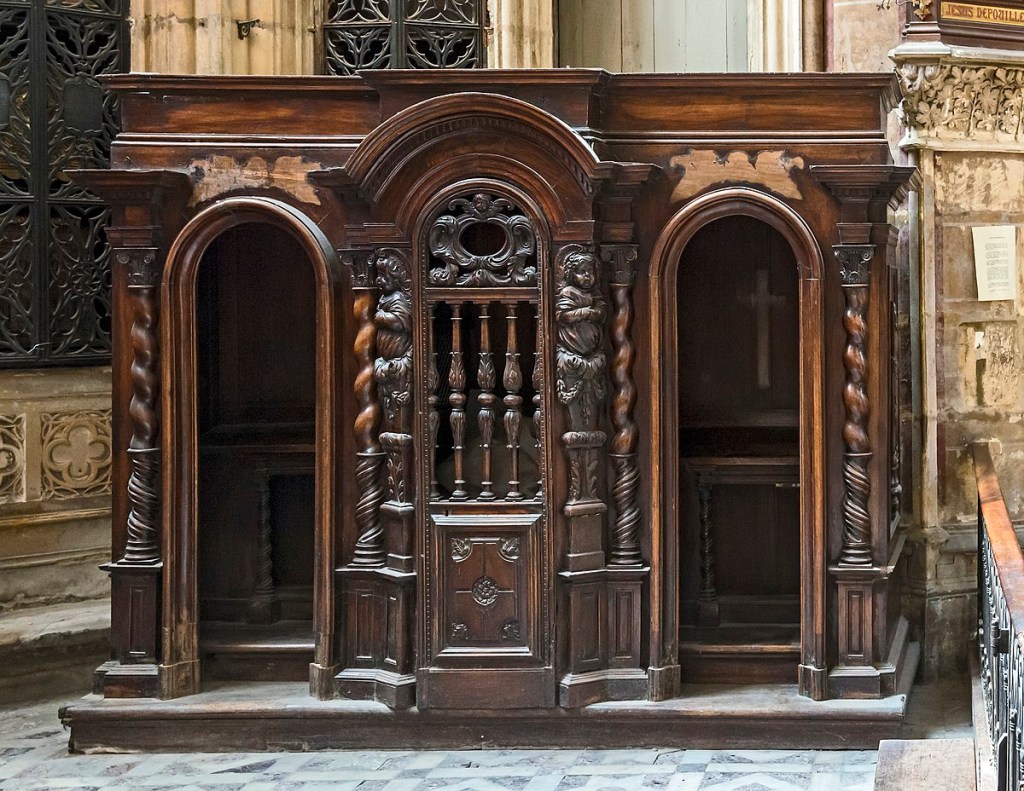
As he does so, Jimmy looks up and sees that the priest on the other side of the booth is none other than Lex Luthor, dressed in a priest’s robe. Jimmy rushes out and tells his companions, but by now Luthor has escaped from the church and disappeared into the streets of Rome, in the midst of lots of priests who happen to be on the streets at that time.
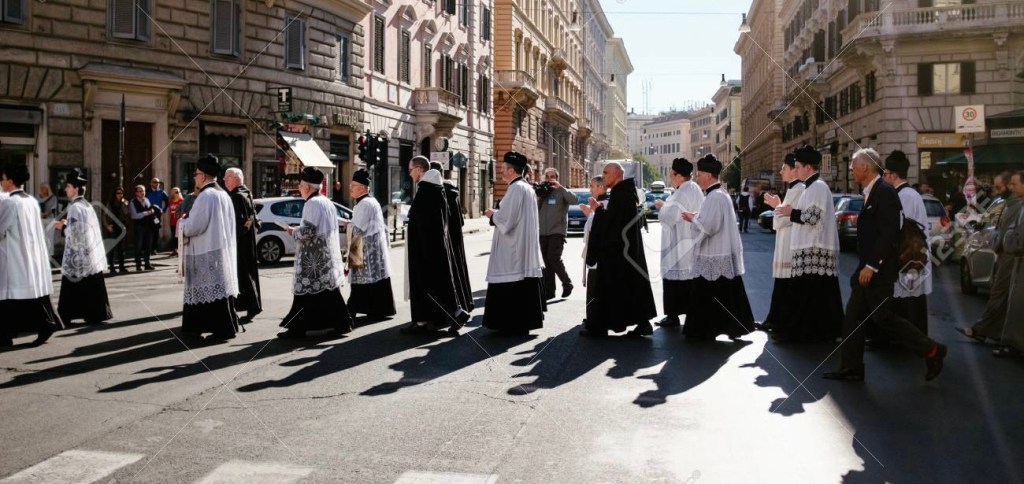
From there the script continues as before, as Luthor and his henchmen attempt to assassinate the Pope. Clark leaps into action and stops one of the henchmen, who manages to shoot one of the Pope’s cardinals and kill himself in the process. His last dying words to Clark: “This is nothing… this is nothing…”
The only difference here is that Clark has all of his Kryptonian powers back, and the end conversation between him and Lois where they both say, “Super ain’t happy,” has been deleted from the second draft script.
Next time: we will look at Lex Luthor’s second great crime.
(Some of the screenshots in this blog are courtesy of CapedWonder.com.)
-
The Puzo Scripts – Part 19: The Nuclear Threat, the Maguffin, and the Bridge to “Superman II”
Picking up where we left off, on page 191 of the second draft script, we find Lex Luthor, Eve, and his henchmen watching Perry White deliver the news story about the nuclear hijacking at the Army reservation and the miraculous recovery of Clark Kent from the nuclear radiation he suffered. From here, Luthor prepares his letters to the president detailing his demands.
What is interesting here is that Puzo has changed the delivery of the news report. In the first draft he had Jimmy Olsen on air. Here, he has Perry delivering the news story. It makes me wonder why he made the change in this version of the script. But it does seem kind of appropriate that it fits in with Perry’s career.

From Superman: The Movie: “I’ve been in this news game 40 years, man and boy, and I got to where I am with guts, compassion, elbow grease,…” 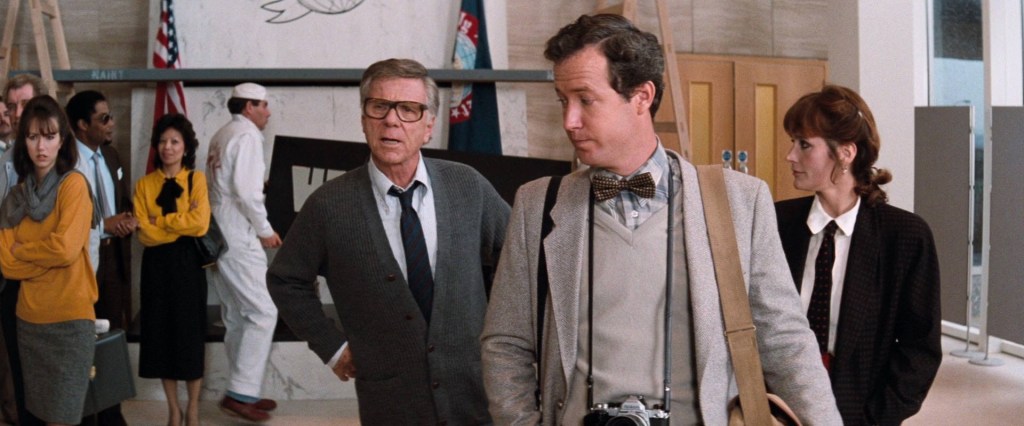
From Superman IV: “You know, I’m not a tycoon, I’m just an old reporter…” In this aspect it is fitting that Perry deliver the news story, as it eventually becomes part of his back story in the Superman films.
Later, we find Superman at his Fortress watching the news story of the president refusing to give in to Luthor’s demands, and he goes into action as Jimmy Olsen reports on the red alert that has gone off in Metropolis. No changes in the script at this point.
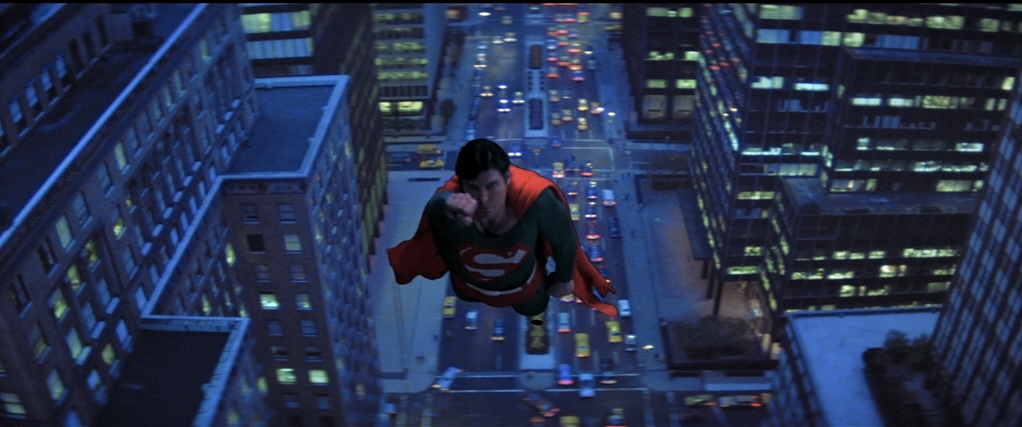
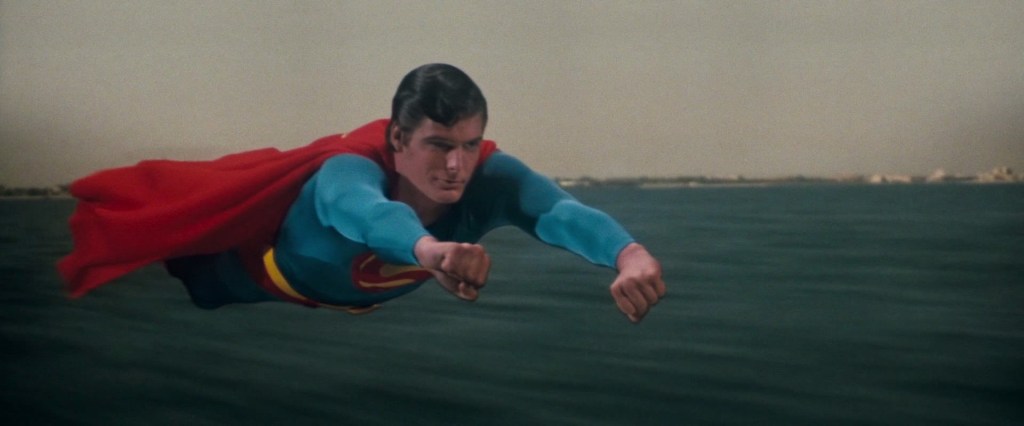
I love this flying shot. Christopher Reeve made it so believable for Superman to fly with one arm outstretched upward. Superman goes into action, promises to let Luthor go free if he tells Superman where the nuclear bomb is, and sends it into outer space.

This aspect of the script survives into the final versions of the first and second films. The bomb explodes, ripping a hole in outer space and hurtling Superman back to Earth.

As conveyed in the theatrical version of Superman II in 1980-81. Again, no changes to the script up to this point.
Later, we are given the ceremony at the White House, where the president gives Superman the Congressional Medal of Honor and Lois accepts on Superman’s behalf. And it’s during a quiet moment with Lois that Clark sees what the explosion has wrought…
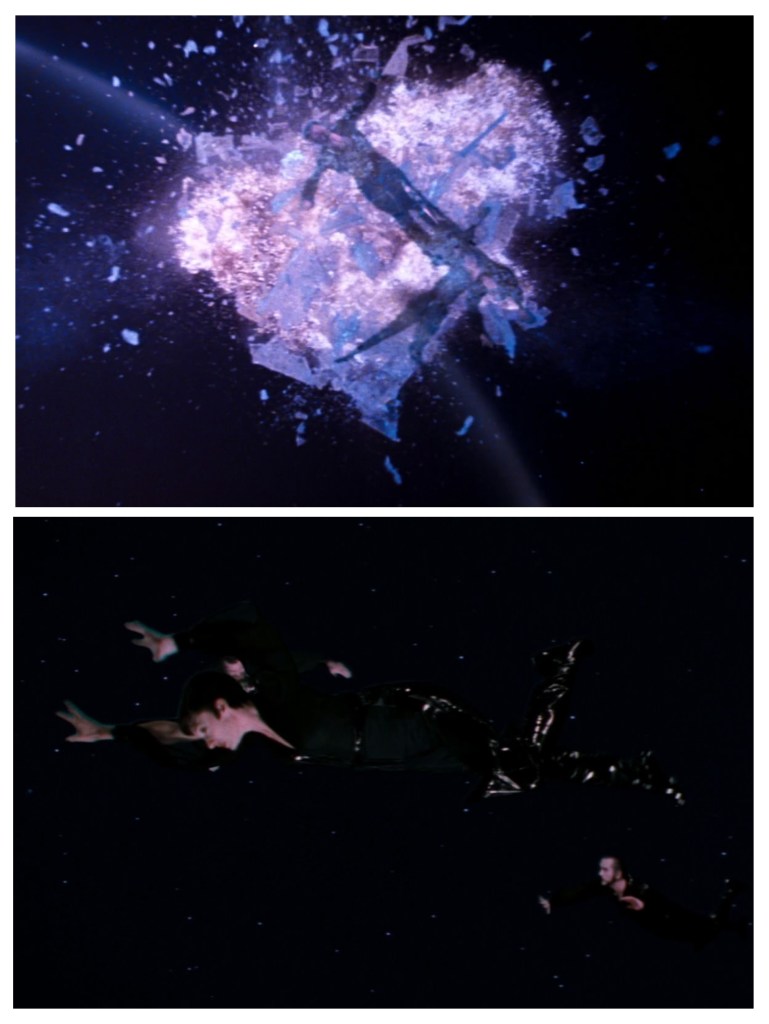
To quote Gandalf the Grey, “They are coming.” From this point on, Puzo briefly expands on the scene with an exchange between Lois and Clark, where she notices the concern in his eyes. “What is it, Clark? Any trouble?” she asks.
“Yes, but don’t worry,” he responds. “I figure it will take a year to get here. It has about seven million miles to travel.”
But it is here that Mario Puzo makes some very interesting notes. On page 209 he has written, “This might be a good place to end the first film. Now we go on to the three great crimes of Luthor and the arch villains of the Phantom Zone.” This is especially important because it is in this draft that Puzo has begun thinking about dividing such a long script into two films. While the previous draft gives readers an unclear dividing line earlier on in the script, Puzo himself has provided it here in this draft, even though certain earlier moments—Lois deducing Clark’s secret, giving up his powers, getting beaten by the bullies, and ultimately regaining his powers—would later be shuffled into the later scripts for Superman II. Furthermore, the entire maguffin of the two films, the explosion in space that results in the unleashing of the villains from the Phantom Zone, would be ported to the original ending of Tom Mankiewicz’s 1977 shooting script for Superman: The Movie and also used as part of the prologue in Superman II: The Richard Donner Cut.
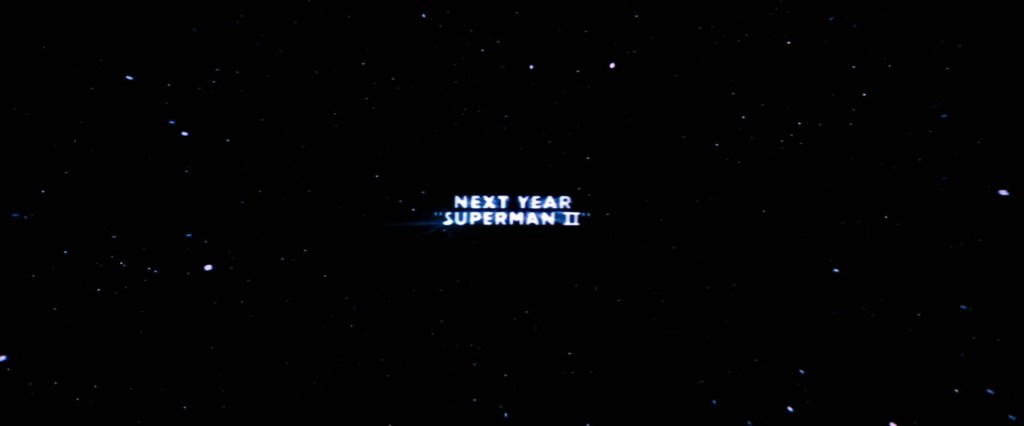
That final title card left fans wanting more. Moving into page 210, Puzo includes some additional notes about everything that has transpired thus far. He writes, “This section is rewritten to show Superman with all his powers regained since he has gone through the machine a second time. In this section Lois can no longer know he is Superman. Also, he is no longer vulnerable, so we lose some suspense in this episode.”
By later moving Superman sacrificing his powers to the script for Superman II, it provides a greater sense of character development and plot progression, as the first film sets up the origin story and showcases who Superman is and can be. As Christopher Reeve later said in an interview about the first film, “In the first film we had the obligation to tell the back story. Now, show us something.”
Then on page 211, Puzo provides even more notes that would build the bridge between the two films. He starts off, “The following would come after the first film ends (if you cut the film in half) just before Luthor tells about his three great crimes.” He then lists a montage of moments from the first half of the script that would provide a recap of what has happened so far, which includes:
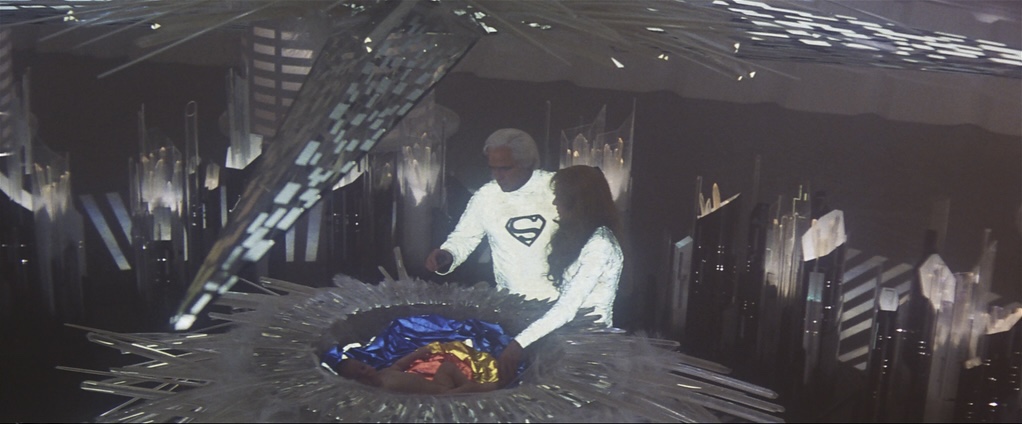
Superman’s parents placing him in the rocket ship… 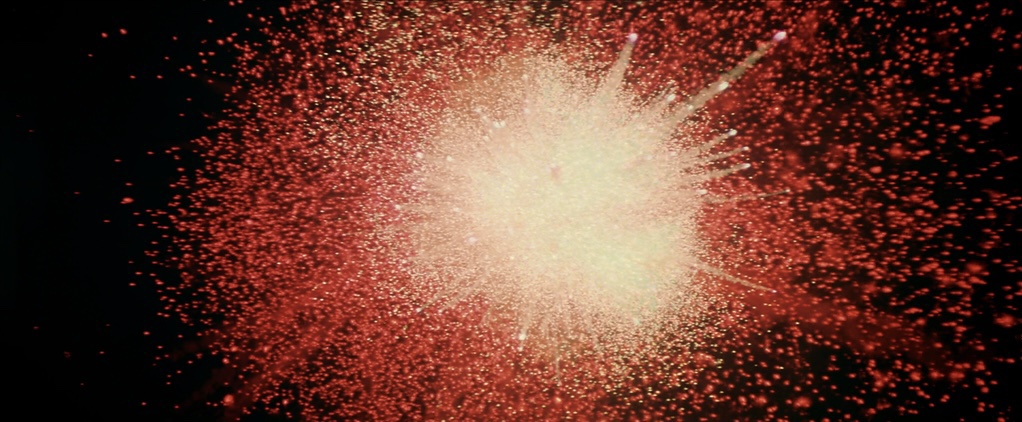
the destruction of Krypton… 
the Kents discovering the infant Kal-El… 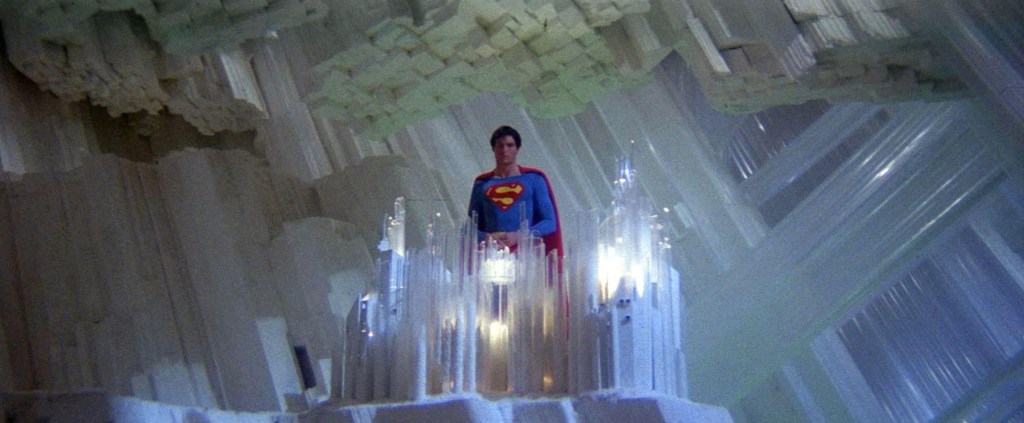
Superman at the Fortress of Solitude… 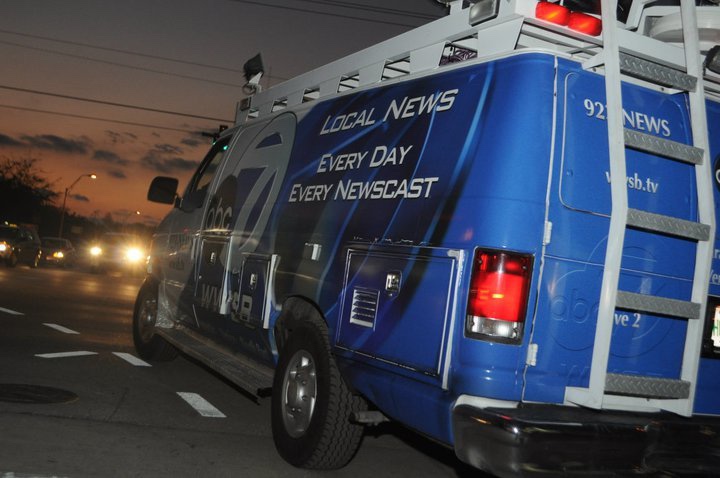
the WGBS News Team van in action… 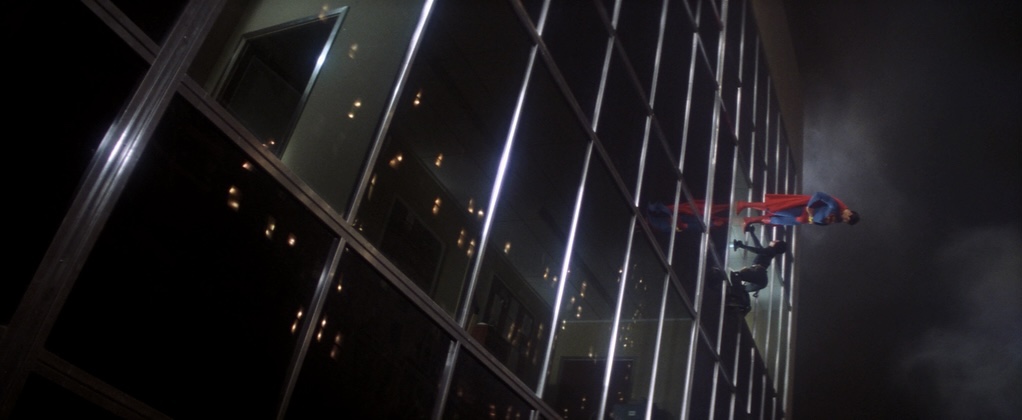
Superman nabbing the burglar along the side of the apartment complex… 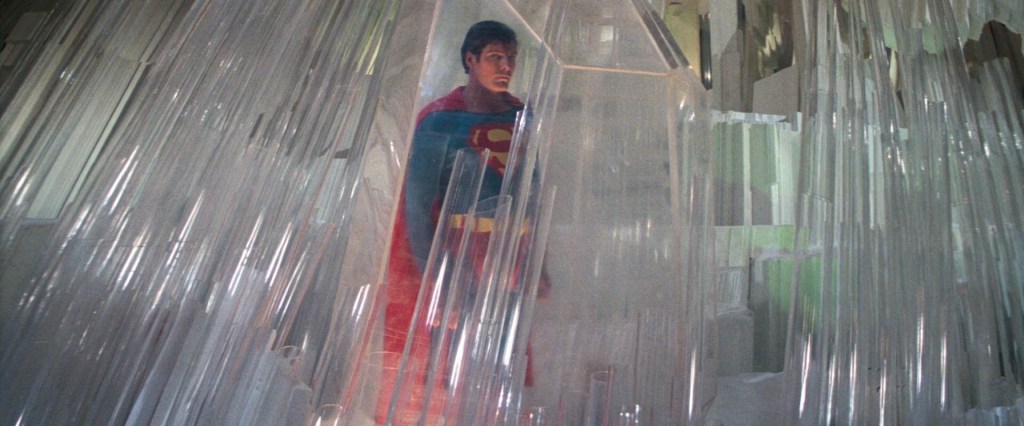
Superman in the destructuring chamber… 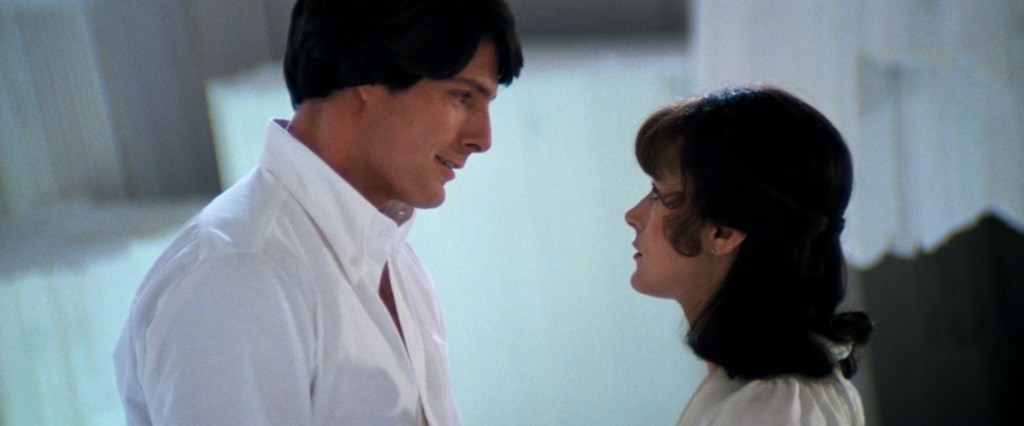
a tender moment between Lois and Clark… 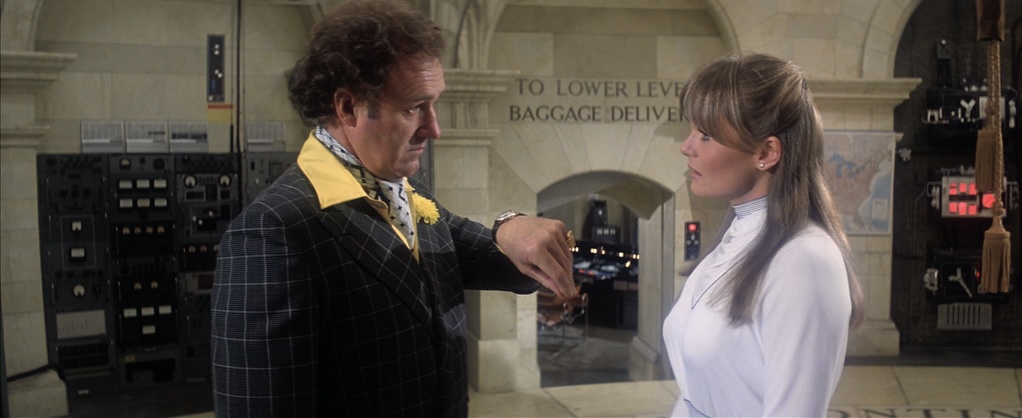
Luthor and Eve escaping from the Army complex… 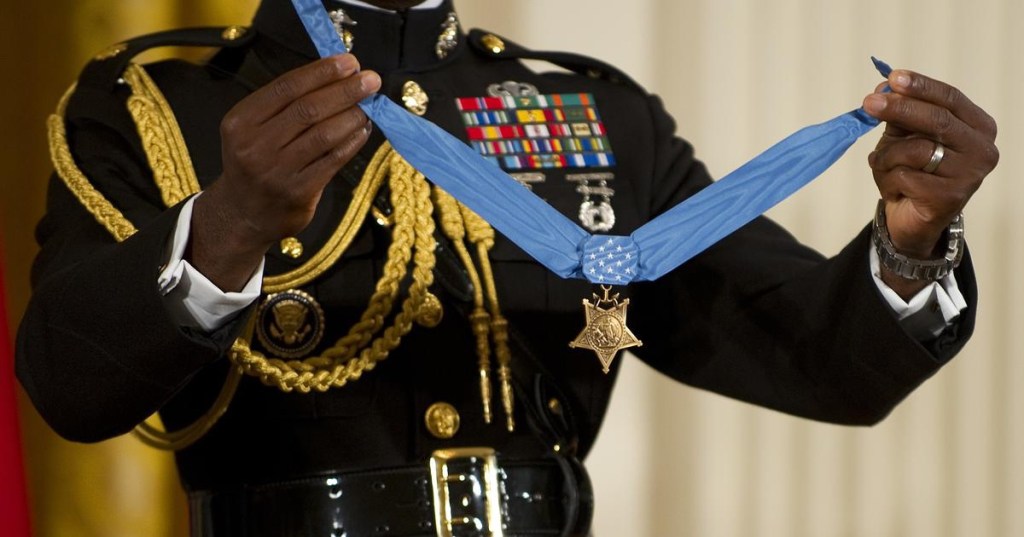
Superman receiving the Congressional Medal of Honor… 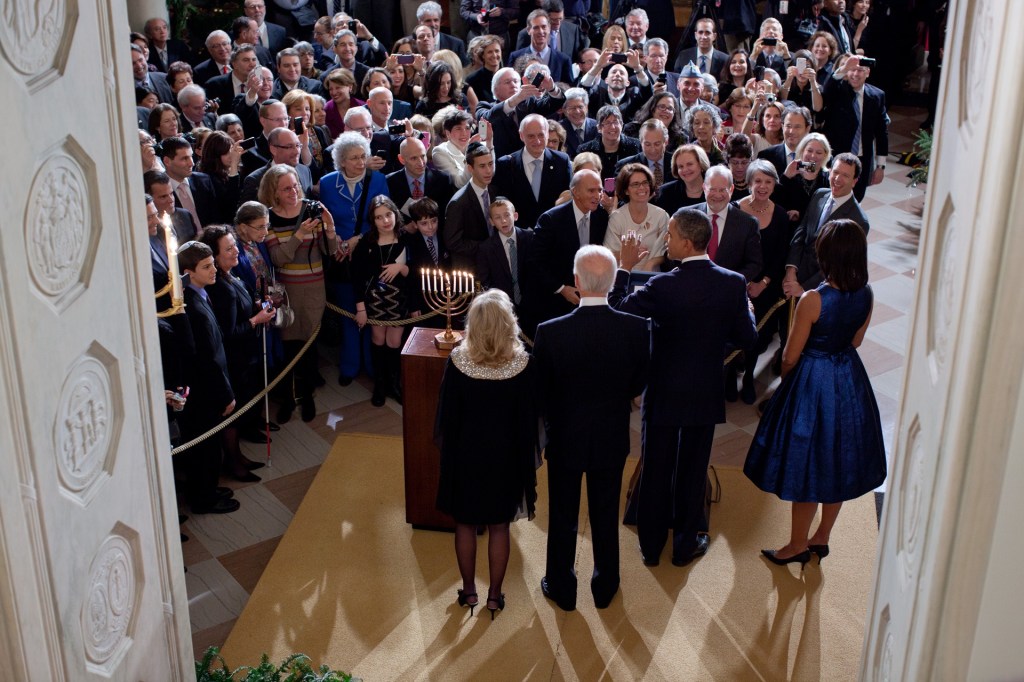
the White House celebration… 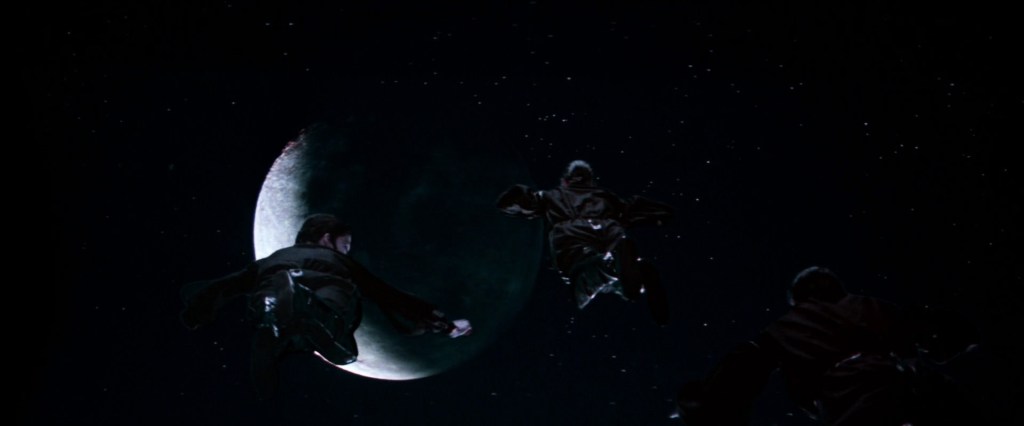
and the villains from Krypton on their way to Earth. It’s a lot to take in, but Puzo is determined to set up his framework for the story of Superman II in the final 100 pages of his script, and that’s where we will pick up next time.
(Some of the screenshots in this blog are courtesy of CapedWonder.com.)
-
The Puzo Scripts – Part 18: The Diner, The Assignment, and The Nuclear Heist Revisited, and New Material
Moving forward with page 158, we find Clark and Lois heading home to their ill-fated encounter with the truck drivers who nearly beat Clark to a bloody pulp. No changes to the script.
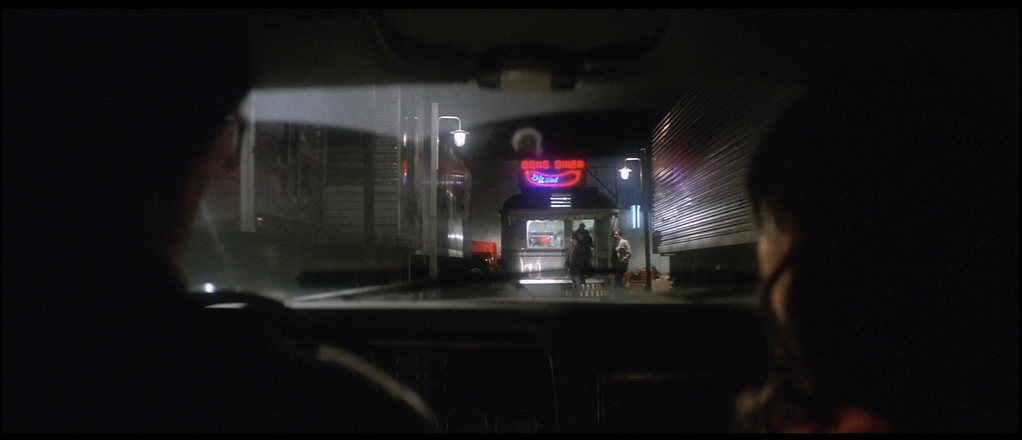
From there the script jumps to Perry White assigning Clark the story of the development of the hydrogen bomb at the Army reservation in Nevada.

This is especially significant for two reasons. First, all of the dialogue that was originally spoken by Morgan (Martin) Edge in the first draft script has now been given to Perry White. There is no presence or appearance from Edge at all in this sequence. It is as if Puzo is deliberately phasing out any involvement of Edge’s character from the script.
Second, a lengthy portion of the first draft script is now gone. All of the scenes from pages 143 to 161 are completely edited out of the script. This includes Clark Kent’s news report, Luthor revealing his first sinister plot to Eve and his henchmen, and the entire assassination plot on the Pope by Luthor in Rome. Why Puzo removed these scenes is unknown. Perhaps he felt that these served no purpose in the overall story and slowed the action down altogether. Perhaps, upon reviewing the first draft script, the Salkinds asked Puzo to cut those scenes from the script. We will never know.
However, on page 166, there is still a reference to the assassination plot that Puzo accidentally left in. During their conversation with Perry about their trip to the Army base, Jimmy says, “You just had one of the greatest scoops. What do you call that Pope thing?” Even great writers are prone to continuity errors.
From there the scene shifts to the action at the Army reservation, where Lex Luthor steals several nuclear rods and causes a chain reaction that releases nuclear energy around the base. Among those affected is a powerless Clark Kent, who slips into a coma. Nothing has been edited from this sequence.
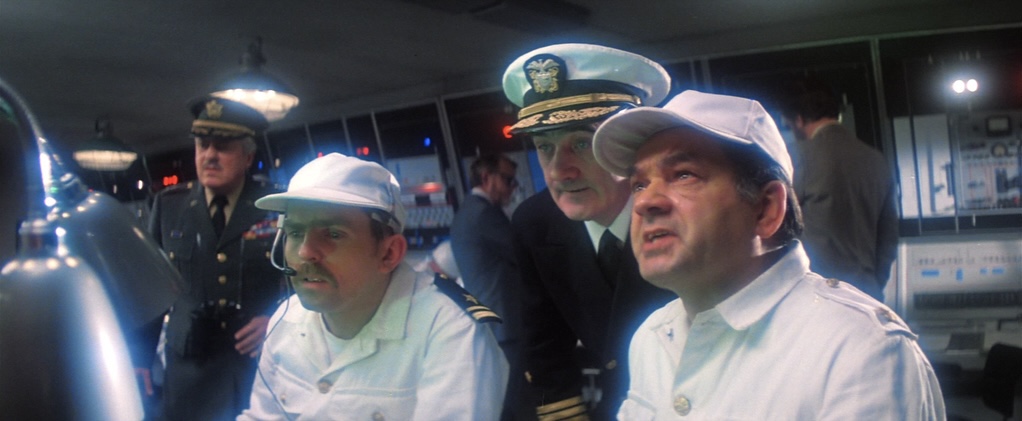
From there it’s up to Lois, Jimmy, and Steve to spring a comatose Clark from the hospital and get him to his Fortress of Solitude, where the Kryptonian chamber can heal him and restore his powers to him.
Up until this point these moments have been duplicated from the first draft script, but at the bottom of page 176 we are treated to a new expansion of material. As the ambulance heads for the airfield, Lois says, “We need to find the Galaxy airplane.”
At this point we see a surprising turn in character from Steve Lombard when he says, “We’ve had it on alert. It should be ready.” He then tells Lois and Jimmy, “I flew twin engines in Vietnam.”
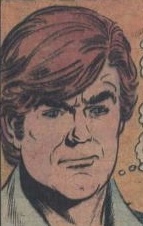
Steve Lombard, military veteran. You learn something new every day. Too bad the comics never pursued this side of him. As they reach the Galaxy plane, Steve takes charge with getting the ground crew to get the pilot and crew ready, then in getting Clark into the plane. This is a totally different side to the formerly flippant sportscaster than we’ve seen in the script or even in the comics. This is a Steve Lombard who is now risking life and limb to help save Clark at any cost.
With the police closing in, and no time remaining, Steve takes charge of the aircraft and flies it out. He then asks Lois, “Clark told you it was within 100 miles of the North Pole?” Lois gives him the coordinates to locate the Fortress. But with fuel running out and the landing gear malfunctioning, Steve manages to get the Galaxy aircraft onto the ground in close proximity to the Fortress of Solitude.

Any landing you can walk away from is a good one. The script then resumes with its previous material of Jimmy and Steve realizing that Clark Kent and Superman are the same person. They quickly get him into the Kryptonian chamber to heal him of the atomic radiation, and Lois realizes that once he regains his powers, they cannot be a couple anymore.
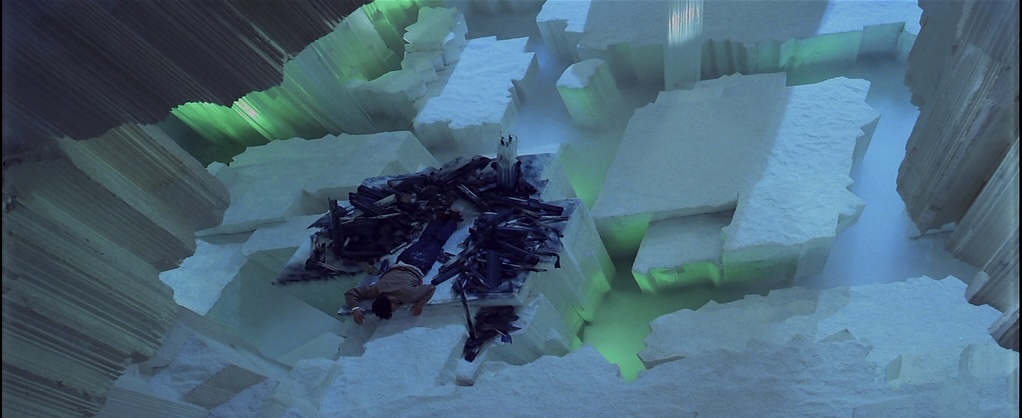
An unconscious Clark Kent in the Fortress, from Superman II: The Richard Donner Cut. Once he regains his powers, he slips the Kryptonian equivalent of a Mickey to Lois, Jimmy, and Steve so they can forget what has happened. Only Lois fakes falling asleep, and later on she slips into the Kryptonian computer chamber to see if she can get super powers and be Superman’s equal. Here Puzo again references her dream of being a Superwoman.
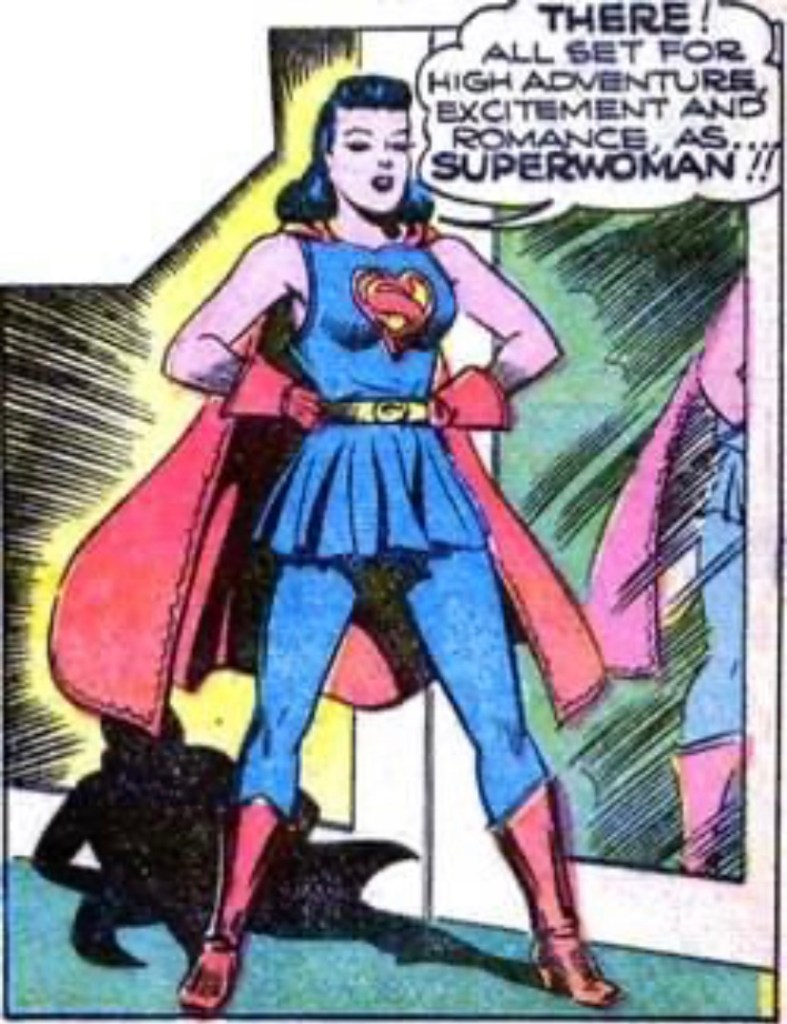
Lois’ dream of being a Superwoman first appeared in Action Comics #60 on March 16, 1943. And as with the previous script, this, too, has been carried over into the second draft with no revisions or additions. Superman tells her that the machine only works on Kryptonians, not humans, and she, too, must forget as well.
Next time: the nuclear threat revisited.
(Some of the screenshots in this blog are courtesy of CapedWonder.com.)
 Superman: The Blog