-
The Puzo Scripts – Part 17: Mr. and Mrs. Superman?
Yes, that subtitle says it all.
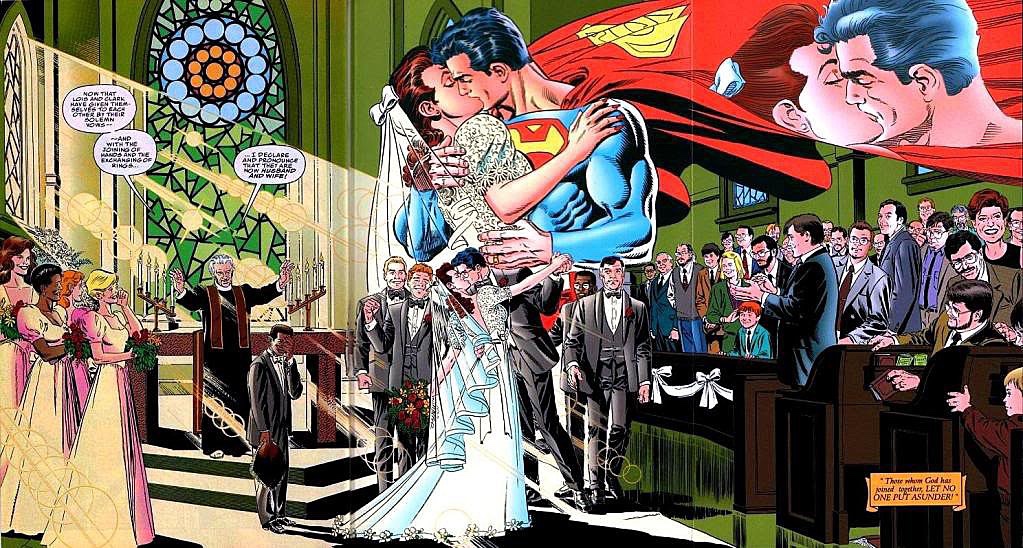
The comics event of 1996. Unfortunately, it got annulled when DC Comics revamped Superman in the 2010s. Let’s face it, people have wanted to see Superman and Lois Lane get married for decades. It wound up being one of the longest courtships in the 20th century, exceeded only by Popeye and Olive Oyl. In many circumstances the marriage served as a way to trap one of Superman’s villains or as a dream, as in the Adventures of Superman episode “The Wedding of Superman”.
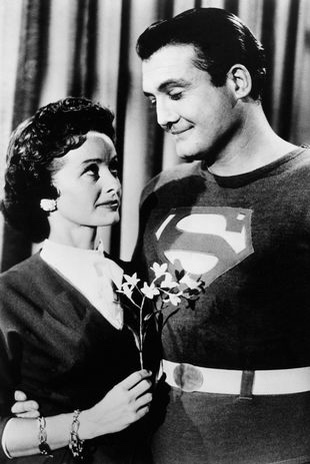
Not to mention the final season episode “Superman’s Wife”, in which he proposes to Sgt. Helen O’Hara during a crime probe, and to everyone’s surprise she accepts.
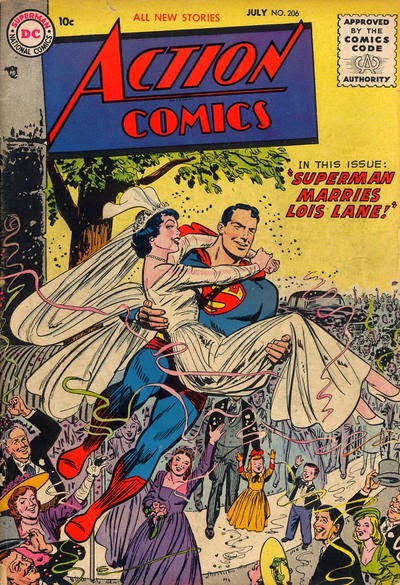
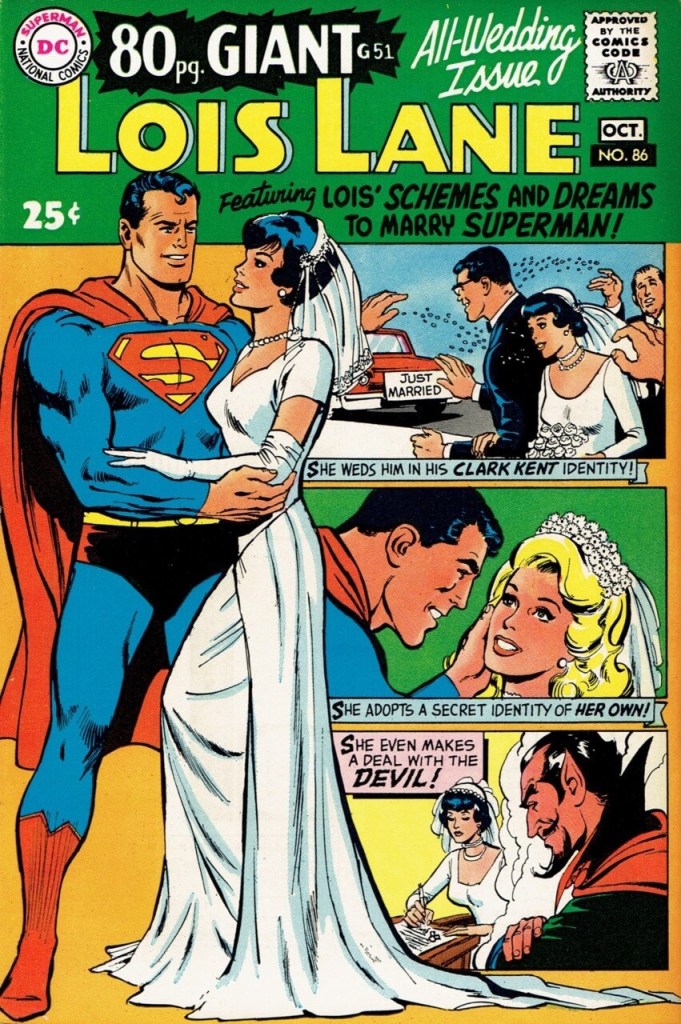
But it wasn’t until the 1990’s that the thought of the Last Son of Krypton settling down with Lois Lane in wedded bliss, and it actually happened in the comics and on television in 1996. DC Comics produced a lavish one-shot entitled Superman: The Wedding Album that brought together many of DC Comics’ creative talents. And on Lois and Clark: The New Adventures of Superman, guest star Delta Burke attempted to foil the title character’s heavenly nuptials in the episode “Swear to God, This Time We’re Not Kidding.”
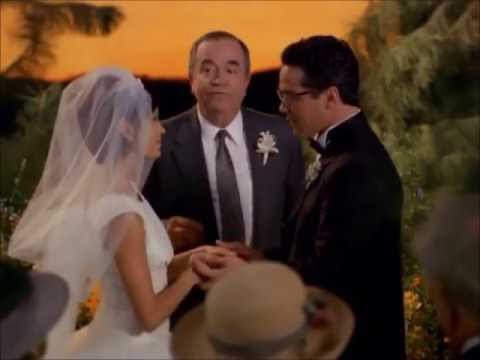
While the comic book marriage lasted a while longer, the TV marriage didn’t, and the series ended less than a year later. It wouldn’t be the last time. In the series finale of Smallville, part of the subplot of the two-hour final episode dealt with Lois and Clark tying the knot. And the current CW series Superman and Lois focuses on the two leads as a married couple raising two super-powered sons.
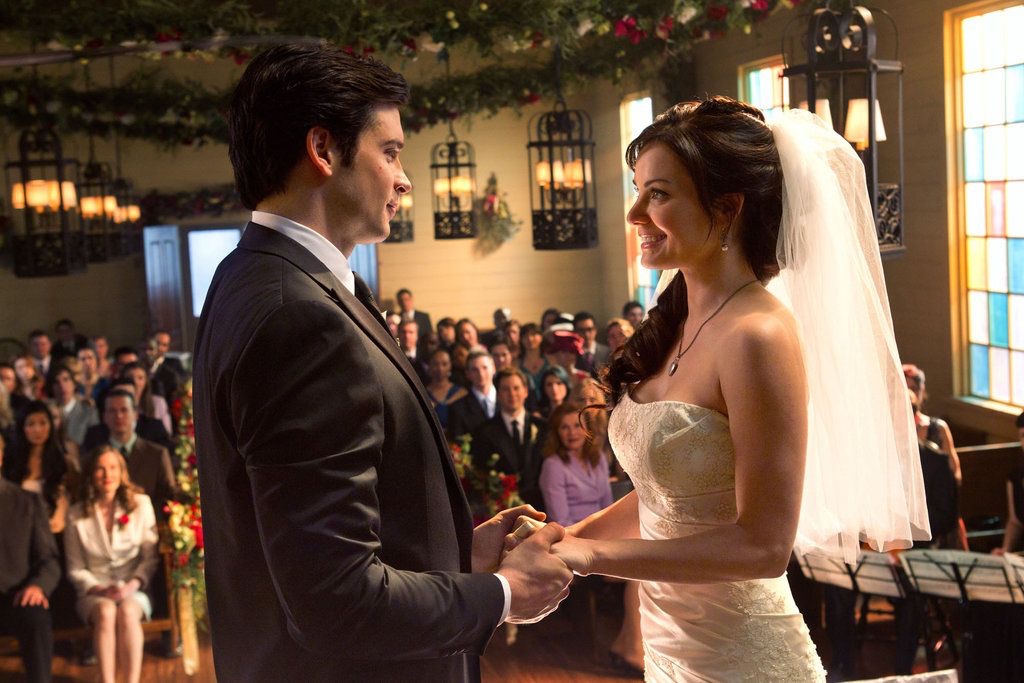
But believe it or not, Mario Puzo also came up with the idea of Superman and Lois getting married in his second draft script from October 1975. Let’s jump back in and see where this takes us.
Picking up on page 137 of the script, we find the couple at the Fortress of Solitude, having dinner together complete with champagne and talking about his plans to give up his powers and become a mortal man.
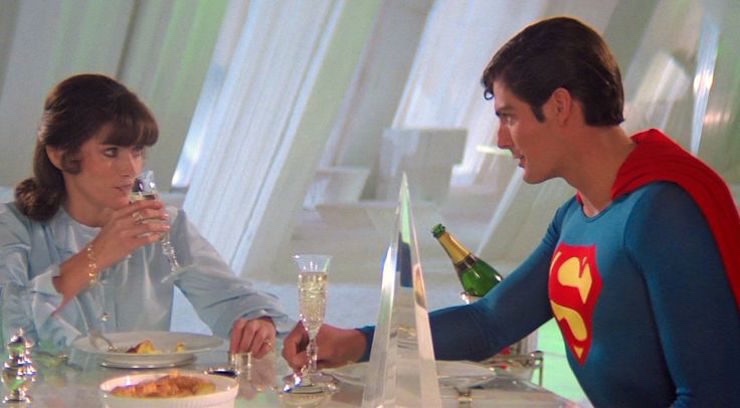
Everything with the script—consulting Jor-El and Lara, sacrificing his powers, Lois testing him—is consistent with the first draft script, with no additions to these moments.
It is not until page 146 that the discussion of marriage comes into play. Superman informs Lois that they should get married and prepare a wedding feast. He says, “On Krypton the principals exchange vows and pledges… and I have lots of cookbooks.” They soon have a huge feast set up with various dishes of French, Chinese, Italian, and Greek foods, even with Lois insisting that they have a couple of greasy hamburgers instead.
Before they can dive into their wedding feast, Lois suggests that they should get married. They go outside and overlook the Arctic lands, and it is in the balcony that they recite vows to each other pledging their love for each other. It’s a most unusual wedding ceremony because there’s no officiating priest present. Lois comments at one point, “This sounds like a Muslim ceremony,” then at another point, “It sounds more like a joint declaration of war.” It’s a most unusual wedding to be sure.
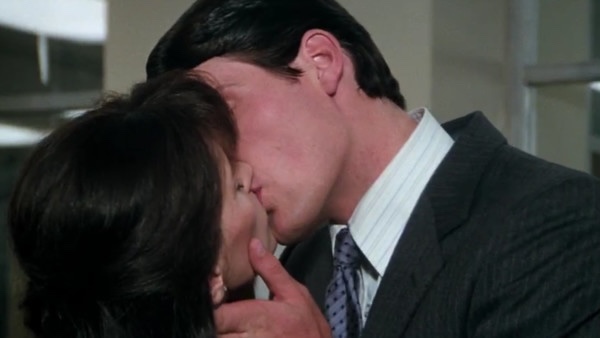
“You may kiss your bride.” Afterwards they indulge in their huge wedding feast. Superman is eating everything in sight like a chow hound and marveling at the fact that he’s never experienced all of these foods before. Lois just sits back, unable to eat a bite, feeling a little angry towards his newfound appetite.
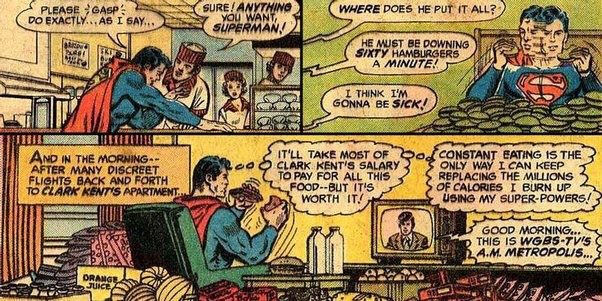
This little thing about Superman’s appetite would carry over into the 1977 screen tests, when Lesley Ann Warren (reading for Lois) says, “Do you want a cookie?” Then in the final film, Lois asks him, “Do you… eat?” To which Superman replies, “Yes, yes I do… when I’m hungry.” The script then continues as before, with Lois bringing Superman to bed, with the two of them making love together. The next day, she proceeds to get him drunk. All of these beats are repeated, with no changes whatsoever.
So what are your thoughts about Superman and Lois getting married at this point in the script? Should they have gotten a priest to officiate the marriage? Should the plot point have even been included to begin with?
Next time, the plot of Superman II continues…
-
The Puzo Scripts – Part 16: Superman II: The Mario Puzo Cut Begins
How many versions of Superman II are out there? Let’s count them all up…
First, there’s the theatrical version of the film that was released in 1980-81 (also unofficially and colloquially known in fan circles as The Richard Lester Cut.
Then there’s the extended TV cut that was shown three times on ABC in 1984, 1985, and 1987. There were also other versions which featured additional footage and were shown in overseas markets including (but not limited to) Canada, Denmark, and Australia.
Then in 2004 we were given the Restored International Cut, which brought together all of the footage from all versions of the film in one high-quality fan-produced cut. (Check out my blogs for the full story behind the Restored International Cut.)
That led to the release of the 116-minute version of the Richard Donner Cut on DVD, HD-DVD, and Blu-Ray, which followed closely to the original intentions that Donner and screenwriter Tom Mankiewicz had devised in 1977.
And in 2015 we saw an even longer version of the Richard Donner Cut released to Vudu and Amazon Prime which ran 122 minutes in length. This had been the original pre-release version of the film that was submitted to Donner for approval prior to the final edits that were made before it’s release on home video.
But now we have to go back to the beginning, back to the very first version of Superman II that existed, and it is what I call the Mario Puzo Cut. As we begin our journey through the second half of the second draft script, we can see what has changed, what has been added, and what has remained the same from the first draft script, especially considering that we have about 185 pages to go. If the previous script was, in essence, the original theatrical version, then this draft would be the extended version.
So without any further ado, let’s dive in!
Picking up on page 125, we find Superman consulting the Kryptonian memory banks for any information about protection against kryptonite. Jor-El and Lara tell him that the only way is to construct a lead-lined suit to protect himself.
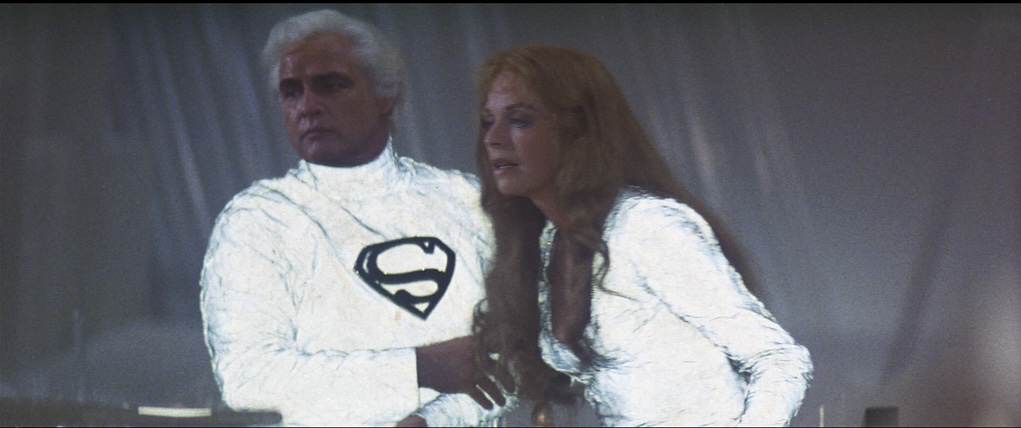
There just aren’t a lot of good pre-destruction shots of Jor-El and Lara together. Their onscreen time wasn’t all that much in the film. Which is what Superman begins to do.
So far, no changes to the script at all.
Then we see Lois preparing dinner at her apartment. The script describes her place as “the apartment of a forceful career woman of good modern taste. Lois is arranging settings for two on a table in a small alcove-type dining room that looks over the city.” This concept of her apartment overlooking Metropolis is something that makes it all the way into the final film.
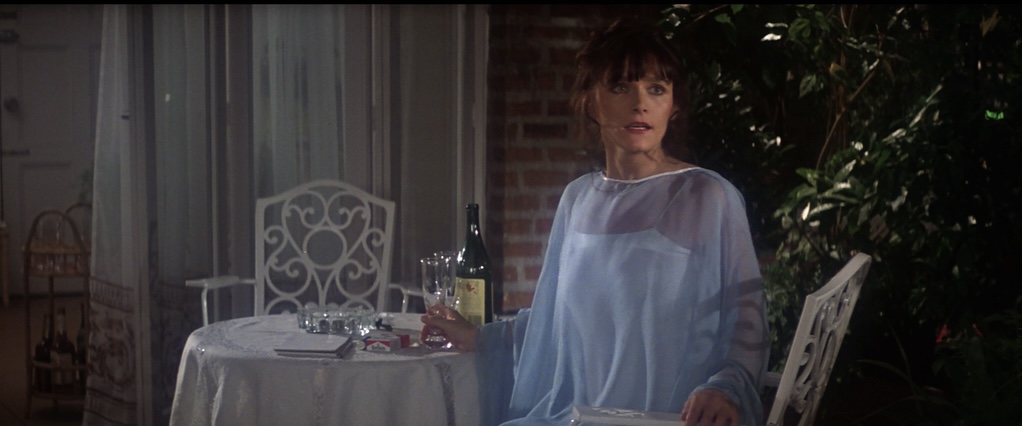
And as in the previous script, she’s out to prove that Clark Kent is really Superman, first by kissing him, then by bringing out the kryptonite belt that Lex Luthor trapped him in in Iran. But she doesn’t know that Clark is wearing the lead-lined clothes underneath his own clothes to protect him from the effects of kryptonite.
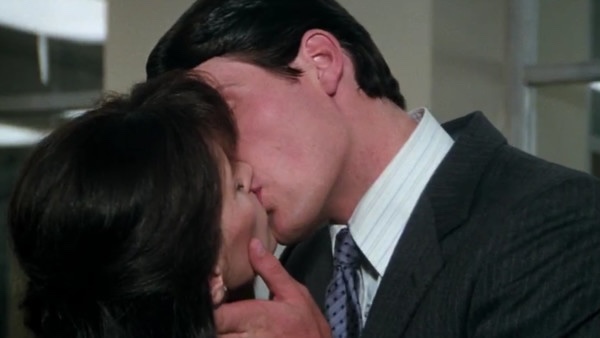
No memory loss here. You must remember this, a kiss is still a kiss, a sigh is just a sigh, the fundamental things apply… It is here that Puzo expands upon the dialogue between Clark and Lois. She says, “It’s funny being alone with you. Do you know you’ve never given me that look that men give women all the time?”
“What look?” Clark asks.
“You know. Men looking at women as if they are undressing them with their eyes.”
Puzo then describes how Superman uses his x-ray vision to look at Lois from top to bottom, seeing all the way through to her skeleton. Notice that Puzo refers to him as Superman, even though we can see that he is in his guise of Clark Kent and not Superman.
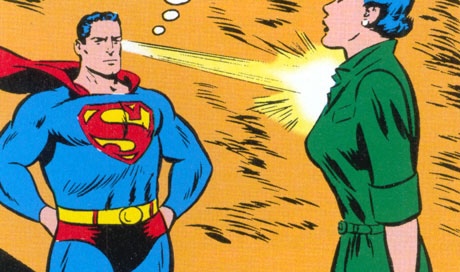
“Jeepers creepers! Where’d you get those peepers? Jeepers creepers, where’d you get those eyes?” Lois asks, “Like what you see?”
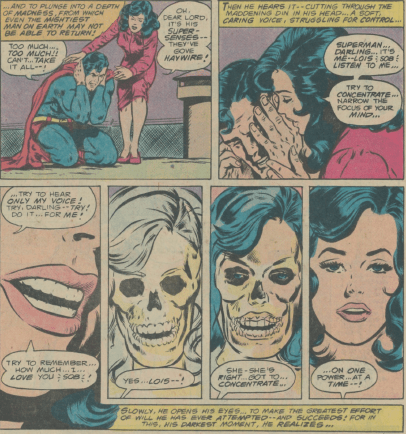
Another comic book effect illustrating the use of Superman’s x-ray vision on Lois. “You’re very beautiful,” Clark responds. He then asks, “When you were a child, did you have a fracture in your left arm?” An observation like that should have tipped Lois off right away, but Puzo makes no mention of it in the script.
The script then continues with their dinner together, and Clark saying that he should get going. Lois then tricks him again by wearing the kryptonite belt under a trench coat, and this time Clark collapses as a result of the effects of the kryptonite.
“When did you first know?” Clark asks.
“When I kissed you.”
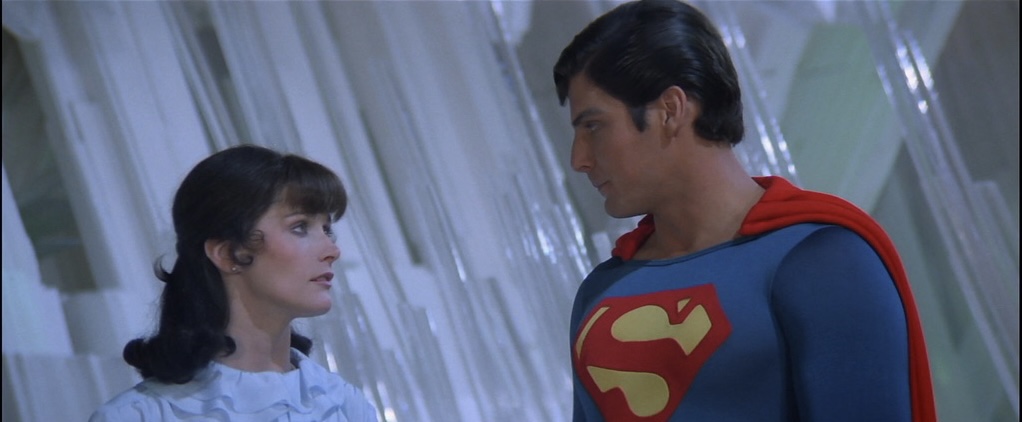
From there, the scene then shifts to the Fortress of Solitude, and the romance kicks into high gear.
Next time: Mr. and Mrs. Superman?
(Some of the screenshots in this blog are courtesy of CapedWonder.com.)
-
The Puzo Scripts – Part 15: Back to Iran

As we move into the next third of the second draft script, beginning on page 104, we find Clark Kent, Lois Lane, Jimmy Olsen, and Steve Lombard flying to Iran to cover the terrorist threats to that country’s oil refineries. The second draft script follows exactly as it did in the first draft script, with zero changes or revisions made. As someone might say, “Move along now, there’s nothing to see here.”
But I want to pause for a moment and focus on the character of General Ahmed, the Iranian military contact who meets with the four reporters and who ultimately betrays them to Lex Luthor. According to Puzo’s script, Ahmed is described as “a very silky, handsome man, charming.” With that kind of description, any actor at that point in time would have been a good candidate for the part.
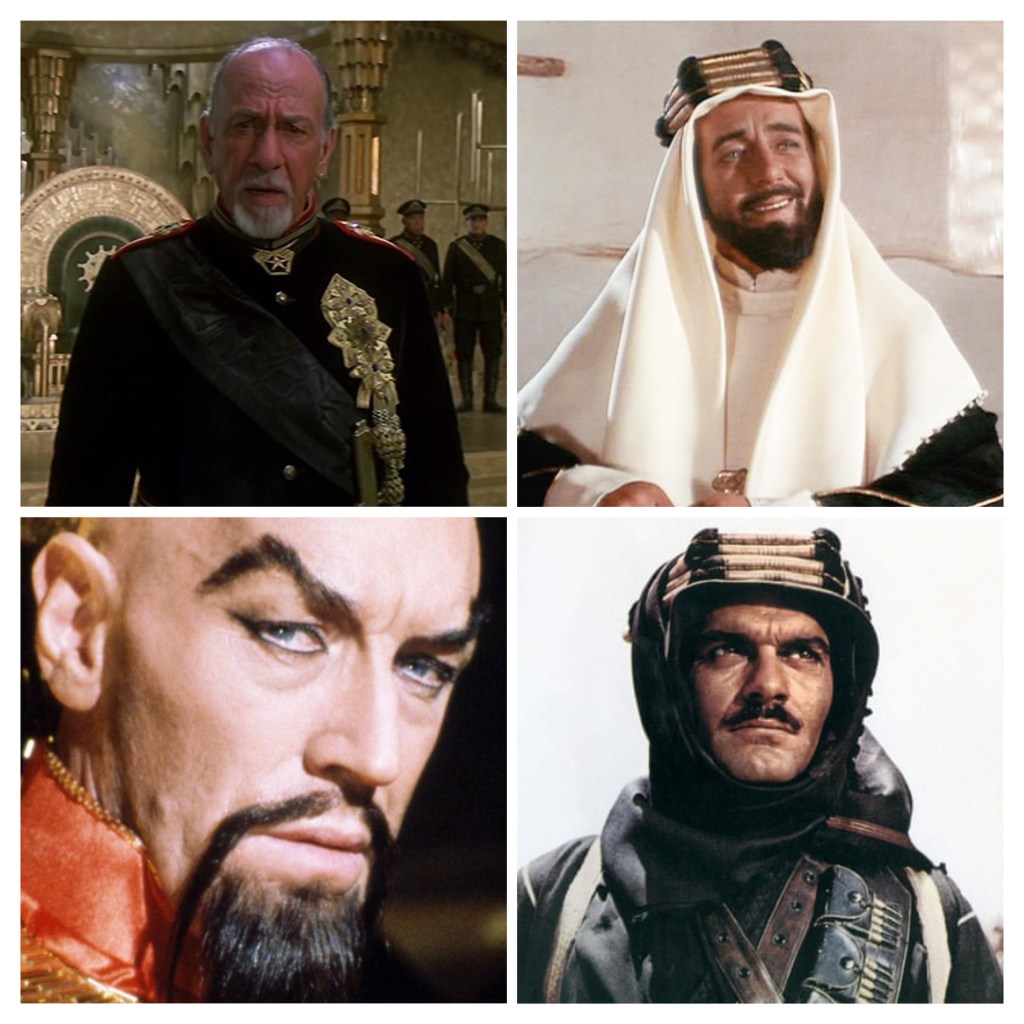
Some of the choices that come to my mind of actors at that time include Jose Ferrer, Sir Alec Guinness, Max Von Sydow, and Omar Sharif. Who would you have cast in the part? As with the previous script, we see a little romance blooming between Lois and Clark…
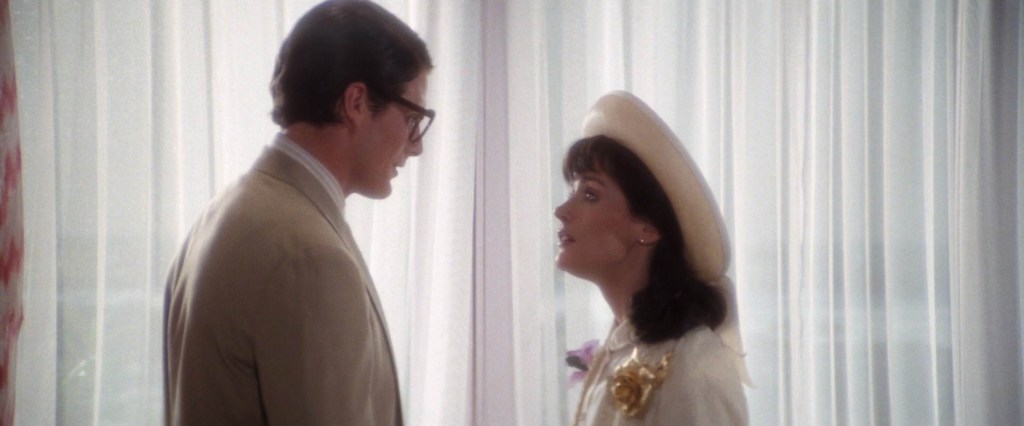
It is this little hopefulness on Clark’s part that Lois will notice him for him and not for Superman that will be integral to the final version of Superman II.…and then the explosions occur, and Lois recognizes that it is all a plot on the part of Lex Luthor and his henchmen, all of them dressed in Iranian army uniforms.

The action unfolds, and before long Luthor traps Superman with the kryptonite belt.
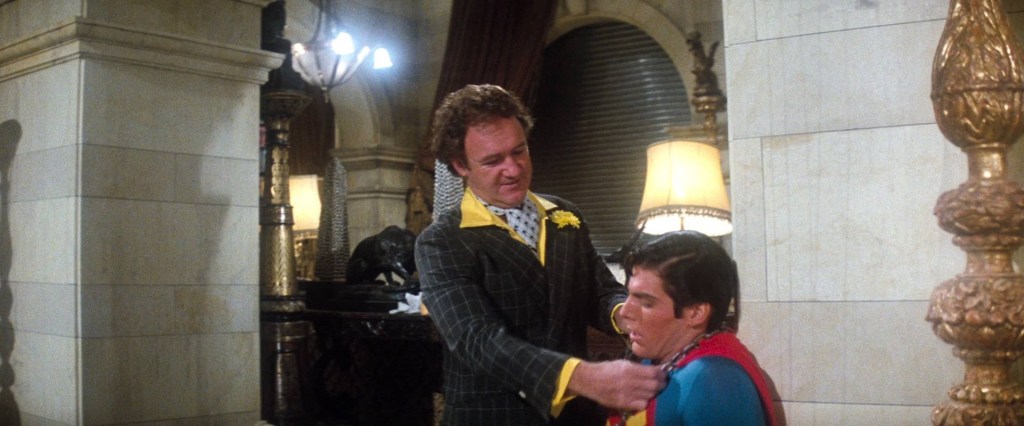
“Brain over brawn” in the Puzo script becomes “Mind over muscle,” and the kryptonite belt becomes a piece of kryptonite attached to a heavy chain, but the essence of Luthor trapping Superman is what will survive in the final film. The action then proceeds as in the first draft script, with Jimmy and Steve racing in to save the day and rescue Superman and Lois, no changes to the script at all.
It’s only afterwards when Clark, Jimmy, and Steve are waiting for Lois to arrive so they can leave Iran and head back to Metropolis that Puzo changes some of the details of Lois’ arrival. In the first draft she arrives by cab, but in the second draft she arrives seated on top of a camel.

This is from the 1999 version of The Mummy, one of my favorite movies. In my opinion, if a Superman film had been made around that time, Rachel Weisz would have made a great Lois Lane. And as they make their way back home, just like in the first draft script, Lois carries with her a lead-lined jacket that will protect Superman from being affected by the kryptonite. She says this while looking at Clark straight in the eye. That’s because she’s onto something that’s been going on since the showdown in Iran, and it’s not the WWE Crown Jewel event in Riyadh…
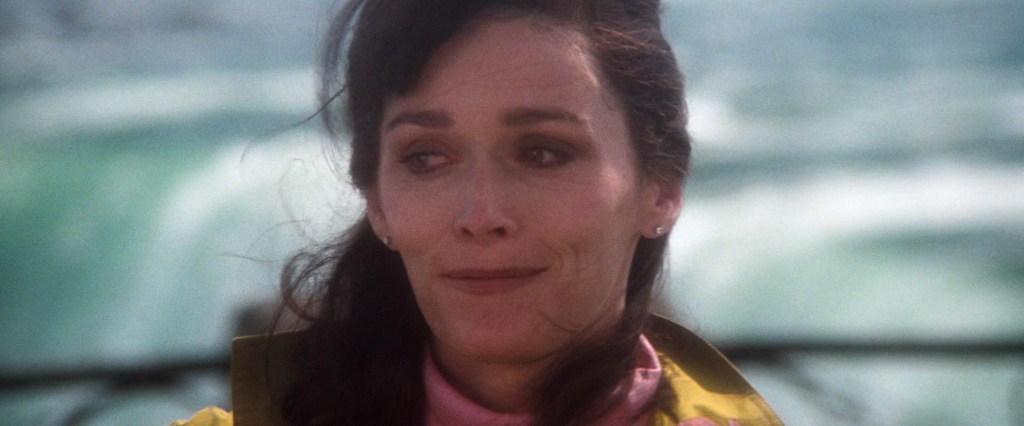
“And Clark is not around as usual… hmmm…” This is another element that will carry over into the final version of Superman II. Next time: the plot thickens!
-
The Puzo Scripts – Part 14: Diversionary Tactics, Morgan Edge Does Charlie Townsend
As we pick up on page 96, we find that Clark Kent is reporting on the decrease in crime in Metropolis all because of Superman, and nothing has changed in this beat.
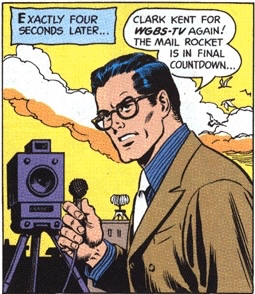
Coming to you live from WGBS… But it’s the next sequence that Mario Puzo fully expands upon and creates in the second draft script. In the first draft we find Luthor and Eve at the Metropolis Museum of Natural History. It is at that time that the heist is very quick, lasting all of about one page of script. Now, in the second draft, Puzo refers to the museum as the Metropolis New York Museum of Natural History. This is very significant because, beginning in the comics of the 1970s, Metropolis was viewed as a fictional substitute for New York City.

In issue #279 of Superman we find the Man of Steel observing a number of fire trucks responding to an emergency at the Twin Towers, a very ominous foretelling of what would happen first in 1993 and then ultimately on September 11, 2001. This would be a precursor to what would occur two years later, in July 1977, when filming on numerous scenes for Superman: The Movie would occur in New York City, with the city doubling as Metropolis. This sense of verisimilitude, the feeling of truth within a fictional environment, is something that occurred in the novels and short stories of Pulitzer Prize winning author Eudora Welty, long before Richard Donner embraced the concept of verisimilitude in filming Superman. We as viewers fully know that this is New York City, but we embrace the fictional reality that is Metropolis in the films.
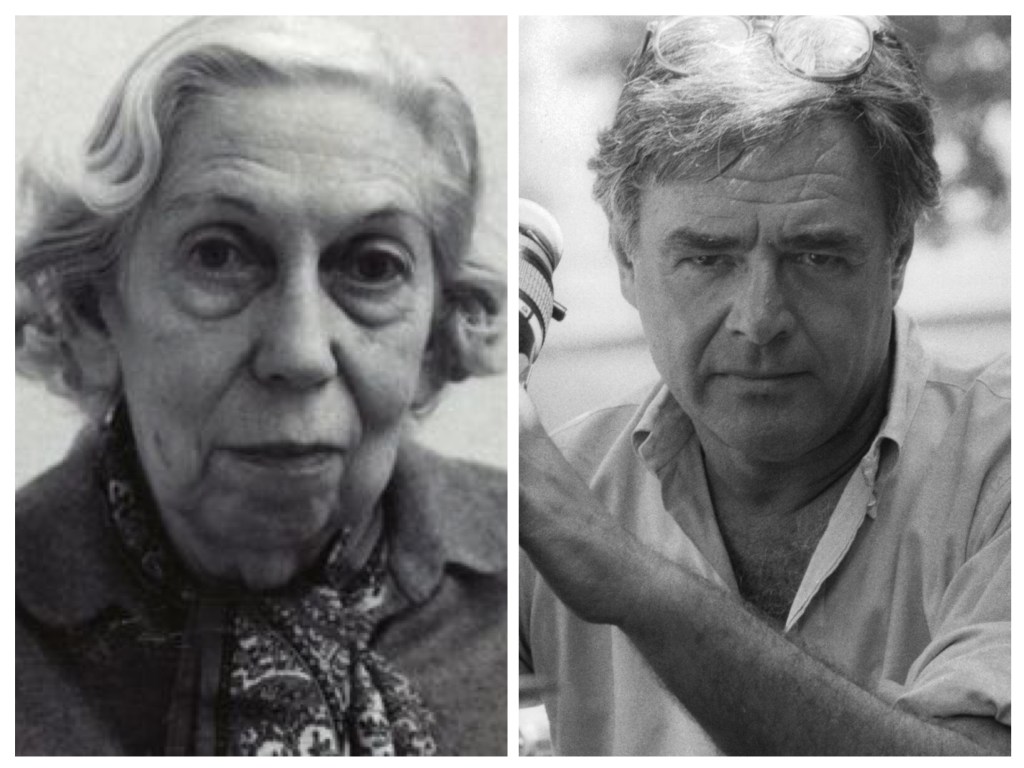
Eudora Welty and Richard Donner, architects of verisimilitude in their respective crafts. From this point, over the next five pages, we see Eve attempting to distract a museum security guard while Luthor cuts into the security glass and steals a fragment of green kryptonite. The guard immediately catches on to their ruse, and Luthor is left with no choice but to knock the guard unconscious before they make their getaway.
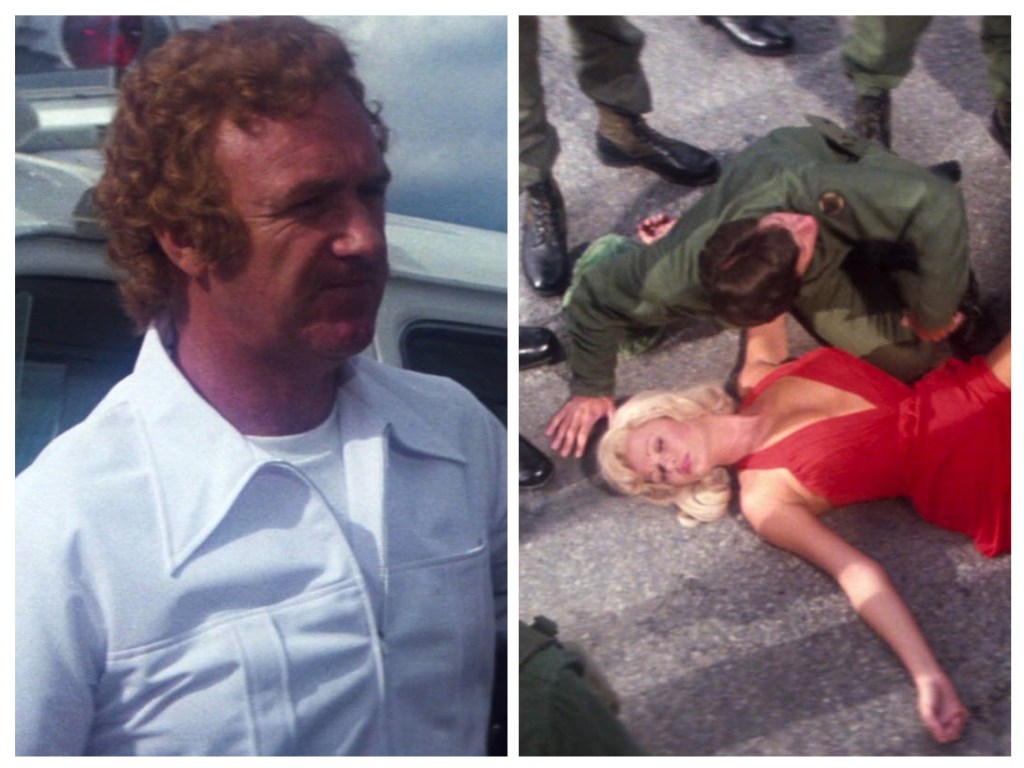
These diversionary tactics on the part of Lex Luthor and Eve would later become an essential part of the first missile hijacking sequence in Superman: The Movie. Furthermore, the reference to their break-in and theft would be referenced in an offscreen moment through a bit of dialogue spoken by Perry White in the final film.
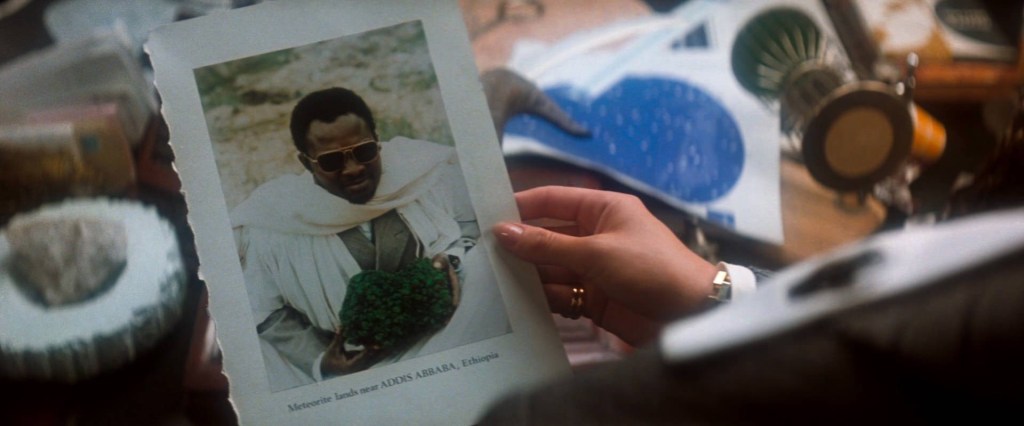
“Look at this dispatch from Addis Ababa,” Perry tells Clark Kent. “People break into a museum in the dead of night, kill two people, and what do they take? A worthless piece of meteorite. Now how do you figure that?” 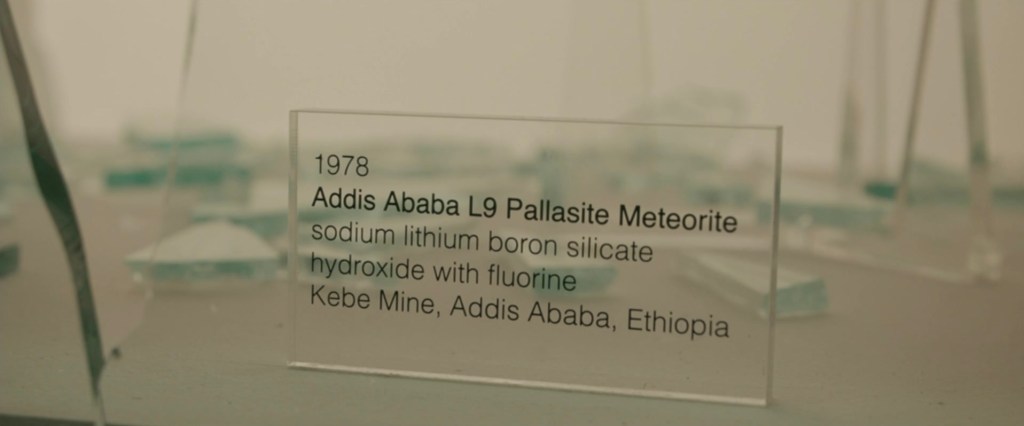
It would also be similarly referenced in Superman Returns in 2006. The next scene finds Morgan Edge addressing his reporters about the oil refinery crisis in Iran. Instead of meeting with them directly, he uses the closed-circuit in-house monitors to talk with them. As he says to Perry White, “The visual, Perry, the visual. You know I like to look my people in the eye.”

And yet in the next moment we see something most unusual. According to the Puzo script, “we catch a tantalizing glimpse of a massive head and then it disappears.”
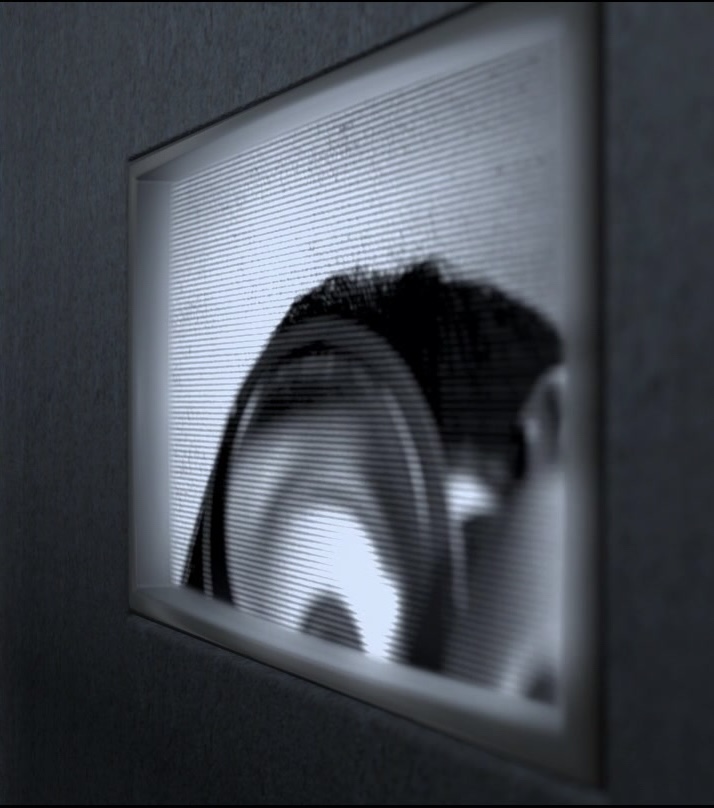
This quick introduction of Edna Mode from the Pixar animated superhero comedy The Incredibles is probably the best thing I can come up with that is similar to how we could visualize this moment in the script with Morgan Edge. Edge then says offscreen, “These damn controls don’t work. Anyway, you don’t have to see my eyes.” The rest of the scene is written with just Edge’s voice giving offscreen directions to Clark to travel to Iran and cover the story.
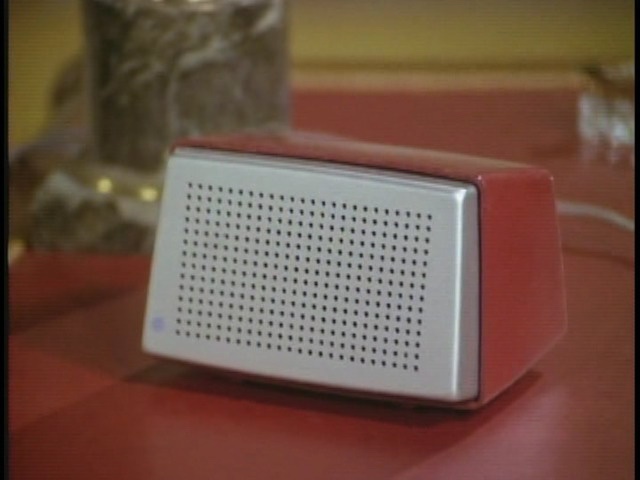
This brings to mind a similar manner in the original Charlie’s Angels TV series in which we would always hear the voice of Charlie Townsend (John Forsythe) give them their instructions, but neither they nor we the viewers would ever see him. Clark then asks a question that he later asks in the theatrical version of Superman II:
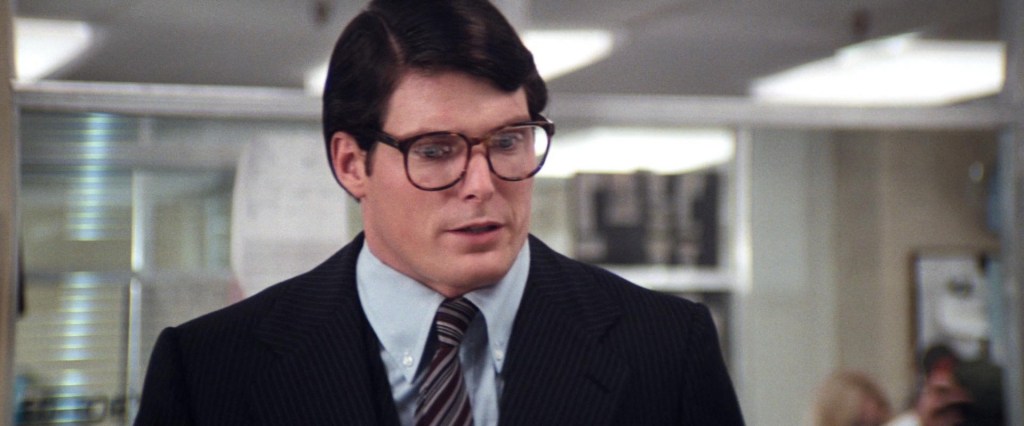
“Isn’t it a little dangerous?” Edge then dismisses the reporters, and all of the monitors go off. As Perry gives them their marching orders, they all look at the monitors for several moments and wonder if they are really off and Edge is secretly overhearing them. Jimmy then makes an ominous statement about Edge that has them all wondering about his intentions: “That maniac is going to get us all killed.”
The scene then ends with Perry telling them, “Don’t worry. We have big insurance policies on all of you. I’ll give you all the stuff you need. And I’ll put you all in for a raise.” This shift in reporting assignments adds to Perry White’s character development as the managing editor of his staff that we all know him to be.

Edge’s offscreen comments and lack of appearance in the story, coupled with Jimmy’s comments, further adds a layer of mystery about Morgan Edge and makes us, the readers, why Puzo is phasing him out of the script as much as possible, referencing him in offscreen bits without seeing him. Perhaps Puzo realized that Edge was more of a superfluous element to an already packed script and decided that he needed to go. Or maybe it’s an issue that he later addresses in the expanded script. Whatever the reason, it’s something that we will look at down the road.
Next time, the Iran crisis.
-
The Puzo Scripts – Part 13: Get Me Superman!
Picking up with page 67 of the script, we find Perry White chewing out Clark, Lois, Jimmy, and Steve about making up the entire story about Superman’s emergence in Metropolis. Two things leap out about this sequence. First, it is Perry who comes up with the name Superman in the story. This brings to mind how the concept of discovering who Superman is would be reshaped for the final film. This essence of Perry is something that is taken all the way through into the final film.
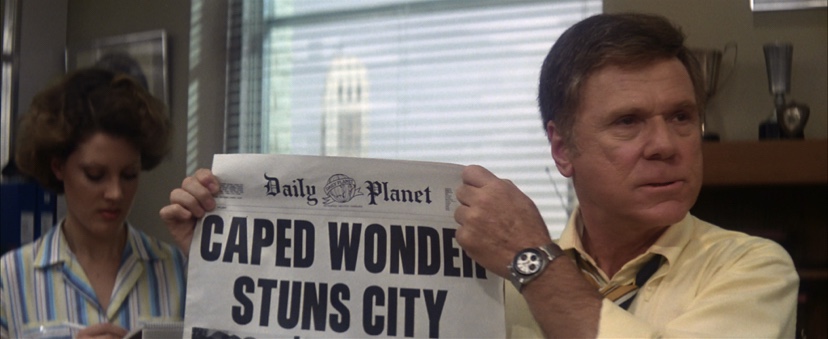
“I want the name of this flying whatchamacallit to go with the Daily Planet like bacon and eggs, franks and beans, death and taxes, politics and corruption!” (Interesting side note here: in Superman: The Movie, it’s not Lois Lane who gives him the iconic name at the end of the flying sequence. Rather, if you watch the scene where he deposits the getaway boat and the four tied-up robbers in front of the police precinct, listen very carefully to the scene. As he flies away, once Sgt. Dolan says, “Mooney…”, you can just make out one of the bystanders calling out, “Superman!” While it’s dialed out in the sound mix of the 1982 extended TV cut, it’s there in the original 1978 sound mix and the 2001 sound remix as well.)
Second, if you compare both scripts, you’ll see that all of Perry’s lines were originally written for Morgan Edge in the first draft, and they’re now given to Perry in the second draft. This continues through later moments in the script up to page 76 of the second draft, after the latest newscast on WGBS, as Morgan Edge’s lines have been given over to Perry. It’s as as if Puzo had realized that Edge was superfluous to the overall story and began phasing him out of the story altogether, reducing his involvement as a result and increasing Perry White’s importance to the overall story.
At this point, however, Steve Lombard still appears as a second fiddle character, continually hitting on Lois and trying to play Clark Kent for a fool. Nothing through page 81 has changed from the first draft script where Steve’s character is concerned.
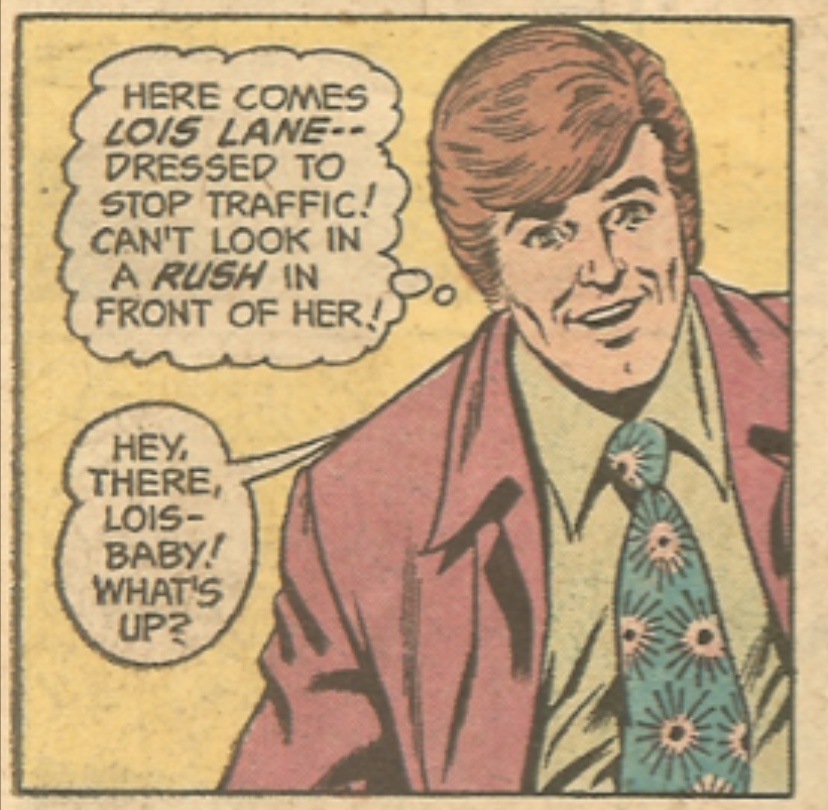
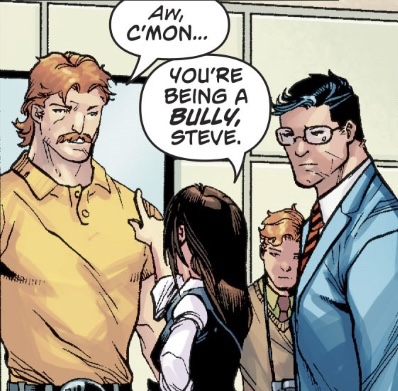
So the question is, why is Steve Lombard even around in this script? Later, as the reporters are delivering their newscast, Steve Lombard mentions the upcoming Super Bowl between the New Orleans Saints and his former team, the Tucson Orphans. This is particularly interesting because it would be decades before the Saints would not only go to the Super Bowl in 2010, but also win Super Bowl XLIV.

Later, during the reporters’ encounter with the drug dealers, Superman has a most unusual encounter with a drunken man who wanders out of a nearby phone booth and into the line of fire between the Man of Steel and the drug dealers. The drunk eventually comes face to face with Superman and says, “I seen you someplace before. You were in my phone booth.”

So I went with Red the Bum from Back to the Future. The rest of the scene, along with all of the super feats that follow over the course of the next six months, are exactly as what Puzo had previously written. There are no changes at all to the script. Even Lex Luthor’s dream about the Phantom Zone villains, as well as his discussion about how to defeat Superman through the use of kryptonite, are exactly the same. Puzo has not changed a word.
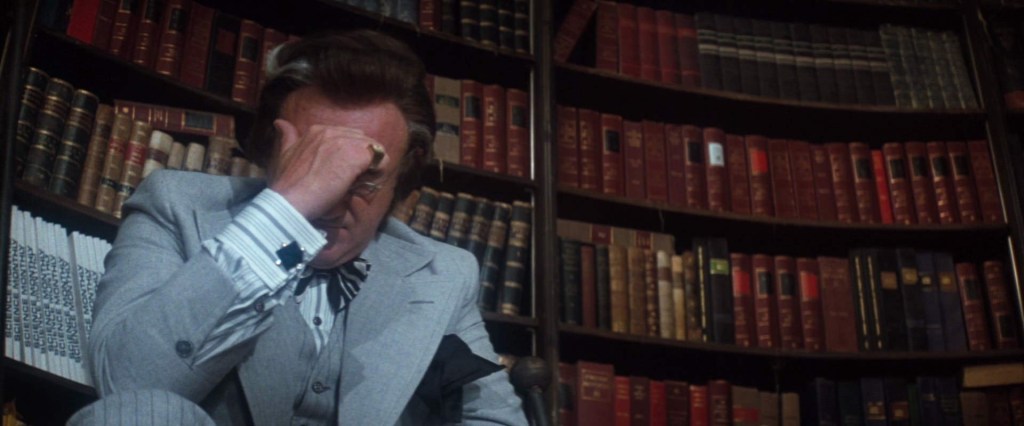
So now we are a third of the way through the second draft, and very little has changed from the first draft to the second with the exception of a few added bits and pieces and a nearly overall character deletion. As we head into the second third of the script, I wonder if there are any substantial changes to come.
As I bring this blog to a close, I want to thank everyone who made suggestions about who to cast as Morgan Edge. There were some really great mentions, including Robert Wagner, William Devane, and James Woods. Any of them would have been perfect had the role been cast.
(Some of the screenshots in this blog are courtesy of CapedWonder.com.)
-
The Puzo Scripts – Part 12: Fortress and Metropolis Revisited
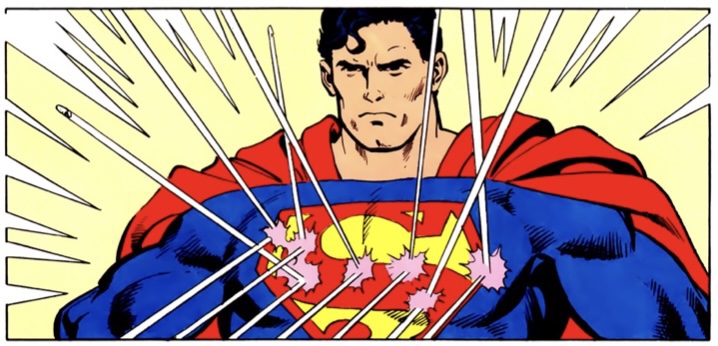
As we pick up on page 37 of the second draft script, Mario Puzo revisits Clark Kent’s journey north. At this point Puzo still refers to him as Superman. This owes to the then-current assumption in the comic books that Superman was the real person and Clark was the secret identity.
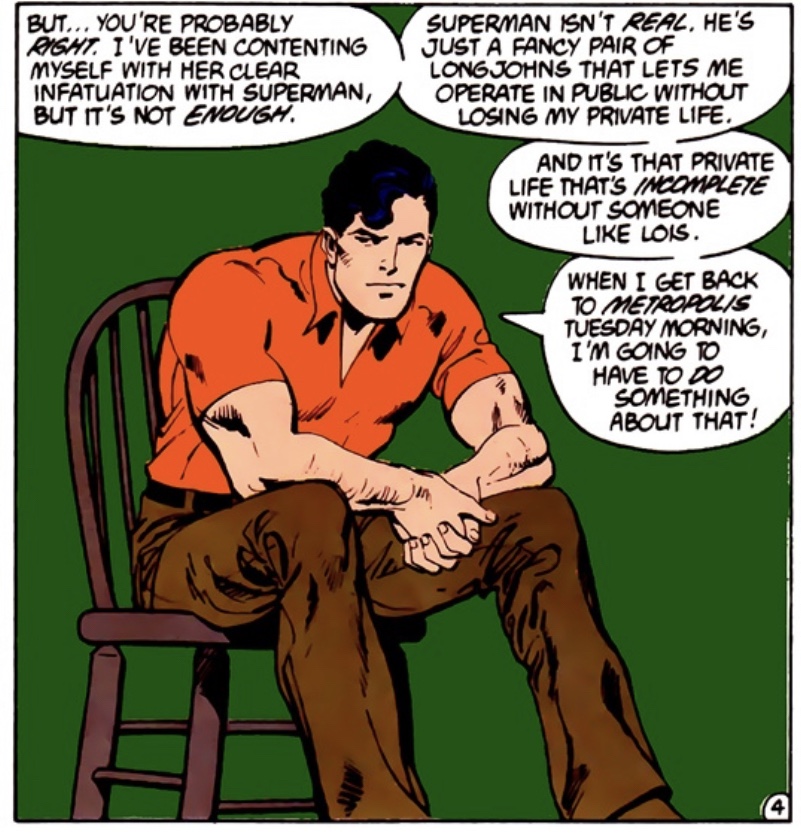
John Byrne got it right in the sixth issue of DC Comics’ Man of Steel relaunch series in 1986. 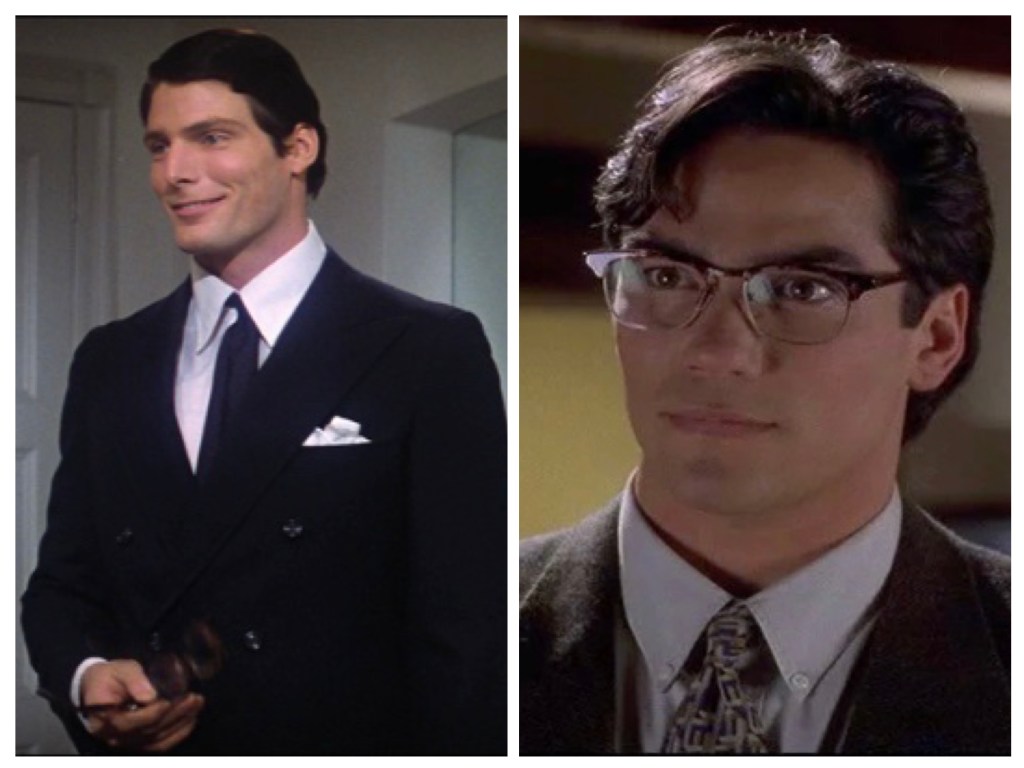
So did Christopher Reeve in the movies and Dean Cain in Lois and Clark. As the character said in the pilot episode of the 1993 series, “Clark Kent is who I am. Superman is what I do.” The second draft follows almost exactly as what Puzo had written in the first draft a few months earlier, except for one point. On page 39 he added the following note: “We see Superman still as a young man (still not the star at this point) standing alone on the snowy iced over tundra.”
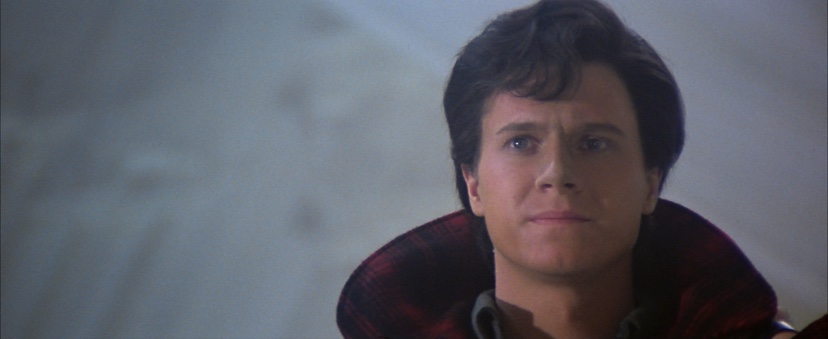
From there the script continues as is from the first draft, with Clark Kent arriving in Metropolis, getting an apartment, getting his job as an on-air reporter with Galaxy Communications, and meeting Perry White, Lois Lane, and Morgan Edge.
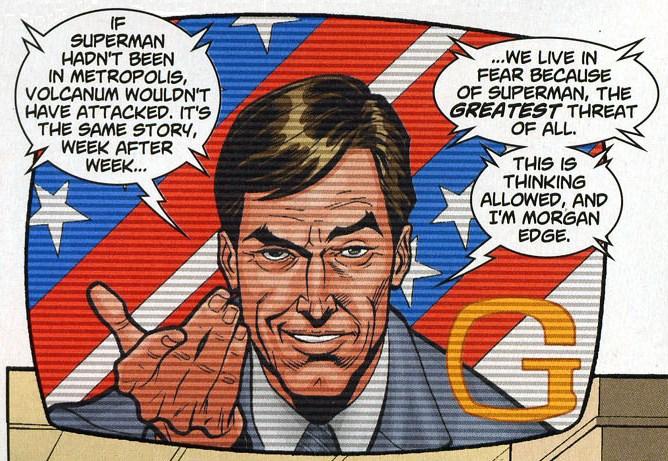
Here we have two significant revisions, as there is no physical description for Morgan Edge. Puzo has removed the reference to Broderick Crawford from the first draft and left the playing field wide open for any actor to be cast in the part. Perhaps the editors at DC Comics, or the Salkinds, may have noted the dissimilarity between Puzo’s initial notes about Edge and the comic book character. Furthermore, there is no shuffling back and forth between the names Morgan Edge and Martin Edge. This is another correction that Puzo wisely made in the second draft.
So now the question is, if the role had been open for casting, who would have been suggested for the part? I’ve made some suggestions based on the age of Morgan Edge, around mid 30s to mid 40s, and the physical appearance of the character, and here are some suggestions.
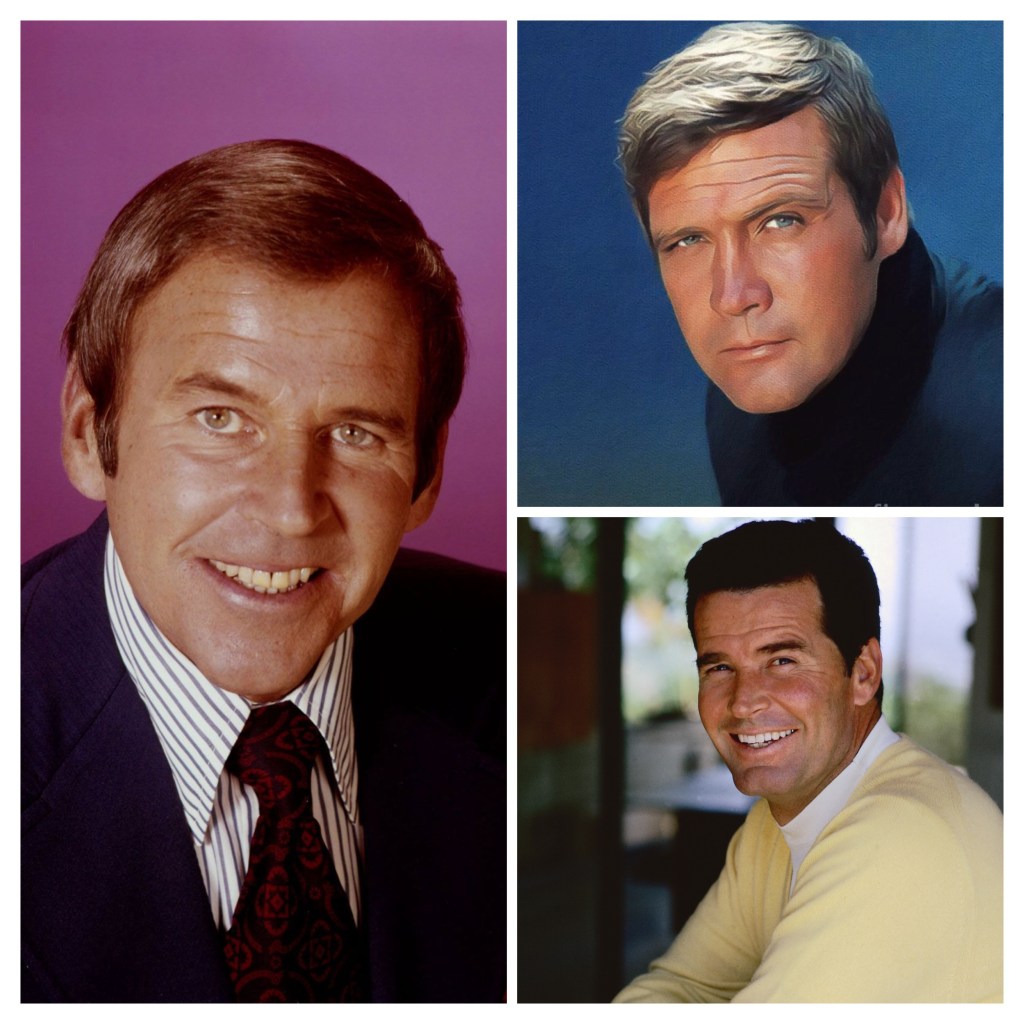
Some of my choices for Morgan Edge would have included James Garner, Lee Majors, or even comedian Paul Lynde in a serious dramatic role. Any of them would have better resembled the comic book depiction of Edge than Puzo’s suggestion of Broderick Crawford. Of course, these are just suggestions and open to interpretation, so anything is valid at this point. After the second draft it wouldn’t matter anymore, as the character of Morgan Edge would be completely removed from the later scripts. So who would have cast in the role? I’d love to hear your suggestions!
Another change that occurs in the script is that Edge’s lines to Lois about reading the wrong weather report are now given over to Perry White in this draft. Furthermore, we are now treated to a warmer, more casual side of Morgan Edge, as he regards Perry White with respect as a senior executive of the Galaxy Communications team, even through his gruffness.
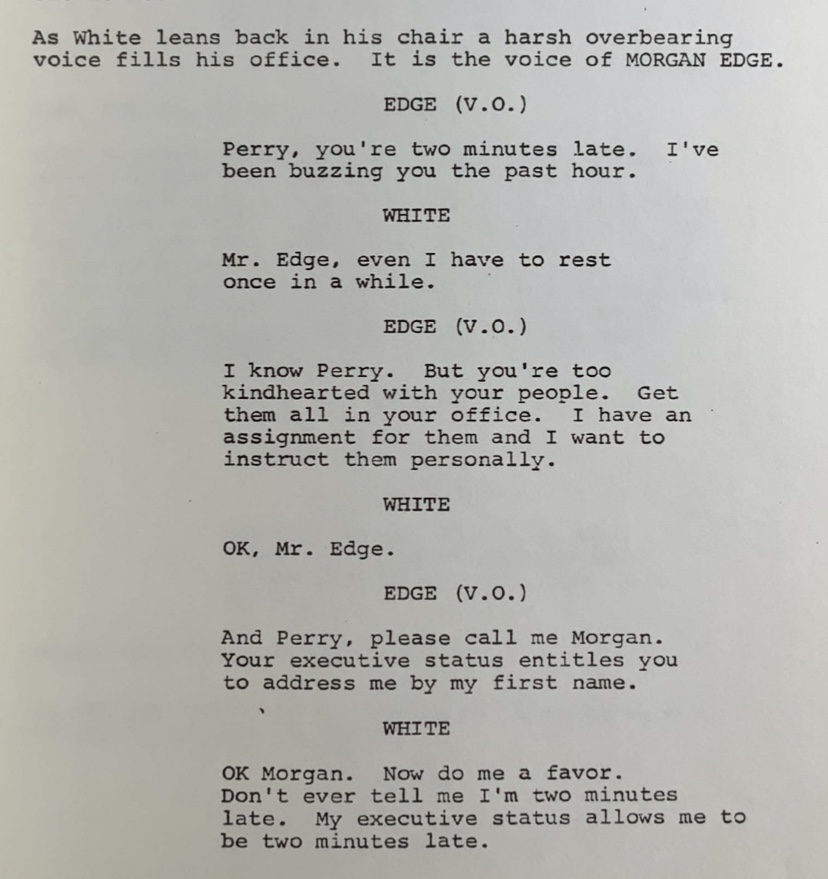

From pages 52 and 53 of the second draft script. Another subtle change occurs in the next scene when Edge discusses with his staff his plans for covering the crime in Metropolis. Whereas in the first draft he is present with them, here he is not, preferring to discuss his plans via a closed circuit monitor. This is where we get our first view of Morgan Edge in this revised script.
The script then repeats the scenes from the first draft, with Clark, Lois, Jimmy Olsen, and Steve Lombard preparing to go out at night and cover the crime rate in Metropolis. No changes have been made to the scene, and we are again given needless exposition to Lombard’s character as he attempts to trick Clark. These snarky moments only slow down the action and contribute nothing to the overall plot.
From there we are introduced to Lex Luthor, his henchmen, and Eve, as they prepare to pull off a late night bank heist. The main takeaway from this scene is that Luthor’s name has been corrected from Luthor Lux in the first draft to Lex Luthor in the second draft. Otherwise, the exposition is exactly the same, even down to Puzo’s casting suggestions of Dustin Hoffman or Paul Newman in the role.
From there the script continues as before, with Luthor pulling off the bank heist and abducting Lois, Jimmy and Steve recording the entire event, Superman arriving and preventing the bank heist from occurring, and pursuing Luthor to his underground lair. In the first draft of the script, the scene of Superman’s pursuit of Luthor into the lair was written as a two-page insert, labeled 57A and 57B, occurring in the middle of the next sequence of the reporters conferring at Galaxy Communications. The insertion of the scene, along with Puzo’s note “Insert here”, was meant to be an afterthought to the action of the script, something he thought about while writing the next scene. Here, he corrects the order of the scenes and places Superman’s pursuit of Luthor in its proper place in the script without any disruption of action or dialogue. Otherwise, there are no other changes to the scene.
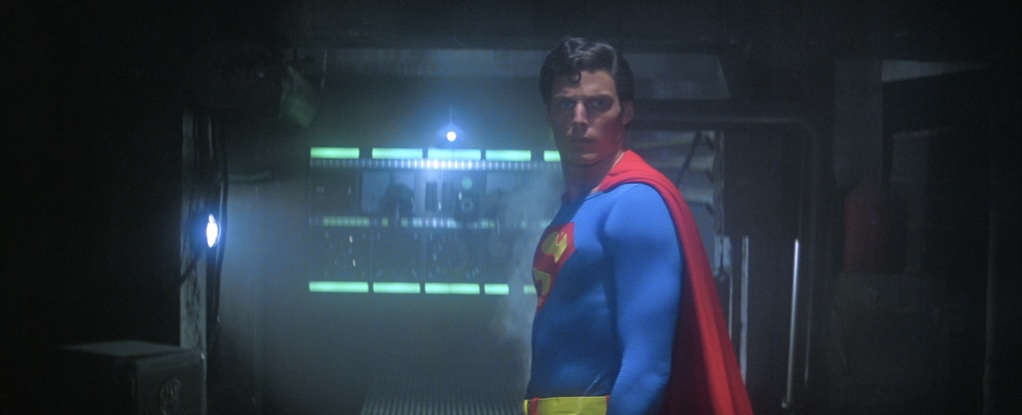
Overall, the revisions to the script over the next thirty pages are slight yet substantial revisions to some of the characters, with a couple of scene revisions and corrections as well. Otherwise, the second Puzo draft is for the most part the same as the first draft. It hasn’t expanded by that much.
Next time: the super feats continue!
(Some of the screenshots in this blog are courtesy of CapedWonder.com.)
-
The Puzo Scripts – Bonus: More Moments in Sepia
After my last blog examining the Smallville scenes in the second draft of the Mario Puzo scripts, I had a number of people comment on Mr. Puzo’s note that Superman: The Movie would have not worked had the scenes been filmed in sepia format. Mind you, this was Mario Puzo’s idea according to his note on page 24 of the October 1975 script draft and continuing over the next nineteen pages to page 43, that a substantial portion of the film’s story would have been shot in sepia.
So I thought to myself, what would other moments in the film have looked like if they had been shot in a sepia tone? I’ve done a little experimenting with a selected number of screenshots from CapedWonder.com, converting them from color to sepia, to give you an idea of what the Smallville and Fortress of Solitude sequences would have looked like had they adhered to the original Puzo notation.
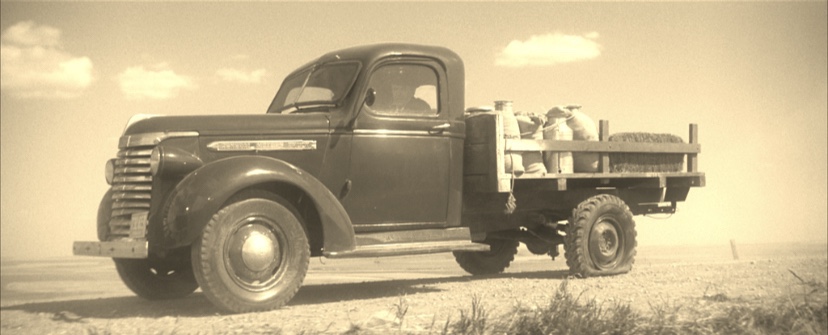
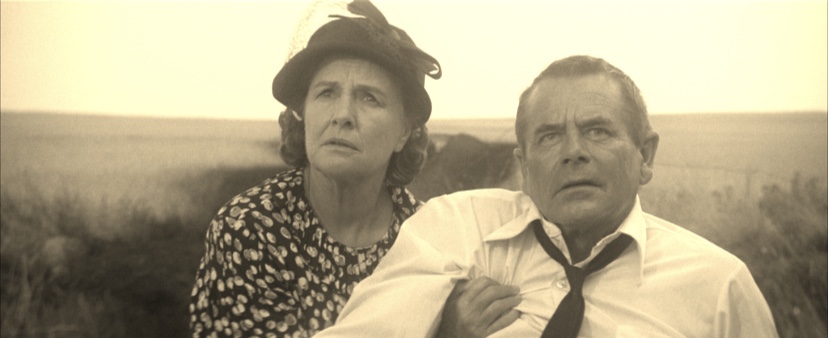
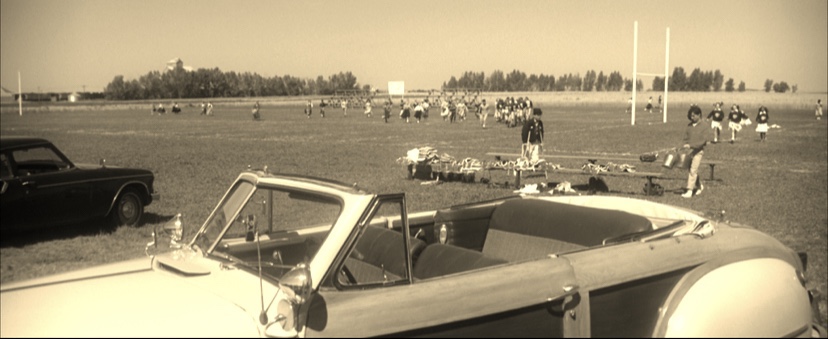
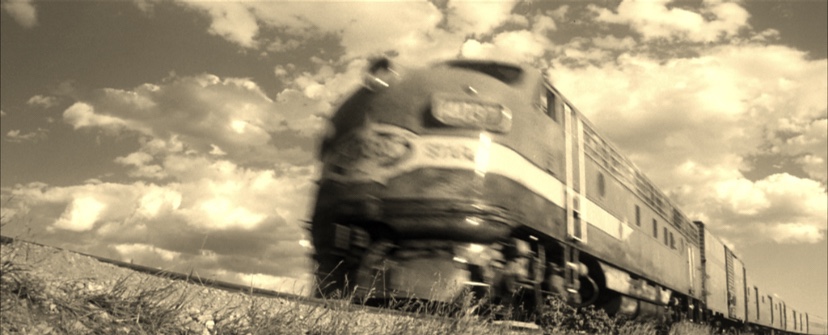
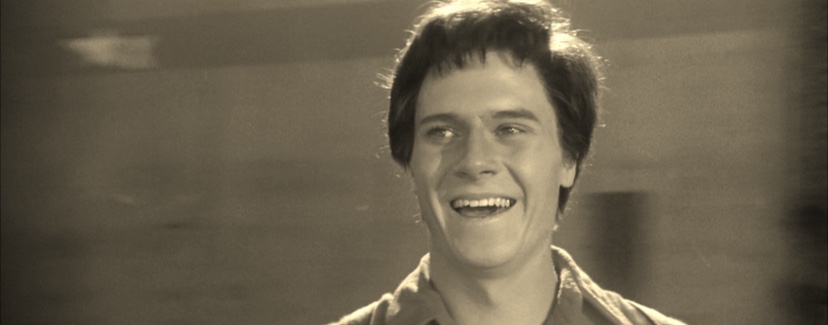
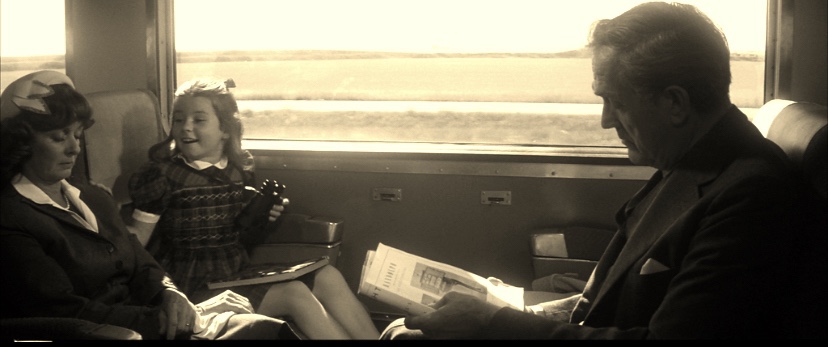
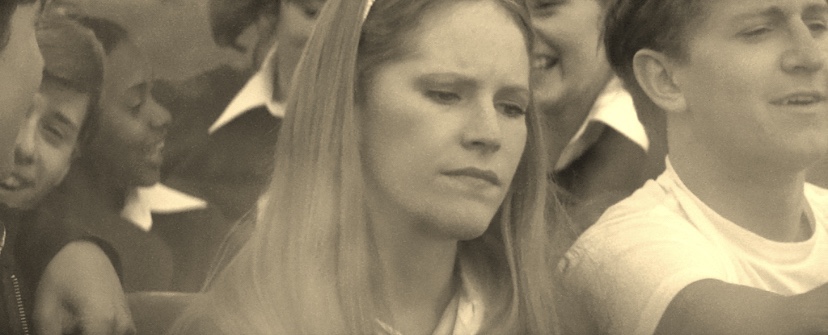
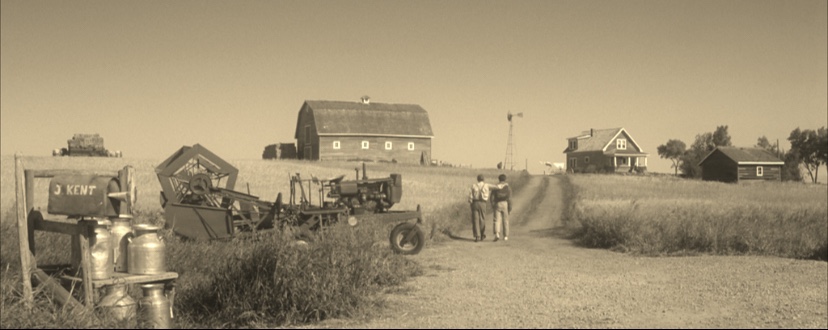
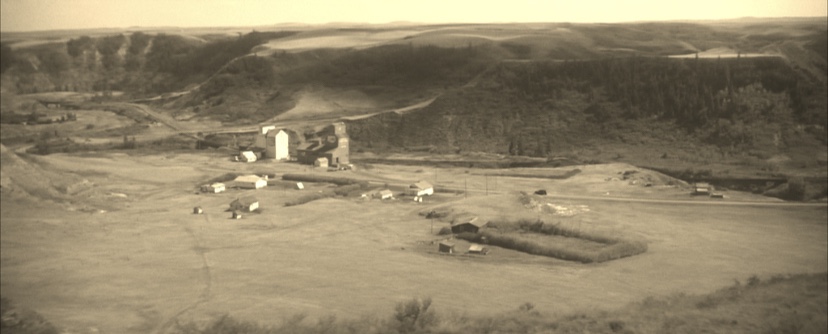
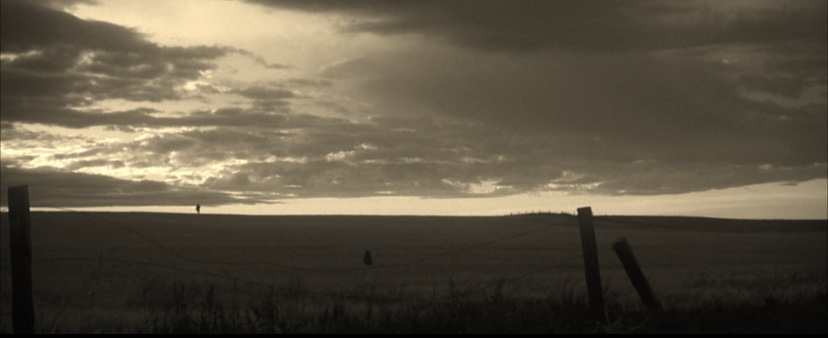
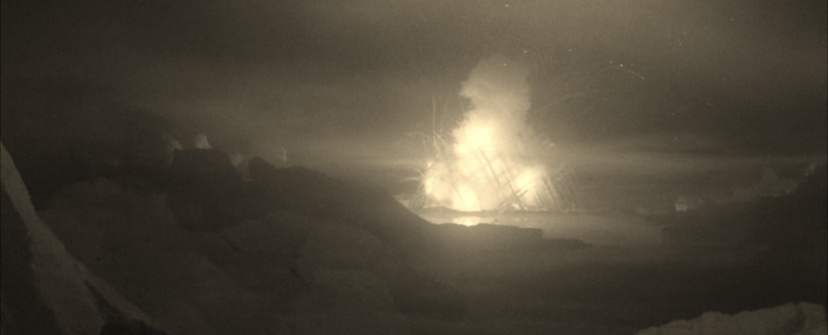
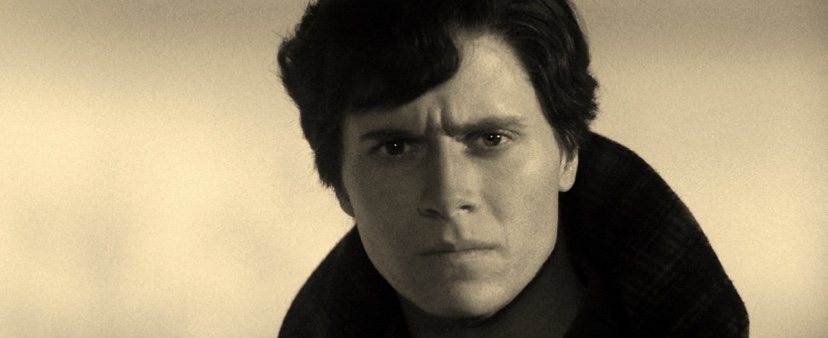
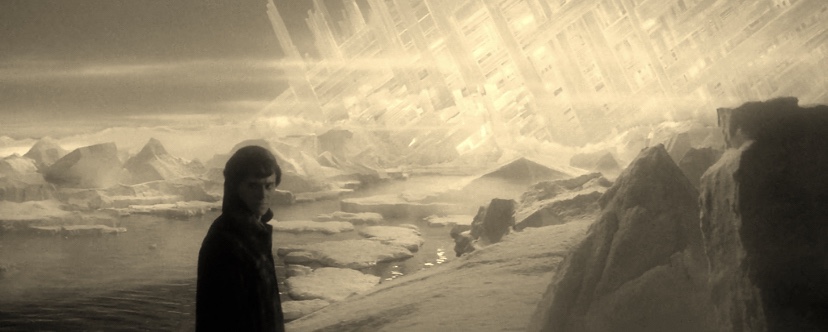
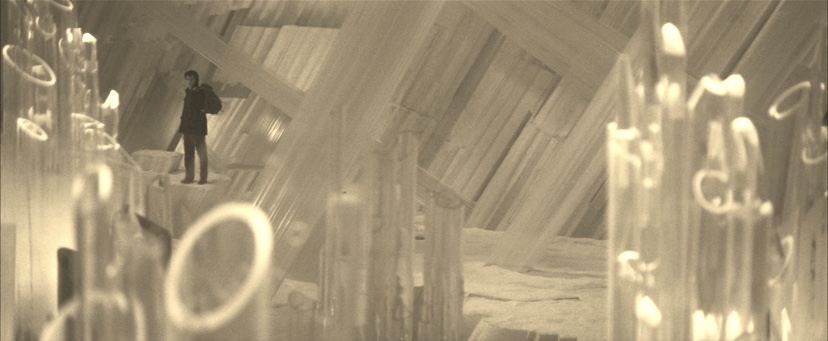
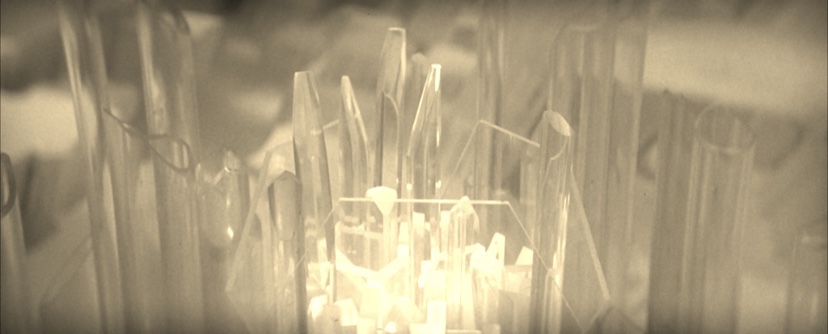
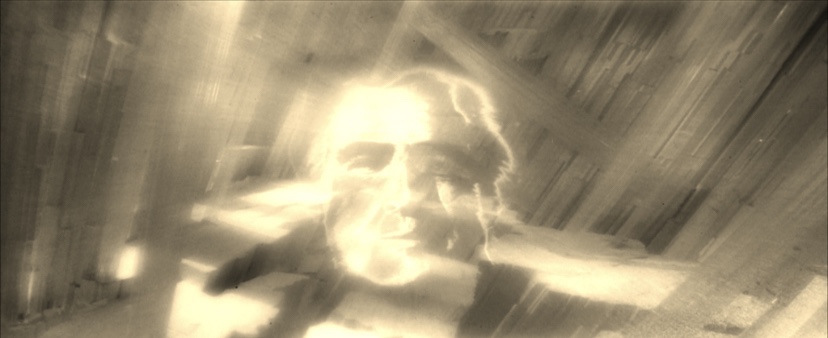
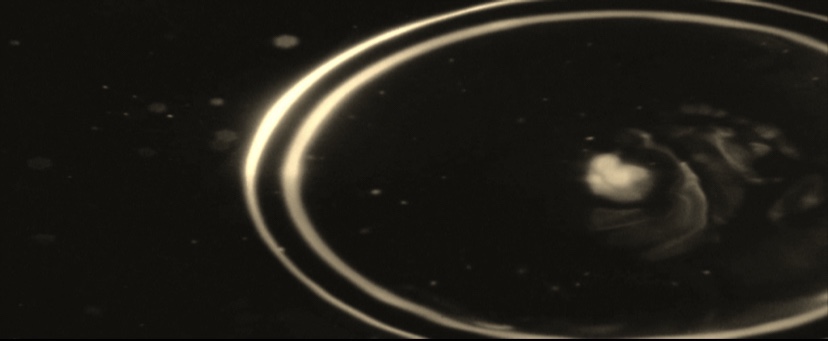
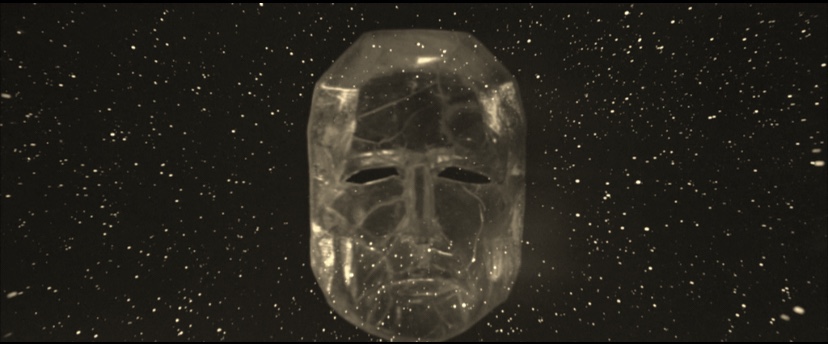
From there, according to the Puzo script, the film would have returned to color upon the first appearance of Superman in his full costume in the Fortress.
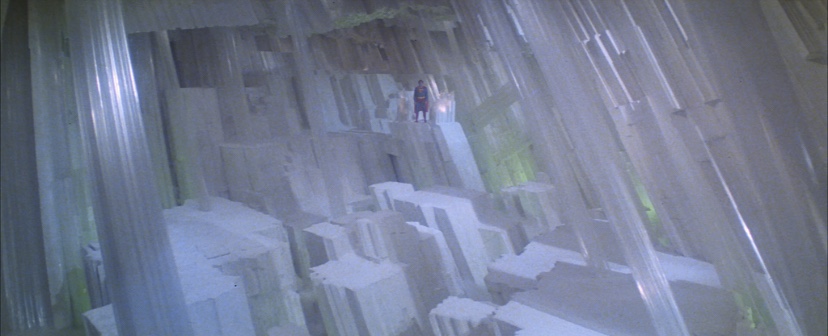
As you can see, color plays a key ingredient in the arrangement of shots, especially in landscapes and skylines and sunrises and visual effects and all of the exterior moments in the film. Without color, the subtleties of these shots are lost. They just wouldn’t have worked in sepia. That would have meant nearly 25 minutes of footage in the theatrical cut, 34 minutes of footage in the extended TV cut. Would such a lengthy portion of the middle of the film have worked in sepia instead of in color? In my honest opinion, no.
This is one script notation that, once the script moved to the next writer, was thankfully removed from consideration. (As for that next writer, that is something that I will discuss down the road in a future blog.)
(All screenshots in this blog are courtesy of CapedWonder.com.)
-
The Puzo Scripts – Part 11: Smallville Redux with a Few Surprises
As we pick up on page 23 of the second Mario Puzo script, we find that the story has not changed all that much where the majority of the Smallville sequences are concerned. However, Puzo had added a few things that seem… interesting.
When the infant Kal-El’s starship journeys to Earth, Puzo makes the following notation: “The screen is filled with sepia color. This special color will be used until we see Clark Kent as Superman in (the) Fortress of Solitude.” This means that from page 23 until page 43, had the script been filmed as is, and given the approximate ratio that a script page is roughly equivalent to a minute of screen time, we would have seen the next twenty minutes of Superman presented in sepia tone.
Look at the following images from Superman: The Movie, which I converted from color to sepia. Do you think this portion of the film would have worked in sepia tone for quite a length of time?
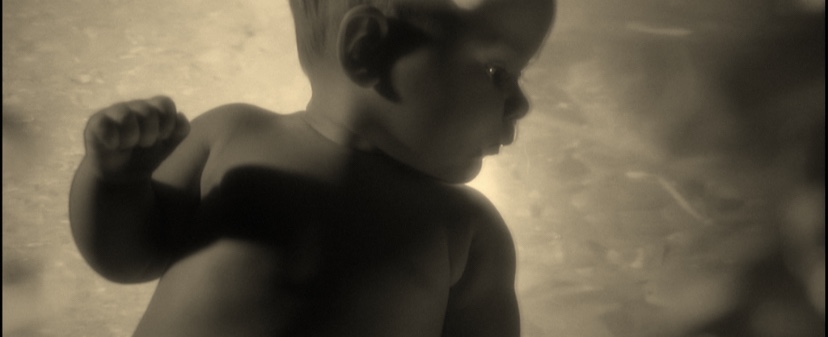
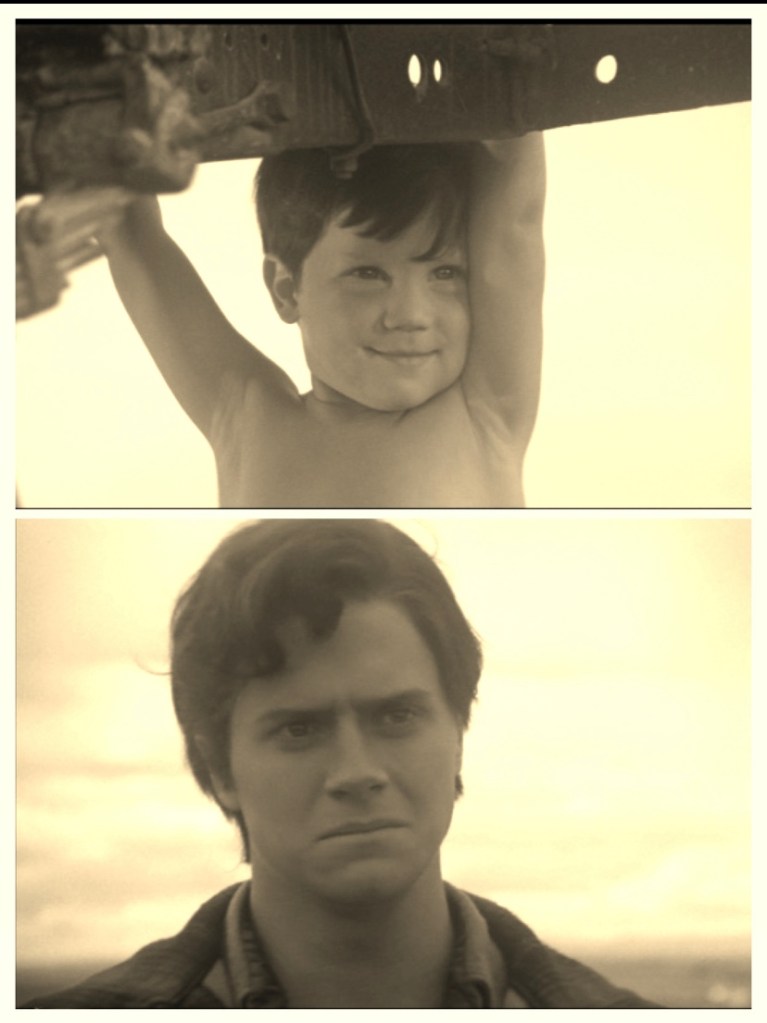
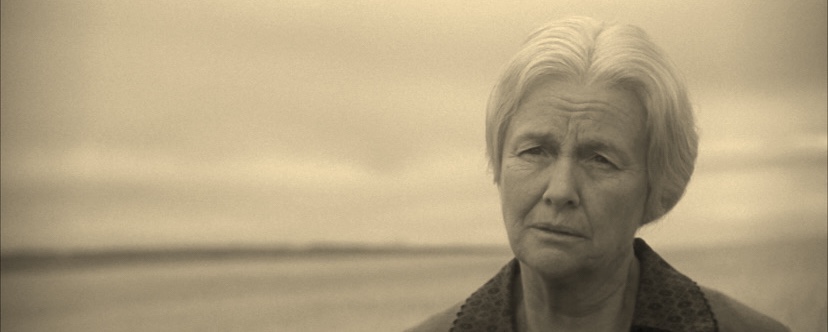
It reminds me of the “real world” portions of The Wizard of Oz, with all of the Kansas scenes presented in sepia tone and the fantasy sequences with Dorothy and her companions in the land of Oz presented in glorious Technicolor.

After being used to watching Superman for the past 45 years in full Technicolor, to watch this portion of the film in sepia in the middle of the film would seem almost jarring to me. It may work with all of the Kansas scenes in Oz, but not with a modern, colorful adventure the nature of Superman. And yet this is what Mario Puzo had noted here.
Once the Kents promise to each other to keep their discovery of the baby a secret, Puzo added a montage of three new scenes to show the young Clark Kent growing up. These three new moments are included on page 27 of the script and are presented as follows:
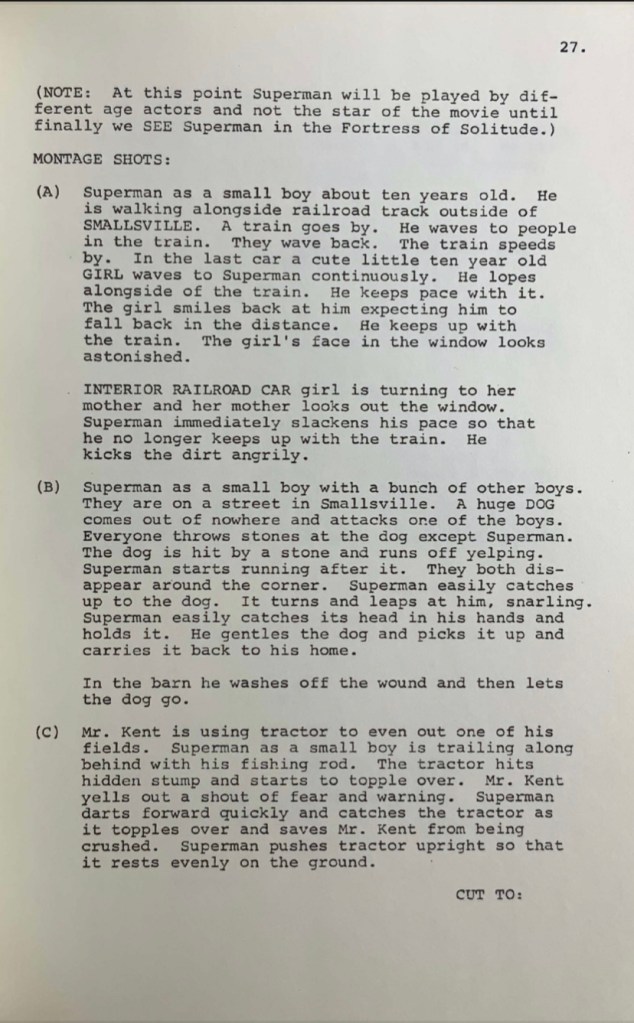
If that first sequence sounds a little familiar to you, it’s because it is very similar to what we would see in the final film, with a few changes made to the sequence of a teenage Clark Kent racing alongside the Kansas Star much to the surprise of a little girl inside the train who spots him.
While we would briefly see Noel Neill’s cameo in the original theatrical version as Lois Lane’s mother, the extended TV cut would include Kirk Alyn’s on screen cameo as well. They were the original on screen Lois Lane and Superman, respectively, in the 1948 and 1950 Superman movie serials, which are available on DVD from Warner Home Video. The other two scenes, of young Clark saving the dog from being attacked, and Clark saving Jonathan Kent from a near fatal tractor accident, would not survive beyond this draft of the script.
The sequence then continues unchanged until page 34, when Puzo adds a game changer to the story. Martha Kent tells Clark that his father has to go to the hospital for a needed operation. The scene then changes to the hospital, where Jonathan Kent’s condition is extremely critical to the point of death, and Clark quietly says, “I’m the most powerful man in the world, and there is nothing I can do.” This key line would be later rewritten and used in the final film in one of the most emotional and heartbreaking moments of the entire film:
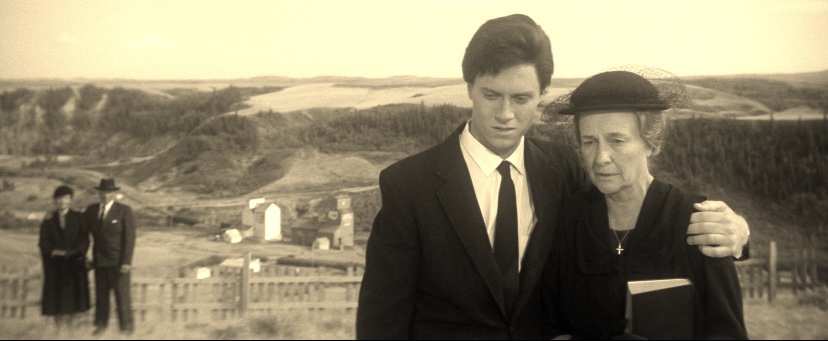
“All those things I can do… all those powers… and I couldn’t even save him.” Still hits hard after 45 years. One of Jeff East’s best on screen moments ever. From there the remainder of the Smallville scenes have been rewritten to focus solely on Clark and his mother, continuing through page 37 as he prepares to leave her, the Kent farm, and Smallville behind so he can begin his journey into adulthood and becoming Superman.
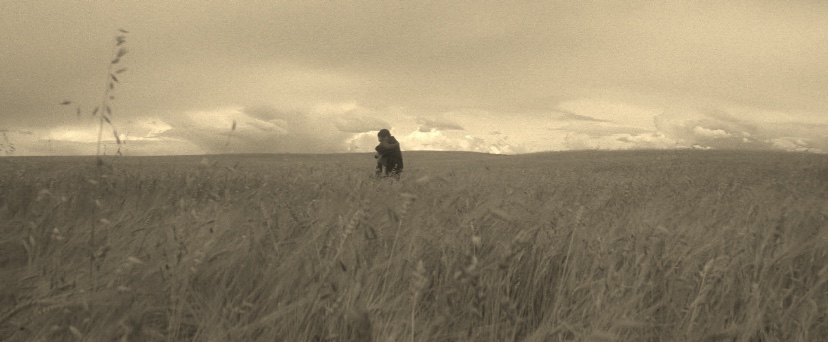
What do you think of the entire sepia aspect as Puzo intended in this draft of the script? Let me know your thoughts!
(Some of the screenshots in this blog are used courtesy of CapedWonder.com.)
-
The Puzo Scripts – Part 10: Beginning the Second Draft, Return to Krypton
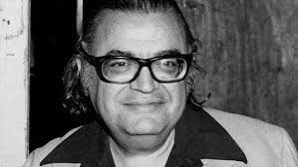
After the completion of the first draft script in July 1975, it becomes clear that Mario Puzo had laid a decent amount of the framework for the final versions of Superman and Superman II at this early stage. Every story has to start somewhere, and the story of the two Superman films begins with this essential first draft. In looking at the script, I would estimate that approximately thirty-five percent, possibly forty, of the Puzo script survived into the final films. This includes scenes, moments, bits of dialogue and action, essences of scenes, and more. Granted, I’m simply making a rough estimate at this point, and maybe I’m being a bit more generous here than I should be, because a lot would change between here and the Newman-Benton draft in 1976, the Tom Mankiewicz drafts in 1977, the Newmans’ 1979 rewrite of Superman II, and, of course, the final films.
But even with that much of Puzo’s initial story that survived in one form or another, so much more didn’t survive into the final films. For example, the Kryptonian villains of Jax-Ur, Professor Vakox, and Kru-El. The computerized nature of Krypton. A teenaged Clark Kent being a star athlete in high school. Superman’s cabin in the woods approach to the Fortress of Solitude. The characters of Morgan (Martin) Edge and Steve Trevor. Making Clark, Lois, and Jimmy TV reporters. Investigating petty crimes in Metropolis. Luthor Lux as a petty criminal at the start. The action scenes in Iran, the Army installation in Nevada, and Rome. The fantasy scene of Lois imagining she has the same powers as Superman. A powerless Clark getting beat up by three truck drivers. Superman using the same method of making the powerless villains forget that he had used on his friends. And more.
There’s a lot that needed to be either corrected or removed altogether, and while Puzo had a good start with this first draft, it just seemed incomplete and even inaccurate in places. The story needed to be fixed and corrected. No writer can get the final polished draft of anything completed in his or her first attempt. Plot holes needed to be filled in. Characters needed to be added or removed. Scenes needed to be added, clarified, changed, moved around from one place to another, rewritten, tightened, trimmed, you name it. This is simply the nature of writing, whether a novel, short story, stage play, TV episode, or feature film.
And that would lead to a second draft.
Puzo would then go back and rewrite the script for Superman immediately upon completion of the first draft, working for another three months until the second draft script was completed on October 1, 1975. If the first draft was massive at 220 pages, the second draft was even more massive, coming in at a whopping 309 pages.
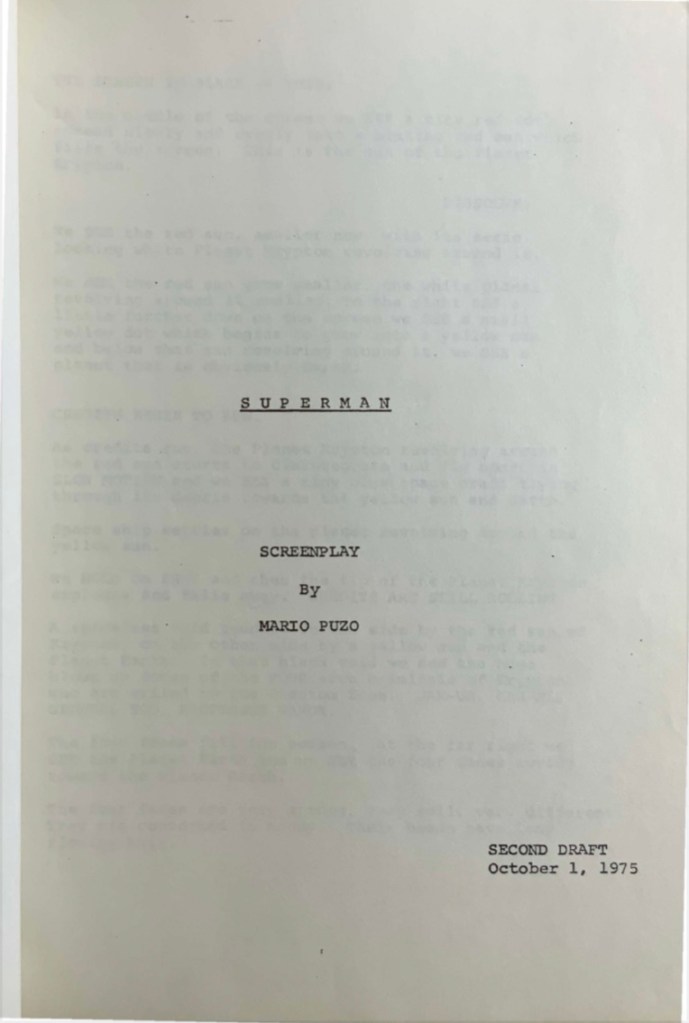
It is this second draft script that David Michael Petrou had access to as he was writing The Making of Superman: The Movie. According to Petrou, “The final shooting script of Superman incorporates most of Puzo’s initial story. There is considerable fascination in reading through the original and seeing what concepts did not make it.”
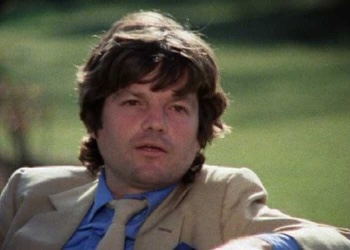
Ilya Salkind agreed that the Puzo script needed work in order to bring it to life on screen. Petrou interviewed Ilya Salkind for the book, who offered up his own thoughts on the script. “It was an incredible script—an amazing achievement, really. The main problem, though, was the considerable length. It was over three hundred pages long—it would have made a six-hour movie! Quite honestly, it was more of a novel than a screenplay.”
As we begin moving into the second draft, we see that the opening moments are identical to the first draft script. Puzo drafted a mixture of the main title credits and moments from the entire story into the opening three or four minutes, focusing on the confrontation between Superman and the Phantom Zone villains, with Lex Luthor standing in the wings. This is one key correction that Puzo has made to this script, referring to the principal villain as Lex Luthor and not Luthor Lux. Perhaps Puzo caught this error after the script was completed, or perhaps someone brought it to his attention. Whatever the outcome, this is one fix that benefits the second draft.
From there we move into the depiction of Krypton’s capital city and the science council. And it is here that Puzo makes a scene revision which Petrou references in his book. According to the script, “all the Elders of Krypton wear the futuristic letter ‘S’ on their clothes, as does Jor-El. There should be a huge futuristic letter ‘S’ design on the wall of the Council Chambers.”
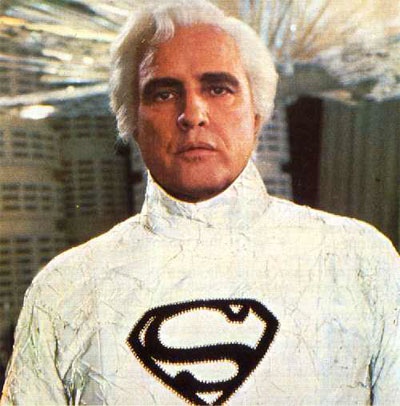
The fact that Jor-El would wear the “S” shield on his cloak in Superman: The Movie and Superman II would have a significant impact on the character in later television and film portrayals in Superboy, Smallville, Man of Steel, and Superman and Lois, as well as later comics. But there is another aspect to Jor-El that Puzo adds to the second draft that is quite intriguing. As he wrote, “Jor-El should be played by the same actor as Superman. Since he is Superman’s father this will seem natural. Also gives the star a chance to come into the film right away, rather than wait till we are half an hour into the film…. After Krypton explodes, the next time we see the star will be as Superman in the Fortress of Solitude.”
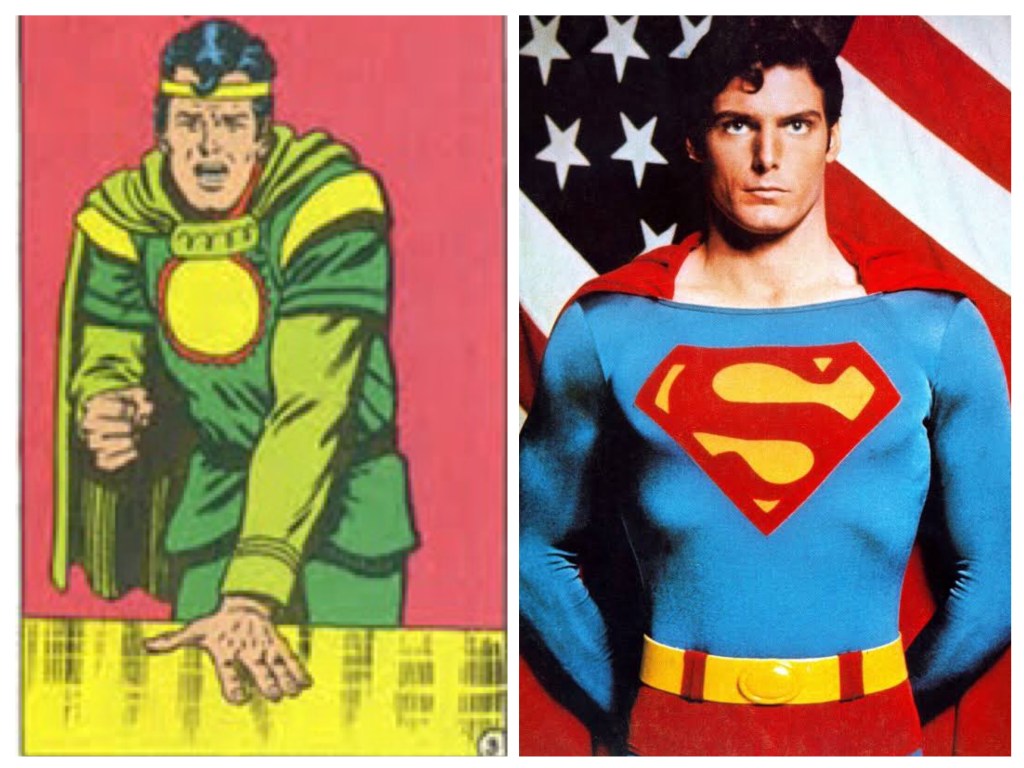
Jor-El as he appeared for decades was roughly the same in age and appearance as Superman. If the film had been shot according to the original Puzo script, could we have seen Christopher Reeve as Jor-El also? There is another note early on in this added script that Puzo makes. “Therefore, it follows that Superman as a young man in Smallsville (sp?) and when he leaves Smallsville will be played by another actor.” This is one script note that came true in the final version of the film.

Superman as a little guy in Smallville (the great Aaron Smolinksi) and when he leaves Smallville (the equally great Jeff East). Backing up a little bit, let’s look at Puzo’s note, “the next time we see the star will be as Superman in the Fortress of Solitude.” This is another note that came true in the final film as well.
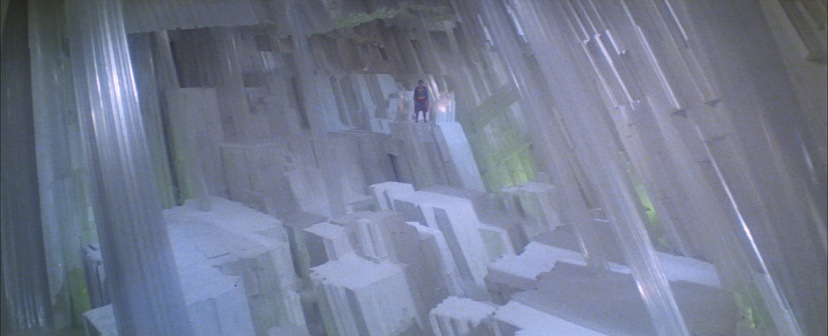
It would be about an hour into the film before we would finally see Christopher Reeve on screen for the first time as Superman, in this classic moment when he takes off and flies out of the Fortress. Marc McClure (Jimmy Olsen) was there the day this shot was filmed at Shepperton Studios in May 1977. From there the second draft is virtually identical to the first draft where the Krypton sequences are concerned. A few things stand out: the First Elder’s judgment towards Jor-El is similar to what he says in the film: “If you persist, if you try to build spaceships, if you defy this Council, you will be treated as other rebels. You will be exiled to the Phantom Zone…”
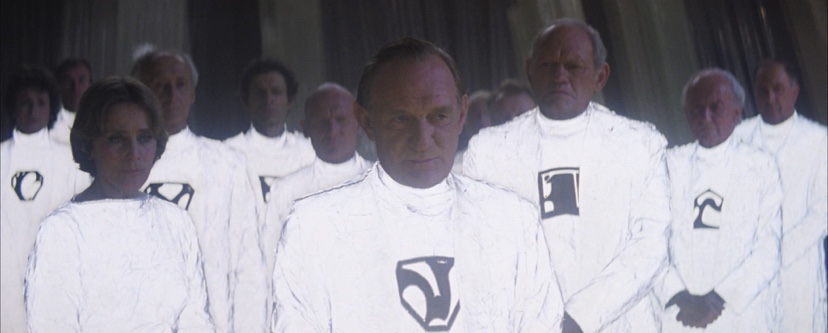
“Any attempt by you to create a climate of fear and panic among the populace must be considered an act of insurrection…. (and) you would be banished to endless imprisonment in the Phantom Zone, the eternal void which you yourself discovered.” From there we are given a new sequence of numerous civilians attempting to board one of Jor-El’s spaceships and leave Krypton. The police arrive and arrest the civilians, ordering them to stand down.
After the council’s decision towards Jor-El, Puzo embellishes on further descriptions of his home. Here we see that a futuristic looking S shield is inside his house, across the books, and “on the exterior of the spacecraft when it finally takes off.”

In the 2013 film Man of Steel, we can clearly see the futuristic S shield on the infant Kal-El’s starship as it leaves Krypton and heads for Earth. As Jor-El and Lara prepare the spaceship, he tells her something that will be revealed in the final film: “The trip to Earth will take three years. The computer will be wired to his head. For three years his brain will be educated as he sleeps.”
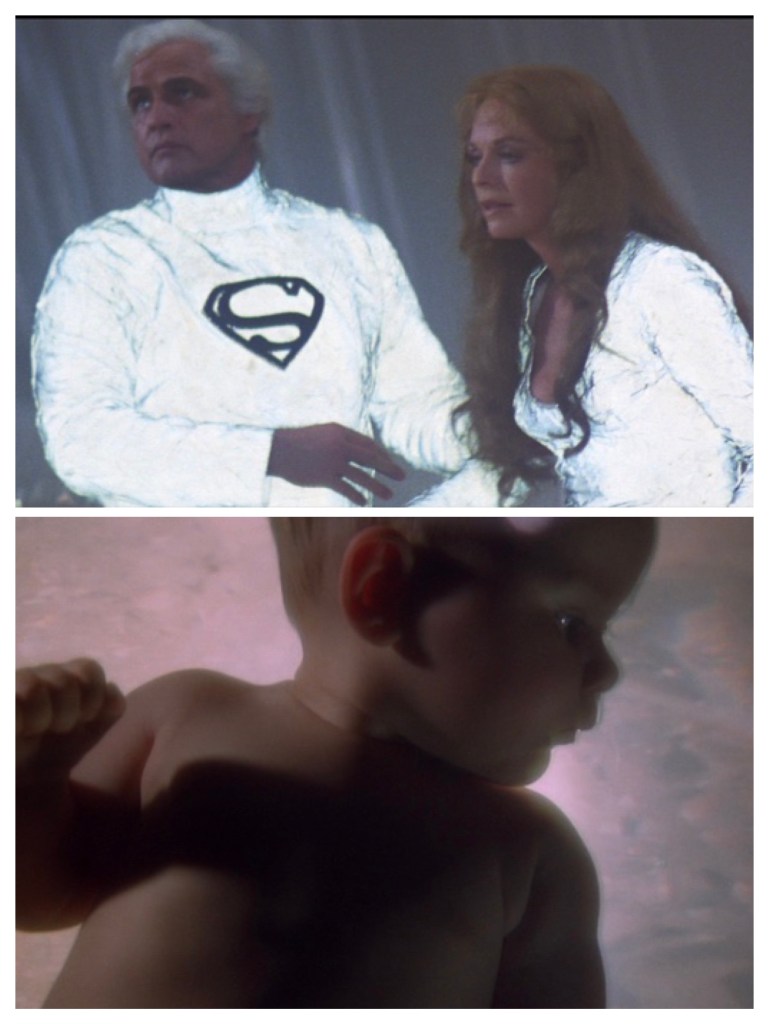
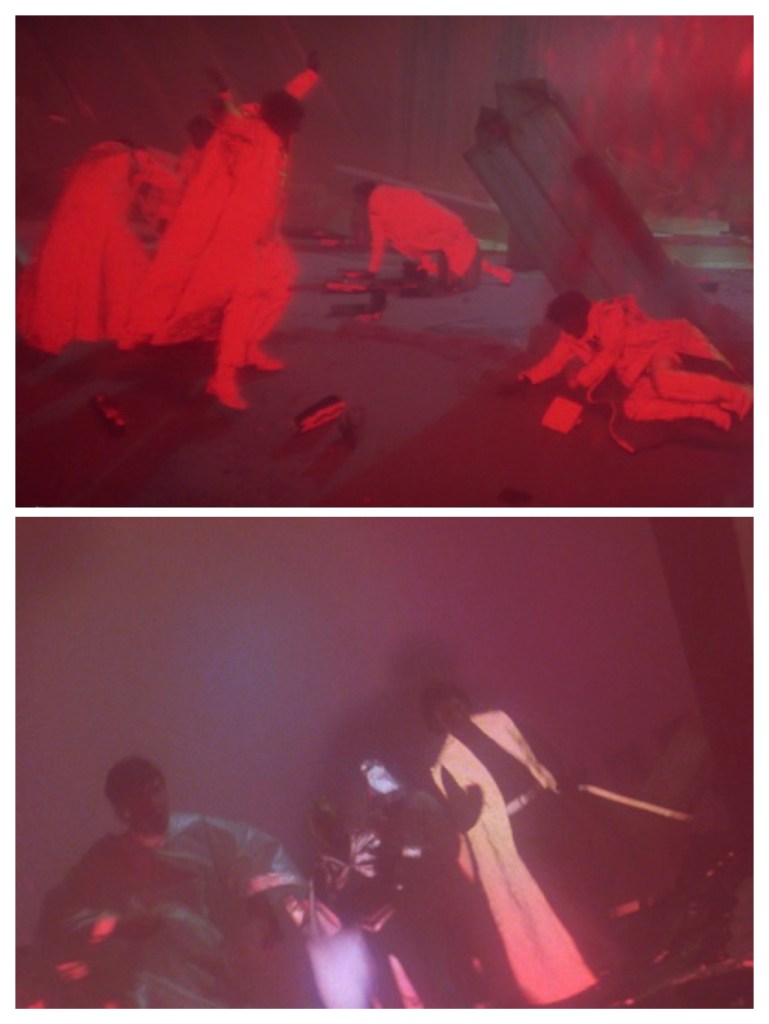
In the final film Lex Luthor (Gene Hackman) says to Otis (Ned Beatty) and Miss Teschmacher (Valerie Perrine), “In the interview he says that the planet Krypton exploded in 1948. The ridiculous little freak took three years in a rocket ship to get to Earth.” As the destruction of Krypton falls all around the planet’s inhabitants, we are given a written montage of moments as the people attempt to escape the destruction all around them. The following is taken from page 19 of the second draft script:
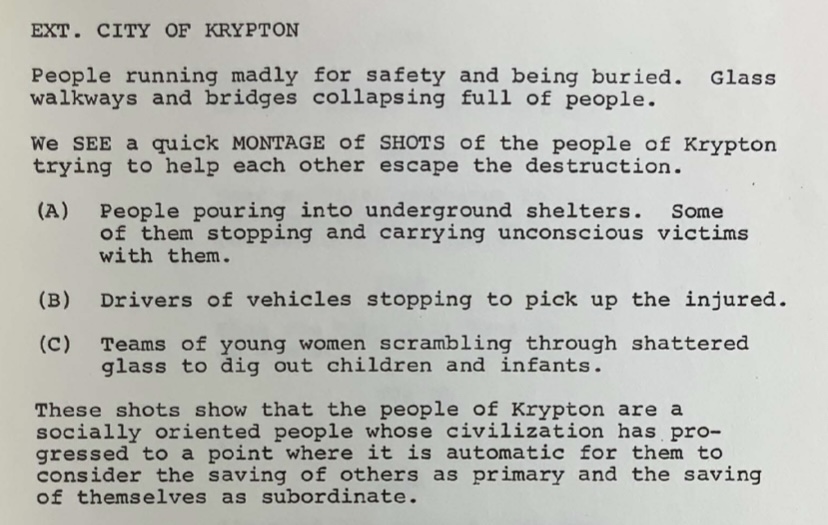
Details like these further prove Ilya Salkind’s statements true, that Puzo has begun to flesh out the script with background information about Krypton and its people, and that it reads more like a novel. We would have seen this in a montage similar to the shots in the film and its extended TV version of the people futilely attempting to escape the planet’s destruction.
Next time I will return to Smallville and the Fortress of Solitude for more insights into the second draft.
(Some of the screenshots in this blog are courtesy of CapedWonder.com.)
-
The Puzo Scripts – Part 9: Showdown in Metropolis and the Fortress
Before I begin this next analysis of the Mario Puzo scripts, I owe you, the reader, an apology. Early on, when I began my analysis of the first draft script, I had commented that the characters of Professor Vakox and Kru-El were original creations of Mr. Puzo. As I started my research for this blog, I realized that I was in error. Professor Vakox first appeared in Action Comics #294 in January 1962 and was created by writer Robert Bernstein and artist Curt Swan. Kru-El’s first appearance was a year later in Action Comics #297, in February 1963, in a story written by Leo Dorman and illustrated by Jim Mooney.
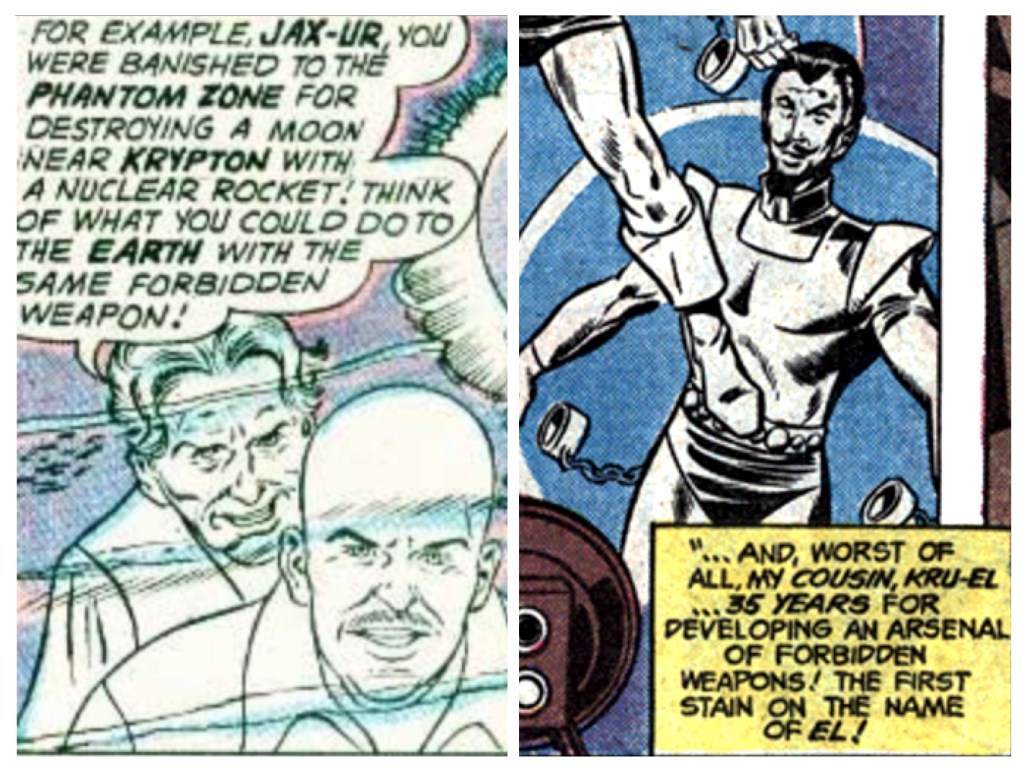
Professor Vakox and Kru-El as they originally appeared in Action Comics. It’s important to reference them now and make this correction because they, along with General Zod and Jax-Ur, play a vital part in the final segment of the script in their confrontation with Superman. For that oversight, I apologize.
Now, onto the story.
Picking up at page 202, we find the four villains standing in the streets of Metropolis, with mass carnage, destruction, and death all around them. Superman confronts them, but even with the kryptonite belt in his possession it’s still four against one, no matter who gets weakened. As the fight moves into the heart of Metropolis, Jax-Ur manages to rip the kryptonite belt away from Superman, giving them the advantage.
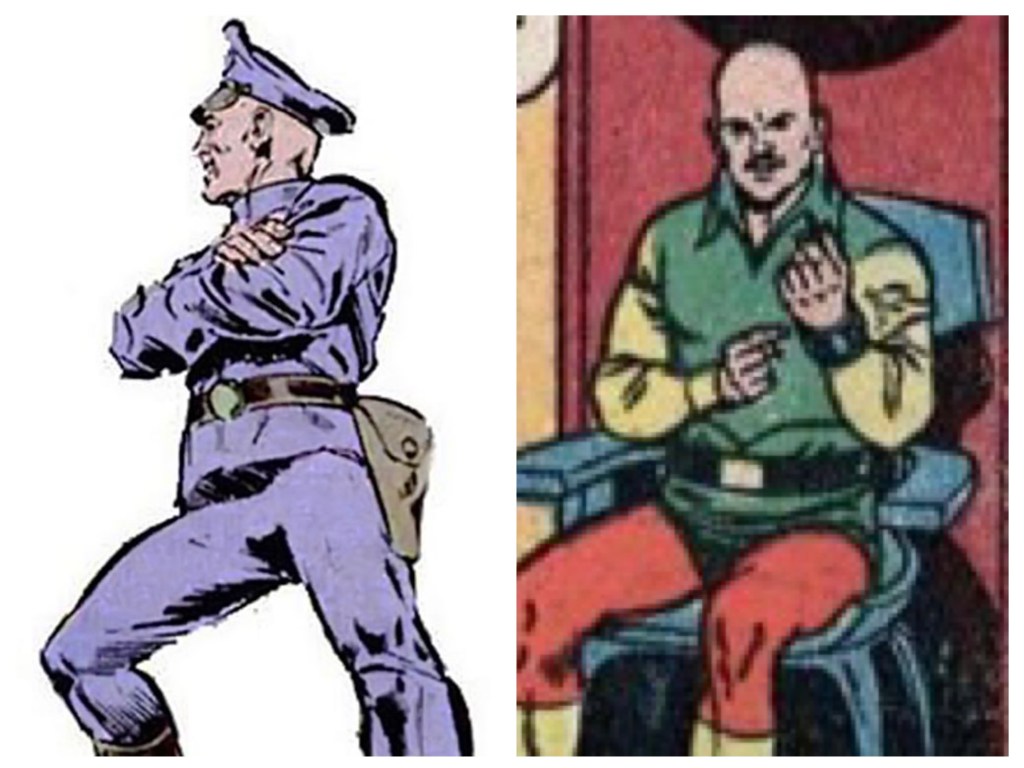
General Zod and Jax-Ur prove their upper hand against the Man of Steel. The fight through Metropolis is described in almost a breakneck pace, with the villains gaining momentum and destroying buildings and hurting Superman to the point where he starts bleeding.
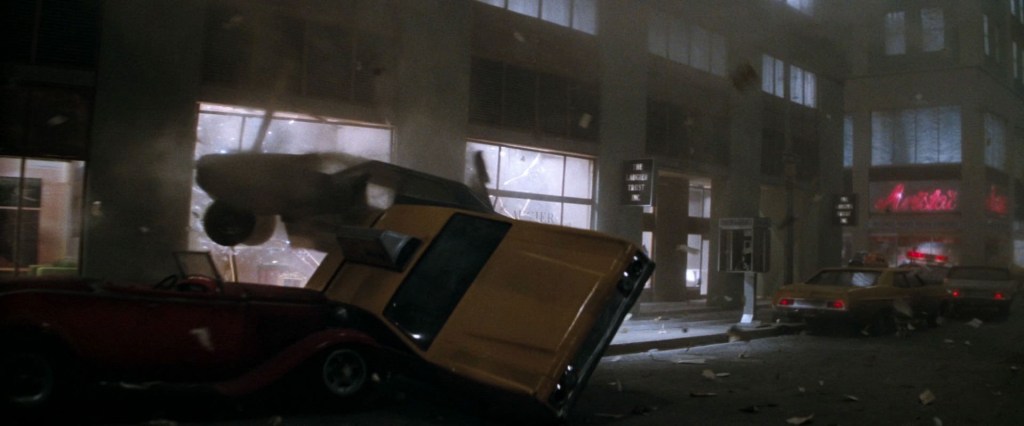
Just a mere fraction of the destruction that the Phantom Zone villains cause throughout Metropolis, which is seen in the final versions of Superman II. Eventually, Superman lures them to Luthor’s lair and uses the same holographic trickery on them that Luthor Lux used on him, resulting in multiple Supermen.
Meanwhile, Jimmy Olsen reports that with the presumed death of Superman, the President has declared martial law in the United States.
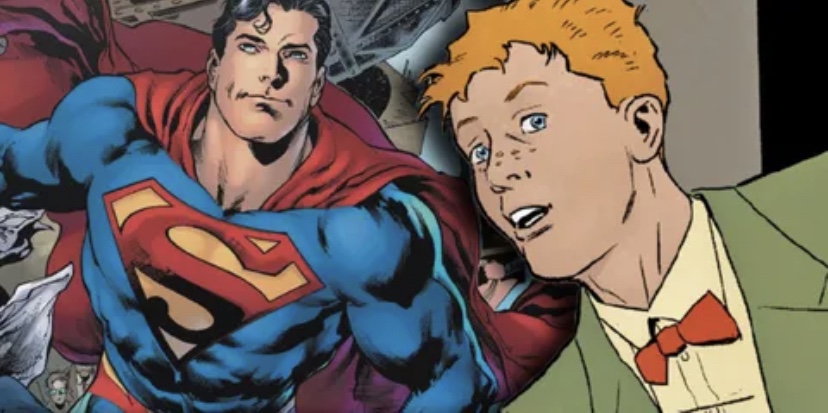
How did Jimmy know about Superman’s presumed death that quickly? Back in Luthor’s lair, we find that Luthor and Eve have saved Superman from the four villains. Superman proposes that Luthor help him trap the villains.
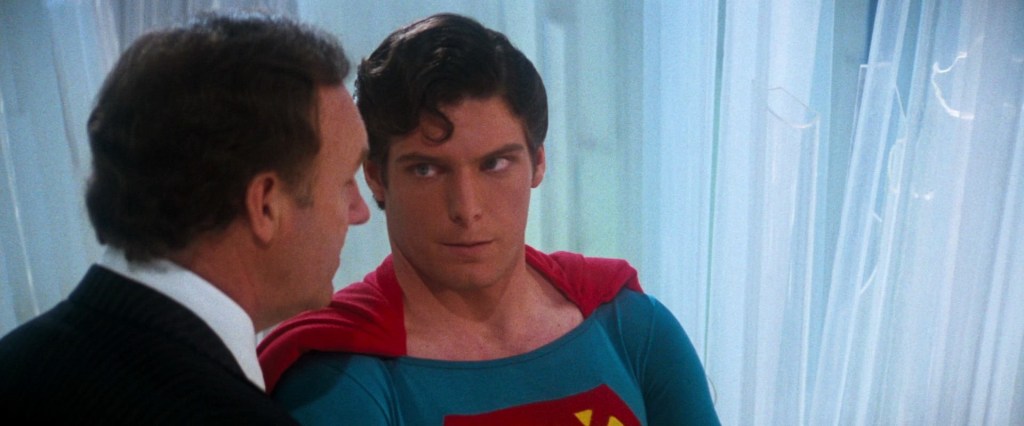
The story plot of Superman conferring with Luthor about tricking the Kryptonian villains is something that carries all the way through both versions of Superman II. Luthor then approaches the villains and reveals that he can lead them to Superman. Is this a double cross, or is this part of the plan after all?
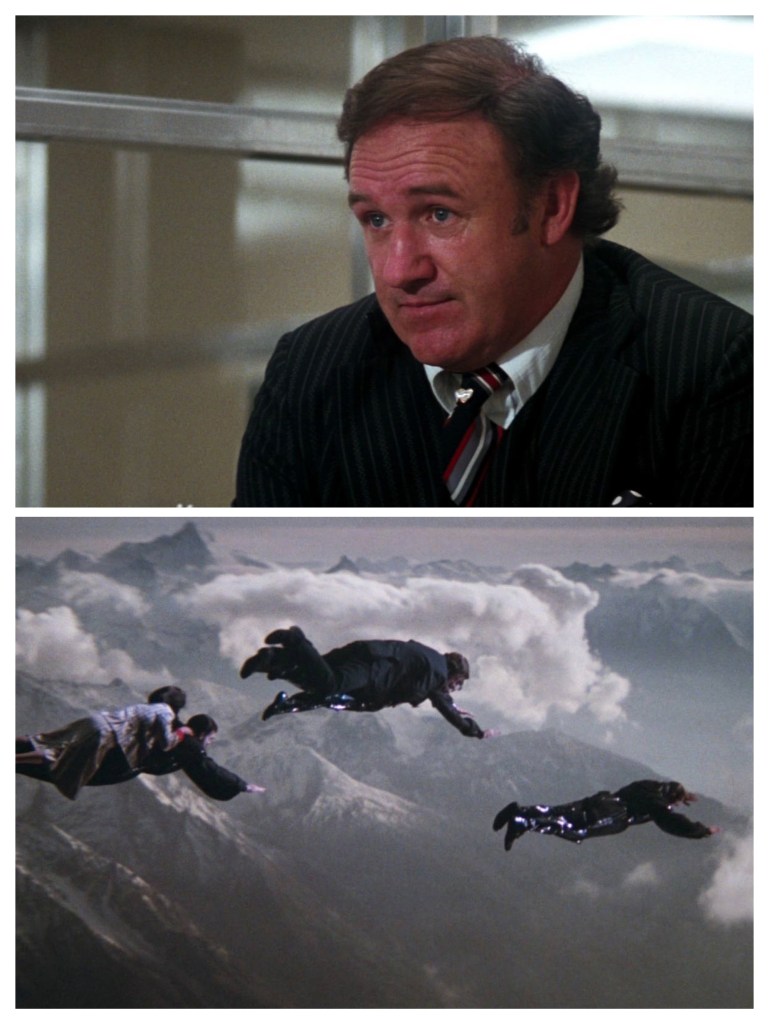
Luring the villains to Superman’s address some three thousand miles away is another beat that continues into the final versions of Superman II. Meanwhile, Superman arrives at the Fortress of Solitude and begins to hotwire the restructuring chamber.
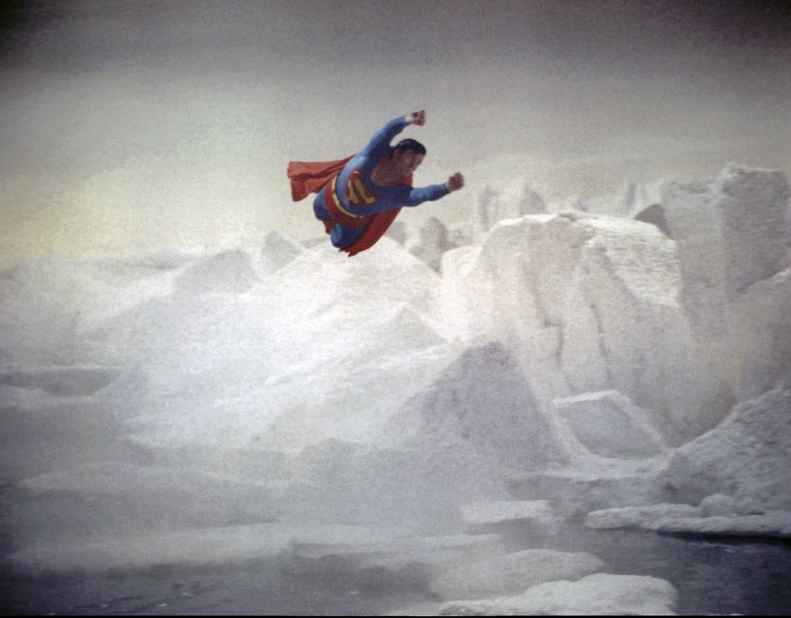
It’s interesting to note that the footage of Superman arriving at the Fortress has not been seen to this date in any version of Superman II. The whereabouts of said footage remains unknown to this day. Once the villains arrive, they somehow manage to break into the Fortress and confront Superman.
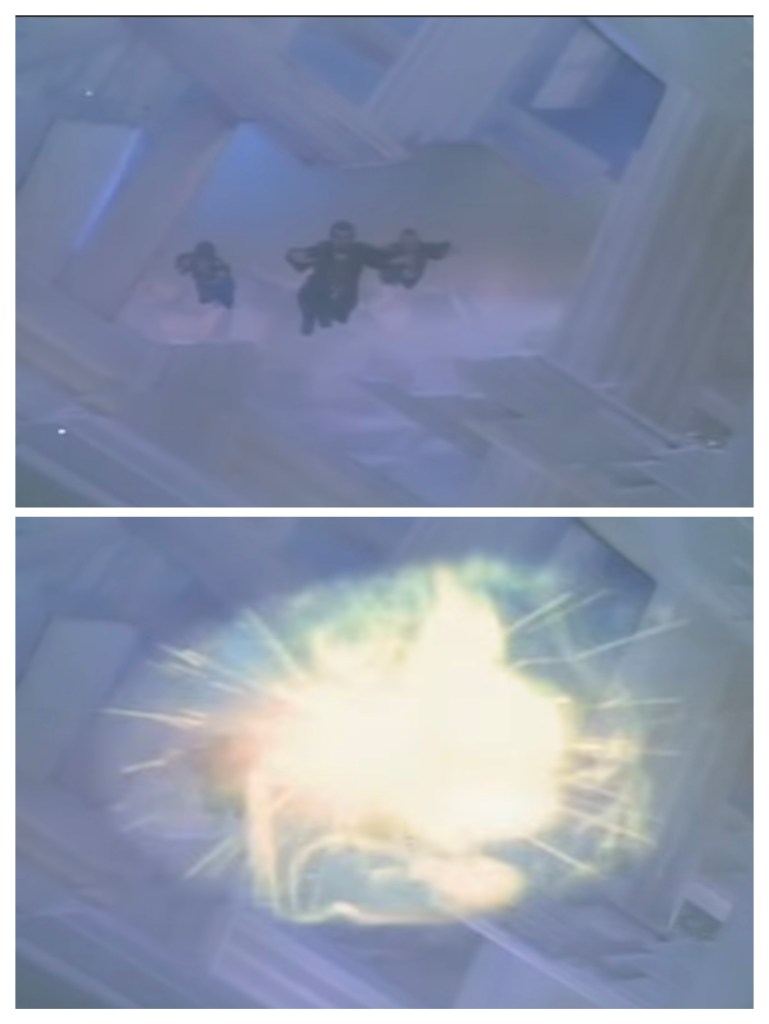
One of the cut scenes from Superman II that was featured in the extended TV cut in 1984 and as a deleted scene on the DVD of the Richard Donner Cut in 2006. Superman somehow lures the criminals into the restructuring chamber, and a blue fog envelops all of them, including Luthor Lux. Once the blue fog disappears, the villains again attack Superman, but this time something is different.
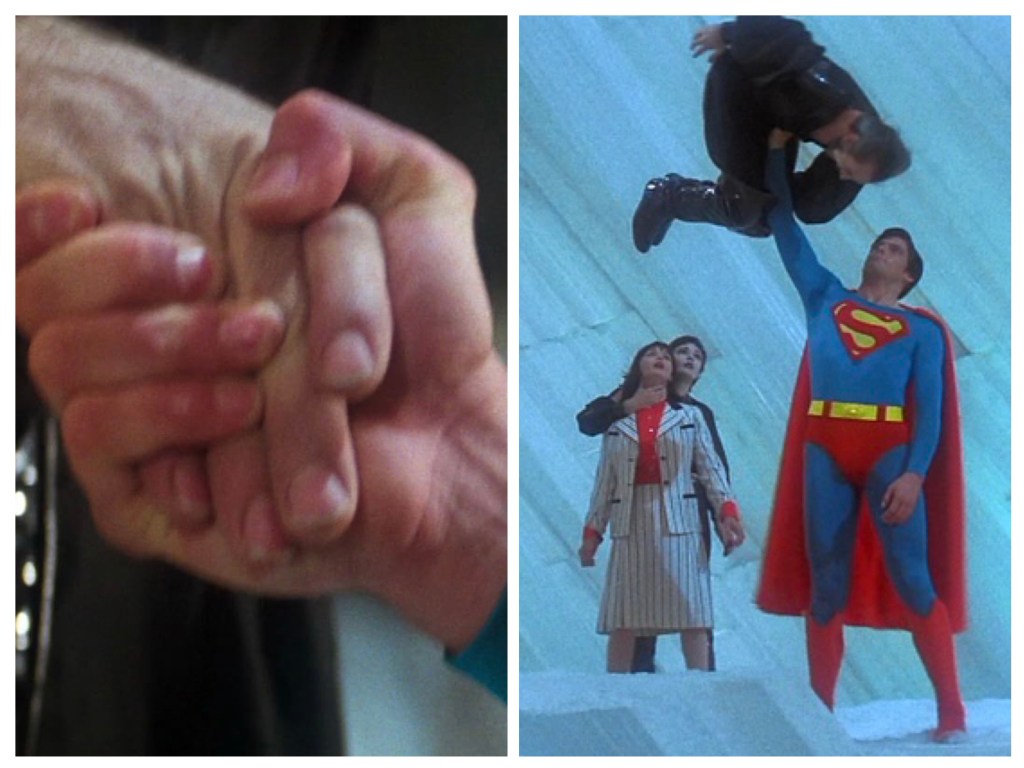
“He did it to them. The lights were on out here, while he was safe in there.” The big switch is another beat that plays very similarly in the final film to how Mario Puzo originally wrote it. With the four Kryptonian villains now powerless and as mortal as Earthlings, Superman gives them laced drinks that will erase all of their memories of good and evil and allow them to begin new lives on Earth. He then gives the same drink to Luthor Lux, allowing him to start his life anew.
As the script ends, we finally see Clark Kent reporting the news on WGBS very matter-of-factly, noting that Earth’s reprieve from the Phantom Zone villains is permanent, but people’s reprieve from the everyday threats in the world is only temporary. The script ends with Clark saying, “Not even Superman… can save us from ourselves.”
All of these final moments seem quick, a little sketchy, even a bit fast paced in the final five pages. It’s actually a good thing that these last beats did not survive in the final films beyond the original Puzo script. It may work for a comic book ending, but not necessarily for a movie.
Next time, I will wrap up my thoughts on the first draft script and start the process all over again with the second draft script.
(Some of the screenshots in this blog are used courtesy of CapedWonder.com.)
 Superman: The Blog