-
The Puzo Scripts – Part 8: The Confrontation, the Rescue, and the Phantom Zone
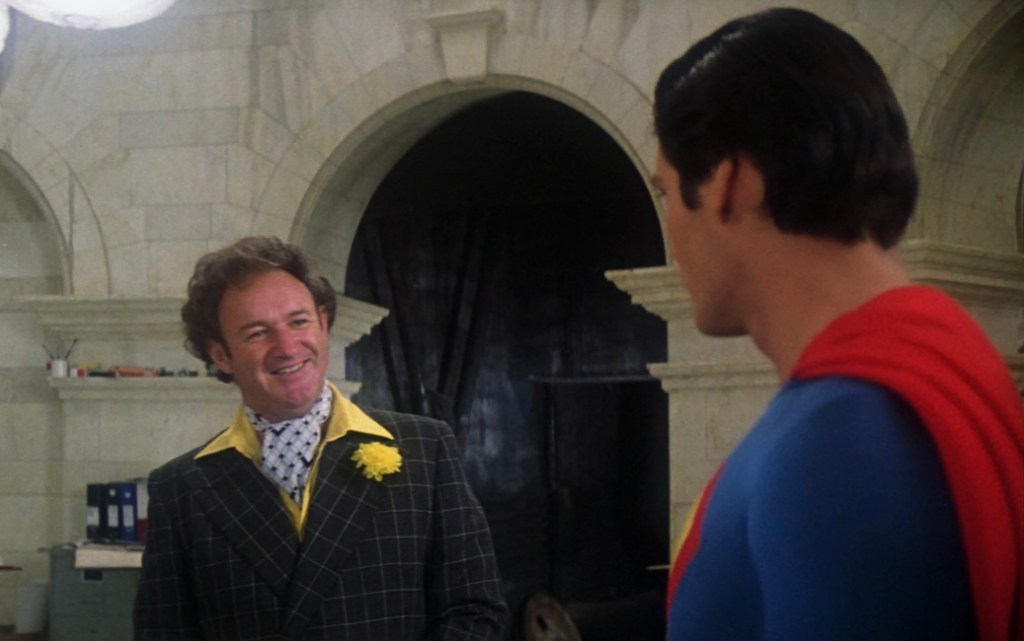
Picking up on page 188, we find Jimmy Olsen broadcasting an emergency alert for the citizens of Metropolis to evacuate the city, as an automated airplane carrying Luthor Lux’s nuclear bomb circles the city. According to the information that they have received, it will detonate in the next two hours. People across Metropolis are in a panic as they attempt to flee the city.
Superman arrives at the right moment and crashes his way into Luthor’s subterranean lair. Sounds a bit familiar, doesn’t it?
“It’s open. Come in.” Once Superman makes his way into the lair, Luthor activates a holographic program that pulls up multiple copies of himself, Eve, and the henchmen in order to distract Superman. But Superman can see right through all of the holograms and catches Luthor in his hands, telling him that he will let Luthor go if he reveals the location of the nuclear bomb. Once Luthor tells him the location, Superman goes into action and hurtles the bomb and the airplane into outer space.
With a slight change from airplane to elevator, this moment survived almost completely intact from the first draft script to the theatrical version of Superman II. Three days later, in Washington, D.C., the President awards Superman the Congressional Medal of Honor, with Clark, Lois, and Morgan Edge in attendance and Lois accepting the medal for Superman.
That night, during a celebration in Superman’s honor, Lois starts trying to remember something important, but Clark immediately stops her from remembering. They go outside, and Clark uses his x-ray vision to look into outer space. What he soon sees startles him.
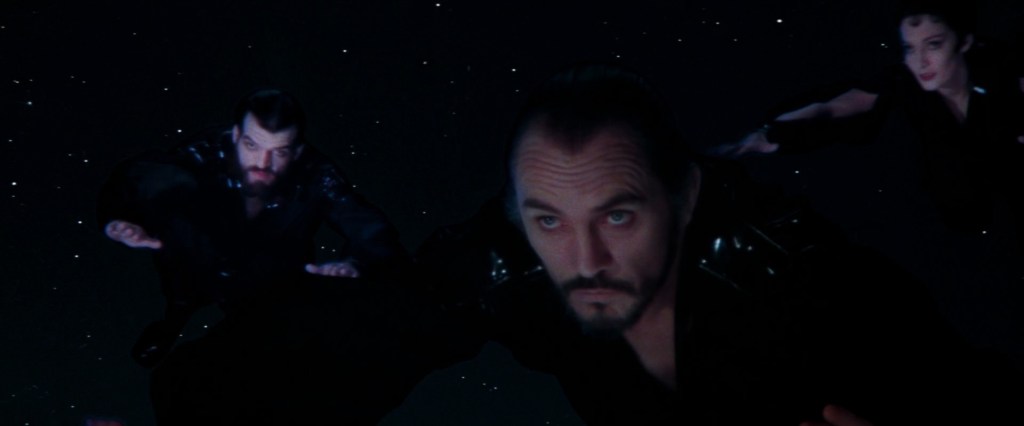
They are coming. Clark soon excuses himself from the banquet, changes to Superman, and flies to the Fortress of Solitude to consult the Kryptonian memory banks about anything and everything related to the Phantom Zone. The computerized program of Jor-El tells him everything about the villains, how Krypton had no death penalty, and how these antisocial beings were imprisoned in the Phantom Zone for all eternity.
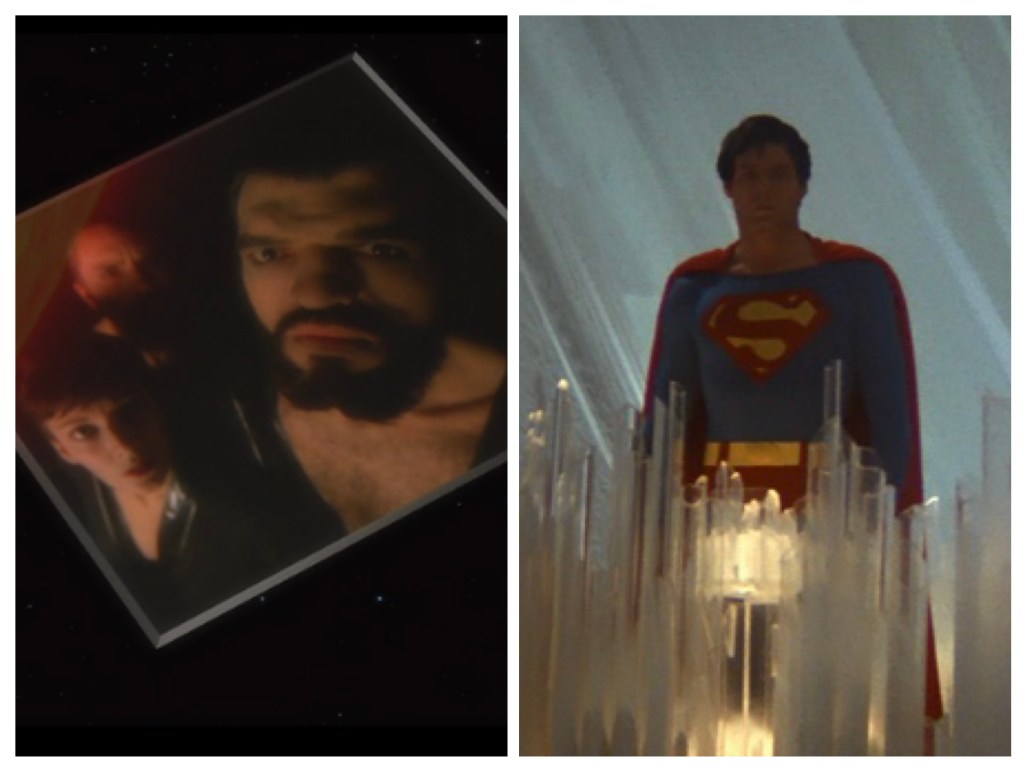
These moments would be later modified for both versions of Superman II, most notably with Luthor consulting the Kryptonian memory banks about the villains and the Phantom Zone. Jor-El then tells his son that an atomic explosion could possibly trigger a chain effect for the Phantom Zone to explode, freeing the villains from imprisonment.
Which is what happened in both versions of Superman II. Superman then asks his father some hard questions: Can another Phantom Zone be constructed? Can the villains be reformed of their antisocial ways? Can they even be killed? And in each case Jor-El’s answer is the same: no.
This leaves Superman with little choice but to put on the lead-lined suit and the kryptonite belt and confront the villains once and for all.
Next time: it’s the showdown in Metropolis.
(Some of the screenshots in this blog are used courtesy of CapedWonder.com.)
-
The Puzo Scripts – Part 7: The H Bomb, Luthor’s Second Plot, Superman Returns, and the Final Plot
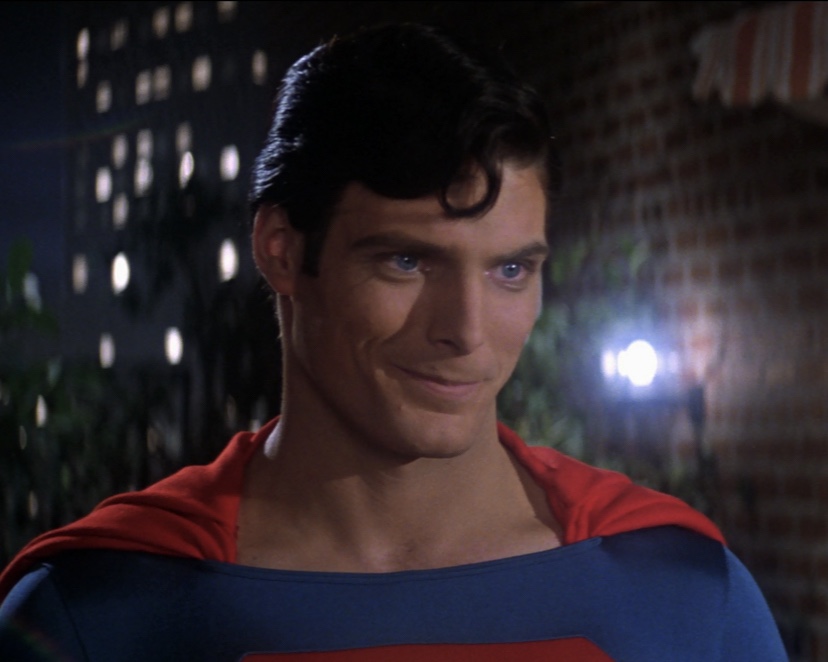
It’s hard to believe, but it’s true, we are now heading into the home stretch of analyzing Mario Puzo’s first draft script for Superman. There’s not much more to go, but yet there’s lots to cover, so let’s get started!
Picking up with page 161, we find our team back in Metropolis, as Morgan (Martin) Edge gives Clark Kent the story of a lifetime: go to an Army reservation in Nevada and cover the development of their latest hydrogen bomb. He gives Clark complete freedom to cover the story but also advises him that he will be cut off from civilization for five days with no contact to the outside world. This, of course, is a dilemma for Clark, since he has five days to go before the loss of his Kryptonian powers is permanent. So off he goes, with Lois, Jimmy Olsen, and Steve Lombard in tow.
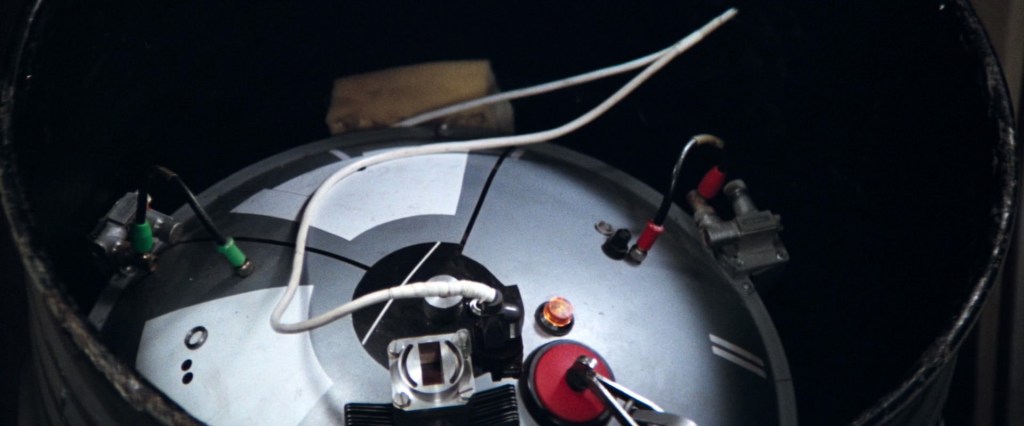
“It’s me that controls the bomb, not the bomb that controls me.” This element from the first draft would be utilized by Richard Lester and the Newmans as the maguffin that sets in motion the events of the theatrical version of Superman II. But someone else has an interest in the hydrogen bomb: Luthor Lux, who has infiltrated the Army reservation along with his moll Eve in complete disguise as Army officers.
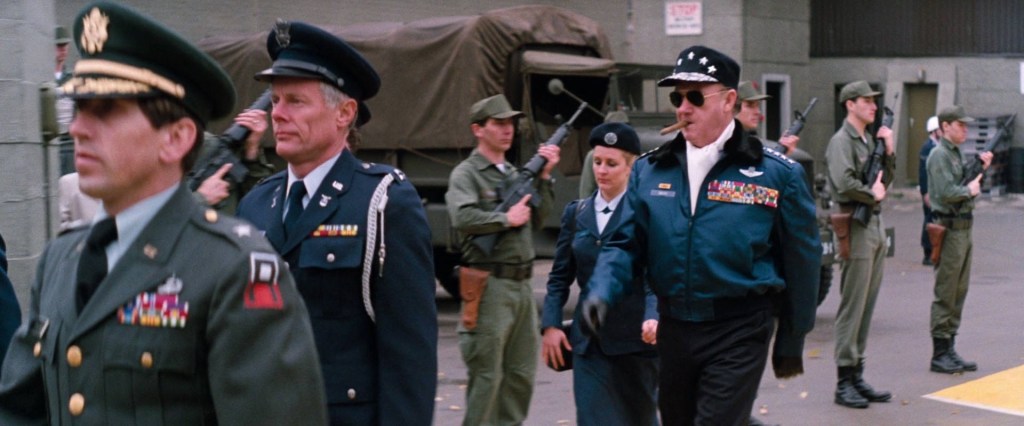
It wouldn’t be the first time that Luthor infiltrated a military base and nobody noticed. From Superman IV. Luthor and Eve then kill a couple of Army soldiers, put on nuclear reactor suits, and make their way into the reactor chamber, where they steal several nuclear rods. Then they carry the nuclear rods to another chamber, where they arm a pair of explosive devices and cause the chamber to explode, causing radiation to pour out onto the Army reservation.
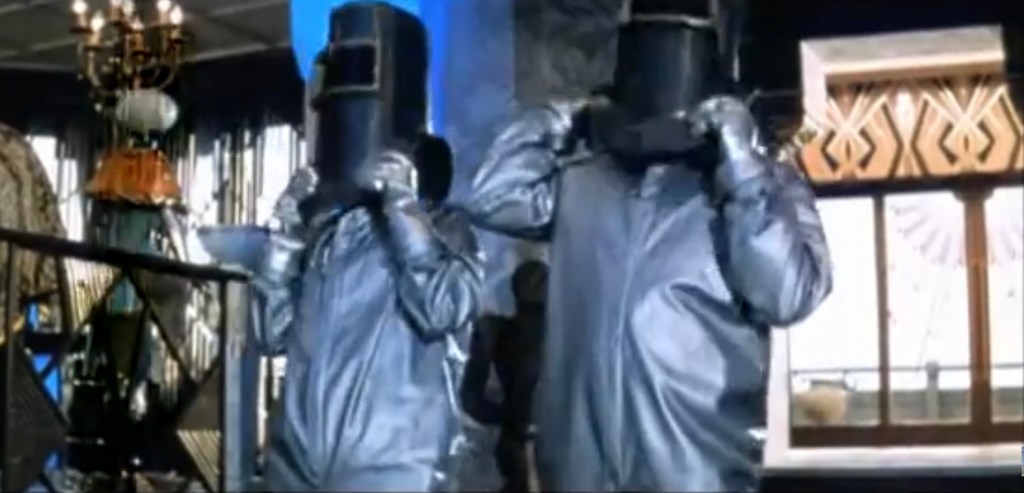
What it might have looked liked if Luthor and Eve had donned nuclear suits. Obviously taken from one of the deleted scenes from Superman IV, but this should give you an idea into the execution of Mario Puzo’s script. Clark then joins several Army medical aides in rescuing as many survivors from the explosion. One of the survivors is severely injured and affected by the nuclear radiation. Clark then takes it upon himself to run into the nuclear reactor chamber and finds Luthor and Eve. Clark attempts to attack Luthor, but Luthor uses a shovel to attack Clark, exposing him to the nuclear radiation. Luthor and Eve soon escape from the Army reservation, while medical crews pull an injured Clark to safety.
That night, doctors give Lois, Jimmy, and Steve the grave news that Clark’s exposure to the nuclear radiation is severe and that he has at most two weeks to live.
Somehow, in his weakened state, Clark tells Lois, “Get me to the Fortress.” She, Jimmy, and Steve soon move Clark out of the hospital and into an ambulance, and the three soon take him to a nearby airport, and together they fly north to the Fortress of Solitude. Once they arrive, they immediately transfer Clark’s unconscious body into the Kryptonian chamber and use it to heal him of the nuclear radiation and transform him back into Superman. It’s then that Jimmy and Steve soon realize that Clark Kent is secretly Superman.
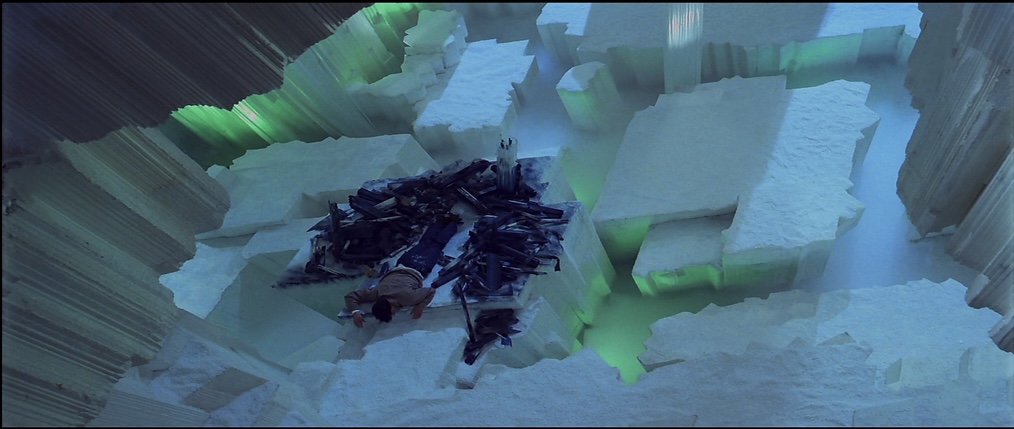
An unconscious Clark Kent with his powers restored to him. From Superman II: The Richard Donner Cut. Now fully rejuvenated, and with his Kryptonian powers restored, Superman must do the unthinkable: he must erase the memories from Lois, Jimmy, and Steve so they cannot remember any of what they have witnessed. (No super kisses here.) He laces their champagne with a chemical that causes them to fall unconscious so that they will wake up with no memory of what has happened at the Fortress, and no memory of his dual identity. Clark then calls in the story to Galaxy Communications.
Afterwards, Lois later wakes up and makes her way to Superman’s Kryptonian chamber, intending to use it to gain powers equal to Superman’s so she can be with him. We then enter into a weird fantasy sequence where Lois dreams that she is now a Superwoman with all the powers and abilities as Superman. Puzo made a note at the bottom of page 176 that reads, “This will be photographed with all the weird lighting of fantasy and its sets and costumes so that the audience will know it’s fantasy.”
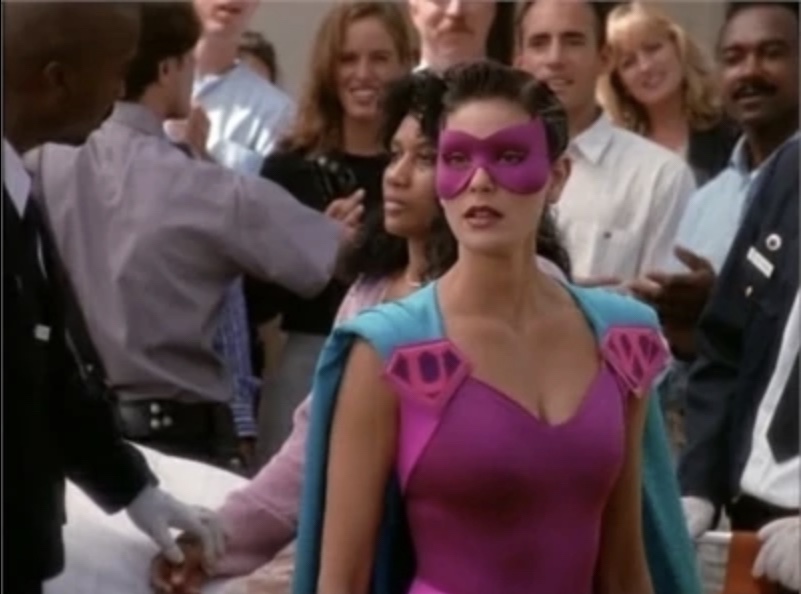
That one time when Lois Lane had all of Superman’s powers. From the November 1995 episode “Ultra Woman” of Lois and Clark: The New Adventures of Superman. Over the next two pages we see Superman and Lois flying in the air together to a cheering crowd and landing at a nearby fairgrounds, where Luthor, dressed as a circus strongman, declares his love for Lois and challenges Superman to a fight. Lois then steps up and beats Luthor to a pulp, then she and Superman fly to her apartment and make love. There is a handwritten note scrawled across the bottom of page 178 that reads, “End of fantasy.”
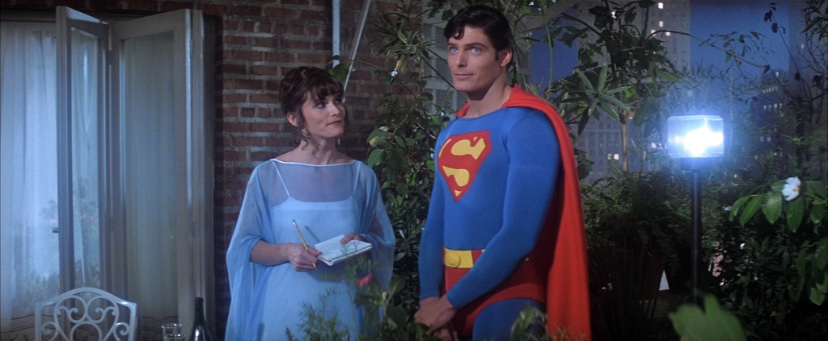
At Lois’ apartment. Of course, it’s all a fantasy. Or is it? Superman soon finds Lois in the Kryptonian chamber and sadly tells her that the machine doesn’t work on humans. He then gives her the same chemical-laced champagne that Jimmy and Steve drank so that she, too, must forget everything.
Later, we find Luthor, Eve, and Luthor’s henchmen watching Jimmy Olsen deliver a news report about the stolen nuclear bomb and how the President has declared martial law in Nevada, Arizona, and California until the bomb has been safely recovered. Luthor then has Eve read a letter he has written to the President indicating that he is in possession of the nuclear bomb and intends to detonate it over New York unless his demands are met: $100 million in gold bullion, $10 million in free advertising on the Galaxy Communications Network, and the release of certain colleagues from imprisonment with full pardons.
Luthor then shows the bomb to his group, but one of the henchmen decides to go into business for himself and blow up the nuclear bomb. Luthor encourages him to go ahead, but he finds out that it’s all a hologram, a trick devised by Luthor, and that the real nuclear bomb is safely hidden away at an undisclosed location.
Two notes to make here: first, Luthor’s message that he will destroy the city with a deadly device is a plot point that will survive into the final version of Superman: The Movie, albeit in rewritten form. Second, the reference to holographic trickery is a thread that will carry over into the final version of Superman II.
A short time later we see the President on television issuing a statement that he will not give in to Luthor Lux’s demands. Luthor then informs Eve and his remaining loyal henchmen that he intends to arm the nuclear bomb.
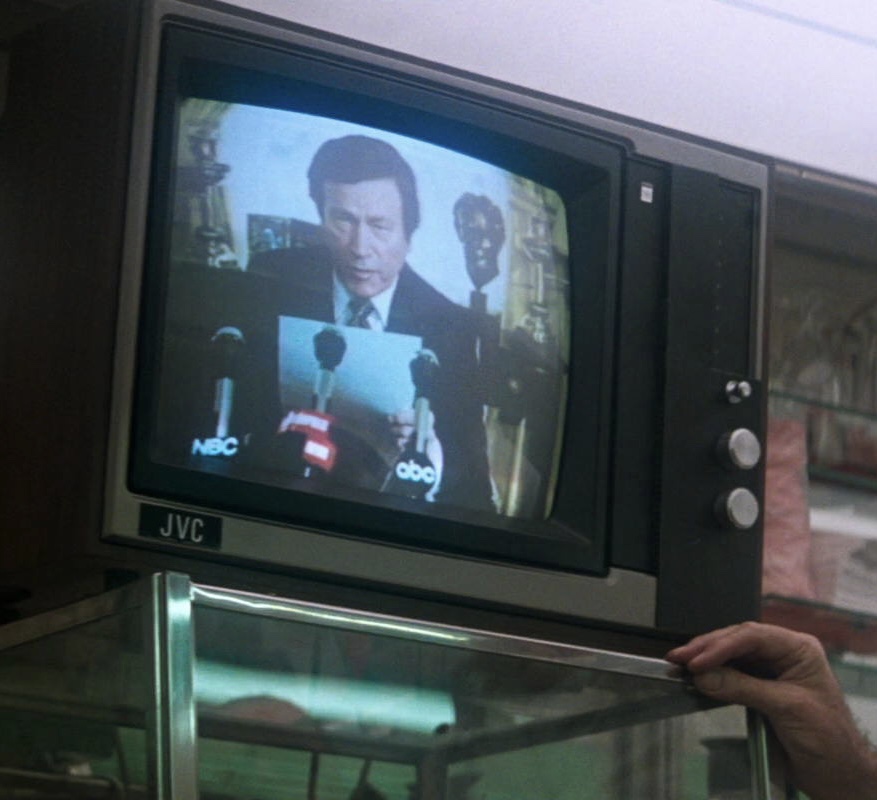
The news report of the President refusing to give in to Luthor Lux is another element that will also carry over into the final version of Superman II in rewritten form. But there’s someone else who’s been watching the President’s statement. Someone who knows that it’s all from the criminal mastermind of Luthor Lux. And this someone has the strength and great speed to stop Luthor from going through with his plan.

The only question is, can Superman get there in time to save Metropolis and all of New York from certain nuclear disaster? We’ll find out next time!
(Some of the screenshots presented in the blog are courtesy of CapedWonder.com.)
-
New 4K Update with Artwork and Specs
We interrupt the Mario Puzo script analysis with this Muppet news flash…
We now have more information about the forthcoming 4K release of the Superman films. HD Movie Source has released what appears to be the final cover artwork for what is tentatively being called the Superman 5-Film Collection: 1978-1987, which is still set for release on April 18, 2023.
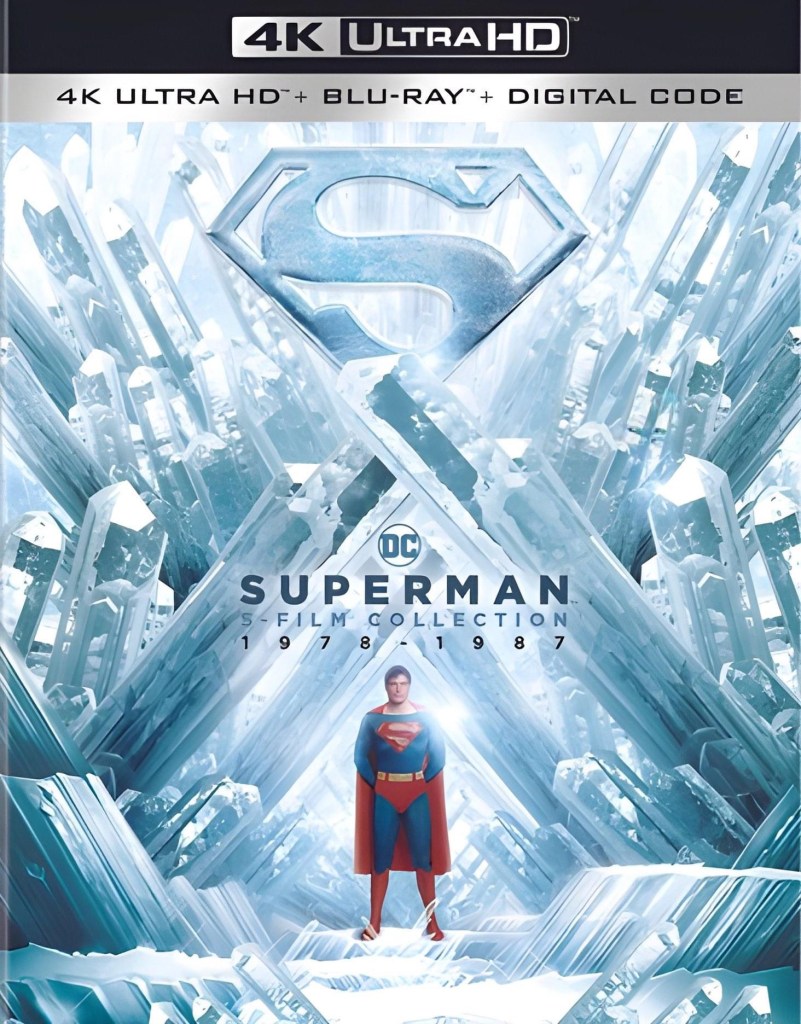
Final or not final? There are differing opinions about whether or not this is the final cover artwork. Bill Hunt of the Digital Bits says that it is, although according to Jim Bowers of CapedWonder.com, Warner Home Video has stated that they did not release the above artwork, and they have yet to issue an official press release. My only advice is to take the artwork with a grain of salt.
HD Movie Source has further posted that this will be a whopping ten discs in all, five 4K discs and five Blu-ray discs of the theatrical versions of Superman: The Movie, Superman II, Superman III, Superman IV, and the 2006 final version of Superman II: The Richard Donner Cut, along with digital copies of each film.
Furthermore, all of the films will be remastered in 4K 2160p format with HDR10 and 2.39:1 aspect ratio of their original theatrical releases. The exact English audio tracks are not yet finalized, but it will also include Spanish and French Dolby Digital mono sound, with subtitles in English SDH, Spanish, and French.
As far as added features go, nothing has been officially announced at this time. However, given the previous 2018 4K release of Superman: The Movie, I am inclined to think that many of the earlier legacy features from the 2006 Ultimate Collector’s Edition DVD set and the 2011 Blu-ray anthology will be ported over to the new 4K set.
With this latest news, I have to believe that this new 4K release of the first Superman film will be a vast improvement over the previous 2018 edition and that all of the films will indeed get a proper remaster. But as I had posited earlier in my blog, the big question still concerns the Donner Cut. Will the visual effects be upgraded and brought into a proper balance? In my opinion those visual effects are the weakest of all five films, and a proper rebalance is in order. It would not look like a real film if those effects were not corrected and the film brought up to par with the other films.
And the price tag for the set: a staggering $155.99. So start saving your nickels and dimes for this one!
As more news becomes available, I’ll pass it along to you.
Many thanks to Bill Hunt, Jim Bowers, and HD Movie Source for all of the latest news and information on this upcoming and highly anticipated 4K release.
-
The Puzo Scripts – Part 6: Aftermath, Bullies, and Luthor’s Next Plot
Before I launch into the next section of the first draft script, I want to point out that everything in the previous section pertaining to Lois Lane tricking Superman, and Superman giving up his powers, focus on just those two characters alone. There are no breaks in the sequence, as in both versions of Superman II, no focusing on other scenes with other characters to divide the action. This would have covered at least twenty nonstop minutes with Lois and Superman. That’s how Mario Puzo wrote it in this first draft. What do you think? Would it have worked without a break in their story?
Continuing where we left off, we’re now at page 132 of the script, after Superman has given up his powers all in the name of love. At this point Lois couldn’t be happier. This is completely different from what she says to him in the final film: “I was just thinking… I can’t believe you gave it all up for me.”
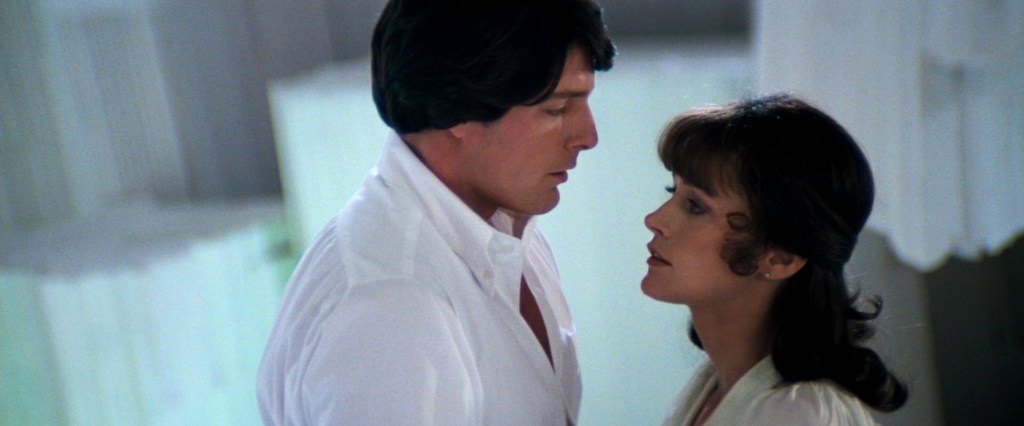
Superman then goes into a lengthy speech about how he couldn’t do things like other people around him, things such as playing cards or enjoying a game of tennis or golf, or never having a headache or getting sick or carrying on a normal conversation, or even making love. Puzo made an interesting side note before this speech, in which he wrote, “The actor should not read it as to gain sympathy, yet again not read it as to provoke derision.”
Lois takes advantage of the situation and leads Superman to the kitchen, where they drink so much champagne that by the next morning they are both three sheets to the wind drunk. And even drunk, Superman continues with his speech, at one point saying, “Another reason why I’m glad I’m not Superman is that I won’t be able to fix everyone’s problems….As Superman I could never refuse. Now they can all go to hell.”
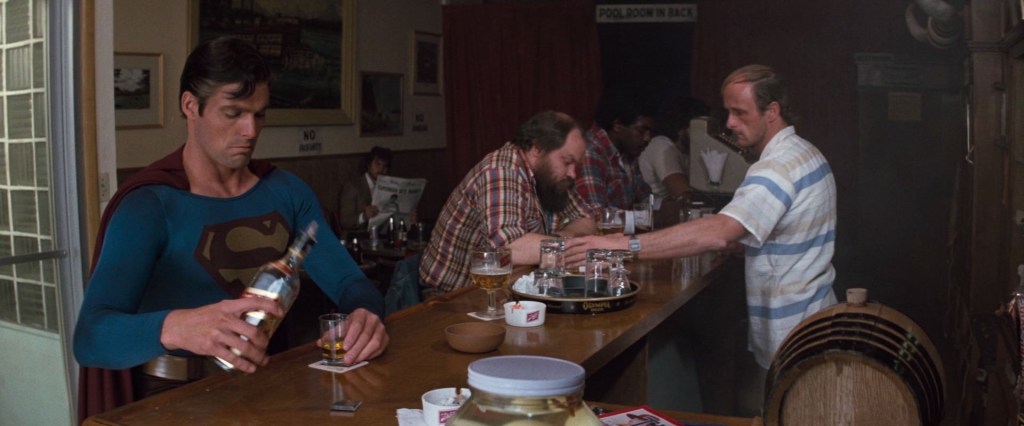
The idea of a drunk Man of Steel is something that would later appear in Superman III. After sleeping off their hangovers, Lois and Clark start to head back home to Metropolis, stopping at one point at a roadside diner. It’s there that a truck driver named Duggie attempts to force Lois and Clark out of his favorite booth. A powerless Clark lands the first punch, but Duggie eventually gets the better of Clark, with his two buddies leaving Clark bloodied and nearly unconscious. Sounds a bit familiar, doesn’t it?
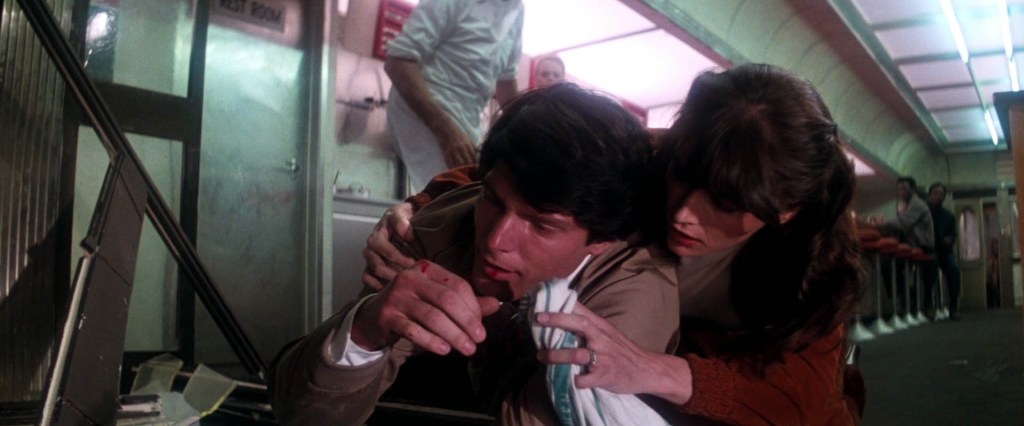
With some tweaks and some rewriting, Duggie became Rocky, Duggie’s buddies were removed, and the essence of the scene would be used in the final versions of Superman II. After Lois tends to Clark’s injuries, she finds that he was brave in the face of three-to-one odds. Clark then tells her that it is still his responsibility to catch Luthor Lux once and for all.
Later on, in Metropolis, Clark Kent goes on television and reports that the police have launched an all-out search for the whereabouts of Luthor Lux. Luthor then announces to Eve and his henchmen that he intends to commit three great crimes that will ensure his legacy in infamy, the first of which will be a diversion to the two greater crimes.
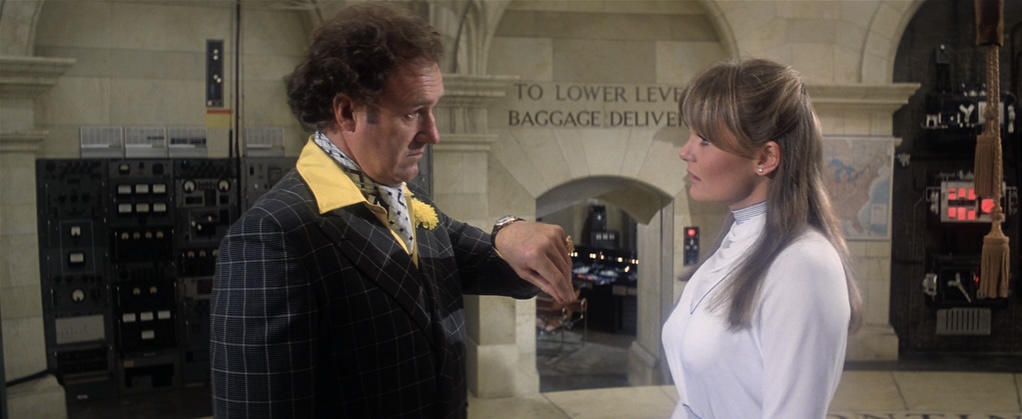
At this point in the script Luthor is still called Luthor Lux, and Eve is simply Eve. This sequence marks Luthor’s return to the story and his first appearance in the second half of the script. Eve wants to know what that first crime will be, and after she begs and pleads that she wants to know, Luthor finally tells her that his first crime will be to travel to Rome and assassinate the new Pope.
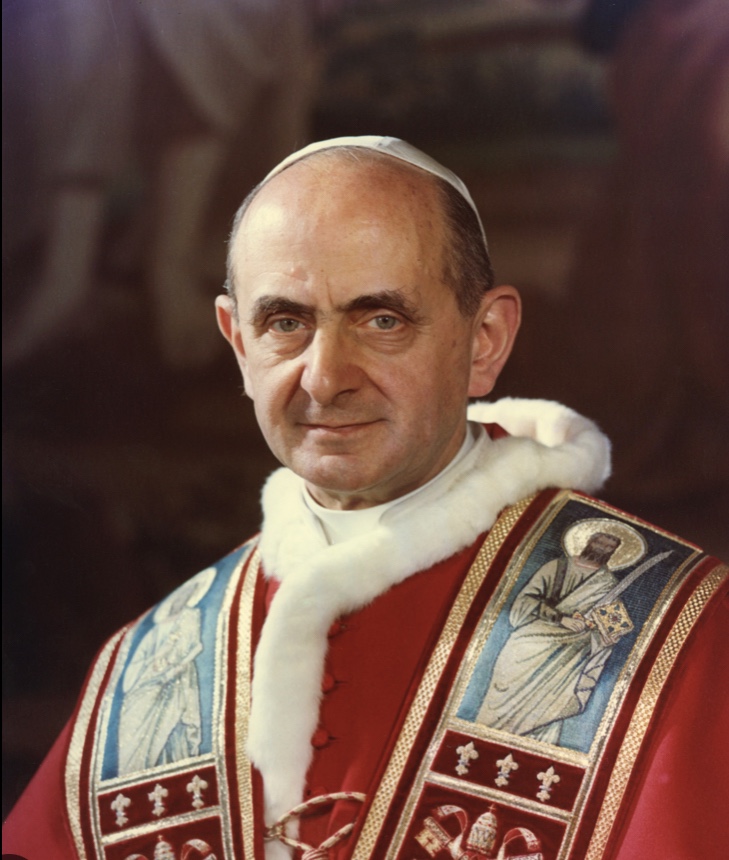
Pope Paul VI, the head of the Roman Catholic Church at the time of the writing of the first draft script in July 1975. I have to pause here and point out an inaccuracy in Puzo’s script. Luthor Lux says that he plans to assassinate the new pope. This could not be a reference to Pope Paul VI, who was clearly alive in July 1975 and would not pass away until August 1978. He would then be succeeded by Pope John Paul I. Being observant to real life events, this is something that Puzo should have kept in mind while writing out the script. A simple removal of the word “new” would have kept the script in step with then-current events in the Catholic Church.
The next day, Clark, Lois, Jimmy Olsen, and Steve Lombard arrive in Rome to cover a big story. Shortly after they arrive, a young boy steals Lois’ purse, which contains only a small amount of money and some cosmetics. This minor detail is one that will be slightly modified and appear in Superman: The Movie, when Clark accurately describes how Lois has “ten dollars, two credit cards, a hairbrush, and a lipstick”.
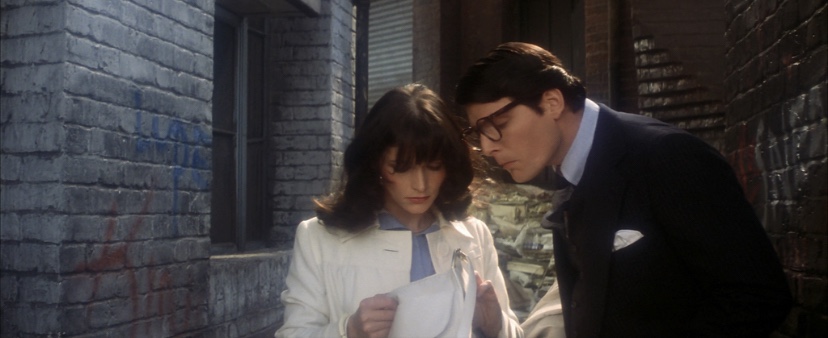
“Wild guess.” Clark gives chase but is unsuccessful in capturing the young thief and retrieving Lois’ purse. She’s not too worried about the loss. And even though only two days have passed since Superman gave up his powers for Lois, he’s not too concerned about the loss either.
We are then given another lengthy sequence of Steve Lombard attempting to hustle Clark by seeing whether or not he could throw a series of successful football passes. Clark is unable to beat Steve at his game, and in the end he loses five hundred dollars. This scene almost seems like a repetition of the scene in the first half of the script where he played a similar trick on Clark and lost. This entire sequence slows the story and contributes nothing worthwhile.
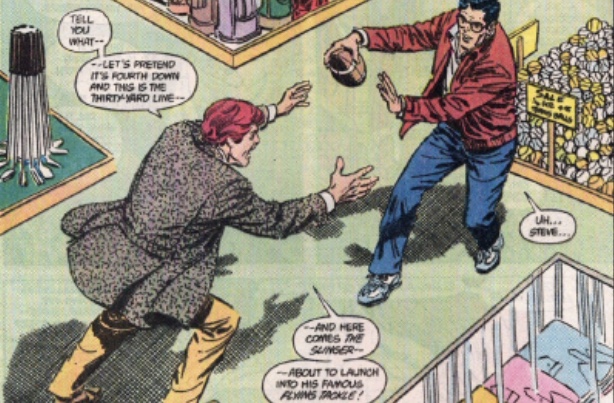
Do these subplots with Steve Lombard really matter in the long run? That night Lois receives a mysterious phone call from an unidentified source warning her to watch for the sign of the cross.
The next night at the Vatican, the four reporters witness an assassination attempt on the Pope at the hands of six masked monks, all of whom are wearing a cross on their robes. Clark manages to stop one of the monks from firing on the Pope, and the bullet hits one of the cardinals instead. It’s then that Clark unmasks the monk, who has now shot himself and is dying at Clark’s feet, and realizes that the monk is actually one of Luthor’s henchmen. And his last words to Clark are, “This is nothing… this is nothing…”
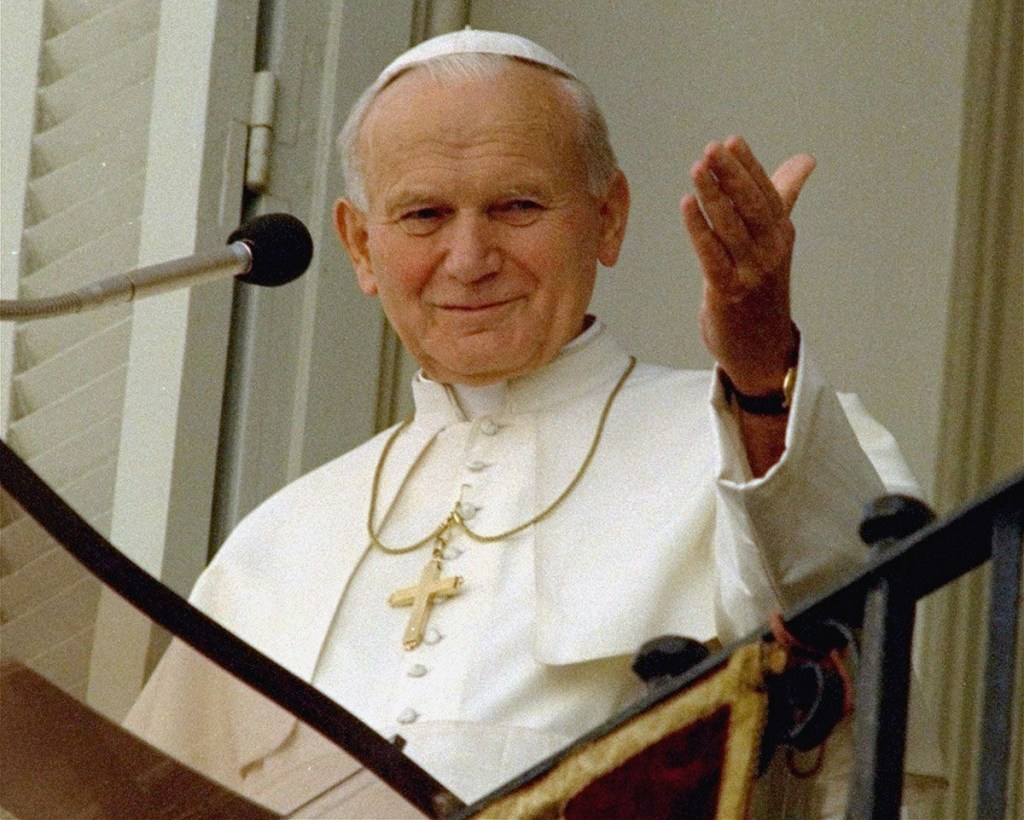
This is another plot point that, like the action in Iran earlier in the script, would have had an eerie similarity and timelinesses to the real-life assassination attempt to Pope John Paul II in 1981. As they return to Metropolis, Lois reminds Clark that he now has five days to change his mind and get his powers back. Clark is adamant about not going back, but Lois tells him that she would rather he go back to being Superman than to lose him forever.
Which makes for a good ending point for now. Next time, we’ll examine more of Luthor’s schemes and how they affect our heroes, but as we end for now, let me leave you with these three words to ponder…
“Super ain’t happy.”
-
The Puzo Scripts – Part 5: Analysis, The Secret Exposed, and the Sacrifice
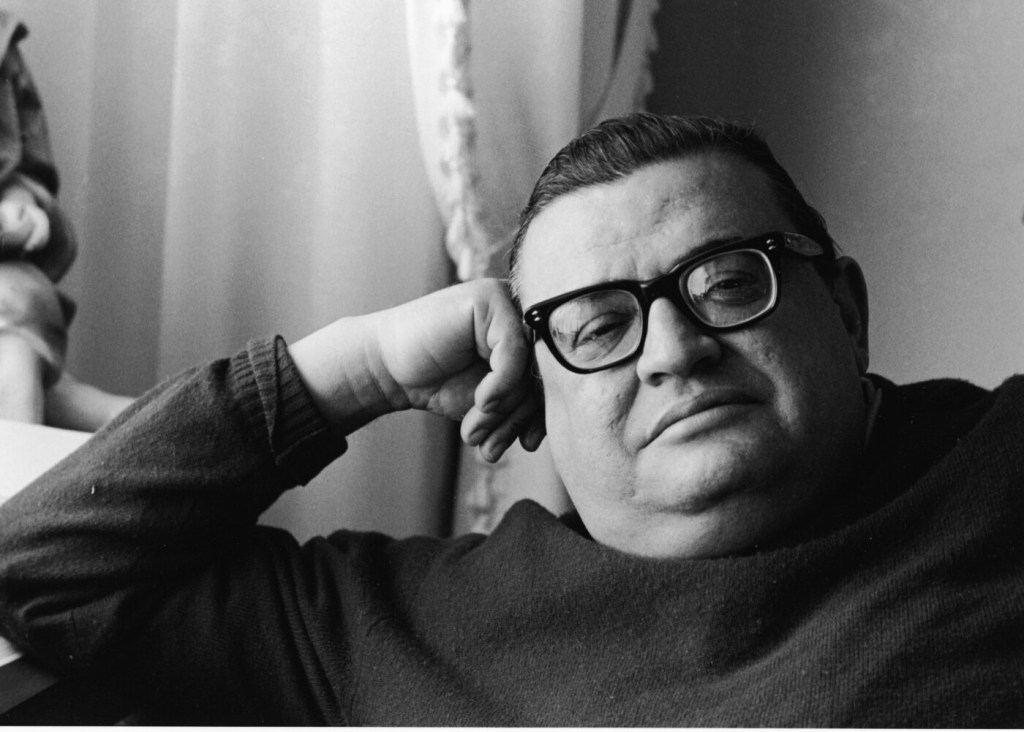
So how do you think Mario Puzo did with his first pass at the Superman script? So far I have covered the first half of Mario Puzo’s first draft script for Superman, and while it does not feel like a finished script, we can see the groundwork being laid for what will become the final film. Granted, not everything is fully represented in this first draft, and there are a number of gaps throughout the draft. As is the case with any writer, Puzo left out a number of elements in this first draft that he would go back and fill in later.
One thing that Puzo had some difficulty with in this first draft is character identification. Specifically, the characters of Morgan (Martin) Edge and Luthor Lux bear little resemblance to their original comic book versions in name and appearance, and through the script Puzo frequently alternates between Morgan Edge and Martin Edge. This is something that would have to be fixed in later drafts.
Another thing that slows down the pacing of the script is a lot of exposition, particularly in the Arctic Circle sequences and on two occasions a lot of football byplay involving Steve Lombard. The written word doesn’t always translate to the silver screen accurately, and what might be good on paper might not work on screen.
Finally, the ensuing melee in Iran appears to be less than exciting, as it involves Jimmy Olsen and Steve Lombard coming to the rescue of Superman and Lois Lane. One respondent to the blog suggested how, if the sequence had remained as was in Iran, the entire film would have been received at the time of the Iranian hostage crisis in 1979. Art imitating life, and life imitating art, indeed.
But no matter how you may look at some of these holes and inconsistencies, one thing remains: the first half of Mario Puzo’s script begins to set up the events of the first film.
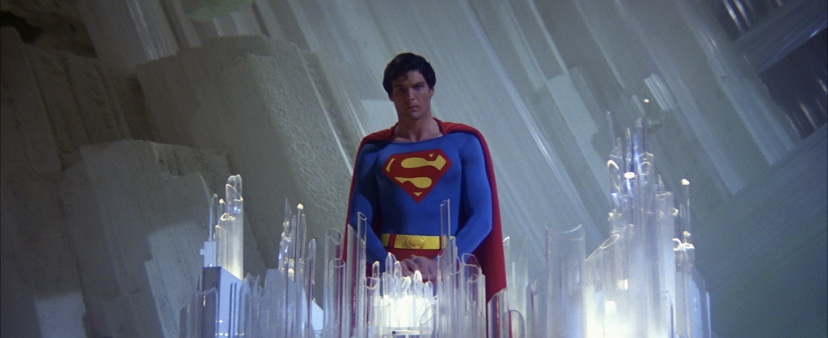
Which leads to looking at the second half of the script, which will lay the groundwork for the events of Superman II, both the final theatrical version directed by Richard Lester and released in 1980-81, and the 2006 recut as conceived and directed by Richard Donner in 1977. So we come back to the question: which Puzo elements survived into the final films? Let’s address them scene by scene.
Beginning on page 111, we find Superman back at the Fortress of Solitude consulting with the computer programs of Jor-El and Lara about the kryptonite that has landed on Earth. Jor-El advises him that the only protection against the radioactive properties of the kryptonite is to construct a suit of lead. He also informs his parents that he suspects Lois Lane knows this and may start to suspect that Clark Kent and Superman are one and the same. This is a thread that carries through the later drafts and into both versions of Superman II.
Back in Metropolis, Lois puts her plan in motion and invites Clark to her apartment for a romantic dinner date. As they share a drink together, she leans over and kisses Clark, informing him that she suspects him to be Superman.
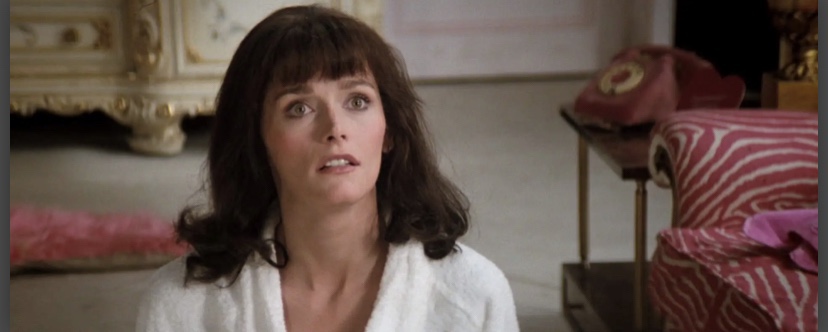
“You are Superman, aren’t you?” Lois then attempts to trick Clark with the suitcase containing the kryptonite-laden belt that she brought back with her from their adventure in Iran, noticing how Clark always disappears whenever Superman shows up. This is a trait that survives all the way into both films. She continues to trick him, ultimately wearing the kryptonite belt under a trench coat and causing Clark to pass out on the sofa. This is when Lois finally knows the truth, and Clark can’t hide it any longer.
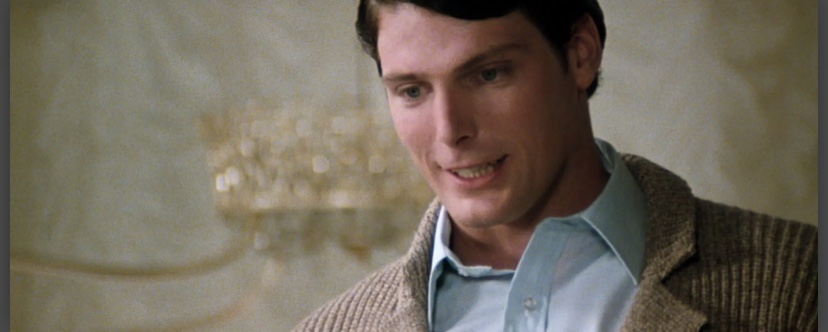
It’s then that Clark says to her, “Do you trust me? Then let’s go to my place.” Later at the Fortress, Superman—now stripped of his Clark Kent persona—shares a romantic champagne dinner with Lois.
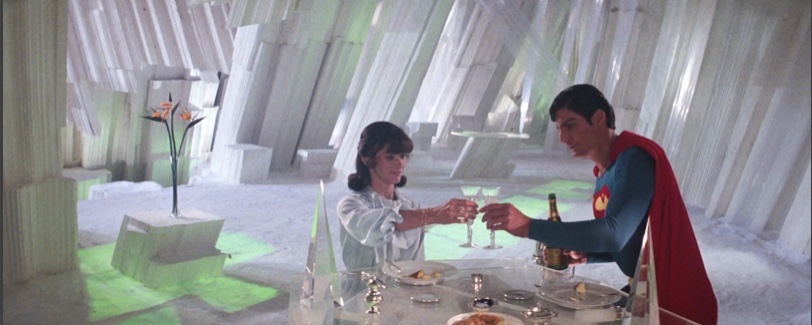
Abandoning the orange juice for once. They express their feelings for one another, and it is then that Superman informs Lois that he is willing to give up his Kryptonian powers to share his life with her. He leads her to the Kryptonian memory banks and consults one of the interactive programs from his parents. Among the files that he accesses is a home movie of his life on Krypton as an infant. This is a moment that never makes it through to the final film.
But in the next moment we then see Jor-El make a very grim statement that does make it all the way through into filming:
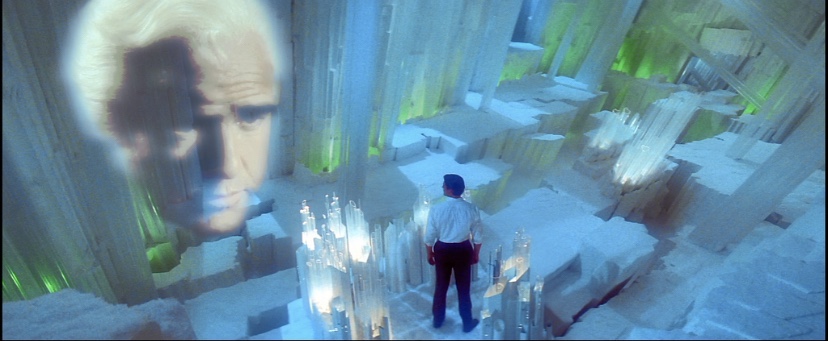
“We have tried to anticipate your every question. This was one we’d hope you’d never ask…. But please consider everything carefully before you do this.” Lara then advises Kal-El, “My darling, if ever you hear my voice, know that I love you and out of that love I beg you, do not become mortal on Earth.”
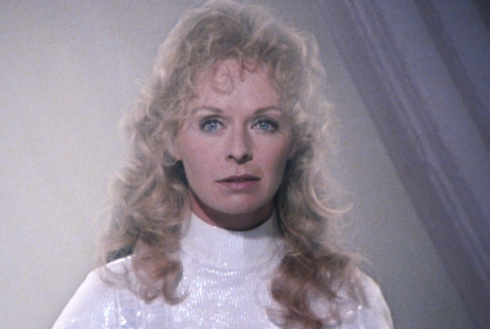
Lara is present in this draft along with Jor-El as they both advise their son not to go through with his decision to give up his powers for love. Jor-El then gives Superman instructions on how to construct a machine that will strip away his powers, along with a safeguard that if he changes his mind after ten days, his powers can be restored. If not, his powers will be gone forever.
It’s interesting to note that in this draft, both Jor-El and Lara advise Superman not to go through with this decision. As we know, Jor-El advises him in the Richard Donner Cut of Superman II, while only Lara advises him in the Richard Lester theatrical version. One fan by the name of “Booshman” recut the scenes together into his own hybrid cut and posted it to YouTube a couple of years ago to some fans’ approval.
Here’s how “Booshman” recut the scenes to involve both Jor-El and Lara into Superman’s decision to sacrifice his powers, inspired by Mario Puzo’s original 1975 draft. What do you think? Superman then tells Lois that he began constructing the machine six months earlier, when he knew that he loved her. Then he goes through with it and relinquishes his powers. In this draft he is laying down on a table in the glass booth, as opposed to standing up in the crystal chamber in both versions. A minor quibble at that.
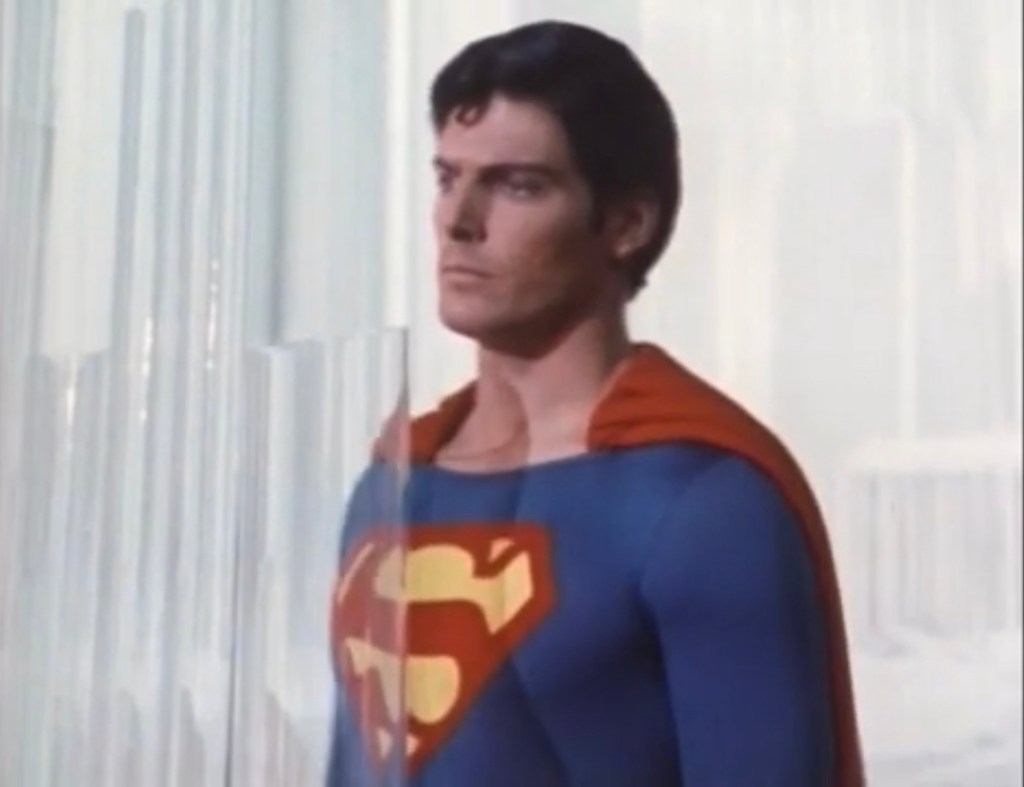
“Any last words before you get destructured?” Unfortunately, the response is not, “We who are about to die salute you.” Even in this draft, Puzo isn’t playing. After the deed is done and Superman is now a powerless mortal, Lois decides to test her theory and punches him in the stomach so hard that it really hurts him. This moment comes off a bit comical as they both laugh about it, and then the mood becomes more sensual as they make love together. It’s not explicitly described, but we get the hint.
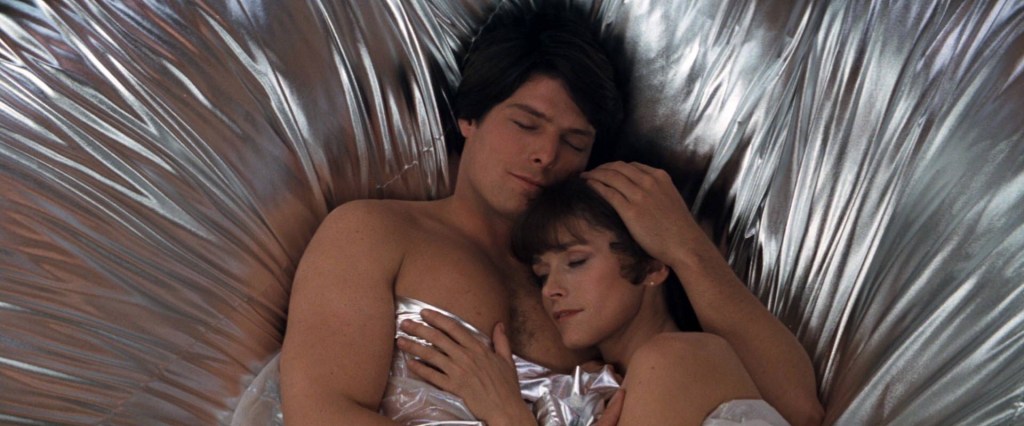
In the 1993 Wizard Superman special, the magazine stated that the scene was filmed but cut in order to avoid an R rating. This is another moment that I will give Richard Lester credit for handling in a very tasteful manner. So much of what Puzo has written in these scenes of this first draft would make it not only into the Newmans’ 1976 and 1979 drafts, and the Tom Mankiewicz script in 1977, but also into both versions of the film. This is one of the strongest moments that Puzo emphasized in his script that would become an important part of the Superman production history.
Next time, I’ll address the aftermath of Superman’s loss of powers, another scene that is added to the groundwork of Superman II, and the return of Luthor Lux and his next plot for world dominance.
(Some of the screenshots in this blog are courtesy of CapedWonder.com.)
-
The Puzo Scripts – Part 4: Luthor’s Plan, Kryptonite, and Superman in Peril
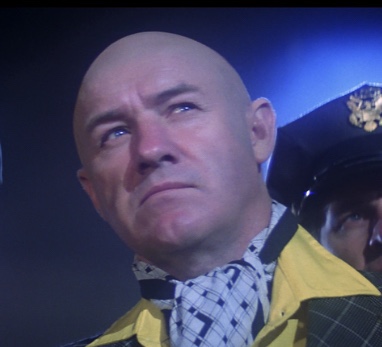
When we last left off with Mario Puzo’s first draft script for Superman, we saw the Man of Steel going into action, stopping a robbery, on the search for the whereabouts of Luthor Lux, preventing a drug deal from going down, and giving Lois Lane the first interview. Where do we go from here?
Over the next six months Superman becomes an avenging angel in Metropolis, effectively reducing the crime rate to almost nothing. He prevents a mugging in one of the city’s back alleys. He stops a couple of robbers from stealing a television set. He arrives in the nick of time to save Lois Lane and Jimmy Olsen from being attacked in Central Park in the daytime. And he stops a jewel burglar along the side of a building.
I want to focus on the scene of Superman stopping the jewel burglar. If this scene sounds very familiar, it should. The differences are two. First, it takes place outside a thirty-story apartment building. Second, Superman has fun at the burglar’s expense, climbing upward alongside the burglar before he catches him on the way down. Otherwise, this is one scene that will go all the way into the final film with some revisions.
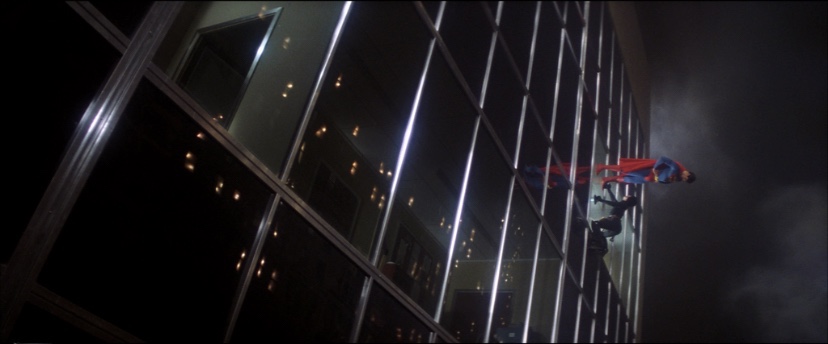
“Hi there. Something wrong with the elevator?” Some time later, Clark Kent gives a news report on how crime in Metropolis has fallen by an astounding 75 percent over a six-month period because of Superman. As a result, the President has reached out to Superman and asked if he would be willing to carry out his campaign in other large cities as well.
Meanwhile, Luthor Lux has had a dream about the four Kryptonian villains in the Phantom Zone. He soon reveals his dream to Eve and comments that the only way to stop Superman is with kryptonite, fragments from the planet Krypton that have fallen to Earth. This discussion is similar in spirit to what Tom Mankiewicz wrote for the final film but greatly different in execution.
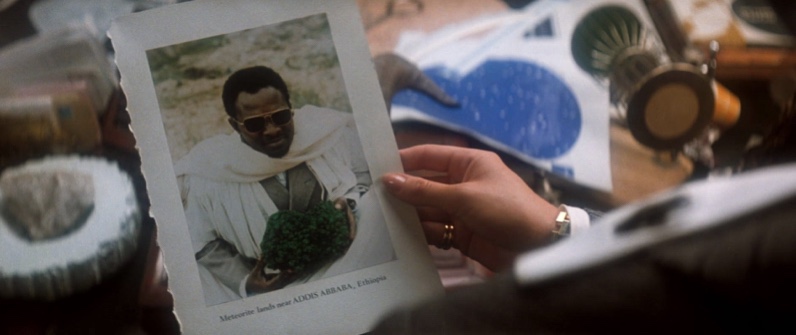
“You mean fire and bullets can’t hurt this guy, but this stuff here… will kill him?!?” It is shortly after this discussion that Luthor and Eve make their way to the Metropolis Museum of Natural History, where they spot a sample of kryptonite in the meteorite section of the museum. They return to the museum later and switch the real kryptonite with a fake green meteorite. This moment appears in the final film but changed from Metropolis to Addis Ababa, where they kill two people in the museum there.
Later, Morgan (Martin) Edge sends Clark, Lois, Jimmy, and Steve to Iran to cover a terrorist situation that had begun brewing six months earlier with a group of terrorists threatening to blow up a number of oil refineries. Clark finds the entire situation dangerous, and Edge tells him that he would be an excellent reporter if he had a bit more courage. That bit of dialogue is similar to what Perry White tells Clark in the first Superman film, that he needs aggression and confidence to take charge and let the people know who he is.
Once they arrive in Isfahan, they begin to cover the situation there. It’s during their time that the romance between Lois and Clark begins to blossom, but their affection is interrupted by a terrorist attack on the Peacock Throne. Lois soon recognizes the terrorist group as Luthor Lux and his henchmen, the same group that robbed the bank in Metropolis. Clark soon disappears and changes into Superman in order to confront Luthor. Only now Luthor has the upper hand thanks to a little souvenir from the old hometown.
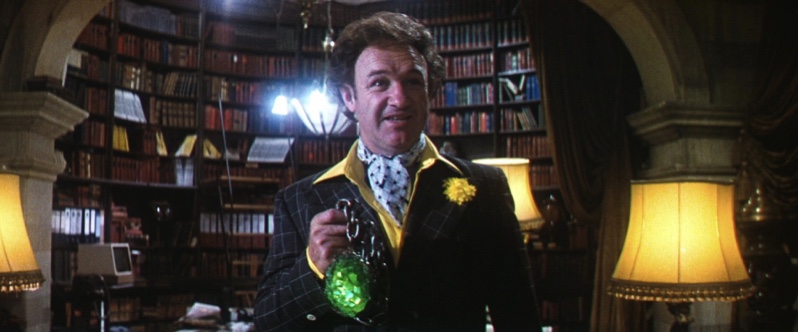
“Brains over brawn,” as Mario Puzo wrote it in the first draft, which later became “Mind over muscle” in the final film. Luthor soon imprisons Superman with a kryptonite belt around his waist and informs Lois, whom he has also taken hostage, that he wishes to send a message to Morgan (Martin) Edge: he will freely release Superman in exchange for ten million dollars of free advertising on Galaxy Communications’ Channel 15. If not, the kryptonite belt will remain around Superman until it kills him.
Eventually, Jimmy and Steve find out that their Iranian military contact, General Ahmed, is secretly in cahoots with Luthor Lux and wants to see the powerless Superman for himself. Olsen and Lombard soon find their way to where Superman and Lois are being held, and a huge melee ensues with Superman eventually freed from the kryptonite belt and Luthor and Ahmed imprisoned. Thankfully, none of this survived beyond the Puzo draft with the exception of Luthor’s arrest.
Later on, the four reporters return to Metropolis, and Lois invites Clark to her place for dinner. When Clark asks her why, she responds, “I have something very important to tell you.”
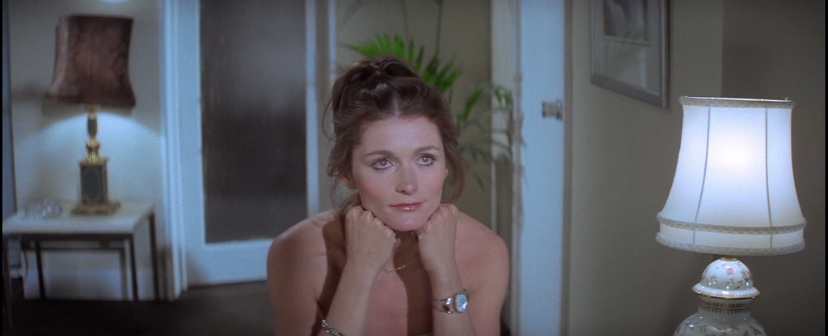
Just what is this important thing that Lois has to say to Clark? Find out next time!
(Some of the screenshots in this blog are used courtesy of CapedWonder.com.)
-
The Puzo Scripts – Part 3: Metropolis; Clark Kent, TV Reporter; and Lex Luthor
After the buildup of Krypton, Smallville, and the Fortress of Solitude, we now turn our attention to what has made Superman successful: the action in Metropolis. As with the final film, Mario Puzo’s first draft script from July 1975 spends a relatively small part of time building up to the events in Metropolis. But does it bear any resemblance to what we see in the final film?
Let’s start with Clark Kent’s arrival in Metropolis. Even in this early draft, Puzo sees Park Avenue in New York City as part of Metropolis. This is something that is referenced in the final film, as Lex Luthor and Miss Teschmacher both mention that their lair is 200 feet below Park Avenue.
From there, a pair of taxis accidentally run down Clark. While he is not injured in the mishap, both taxis are damaged. This is a running gag that resurfaces in later scripts and is briefly mentioned in a news report in the first Superman film, when the TV announcer says, “A cab driver ran a pedestrian down today…”
It would be 5-6 years before this moment finally occurred on screen in Superman II. We then see Clark getting accosted by a pair of panhandlers who are after the money in Clark’s wallet. He then uses his superhuman strength to plaster them against a nearby truck. This is kind of similar to what will happen in Supergirl when she is unwelcomely approached by a pair of bullies at night. Otherwise, this scene does not survive beyond the Puzo drafts.
From there Clark finds his way to Galaxy Communications, where Perry White interviews him for a newscaster job. We then meet the head of Galaxy Communications, one Morgan Edge, whose office is covered with at least ten different TV sets all tuned in to different channels. Puzo describes him as “a big, beefy type, Broderick Crawford style with toothbrush mustache. He also has a big frightening voice and a big frightening cigar. He dresses Wall Street flashy.”
Morgan Edge is the least familiar character at this time in the Superman franchise. He first appeared in issue #133 of Superman’s Pal Jimmy Olsen, dated October 1970, and was written and illustrated by Jack Kirby. Born Morris Edelstein, he changed his name to Morgan Edge after winning ownership of his first TV station in a poker game. He would later president of Galaxy Broadcasting Systems, the home of WGBS, and during his time he bought out the Daily Planet and transferred Clark Kent to the newscasting division as a traveling correspondent and anchorman. He also used his wealth to get involved in political matters in Metropolis, frequently butting heads with Superman. In later years Edge would have ties to the Superman Revenge Squad and, after John Byrne’s 1986 revision, Intergang. To this day he is still portrayed as a multimedia mogul in Metropolis.
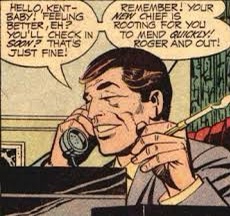
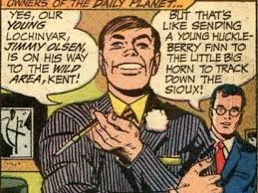
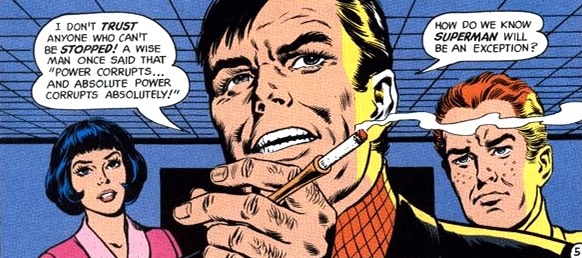
Morgan Edge as he appeared in the Superman comics of the 1970s. 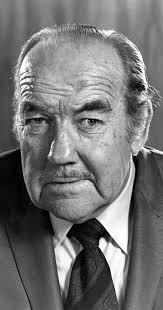
Could you picture Broderick Crawford as Morgan (Martin) Edge? Apparently Mario Puzo did. One thing that Puzo had difficulty with was referring to the character as “Martin Edge” at numerous times in this first draft. This is one character whom he obviously did not have a solid grasp on, and Edge would not survive beyond the Puzo drafts.
We are also introduced to sportscaster Steve Lombard, another supporting character brought in from the comic books. Created by Cary Bates and Curt Swan in issue 264 of the Superman comic, dated June 1973, Lombard was a former football star who later became a sports reporter for WGBS under Morgan Edge. He would frequently pull practical jokes on Clark and hit on the women at WGBS, including Lois Lane. (It would be another four decades before we would finally see Steve Lombard on screen, in the 2013 film Man of Steel.)
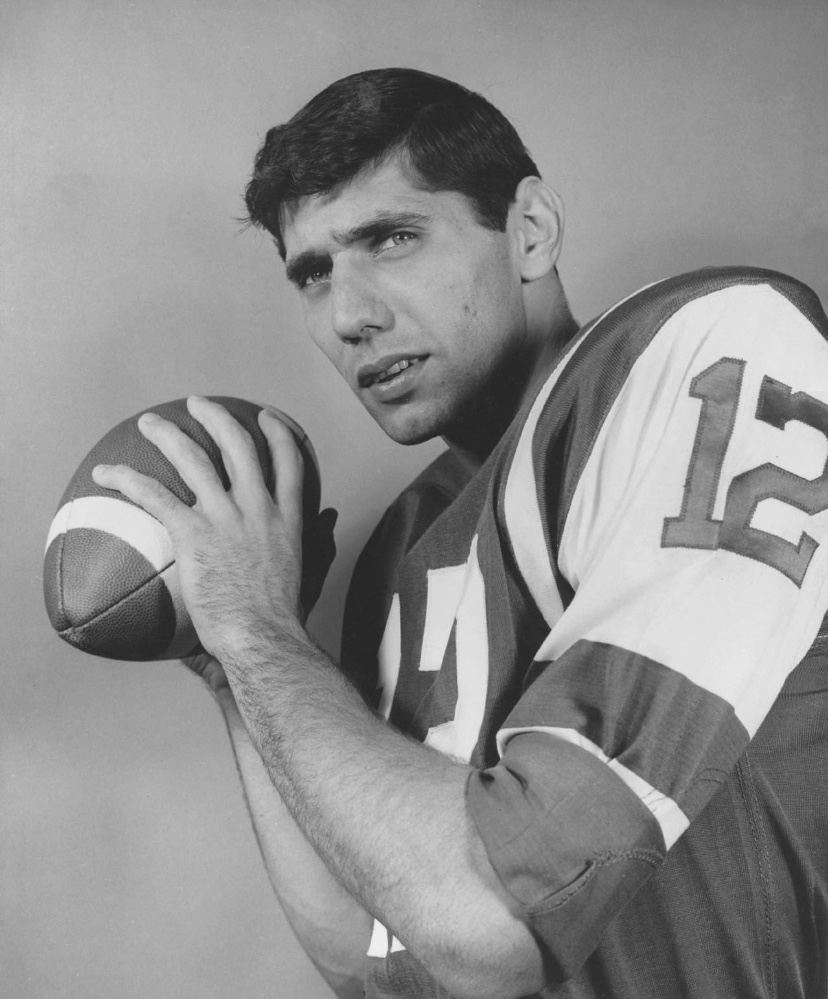
Joe Namath, the real-life inspiration for Steve Lombard. Puzo accurately describes Lombard as a Joe Namath type in the script. We then meet Lois Lane, and it is here that Puzo greatly differentiates from her original incarnation. Here she is seen as the WGBS weather girl who frequently flubs her delivery of the weather reports. A tough but attractive, self-confident reporter, the only reason she became the weather girl is because, according to Edge, “she photographs well.” But it’s clear that Lois would much rather be a hard hitting news reporter than a weather girl. And even in this first draft, Lois still has a penchant for smoking, hitting both Edge and Clark up for a menthol cigarette. This is one characteristic that is seen all the way through into the first two Superman films.
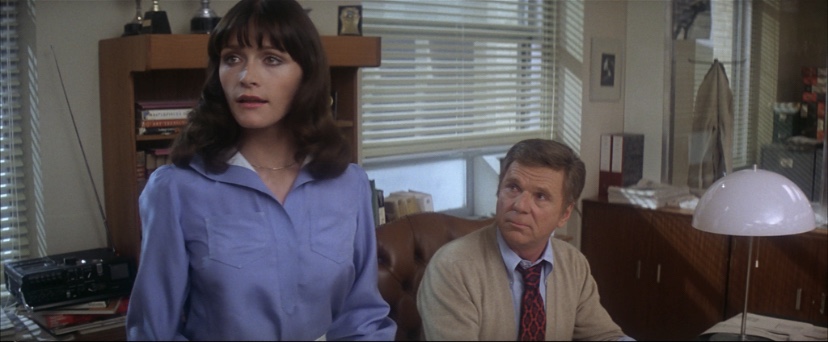
Lois Lane, weather girl? I don’t see that either. But one thing that Morgan Edge said is right on the money… she does indeed photograph well. As Geoffrey Unsworth said, “I’m lighting the lady.” As if that weren’t enough, we are also introduced to reporter Jimmy Olsen, who is not a photographer or even a cub reporter, and at one point he is seen smoking cigars in Morgan Edge’s office. This is obviously reflective of Puzo smoking big Cuban cigars in real life.
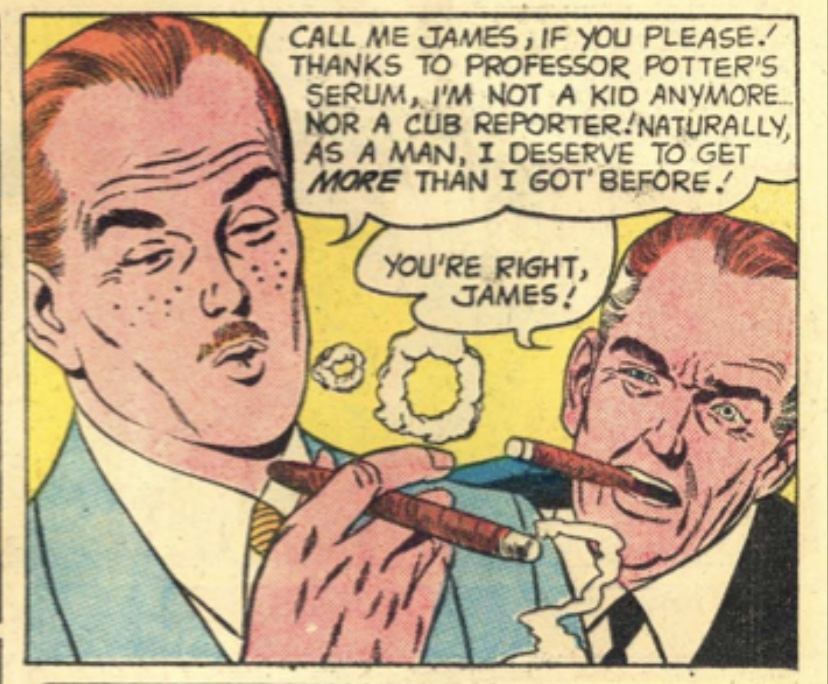
Not a dream, not a hoax, not an imaginary story… Jimmy Olsen did in fact smoke cigars at one point in the comic books! (From issue #47 of Superman’s Pal Jimmy Olsen.) Now that we have met the WGBS crew, let’s move forward with the story. We first see Clark Kent in his apartment in Metropolis changing into Superman and preventing a snowstorm from blanketing the city. This is a leap beyond logic in the script as it’s already his first day in Metropolis, and Clark has his apartment fully furnished and in place. Granted, it’s a first draft, but still even an established writer like Mario Puzo should have known to work out the kinks in this kind of story logic. I will give him a little bit of grace in that this is just that, a first draft script, as some of the elements thus far have not been expanded or worked out or corrected.
From there, Morgan Edge assigns Lois, Clark, Jimmy, and Steve to patrol the streets of Metropolis and report on crimes as they occur in the city. This leads into a three-page sequence of Clark and Steve attempting to fake each other out over football. This further expands upon Steve’s attempts to pull practical jokes at Clark’s expense, but Clark somehow covertly uses his superhuman powers to fake out Steve. While it does provide some lighthearted character byplay among them, it comes off as a needless moment in the script and one that doesn’t survive beyond the Puzo treatment.

From there the story shifts to the first appearance of the film’s chief villain, Lex Luthor. Only he’s not referred to as Lex Luthor but as Luthor Lux. While he doesn’t have the character’s name accurately nailed down, Puzo depicts him as the bald villain we know from the comic books. More interesting is the fact that Puzo describes Paul Newman or Dustin Hoffman in the role at this early stage.
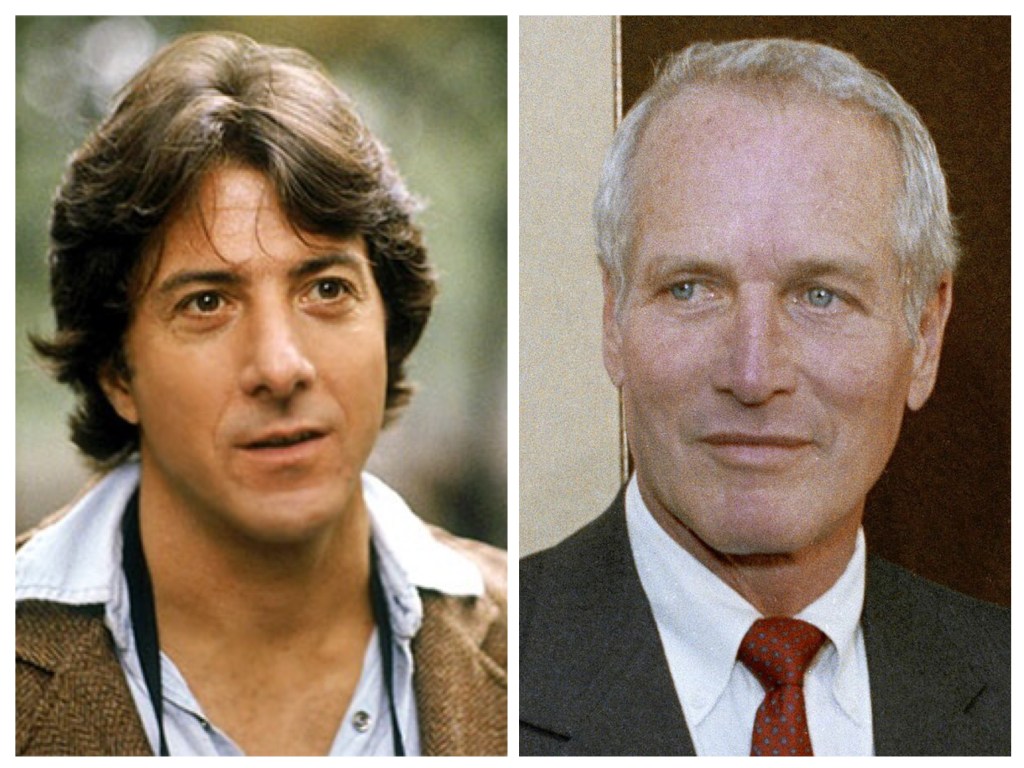
Early possible references for Luthor Lux, according to Mario Puzo’s first draft, and later suggestions for Superman in 1976. Puzo also mentions that Luthor has four or five henchmen in his employ. None of them are mentioned by name. All of them are preparing to hijack an armored car by replacing the real money with perfectly detailed counterfeit money. Luthor says, “When we switch it into the bank and take out the real currency, the Feds will go crazy. When they trace it back to the bank, they’ll put all the bank officials in jail. Where they belong. And the bank will never know they’ve been robbed.” It seems almost improbable that the world’s greatest criminal genius would resort to bank robbery, and yet this is how Puzo portrays Luthor.
But there is another member of Luthor’s team whom I wish to reference. Puzo’s script mentions a blonde female named Eve in these early moments. This is important because it’s from here that the character will evolve into Miss Teschmacher in the films. And this is where we see in the end credits of Superman, Superman II, and Superman II: The Richard Donner Cut that her character is named Eve Teschmacher, though she’s never called by name as Eve during the films.
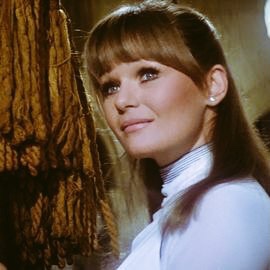
No one could ever play Eve Teschmacher with strength, humor, and a genuine heart like Valerie Perrine. We love you, Valerie! Afterwards the reporters spot Luthor and his henchmen at work replacing the real money from the bank with their counterfeit money. Lois runs into Luthor and is abducted and held in their armored truck. But their getaway is soon imperiled as Superman arrives at tries to play chicken with them. Luthor refers to him as “a man in a circus costume.” This is a moment Puzo has referenced from Superman’s first appearance in Action Comics #1 from 1938.
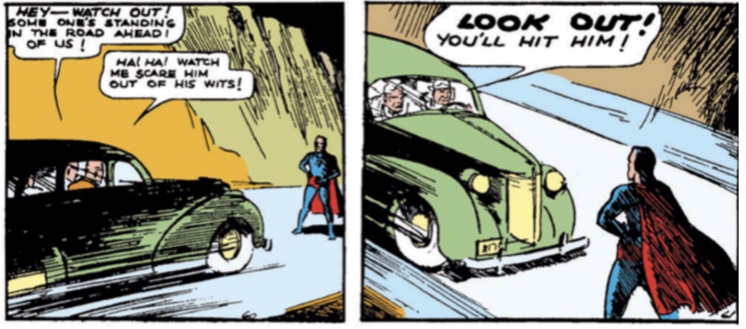
An inspired and iconic moment which Puzo references. Superman is successful in stopping the criminals and rescuing Lois, and both Jimmy and Steve have successfully captured these events on film, but somehow Luthor manages to escape. In a two-page insert that Puzo includes in the middle of the next sequence, Superman pursues Luthor to his lair and believes he’s captured him, but Luthor has tricked Superman with a glass maze, white lights, and holographic imagery.
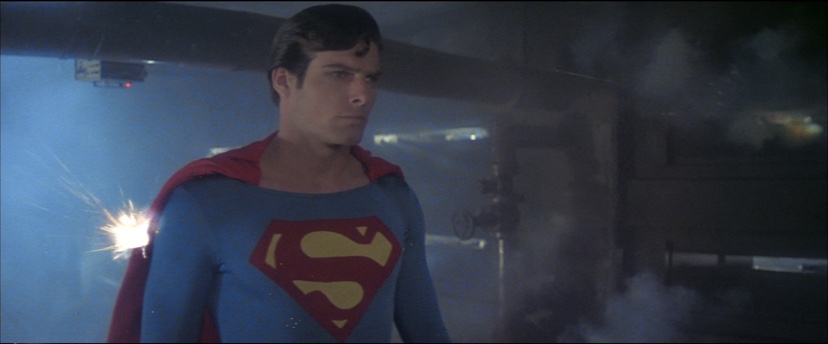
The next day, Morgan Edge chews out all of his reporters for not getting stories of crimes in progress, despite their comments about the failed bank heist. It is here that Jimmy Olsen first suggests calling the caped hero Superman, to which Edge tells him to carefully hedge it in case he turns out to be a phony. Edge then tells his reporters to stay on pursuing crimes in action and forget all about Luthor Lux.
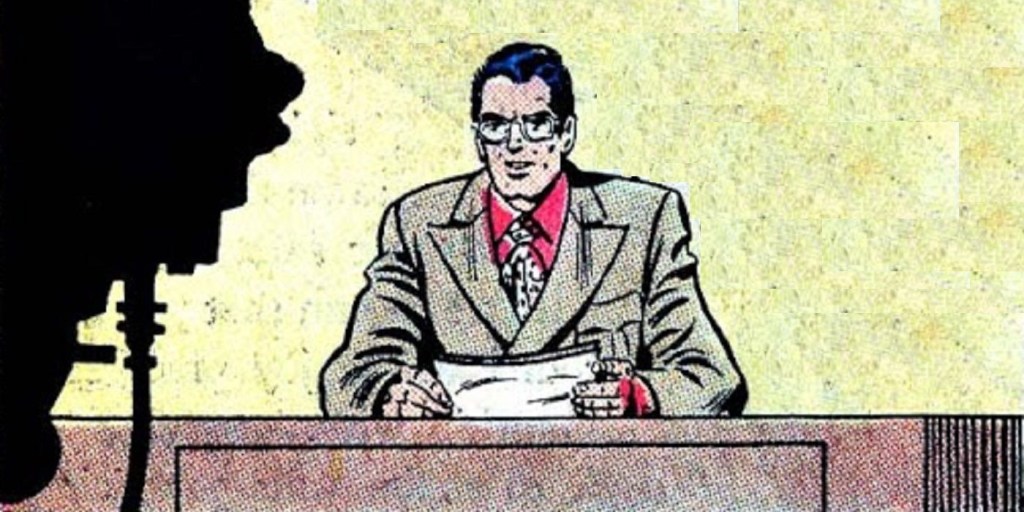
We then see Clark Kent on the next news broadcast mentioning various stories from around the world, soon focusing on Superman’s first appearance in Metropolis. Luthor watches the news report and soon considers Superman a foe worthy of his intellect.
We then see Steve Lombard attempt to trick Clark out of his date with Lois by betting him a hundred dollars that he can’t make a solid pass through a tire. Of course, Clark one-ups Steve in the process. It’s moments like these that were scrapped after the Puzo drafts, as he spent too much time focusing on the banter between Clark Kent and Steve Lombard, which slowed down the progression of the story as a result.
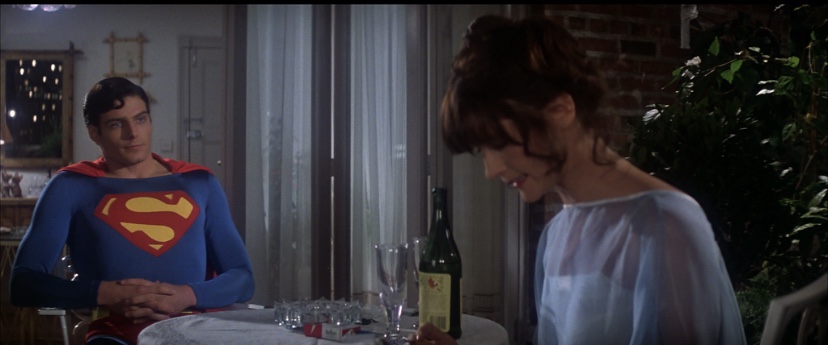
Later, Puzo has Lois and Steve witnessing a drug deal going down when the dealers spot Lois. Superman arrives, spots the drug dealers, and gives Lois her first exclusive interview with the Man of Steel. He keeps his answers short and to the point before flying off and leaving Lois wanting to know more. This exclusive interview is one that is later rewritten and used in the final film as one of the standout scenes of the entire film.
And now we are a third of the way through the script at this point. Next time we will look at Luthor’s plans to use Superman’s weakness against him… and the return of some familiar faces from the story’s beginning. Stay tuned!
(Some of the screenshots used in this blog are courtesy of CapedWonder.com.)
-
The Puzo Scripts – Part 2: Smallville and the Fortress of Solitude
Last time I set up the introduction to analyze Mario Puzo’s 1975 scripts for Superman, which included a look at the scenes on Krypton at the start of his first draft script from July 1975. Now I will turn my attention to his scenes set in Smallville and in the Fortress of Solitude, which encompasses pages 18-35 of the script. Again, the question is, what concepts survived into the final film, and which did not? And what were some of the influences that inspired Puzo’s scripts? Let’s take them beat by beat.
As the infant Kal-El’s rocket ship travels to Earth, it’s a very quick couple of notes. There is a brief reference to alternating shots indicating the passage of time, but there are no references to Jor-El and his audio lessons as in the final film. All in all, it seemingly takes only a moment or two for the journey to occur, not the two- or three-minute sequence depicted in the film itself.
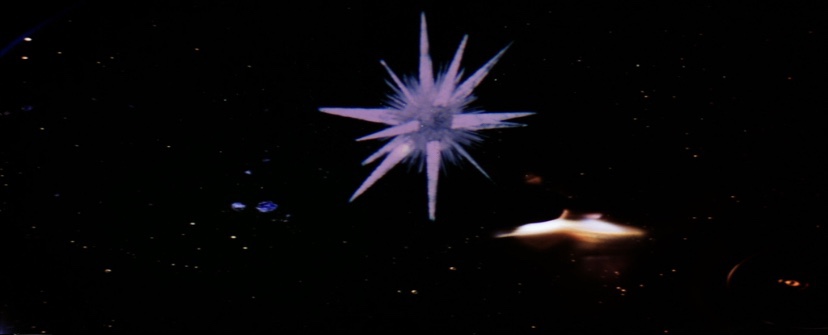
Once the rocket ship lands on Earth, the infant Kal-El is found by the Kents. The characters are not mentioned by name as Jonathan and Martha, only Mr. and Mrs. Kent. As in the final film, Puzo mentions that Kal-El is three years old when he lands on Earth. The most unusual aspect is that Kal-El is wearing a miniature Superman suit in this early draft! This again harkens back to the comics of the day which depicted the infant wearing a miniature Superman suit when he is found. This probably would have been a laughable moment had this been filmed.
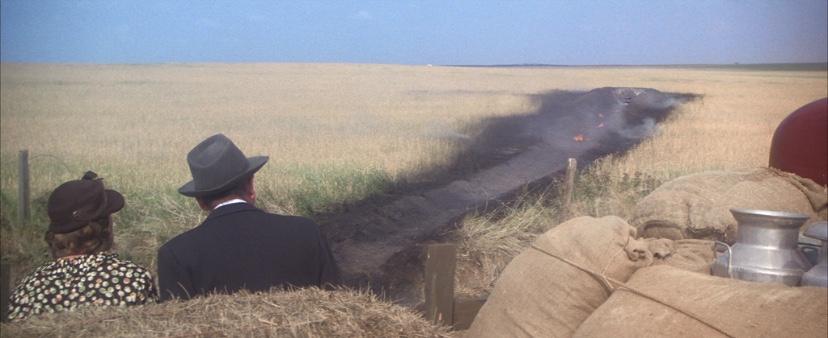
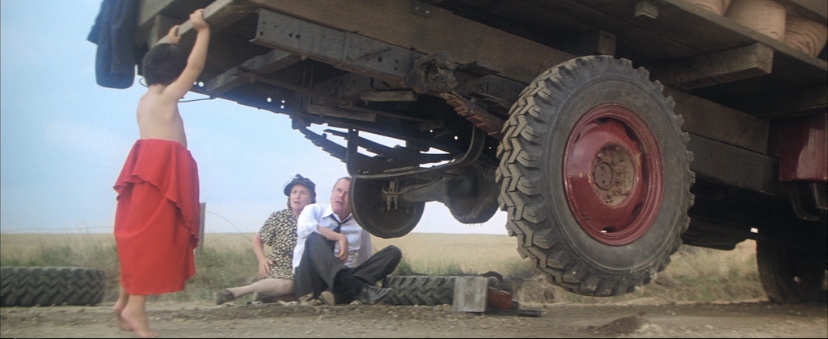
No red cloak, no au naturel in this draft! And the moment of the infant Superman lifting the truck so Pa Kent can repair the flat tire is present in this early draft, except for dialogue between the Kents. It is after they get home that they agree, no one must ever know of this. At this point in the story a number of the beats that Mario Puzo has drafted in this first script will carry on into the final film version.
From here the script moves forward to Clark Kent as a teenager and proving himself to be a superb athlete in school, excelling in baseball, basketball, track, and football to the delight of a number of his classmates and the dismay of some of his teammates. This is greatly different from what we would see in the final film, where the teenage Clark Kent is the football team manager aka water boy responsible for washing the team’s uniforms and collecting all of their gear. It wouldn’t be until 1986 when writer/artist John Byrne depicted Clark Kent as a football star in the first issue of the Man of Steel reboot miniseries. And it would be a plot point through the fourth season of Smallville in the fall of 2004.
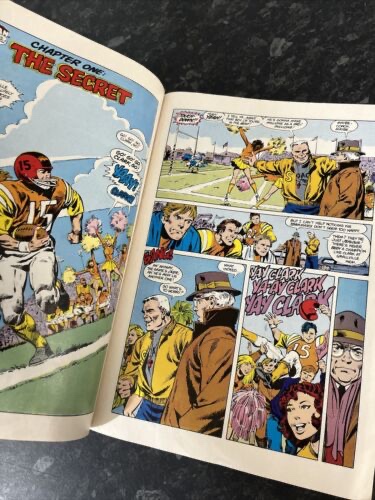
“He’s gonna make millions!” the football coach says to Jonathan Kent. “Millions!” 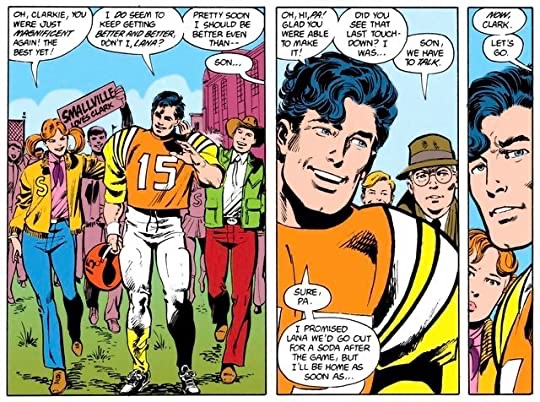
Even then, Jonathan Kent is still determined to keep Clark in check. This is the direction that Mario Puzo was headed with his 1975 script. It’s then that Puzo makes a sharp turn in Clark’s personality, as the athletic director and several coaches try to figure out why he doesn’t want to pursue athletics any further. He gives no reason why, but we as the readers and viewers can only conclude that he is growing more aware of his superhuman abilities, and his adopted father has been keeping him in check. As Jonathan Kent says in the final film, “One thing I do know, son, is that you are here for a reason. I don’t know whose reason or what the reason is… but I can tell you one thing. It’s not to score touchdowns.”
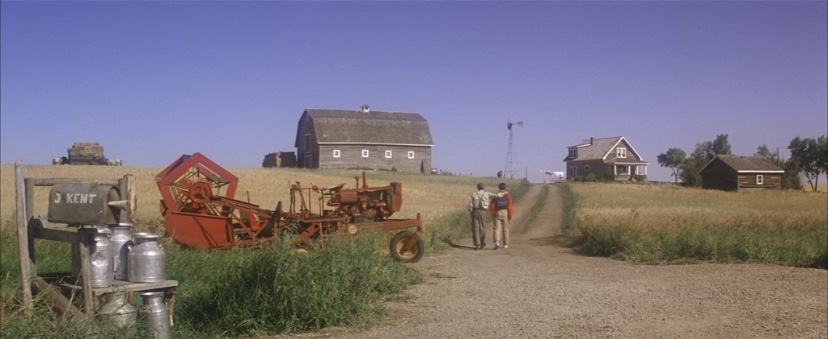
One of the most humanizing moments ever. Shortly after this, we find Clark, who is now eighteen years old, accessing the electronic plates from his rocket ship and interacting with his birth parents Jor-El and Lara, who urge him not to use his powers for athletic gain or trophies, nor to use them to change the course of Earth’s history or even become a god. Rather, Jor-El stresses, to hide his abilities under the guise of an ordinary man and learn more about his purpose on Earth and know the difference between good and evil. They urge him to resume contact with them when he has more questions that they can answer, but only when he is ready. This exact exchange does not progress much further than the Puzo scripts, though the spirit of the discussion can be found in the final film.
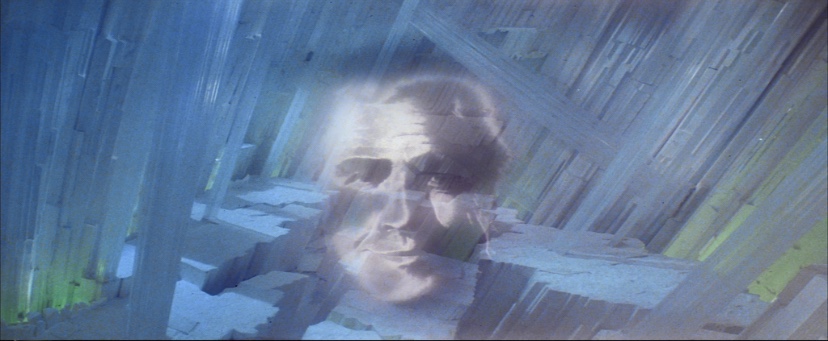
“There are questions to be asked, and it is time for you to do so…. we shall try to find the answers together.” 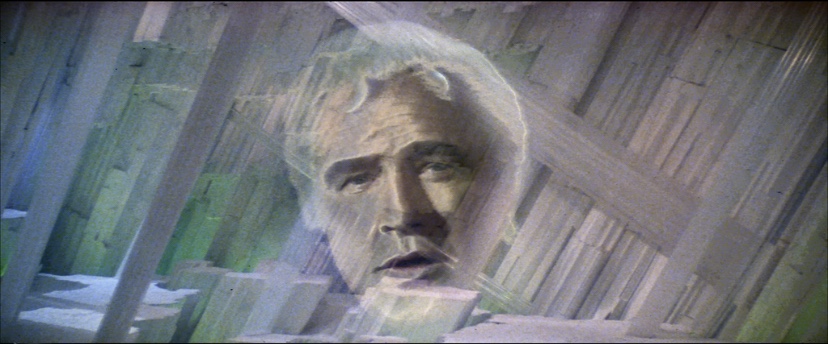
From the extended TV cut Blu-ray. “Do not punish yourself with your feelings of vanity. Simply learn to control them. It is an affliction common to all.” A few years later, Clark decides to leave his home in Smallville and seek out his destiny. Puzo does not mention how much time has passed, only that Clark is now a man and that both of his adopted parents are still alive when he leaves. This harkens back to the 1948 Superman serial and the first episode of The Adventures of Superman, “Superman on Earth”, which both depict Clark leaving home as an adult.
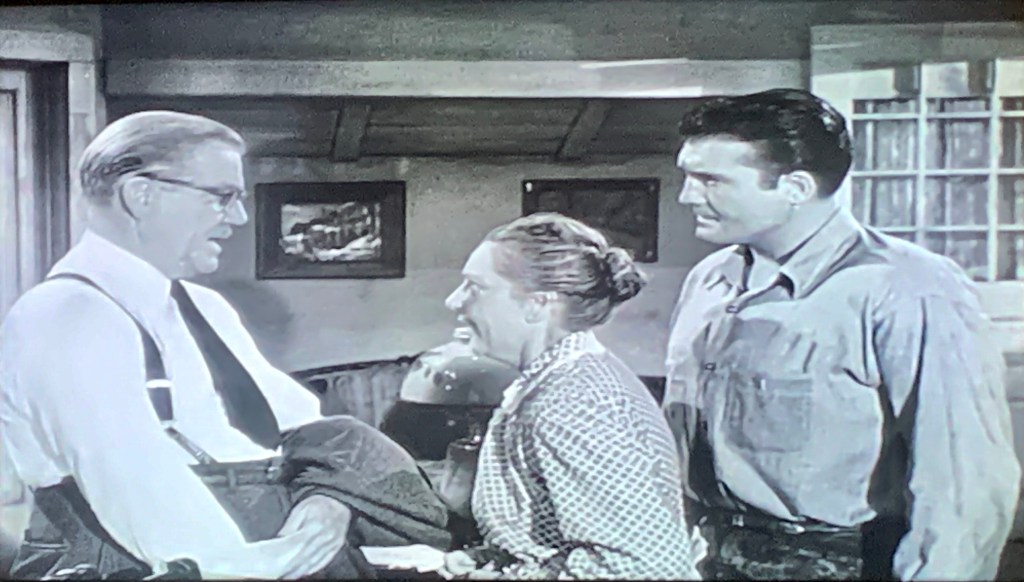
April 10, 1951. At this point Clark Kent is in his mid to late 20s, as depicted in the Adventures of Superman episode “Superman on Earth” after his adopted father Eben Kent has passed away from a heart attack. 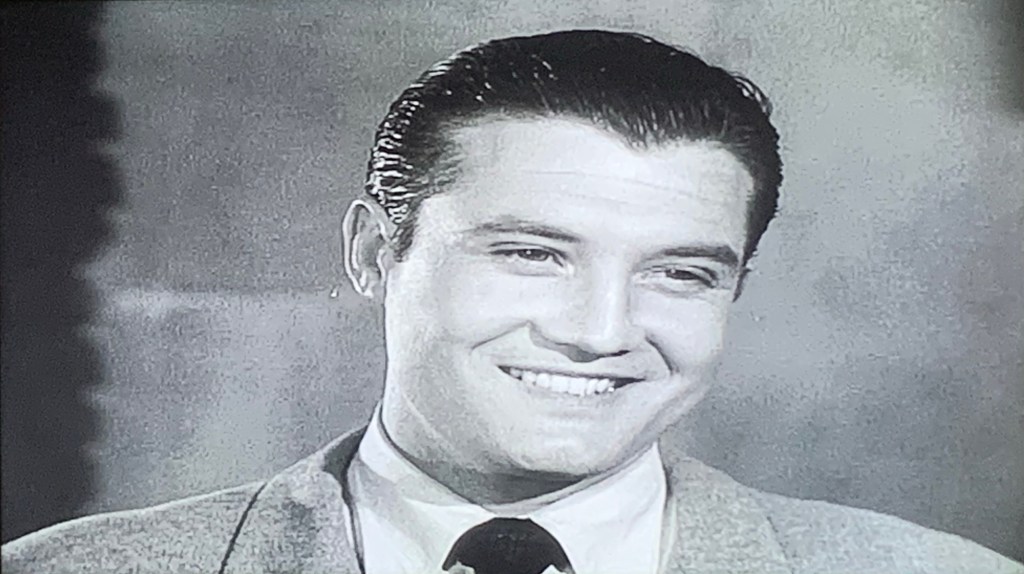
Clark is clearly a grown man at this time when he leaves Smallville. (An iconic portrayal by George Reeves throughout the 1950s.) Puzo’s approach is bare bones and matter of fact as he comes out and says, “Mother, Father, I have to go away.” It’s interesting that Puzo takes this approach and not what was established in the comics that the Kents have both passed away by this time. This goes against the comments that Elliot Maggin made that Puzo saw this as a Greek tragedy. And yet it seems more natural for a young man to leave home to find his way in the world whether through college or the military or the work force.
The scene then cuts to Clark getting ready to leave the Kent farm with a truck filled with supplies for his trip, as well as the rocket ship and the electronic memory bank. It’s a relatively quick goodbye to the Kents, without a lot of emotion played in the script, but one key line here is written that survives all the way to the final film:
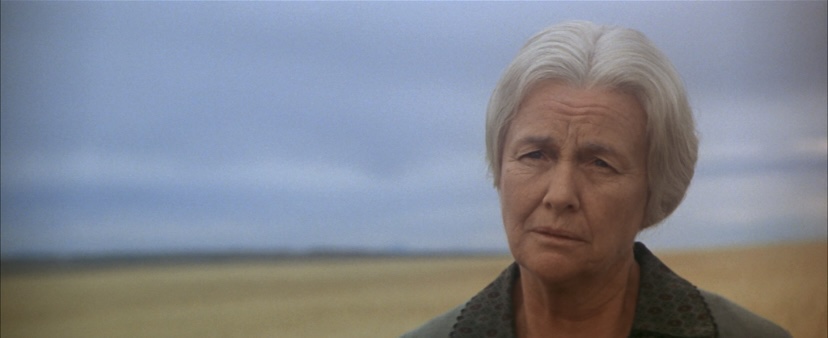
“Remember us.” Puzo then reveals how Clark travels north and uses the Kryptonian memory bank to access Jor-El’s directions to head north to the Arctic Circle and establish a fortress there where he can study all of the Kryptonian literature and scientific manuals that have been sent with him, along with all of the written materials from Earth. Jor-El then says to him, “Perhaps after a year or two of studying, you can take your place as a man on Earth.” Clark then uses one of the instruction modules per Jor-El’s instructions to build the Fortress. The construction is almost instantaneous, happening over several transition shots, and during the construction process Clark moves all of the goods from his truck into the Fortress.
One thing I want to point out is that Jor-El mentions that Clark can journey out after a year or two. This is much different from what is mentioned in the final film, when he says, “By the time we return to the confines of your galaxy, twelve of your years will have passed…. It is now time for you to rejoin your new world and to serve its collective humanity.” Why Puzo would suggest only a year or two is unclear here. We are just more accustomed to the 12-year reference in the film. This is simply another point meant to generate discussion about the differences between this first draft script and the final film.
It’s the depiction of the inside of the Fortress that stands out. It contains a fireplace with a roast turning around in a pit, a bearskin rug, a balcony overlooking the Arctic north, homemade chairs covered in deerskin and wolf skin, a regular looking bedroom, and deer antlers on the walls, among other things. A real bachelor pad. At times Clark lays on the bearskin rug and reads some of the Kryptonian electronic plates, then at one point he puts the plates away, goes to his bedroom, and picks out a suit to wear, becoming the Clark Kent we know from the comics.
This version of the Fortress is completely different from what had been established in the comics as a futuristic-looking scientific center and museum dedicated to the history of Krypton. Instead, Puzo gives us a Fortress that has more in common with a cabin in the woods than the mystical Arctic hideaway that is part of the lore of Superman.

Can you imagine things like these as part of Superman’s Fortress of Solitude? Apparently Mario Puzo did. Next time, we’ll look at Clark Kent in Metropolis as he joins the staff of Galaxy Communications, where he meets Lois Lane, Jimmy Olsen, and Perry White. We’ll also get our first look at Lex Luthor and his henchmen, Superman’s debut in town, and the first encounter between Superman and Luthor. All of this and more will be revealed!
(Some of the screenshots in this blog are used courtesy of CapedWonder.com.)
-
The Puzo Scripts – Part 1: Introduction and Krypton
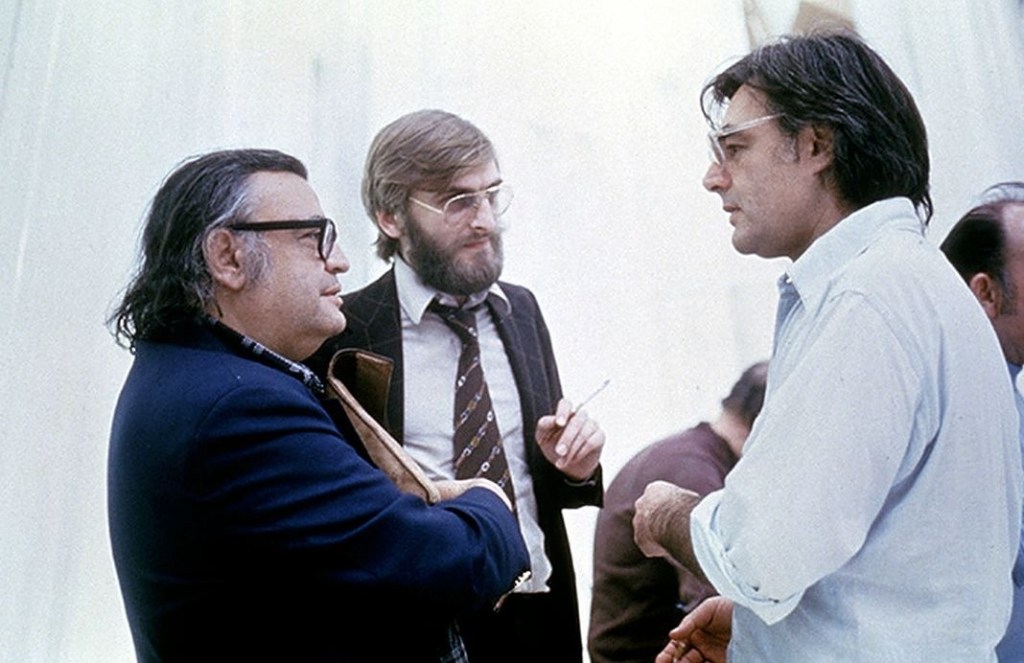
Mario Puzo with Pierre Spengler and Richard Donner on the Superman set in 1977. It came out of the blue on Monday, and it was something that I had not seen coming. But there it was on Facebook: my friend Jim Bowers had acquired what is certainly a pair of Holy Grail pieces for any collection – both of Mario Puzo’s original 1975 scripts for Superman!
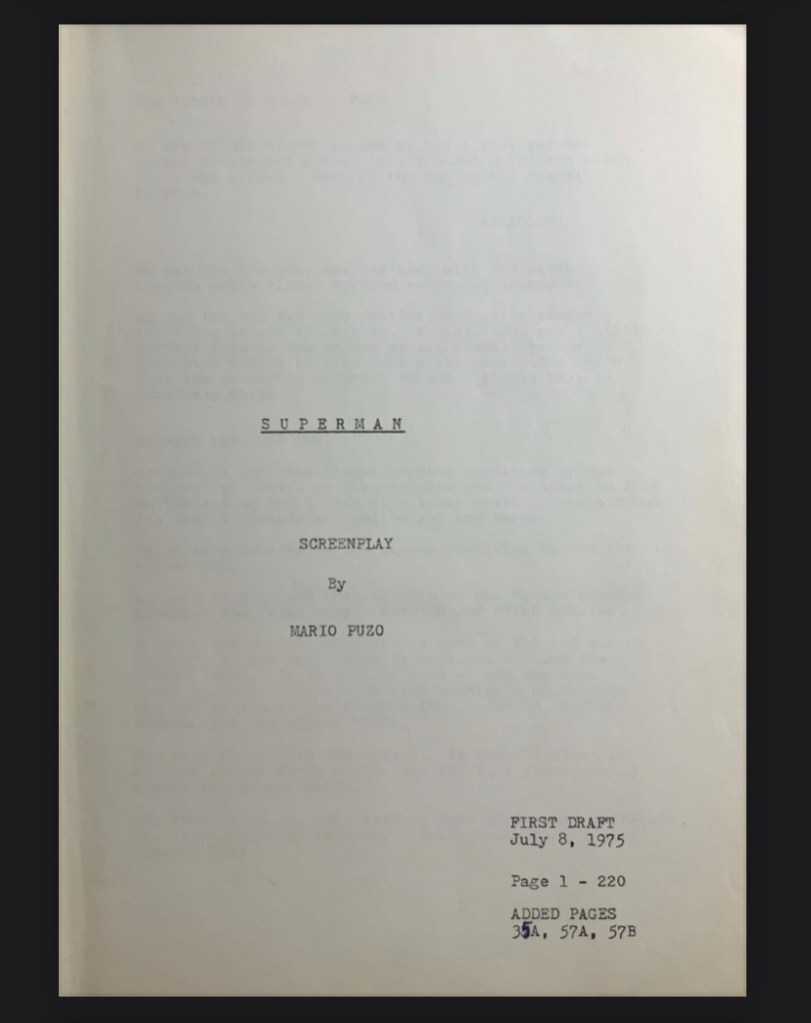
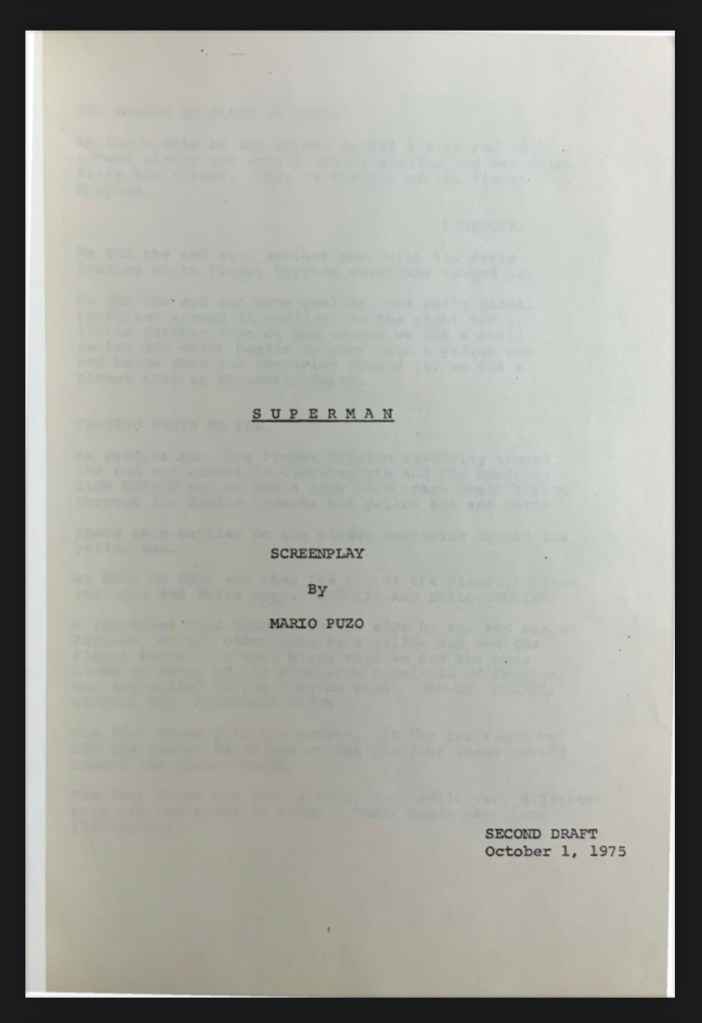
“This is no fantasy, no careless product of wild imagination…” This is the real deal, baby! The scripts had almost become the stuff of legend. Puzo, the celebrated novelist and screenwriter of The Godfather and its sequel The Godfather Part II, had been chosen by Alexander and Ilya Salkind in the early part of 1975 to write the screenplay for their multimillion dollar production of Superman. This came after writers such as Leigh Brackett (The Empire Strikes Back) and Alfred Bester (who wrote for Superman and Green Lantern for DC Comics) were mentioned, and Exorcist screenwriter William Goldman had been interviewed but turned down the proposal.
Then they turned to Mario Puzo. According to a re-enactment that was filmed for the recent Paramount+ series The Offer, the Salkinds had offered Puzo one million dollars to write the Superman screenplay.
In an interview for the 2006 documentary You Will Believe: The Cinematic Saga of Superman, Ilya Salkind recounted their meeting with Puzo. “Mario comes in, talks…slow, smoked big cigars. Italian, a bit,… and he says, ‘I like it.’” He later added, “That was a 500-page script. It was gigantic… and definitely two movies.”
DC Comics writer Elliot S. Maggin shared his recollections of meeting Puzo. “I came to the office one day and there’s Mario Puzo in the library looking through old Superman stories. So they introduced me to him,” Maggin said in the 2006 documentary Look! Up in the Sky – The Amazing Story of Superman. “Cary Bates, another writer and I spent two days sitting, smoking Havana cigars with Mario, in the conference room and talking about who Superman was. And his eyes started to shine, and he said, ‘Wow, this is a Greek tragedy.’”
Pierre Spengler added, “So the elements of Mario Puzo that stayed in the movies are the use of Krypton (and) the use of the Fortress of Solitude.”
But what exactly did Mario Puzo write in his Superman scripts, what elements of those scripts survived into the final films, and what elements did he write that did not make it beyond these early stages in 1975? What I will do in these blogs is break down the Puzo scripts, identify specific elements, compare and contrast them against their final film versions, and separate fact from legend.
Before going any further, I wish to point out that my analysis of the Mario Puzo scripts are my own thoughts and may differ from other people’s conclusions.
The first thing I want to focus on is the specific length of the scripts. According to Ilya Salkind, the length of the Puzo script was approximately 500 pages, enough material for two movies. When we look at the exact page count of the scripts, the first draft script dated July 8, 1975, totaled 220 pages in length. The second Puzo draft script, dated October 1, 1975, totaled 309 pages and expanded upon a number of elements from the previous draft. The combined length of both scripts totals 529 pages in all, so it is likely that this is where Ilya Salkind concluded that the Puzo script was around 500 pages long. Some details and memories do tend to get fuzzy over time, and that’s something that happens to all of us, and we cannot fault him for that assumption.
Now let’s turn our attention to the opening sequence on Krypton from the July 1975 script, as the first seventeen pages cover the opening credits, Jor-El and the Kryptonian council, and the events leading up to the planet’s destruction.
The Kryptonian council chamber as it appears in Superman II: The Richard Donner Cut. The opening credits as described by Puzo appears to be a montage of moments from the story itself – specifically, the planet Krypton itself, Kal-El’s starship as it approaches Earth, the images of four villains inside the Phantom Zone, the appearances of Superman and Lex Luthor, and the first detailed look of Krypton’s chief city. All of these moments are conveyed in the first two pages of the script and are revealed in quick bits and pieces, as if to reveal a summation of the events that will unfold in the story. This seems to be down and dirty, and it almost seems inconceivable to simultaneously cut between the main title credits and moments from the story itself. (Oddly enough, this summary approach would be utilized for the main title sequence of the theatrical version of Superman II in 1980-81. By then it seemed perfect, but for the beginning of the first film it wouldn’t have worked in my opinion.)
There is no trial of the villains, only a quick mention of their names: General Zod, Jax-Ur, Professor Vakox, and Kru-El. They are all described as having long flowing hair and in agony in the Phantom Zone. Of these four, Zod and Jax-Ur are taken from their appearances in the Superman comics, while Vakox and Kru-El are original characters created by Puzo. There is no reason why all four criminals have been exiled; they are already in the Phantom Zone at the start of the script. Only Zod will appear in later drafts and into the final film.
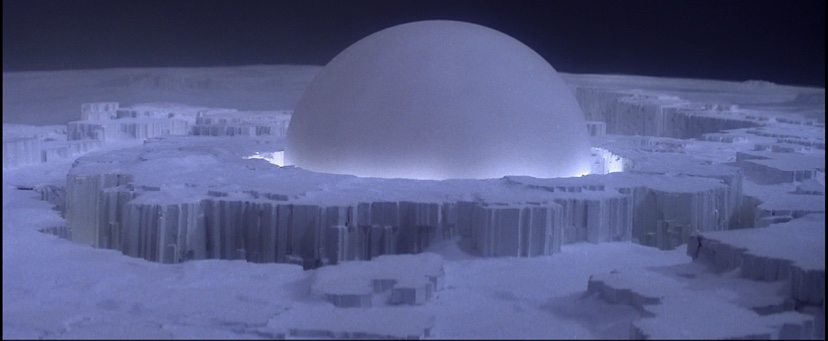
From there Puzo describes the capital city of Krypton as completely glass in nature. Everything is made of glass – the windows, the buildings, the lawns and gardens, the walkways, you name it. It’s from this early description that the planet itself would later evolve from glass into crystal both in the 1976 and 1977 script treatments and in the final films themselves, an element that continues to this day in later comics, television series, and films.
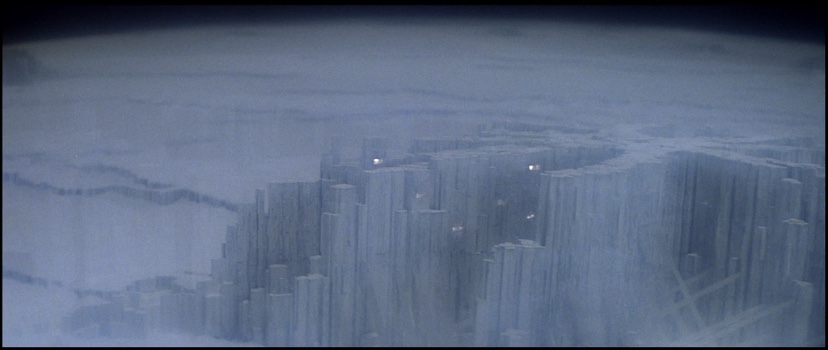
The capital city of the planet Krypton as it appears in Superman II: The Richard Donner Cut. We are then given the scene of Jor-El’s discussion with the Kryptonian council about their planet’s impending destruction. As opposed to the glass nature of the planet, the description of the council is much more modern in today’s times, with computer banks and display consoles that might resemble something out of modern Star Trek films and series. Everyone is depicted as having blonde hair and fair complexions, each one wearing headbands and outfits similar to what Superman will wear on Earth. Part of these descriptions are taken from the Kryptonians’ looks in the comics of the 1970’s.
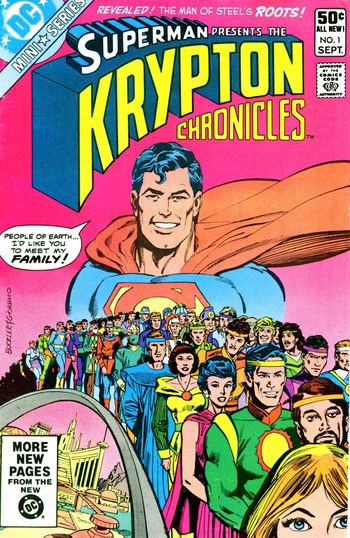
The cover of the first issue of The Krypton Chronicles. Notice the outfits for all of the male Kryptonians, complete with headbands. 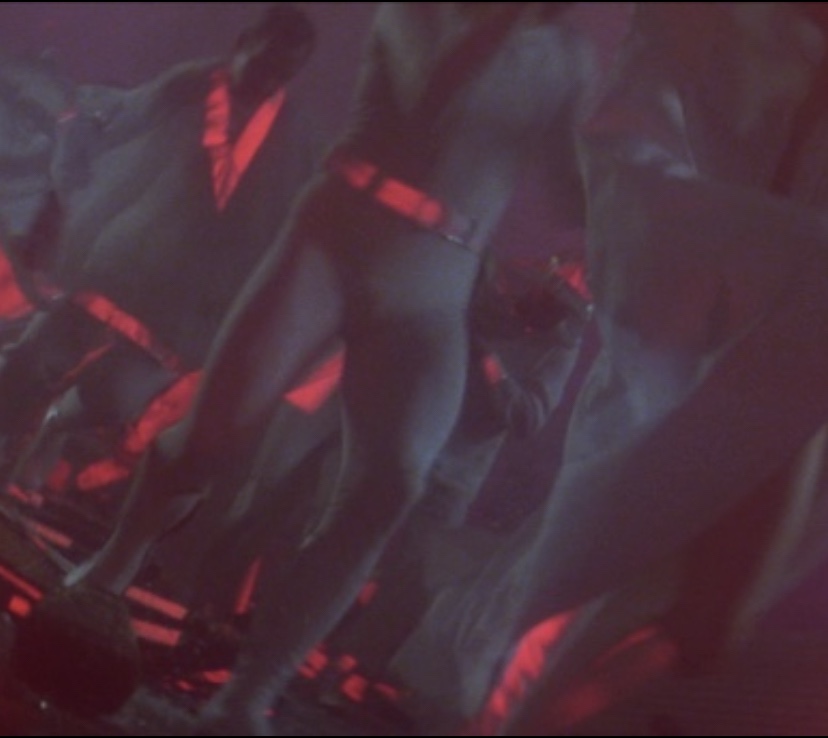
From the 1982 extended TV cut of Superman: The Movie. This outfit worn by this extra during the destruction of Krypton is almost similar in design to Superman’s final outfit. Over the next eight pages, the exchange between Jor-El and the council is almost similar to the final version, as three of the councilmen urge Jor-El not to pursue any mention of the planet’s impending destruction, considering any such talk as an act of insurrection and the punishment endless imprisonment in the Phantom Zone. One slight difference is the earlier mention that Krypton would explode in ninety days, and that giant arks to transport the planet’s citizens be completed within thirty days. Also, there is no Vond-Ah present in this early treatment. Otherwise, the general beat of the scene is fairly similar to what we would see in the final film.
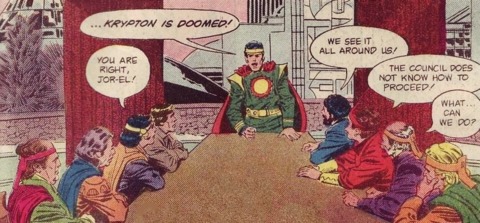
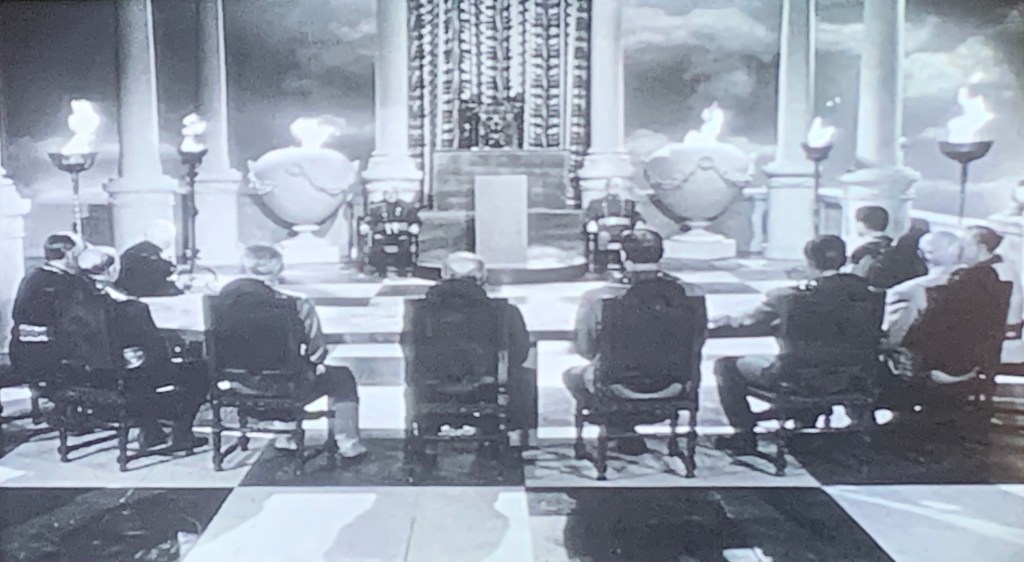
The Kryptonian council from the comic books and the first episode of The Adventures of Superman… 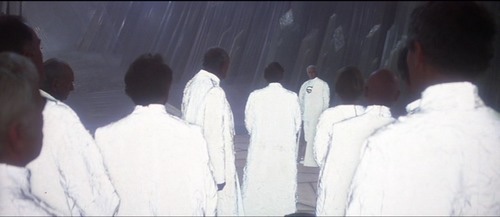
…and from the film. Before going further, there is one note that I wish to address. On page 3 of the script, Puzo states, “This sounds expensive but the city of Krypton will make at least four or five appearances through the film and justify its cost…” In looking at both the final film, the extended TV cut, and Superman II: The Richard Donner Cut, the capital city of Krypton appears a total of twenty different times altogether. Clearly, they got their money’s worth and more.
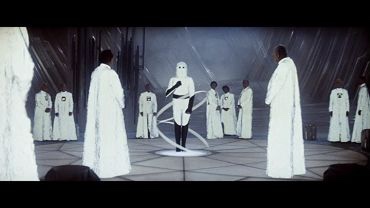
The next scene I wish to address is one that is referenced on pages 13 and 14 in the Puzo script and then finally in the 1982 extended TV cut and the 2001 special edition, of the council receiving the news that Jor-El is expending an excessive amount of energy and data to build a rocket for escaping from Krypton’s destruction. Here the council orders Jor-El to be arrested, and a team of police officers travel to Jor-El’s residence to arrest him. Once they arrive, all of the officers are killed from falling debris as a result of the earthquakes affecting the planet prior to its destruction. Except for differences in dialogue and execution, the scene as written here is remarkably similar to the final filmed version.
Now let’s look at the final moments involving Jor-El and Lara as they place their infant son Kal-El in the rocket ship, sending it out just before Krypton’s destruction. This is the climactic moment of the entire Krypton sequence, and as seen on pages 10-12 and 14-17 of the Puzo script it bears much similarity to the final version as well as some differences. As noted earlier, there are no references to crystals, but both Jor-El and Lara place a number of electronic information booklets, as Puzo calls them here, into the rocket. In addition, Jor-El places a number of blankets in the rocket, all of which contain either the Krypton emblem or the Superman emblem on them. This is the first time in this script that the Superman emblem is directly mentioned. However, there is no farewell speech from Jor-El in this first draft, and it would not appear in the script until later drafts.
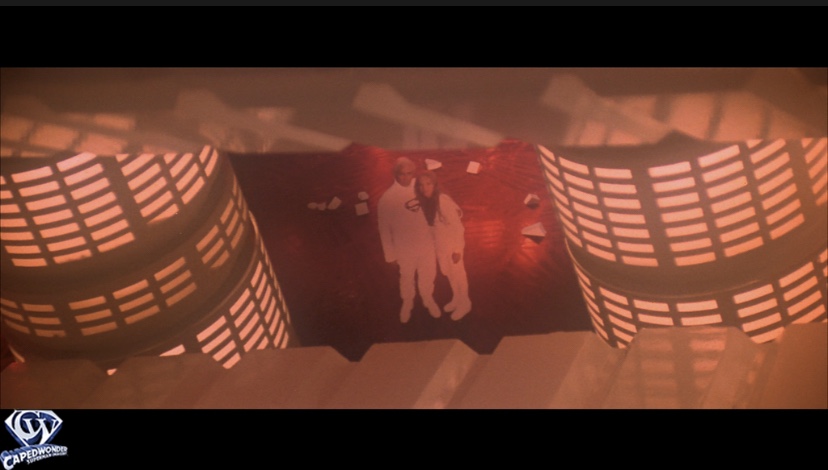
The execution of how this shot was achieved in camera still amazes me to this day. In conclusion, the opening moments on Krypton are fundamentally similar to what will appear in the final film.
I do have one thought that I wish to address as I bring this installment to a close. According to Puzo’s contract at the time, there was a reference which stated that if any version of his depiction of Krypton appeared in any medium other than the film—whether in comics, in print, or on television—he would receive a settlement from such depictions. While the Superboy series from 1988-92 would feature George Lazenby and Britt Eklund as Jor-El and Lara, bearing more than a passing resemblance to Marlon Brando and Susannah York, it would not be after Puzo’s death in 1999 that his depictions of Krypton would appear in further incarnations of the Superman franchise. This includes the crystalline version of the Fortress of Solitude beginning in the fifth season of Smallville in 2005, then in DC Comics’ flagship title Action Comics and in Superman in 2006. The earliest storyline I can recall is the “Last Son” saga written by Geoff Johns and Richard Donner and illustrated by Adam Kubert. A similar crystalline Fortress would also appear in the 2006 film Superman Returns. And I’m sure there are also other uses as well. Since all of these uses occurred after Puzo’s death, it’s a safe bet to say that the Puzo estate was content with its usage now.
Next time I’ll address the Smallville scenes and the Fortress of Solitude before leading in to the Metropolis portion of the script. All I can say is buckle up, because it gets busy from here!
(Some of the screenshots appearing in this blog are courtesy of CapedWonder.com.)
-
Will the Donner Cut Be Fixed?
Since the news came out this past week that the Superman 5-film collection on 4K Ultra HD would be released in April 2023, the news has been received with a mixture of responses across the board. A number of fans are excited that all of the Christopher Reeve films are coming to 4K this spring, and fans are believing for a solid upgrade to Superman: The Movie from its previous release in 2018. I for one am anticipating the release. Other fans are disappointed that other versions of the films—particularly the 2001 special edition cut and the extended versions of all four films—are not making their way to 4K this year.
Let me remind you that at this point only the theatrical releases are scheduled for 4K this year. The 2001 special edition and the 2017 extended TV cut are still currently available in a two-disc set from the Warner Archive. And there is no word yet on when the extended TV cuts of Superman II and Superman III, and the original 134-minute version of Superman IV, are coming from the Warner Archive, even though they have admitted that prints exist in their vaults. When word comes out, I will pass that information on to you as soon as it becomes available.
But I want to turn my attention to Superman II: The Richard Donner Cut.
After sixteen years the film still holds up pretty well and is a good summary of what Donner and screenwriter Tom Mankiewicz had originally envisioned for the film until filming on the sequel ended in October 1977. By that time some 80 percent of the film had been completed. (Jack O’Halloran, who played Non in the two Superman films, would later say in interviews and chat sessions that Donner had filmed as much as 85 percent of the sequel.) The remaining gaps would be filled in by Richard Lester and screenwriters David and Leslie Newman in 1979, along with rewriting and reshooting many of the scenes.
We are familiar with the history and the troubles that Donner faced with producers Alexander and Ilya Salkind and Pierre Spengler—the arguments, the fights, the negative barbs that were said in interviews upon the release of the first Superman film at the end of 1978—which led to Donner’s dismissal in March 1979. And there are certainly enough points to weigh in favor of, and even against, both sides, and there is enough accountability to be held on both sides. Pick your choice; either one fits.
But that is not what I wish to discuss here. Rather, my thoughts are about the final product itself, the 116-minute final cut that was issued on DVD, HD-DVD, and Blu-ray in November 2006. (This commentary will not focus on the 122-minute original cut that was submitted to Richard Donner in 2006 prior to the final edit, and was later released on a number of streaming services such as Vudu and Amazon Prime a decade later, as the same concerns about the recut affect both versions, so I will focus primarily on the final cut.)
Specifically, my concerns about the film pertain to how certain visual effects in the film will hold up on 4K UHD. Granted, I’m not a technical expert, just a fan who will approach all of this in layman’s terms.
As much as I love the Donner Cut (and my personal preference is the Vudu cut), after sixteen years some of the visual effects simply do not hold up in comparison to the theatrical releases of the four Superman films. With CGI massages on the sequels, particularly III and IV, a number of those visual effects look better than they did in their original theatrical releases, particularly the wire effects in the flying scenes. But this goes further beyond just flying. Let me show you what I mean.
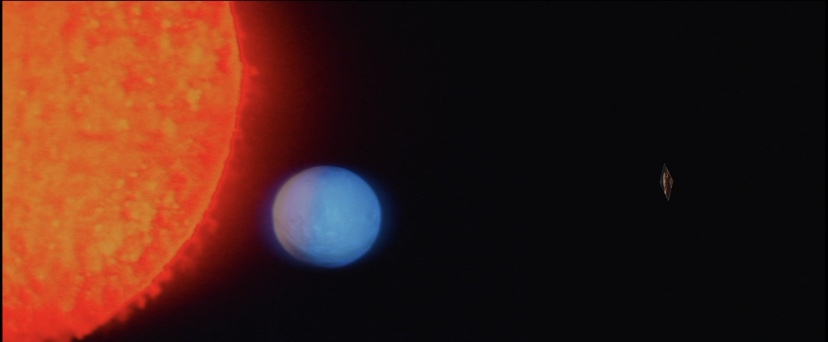
In one behind the scenes clip, restoration producer Michael Thau says to Richard Donner and Tom Mankiewicz, “Well, we do have a budget.” This is clearly evident in an early shot of the Phantom Zone drifting through outer space. Pay particular attention to the background plate of the stars and planets in the shot.
Taken from my copy of the 2011 anthology Blu-ray collection. I apologize for the sound and picture quality. Do the stars and planets featured in this shot look convincing to you? It doesn’t to me. It’s clear that this is budget-rate indeed. In his review of the film from 2006, Bill Hunt of the Digital Bits admitted that the visual effects were clearly budget rate. When you compare shots like this to other science fiction films and series, whether Star Trek or Star Wars or either version of Battlestar Galactica, or even the original Superman, it becomes clear that the visual effects don’t hold up.
Let’s look at another element: the rocket as it goes through space. What stands out here?
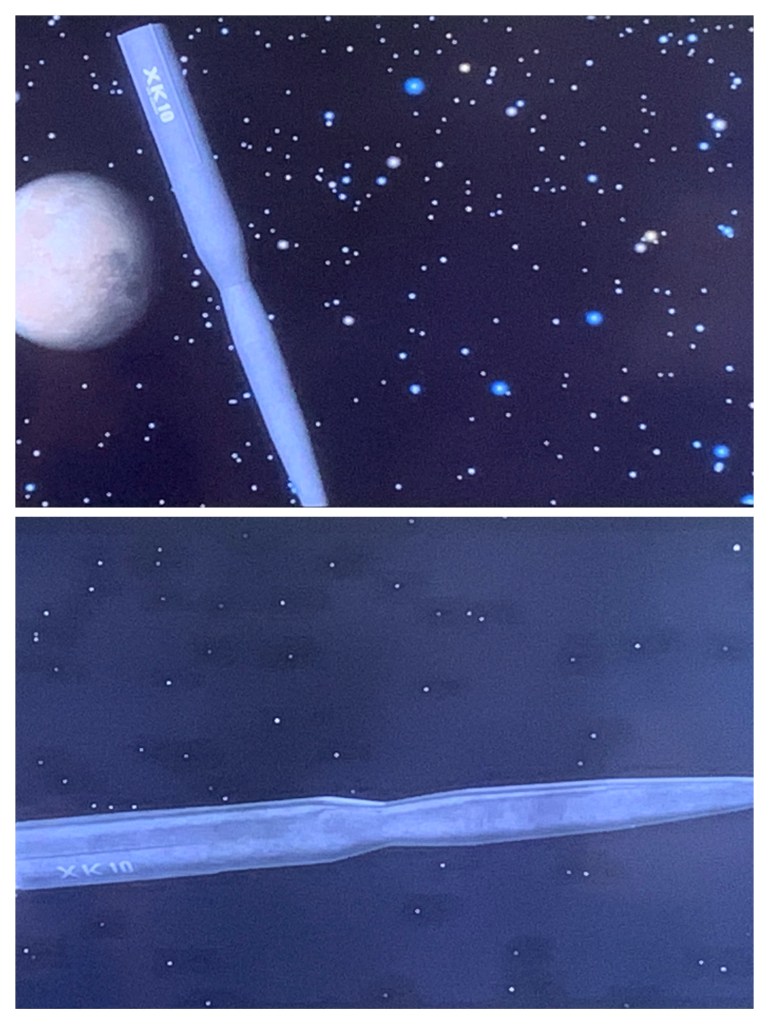
If you said the identification on the side of the rocket, you would be right. It should read XK-101, not XK-10. This is something that should have been caught early on during the editing process and corrected but wasn’t.
Now pay attention to the star field in these next two shots.
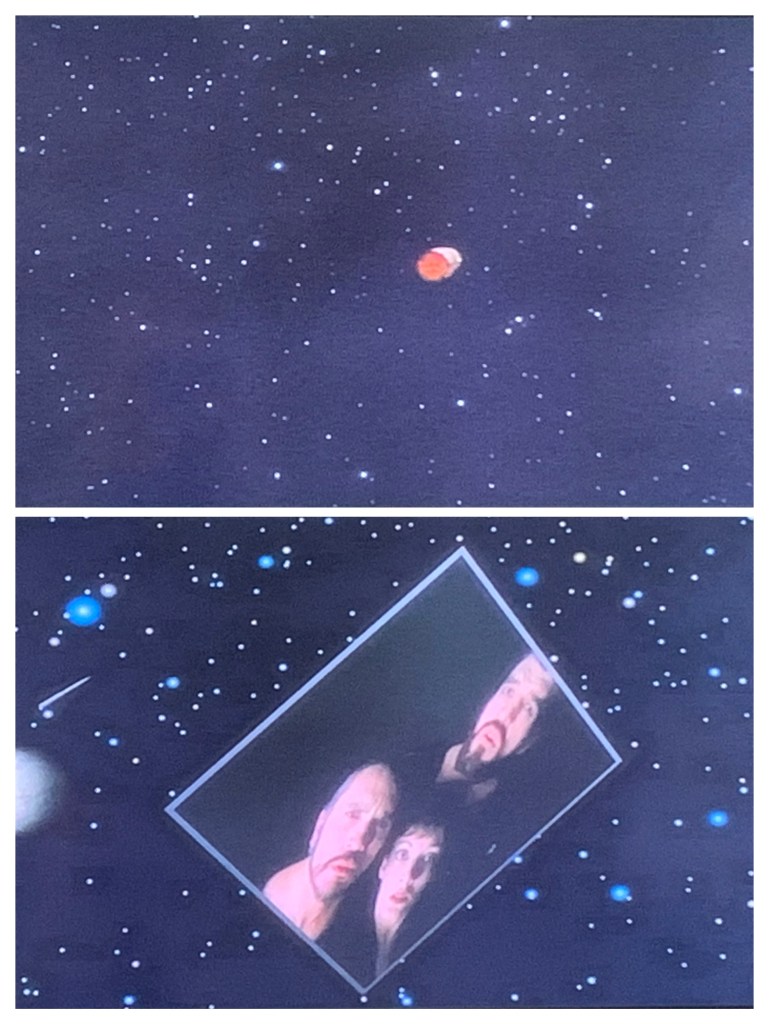
In the above shot, as the rocket’s propulsion dies out, the space background looks pretty good here. But afterwards, once the rocket drifts off into space, and the Phantom Zone enters into the shot, we are again given the same budget-rate space background that we were first shown earlier in the film. The background does not look natural as opposed to the above counterpart.
And again in these two shots once the rocket explodes, we have a difference in the outer space backgrounds.
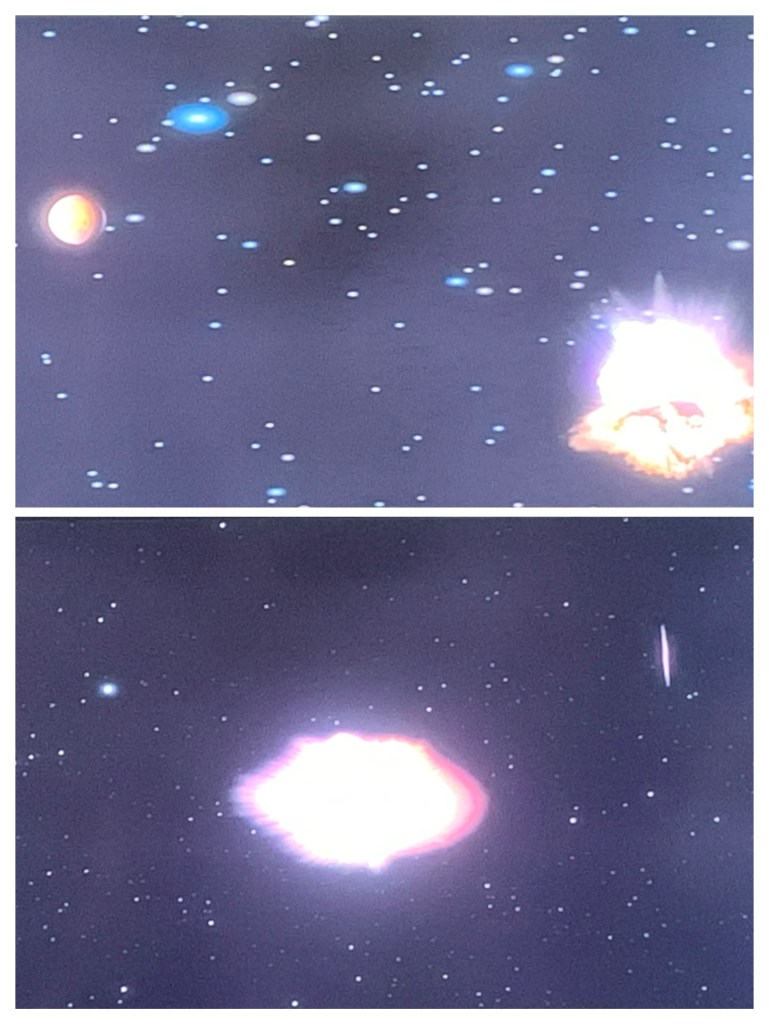
Now let’s turn our attention to the explosion of the Phantom Zone itself and the animation effect used for the Donner Cut.
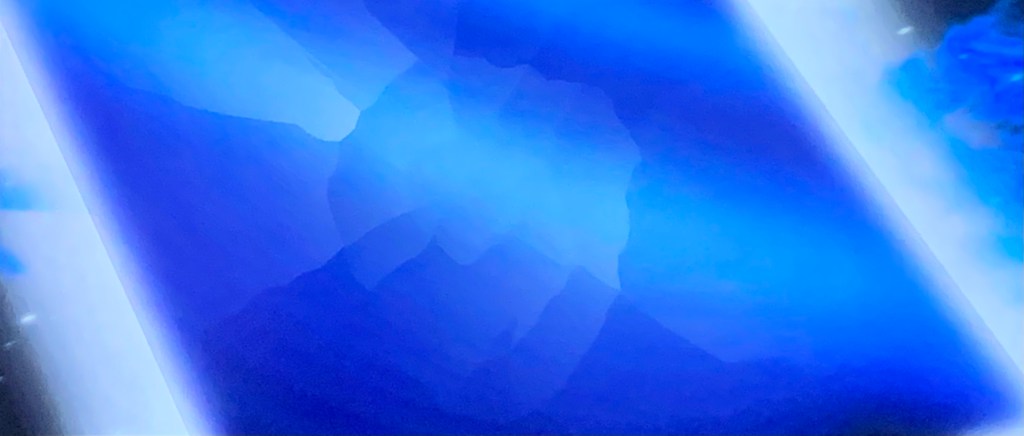
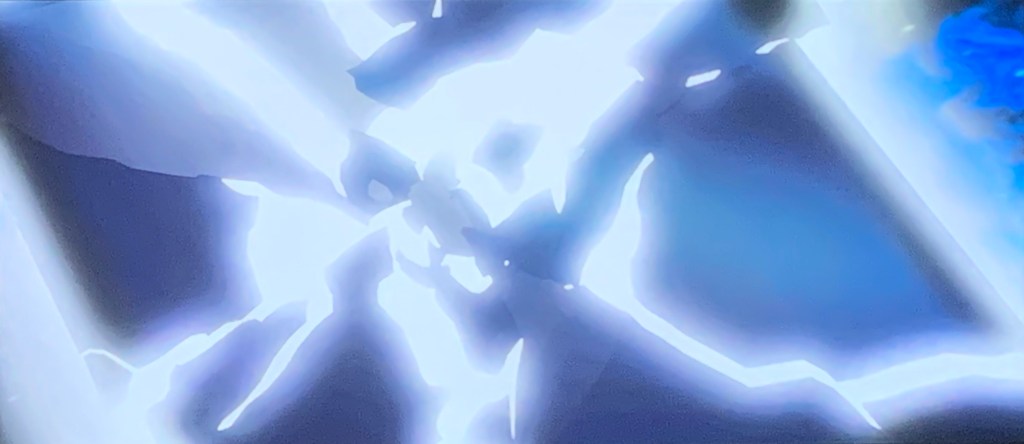
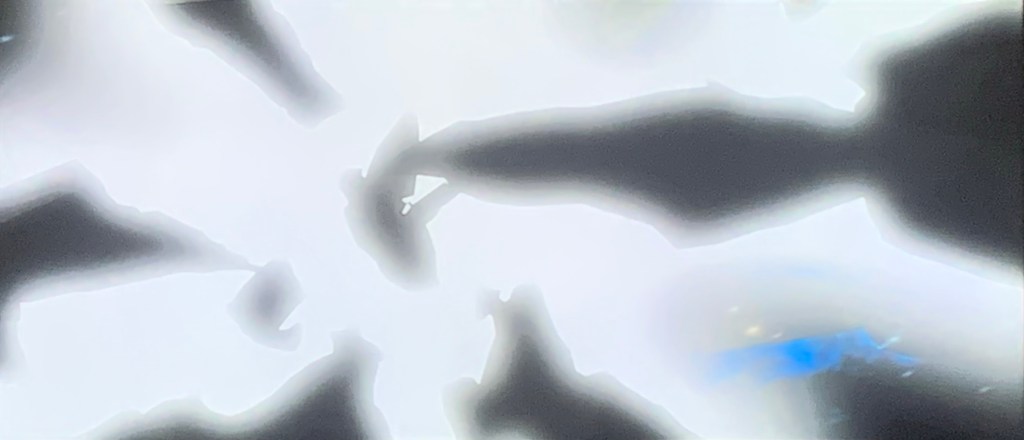
The CGI animation for the explosion effect is decent enough, but once you slow down the video it becomes apparent that even by 2006 standards the effect is rudimentary at best. It’s basic and far from perfect, and more time could have been spent in developing a better explosion effect. Compare it to the explosion effect seen in the theatrical version of Superman II, and you’ll see a vast difference in quality.
Now let’s look at something that could have and should have been corrected in the editing process but was missed, and yet became a focal point for the remastering of the sequels for the 2011 Blu-ray anthology release: wire harness removal.
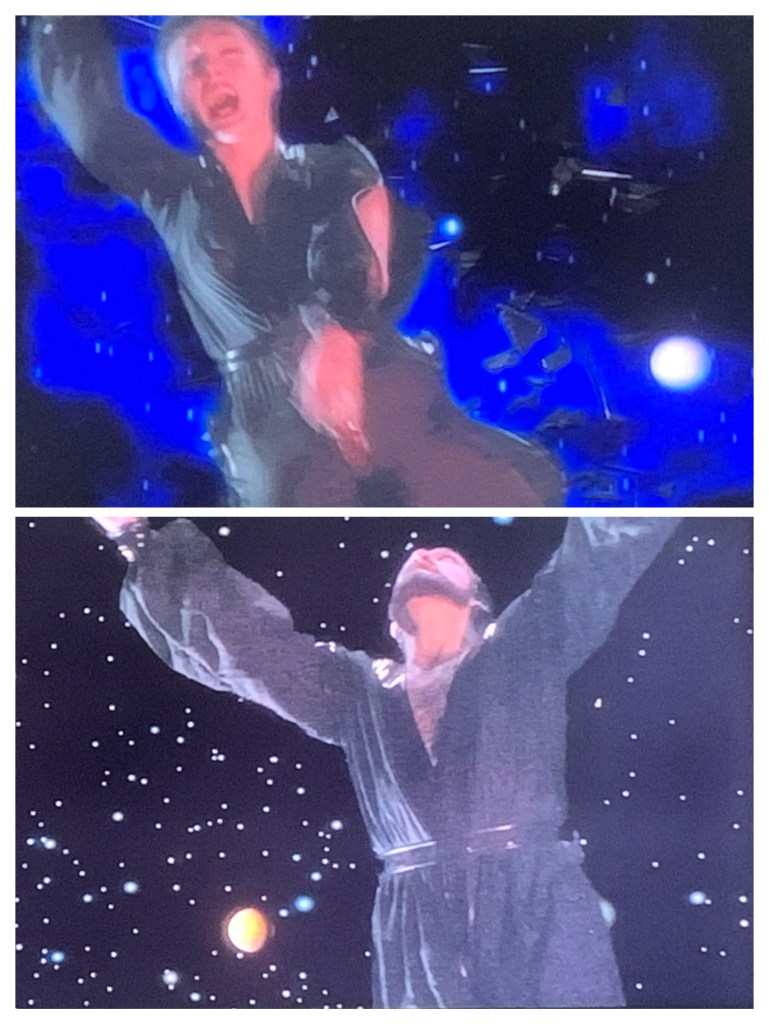
Here you can clearly make out the wire harnesses on the sides of Sarah Douglas’ and Jack O’Halloran’s costumes. This is especially noticeable against the budget-rate background plates, and it should have been corrected in post-production.
Now let’s analyze the matting of the villains against the outer space backgrounds. The original flying elements were shot in 1977, and with a better background plate the matting of the villains in space would have held up better. Instead, we have this…
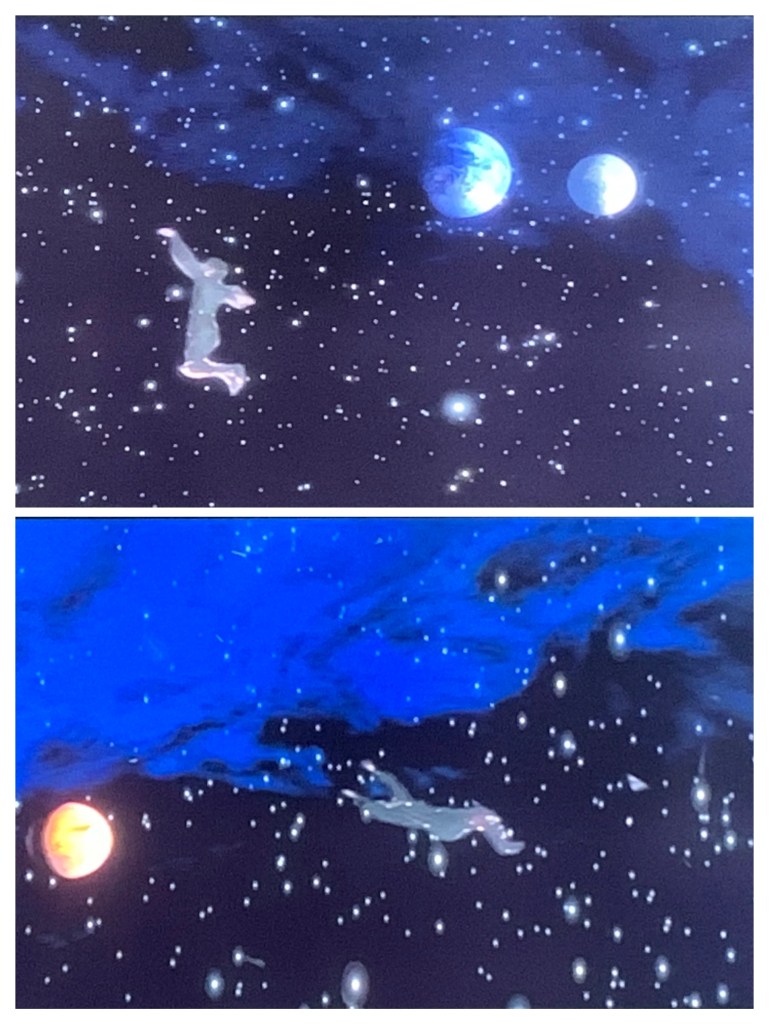
Again, when you compare it to the theatrical version, and you see the flying elements of the villains as they drift in space and start their descent to the moon, you can clearly see which version looks better.
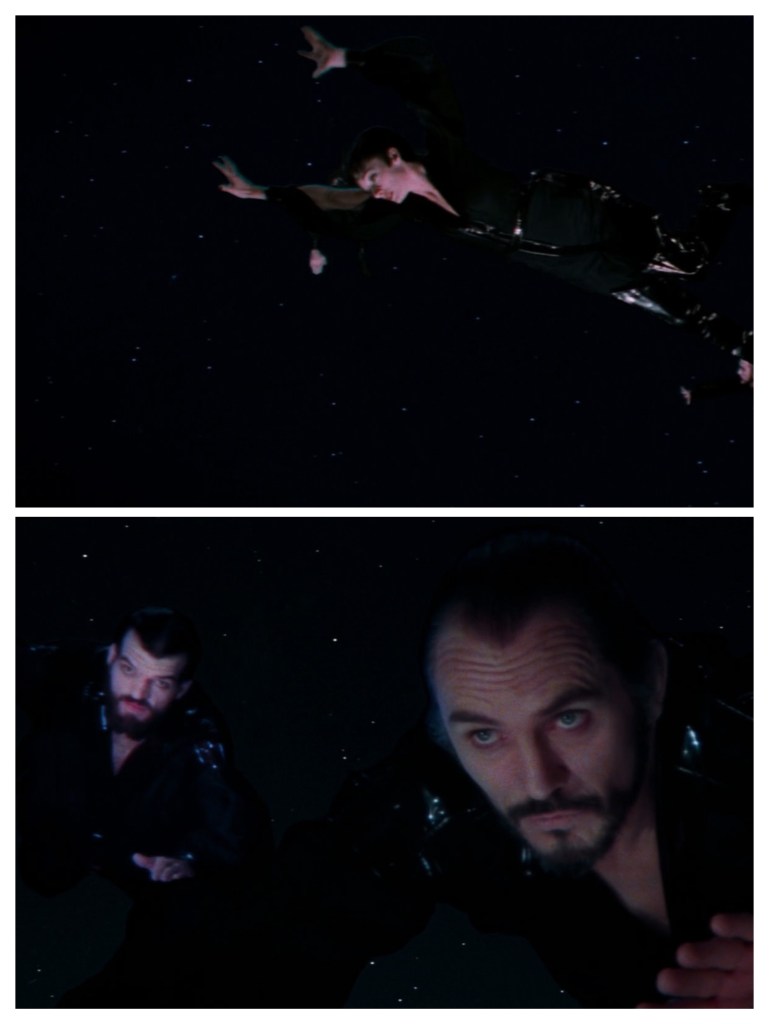
The better of the two versions, in my opinion. Now let’s go further into the film and look at the key scene that ties both films together. When a powerless Superman returns to the Fortress of Solitude to find a way to get his powers restored, he finds the green crystal amid the wreckage of the crystalline console. Once he uses it, he triggers a final recording from his biological father Jor-El, and in an act of sacrifice he expends all of his energy in restoring Superman’s powers to him. It’s the most important scene of the sequel, but even here there are some visual flaws to it. Let’s look at them one at a time.
First of all, pay attention to the shot of Superman finding the green crystal in the wreckage.
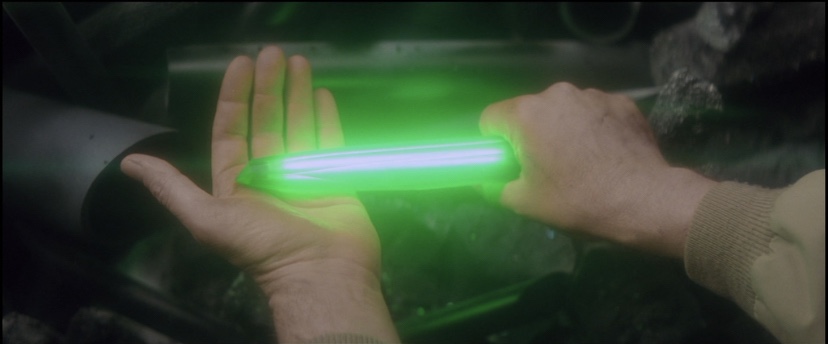
Michael Thau’s hands doubling for Superman’s hands. This pickup shot was filmed in 2005-06. The footage was obviously shot with a digital camera, as opposed to the kind of camera used by Geoffrey Unsworth and camera operator Peter MacDonald back in 1977. There’s a certain crispness in the Unsworth footage, and while the insert shot looks good, it contains a certain haziness that differs from the rest of the footage, and it should have retained that same, or even similar, crispness that the original 1977 footage contains.
Now let’s look at a 20-second piece of footage of Jor-El counseling and admonishing his son for the decisions he made in sacrificing his powers in the name of love. Pay specific attention to the floating head as it is included in the sequence.
There are two particular shots that I want to focus on here. First, when Jor-El says, “…the crystal source from which our communication has begun,” and second, “…you did this of your own free will, in spite of all that I could say to dissuade you.” Pay specific attention to how the camera pushes in as Marlon Brando says these lines. In both of these instances, as the camera pushes in, the floating head of Jor-El remains stationary and unmoving, as opposed to the shot when he says, “You have made a dreadful mistake, Kal-El.” In that shot, we can clearly see his head correctly moving in as the camera moves in. This is particularly noticeable if you move your copy of the DVD or Blu-ray forward at 1.5x or 2x the normal running speed of the disc. The floating head element should have been caught and corrected in post-production. It’s a subtle element, to be sure, but even the most subtle things shouldn’t escape attention.
Now let’s look at another quick insert shot: the moment when Jor-El physically places his hand on Kal-El’s shoulder.
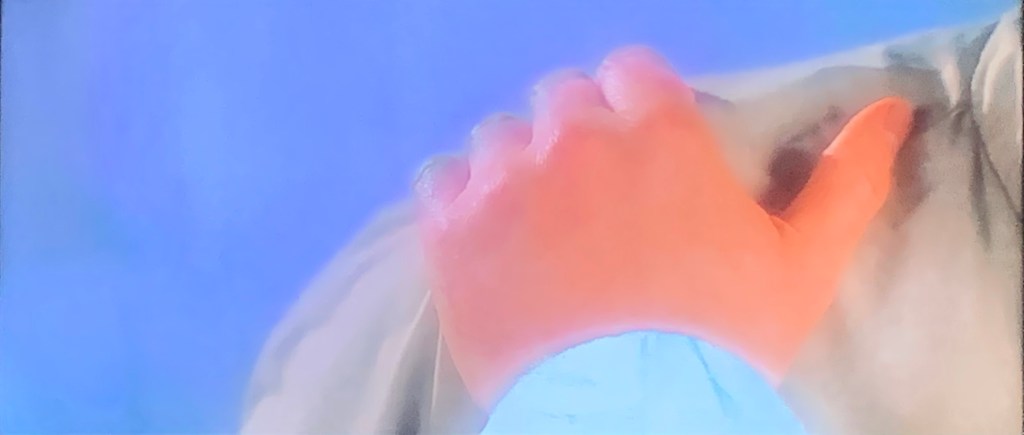
Again, that’s Michael Thau’s hand in this insert shot. As with the earlier shot of finding the green crystal, this insert shot was filmed with a digital camera. The haziness of the shot does not exactly match the crispness of the Geoffrey Unsworth footage, as it appears too smooth.
Finally, there’s one more shot that I want to address. During the climax of the film, as Superman turns back time, one of the things that happens is that the villains are returned to the Phantom Zone (which, story wise, could have set up their return down the road). As with the shots from the start of the film, this involves matting of the actors, CGI animation for the Phantom Zone, lighting for the shots, and a budget-rate background for outer space. Lighting is particularly important to the overall success or failure of a scene, no matter how brief or how long, and in a shot like this the lighting is much brighter than with similar moments that appear in the theatrical release.
I know there certainly are more moments that I could address, but here we have enough to bring us to the question: what can be done to the Donner Cut to bring the film into alignment with the other Superman films for a proper 4K release?
There are certainly a number of answers to that question, but one answer that I want to address is a most important one: a proper restoration of the visual effects. This means a better composition of all of the elements for those scenes. This means recomposing Brando’s floating head so when the camera moves in, the floating head moves in as well in every shot. This means creating better background effects for all of the outer space scenes. This means correcting the markings on the rocket so they properly read XK-101 and not XK-10. This means digitally removing the wire harnesses from the actors. This means aging the insert shots and giving them more crispness to come into alignment with the 1977 Fortress footage. And so on.
More importantly, this requires facilitating a proper budget and proper time to make the necessary fixes, and make it right, so the film looks its very best for 4K release. The template for how a film of this nature can be properly upgraded, all of its visual effects redone, and remastered to 4K release, is last year’s release of Star Trek: The Motion Picture – The Director’s Edition. That is a perfect example of how to remaster a film and its visual effects to 4K quality, and do it right. Even the extended TV cut saw a glaring error from its 1983 broadcast corrected and properly updated, the long shot of Captain Kirk descending from the Enterprise. Look at the visual effects in these clips, and you’ll see the difference a proper remastering makes.
This is the gold standard for a proper 4K restoration. Superman II: The Richard Donner Cut deserves the same kind of treatment for its 4K release. Will we get it? That’s the big question. For now, all we can do is wait.
 Superman: The Blog