-
“Rosetta” and the Return of a Legend: 20 Years Later
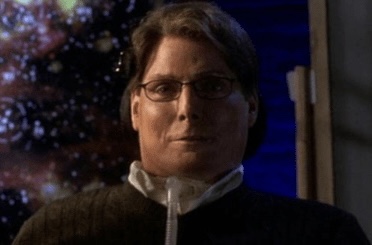
“Hello, Clark. I’ve been expecting you.” Up to this point I have discussed and covered lots of topics related to the Superman film series, including my recent analyses of the Mario Puzo scripts, with a mixture of older material and fresh content for fans to enjoy. But for this particular blog I have to digress, because we have reached another significant milestone in the Superman franchise, and it would be remiss for me to pass this one by.
To borrow from the Beatles, it was 20 years ago today – February 25, 2003 – that the Smallville episode “Rosetta” first aired on the WB Network.
Up until this point the focus of Smallville was on a teenaged Clark Kent, portrayed by Tom Welling, as he grew up on a farm in the title town. Most of the episodes during the first season dealt with the requisite “freak of the week”, people who had been affected by the meteorites that fell to Earth along with Clark’s rocket ship from Krypton. One week it caused the football coach to shoot flames of fire; another week it messed with Lex Luthor’s mind and briefly turned him, and other citizens, into petty criminals; and another week it caused an overweight teenage girl to drink Kryptonite-laced shakes and feast on anything and everything as she lost weight. (That was an early acting role for Amy Adams, who would go on to portray Lois Lane in Man of Steel, Batman vs. Superman: Dawn of Justice, and both versions of Justice League during the 2010s.) And so on. And poor Principal Kwan—did anyone ever like that guy? Eventually the series steered away from the “freak of the week” concept and towards Clark’s exploration of his Kryptonian heritage, as his adopted parents Jonathan and Martha Kent (played by John Schneider and Superman III co-star Annette O’Toole) fought at every turn to keep Clark’s origins a secret from people, especially Lex Luthor (Michael Rosenbaum) and his equally duplicitous father Lionel Luthor (John Glover). And like many teenagers, Clark spent way too much time pining for his dream girl Lana Lang (Kristin Kreuk) much to the dismay of his friend Chloe Sullivan (Allison Mack), who was clearly a much better fit for Clark. I always wanted to see Clark get together with Chloe as a couple for the long haul, but after that first season finale it never happened.

Michael Rosenbaum, Tom Welling, and Kristin Kreuk from Smallville (2001-2011). My memories of Smallville began in 2001 in a hospital room at the old Hinds General Hospital, renamed Central Mississippi Medical Center, in my hometown of Jackson, Mississippi, where my aging dad had been admitted for dehydration. By that time hospital visits became the norm for him, as he was in the final months of his struggle with strokes and Parkinson’s disease, and we watched the pilot episode on a small TV screen in his hospital room, with the sound barely coming through the speaker attached to his bed. I didn’t follow the series much during that first season, preferring the Star Trek prequel Enterprise instead, and my work schedule at the time didn’t allow it, but once it went into reruns in the summer of 2002, I was hooked.
But in the middle of February 2003, this trailer aired on the WB. From the first moment I had seen the trailer, I knew that this was going to be a very special episode. And for one important reason…
Chills in a good way. It had been sixteen years since we had last seen Christopher Reeve on screen as the Man of Steel in Superman IV: The Quest for Peace. From that moment on, the four films he had made over a ten-year period from 1977 to 1987 had gone on to become fan favorites from the theater screens to VHS, laserdisc, and DVD.
And he had endured much in his life in those years. Getting married, becoming a dad again, seeing his career evolve from leading actor to featured player in films such as The Remains of the Day, and preparing to direct his first feature film, a romantic comedy called Tell Me True. (Whatever happened to that script?)
And then everything changed on May 27, 1995.
From that point on Reeve fought to live and regain his mobility from spinal cord paralysis. He appeared at the 1996 Academy Awards and the Democratic National Convention. He directed his first film, the acclaimed HBO drama In the Gloaming. He wrote his incredible autobiography Still Me (of which I have three copies in my collection). He lobbied Congress for funding for spinal cord research and founded the Christopher Reeve Paralysis Foundation. When he appeared in interviews on television—Larry King, 20/20 with Barbara Walters, and David Letterman, among others—everyone gave him the sensitivity and respect to allow patience in his speaking because of the breathing tube attached to his throat and the oxygen tank on his automated wheelchair. Letterman was at his most respectful, holding back his usual barbs, directing the cameraman with his eyes to focus on Reeve, and allowing Reeve to laugh at himself and speak from the heart about everything, one of Letterman’s best moments on television.
Reeve also starred in an acclaimed TV remake of the classic Alfred Hitchcock film Rear Window. He would write a second book, Nothing is Impossible. And he was interviewed for the documentaries on the Superman DVD in 2001. Granted, I’m breezing by other things, but you get the point.
And then Smallville came along.
The moment when Reeve, as the mysterious research scientist Dr. Virgil Swann, reaches out to Clark, he sends a message asking to meet with him. Clark takes a chance and travels to New York City to meet with Dr. Swann (who was named in honor of longtime Superman artist Curt Swan), and the moment they lock eyes on each other and Swann silently nods at him, it becomes a symbolic passing of the torch from one generation to another. Even the musical adaptation is fittingly appropriate, using John Williams’ classic score from “The Fortress of Solitude”, the “Main Title March”, and “The Planet Krypton” from Superman: The Movie, along with sad but beautiful original bridging music, to underscore the entire sequence and the final moments of the episode.
And then Swann reveals the reason why he wanted to meet with Clark: he has a message for him.
The sequence from “Rosetta”. Tom Welling, director Greg Beeman, and the series’ production crew travelled from Vancouver to New York City to work with Reeve, who put in a full day of filming, even with his medical team standing by. An accomplished director and student of directing in his own right, Reeve got the directing bug while working on the first two Superman films, studying camera operations, actor placement, and directorial positioning, eventually leading him to direct the lunar fight in Superman IV, and he would suggest camera placement with Beeman to avoid his wheelchair as much as possible. They worked with Welling to move naturally along the set while Reeve would use his eyes and his voice to deliver a compelling performance. And what was set up as one scene became two in the final cut of the episode.
That final moment between Clark and his adopted father Jonathan Kent is a special moment between father and son, as he tells Clark that he is his son, no matter what Clark’s biological father Jor-El says, and that he will stand with him no matter what. As Jonathan embraces Clark, and we hear John Williams’ classic Superman score end the episode, we see in Clark’s eyes the uncertainty of what the future will bring him, while Jonathan realizes that one day Clark will have to take that journey into adulthood without him there. One of the best endings of an episode of the series, period.
That music… simply epic. But that’s not all. When the second season arrived later that year on DVD, one of the special features on the set was a short behind the scenes look at the making of “Rosetta”, fittingly titled Christopher Reeve: The Man of Steel, which included press interview footage with Reeve and interviews with the cast and crew about working alongside Reeve in bringing the episode to life.
And the cherry on top was a special on-air announcement at the end of the episode with Reeve and Welling to promote the Christopher Reeve Paralysis Foundation. Both actors would thank each other, and Reeve’s lighthearted request, “Please call,” brought joy and laughter from Welling and the entire crew off camera, allowing again for that classic Reeve smile on his face and twinkle in his eyes that helped make his portrayal of Superman one for the generations.
Reeve’s appearance would open the door for other Superman cast members to appear on Smallville, including Margot Kidder, Terence Stamp, Marc McClure, and Supergirl star Helen Slater, further cementing the series in its place in the entire Superman franchise. Reeve would again return to Smallville in 2004 for the episode “Legacy”, and we would get to see some darker shades of Dr. Swann in his interactions with both Clark and Lionel Luthor, and we are left to further wonder what Swann’s motives are.
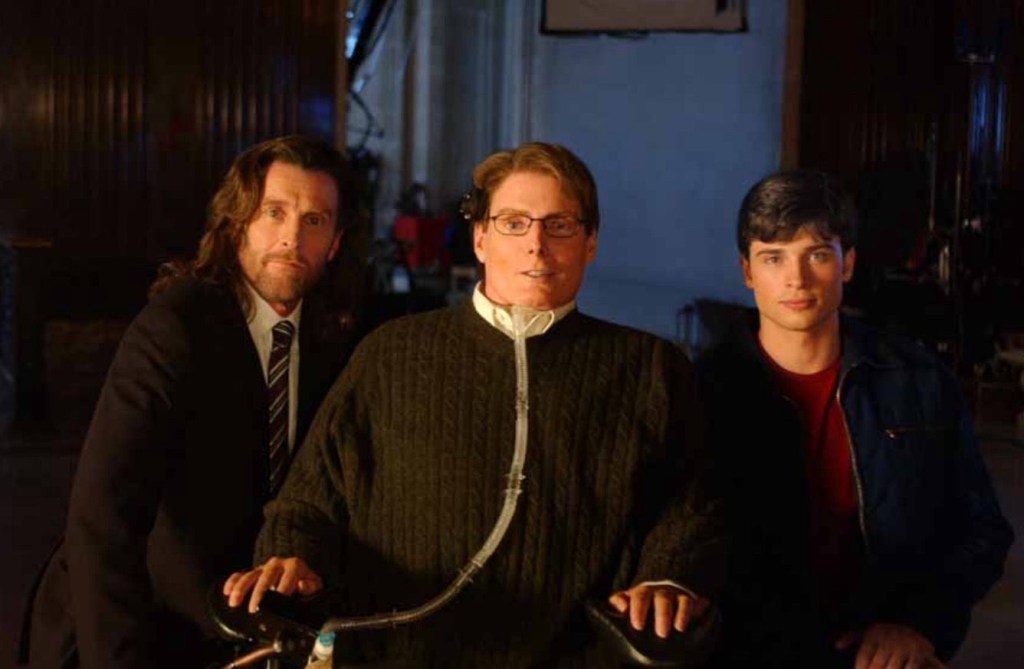
John Glover, Christopher Reeve, and Tom Welling from the episode “Legacy”. There were talks for Reeve to make a third appearance in the series, but everything changed again on October 10, 2004, with his untimely passing at the age of 52. His death was acknowledged with a heartbreaking and bittersweet acknowledgment at the start and end of the fourth season episode “Devoted”, and his passing would be written into the series in the episode “Sacred” (which, oddly, used a closeup of Reeve from the above publicity photo from “Legacy” in the onscreen news story about Swann’s passing).
Those final words Christopher Reeve spoke in “Rosetta” are so true, they can apply to any of us, even twenty years later. “You won’t find the answers by looking to the stars. It’s a journey you’ll have to take by looking inside yourself. You must write your own destiny.” Words to live by.
-
The Lost Ending of “Superman: The Movie”
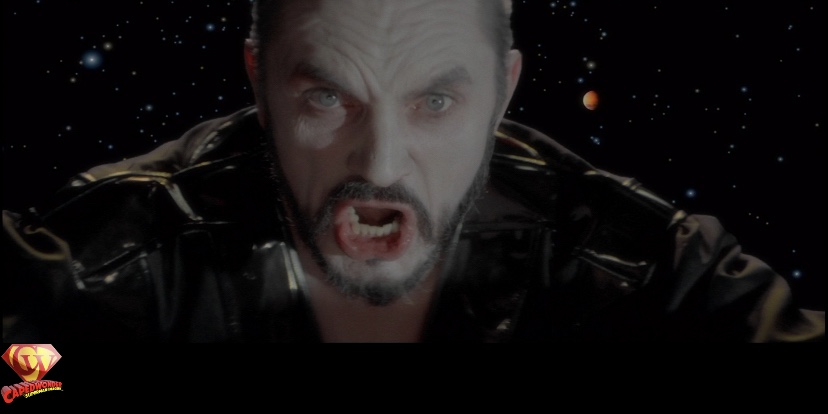
The beginning of Superman II, or the ending of Superman: The Movie? It’s not uncommon to go to a movie and see a post-credits scene. Granted, it means sitting through all of the end credits to get there, but some of them are fun and worth the wait. Nearly all of the Marvel films have post-credits scenes that tease a forthcoming installment or offer a humorous moment.
Proof that you don’t need dialogue to make a post-credits scene this funny. A few of the recent DC films have had them as well – among them Lynda Carter’s cameo at the end of Wonder Woman ‘84, the race between Superman and Flash in the theatrical version of Justice League, and most recently Henry Cavill’s long-awaited yet ill-timed return at the end of Black Adam. Even all of the Star Wars and Marvel series on Disney+ have post-credits bits. And in the initial theatrical release of The Lord of the Rings: The Fellowship of the Ring, a post-credits montage was included to preview the forthcoming release of the trilogy’s second installment The Two Towers.
Thirty or forty years ago, however, it was highly unusual to see a post-credits ending to a movie. The earliest one I can remember came at the end of The Muppet Movie, with Animal looking at the screen and going…
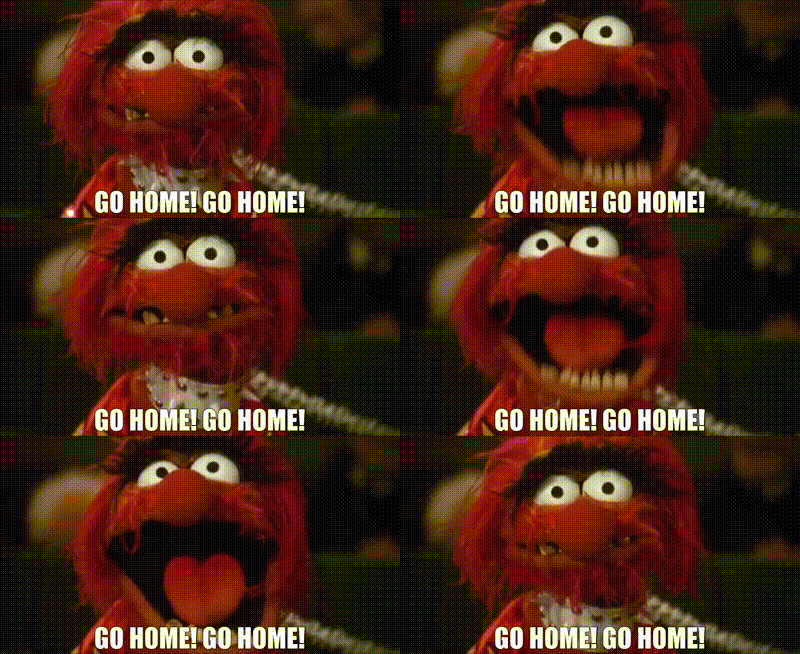
“Buh-bye!” Then came this bit several years later in 1986…
And then there’s this little end bit in a certain 1992 film directed by our beloved Richard Donner…
All together now: “I’m getting too old for this s—-!” At one point in its development, Superman: The Movie had a post-credits cliffhanger sequence written at the end of it. In order to see what this sequence would have looked like, we have to go back to the shooting script.
We are all familiar with how the film’s climax occurred, with Superman reversing time in order to save Lois Lane’s life. But as originally written by Tom Mankiewicz, Lois did not die in the film’s finale. Once Superman pushes the boulders and creates the makeshift dam, he returns to find Lois’ car stranded in the middle of the desert. Jimmy Olsen arrives, and the script plays out as seen in the final film, with Superman bringing Lex Luthor and Otis to prison.
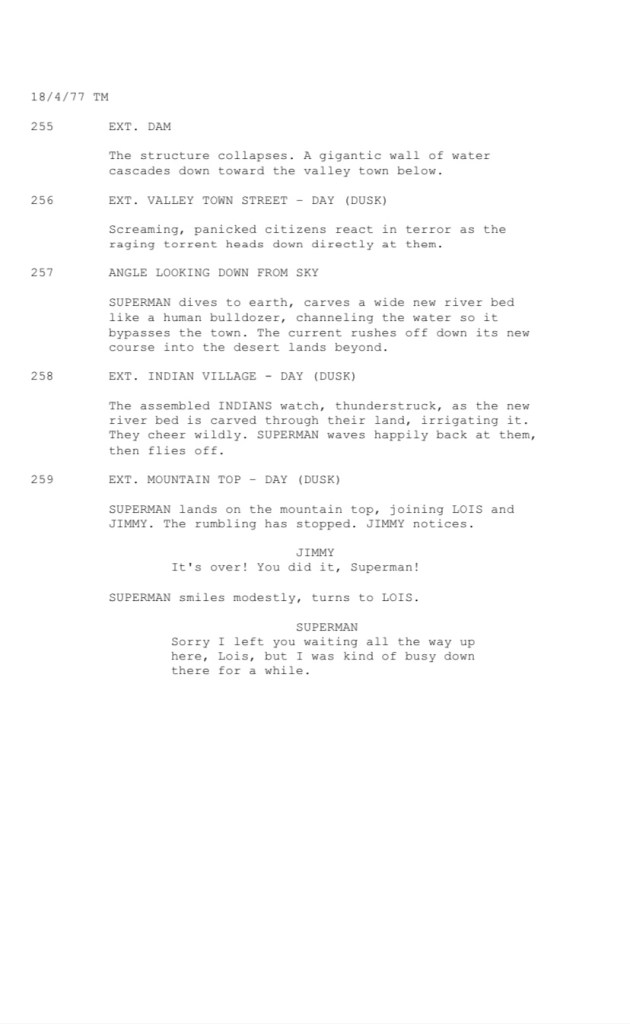
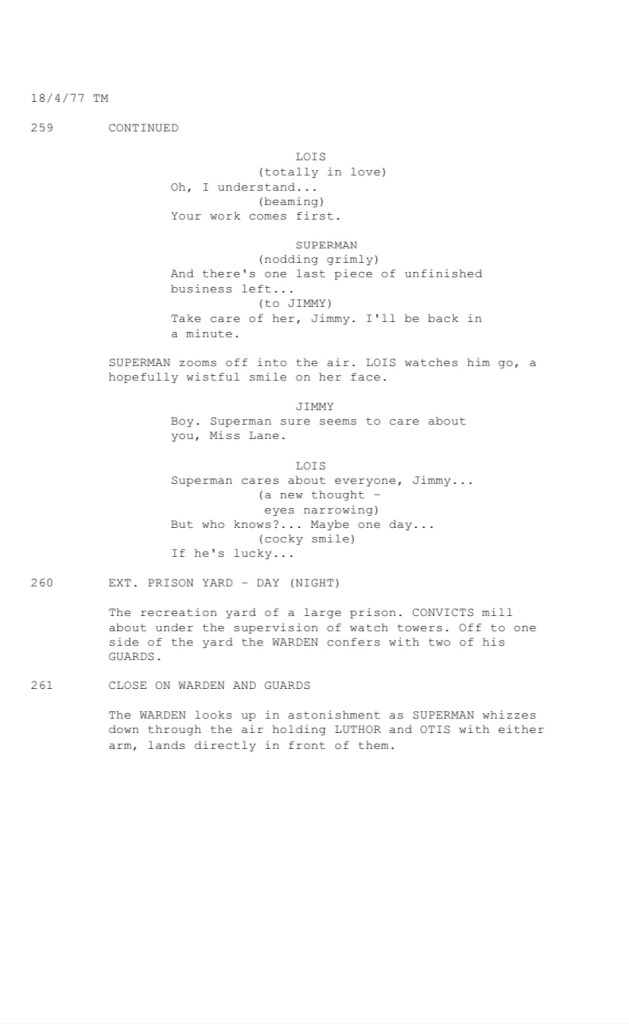
From Tom Mankiewicz’ shooting script, dated April 18, 1977. Here is one re-edit of the ending to Superman that plays close to the Tom Mankiewicz script but without Lois’ death or turning back time. From there, after the end credits, we would have seen the other XK-101 rocket soar into space and explode, freeing General Zod, Non, and Ursa from their imprisonment in the Phantom Zone. Zod and Ursa shout, “Free!” and from there the three villains fly towards Earth, which would have set up the start for Superman II.
Call sheets and production logs confirm that the lion’s share of elements for the sequence were filmed and completed prior to the moratorium on filming for Superman II occurred. On October 8, 1977, the flying unit shot the footage of the villains being freed from the Phantom Zone on Pinewood’s M Stage. Further filming occurred a week and a half later, on October 18, 1977, on L Stage. The model unit would also film several shots of the XK-101 missile spiraling through space, along with several explosions. It would be another three decades before all of these elements would be composited together.
The sequence as it finally appeared in 2006 in Superman II: The Richard Donner Cut. Sorry for the shakiness of the video. That’s the best I could get. From there we would have seen a compilation of scenes from Superman II for the teaser sequence. This excerpt from the Tom Mankiewicz shooting script offers some of the moments that would have been included:
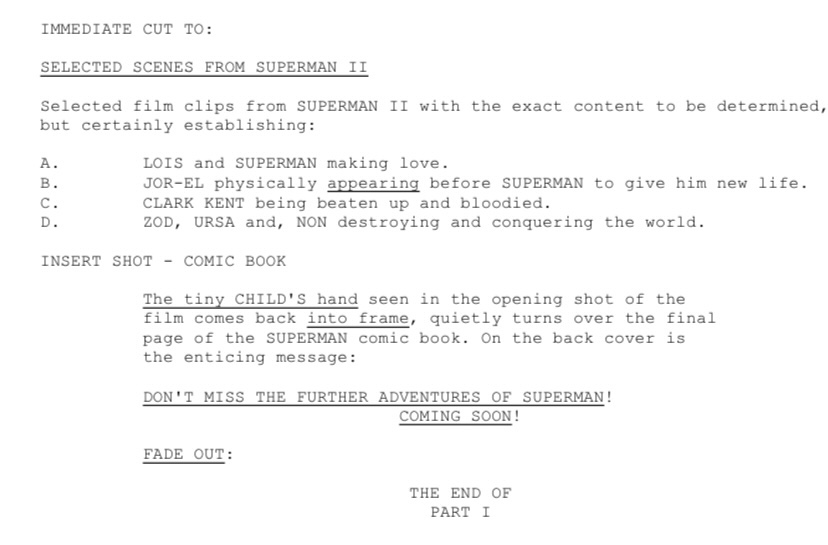
From the shooting script dated April 18, 1977. This first moment that is referenced involves Superman and Lois Lane making love in the Fortress of Solitude.
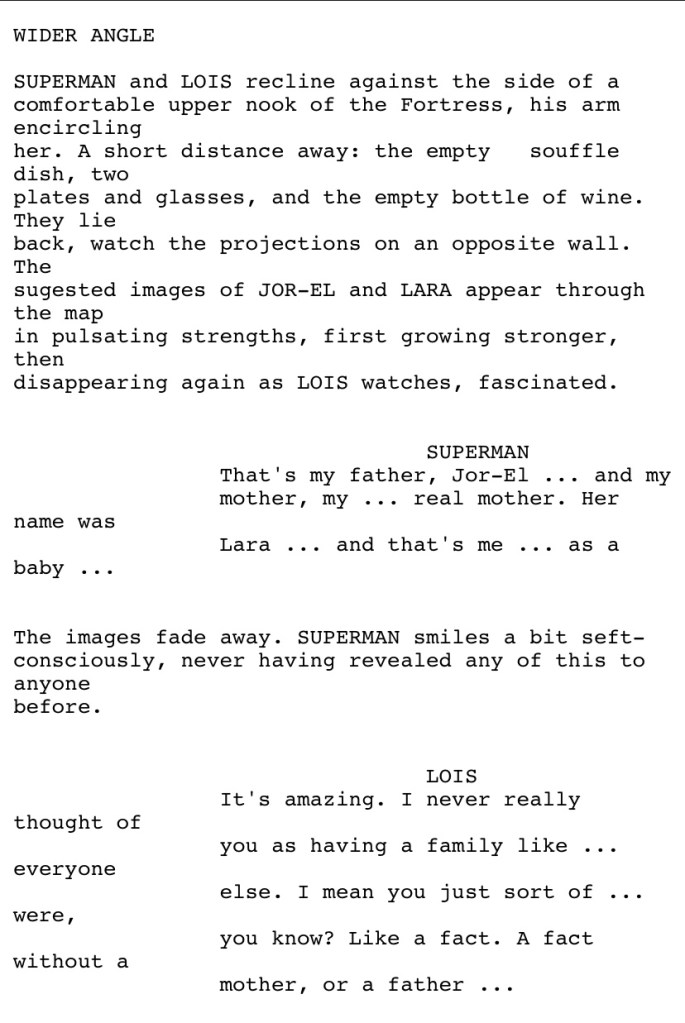
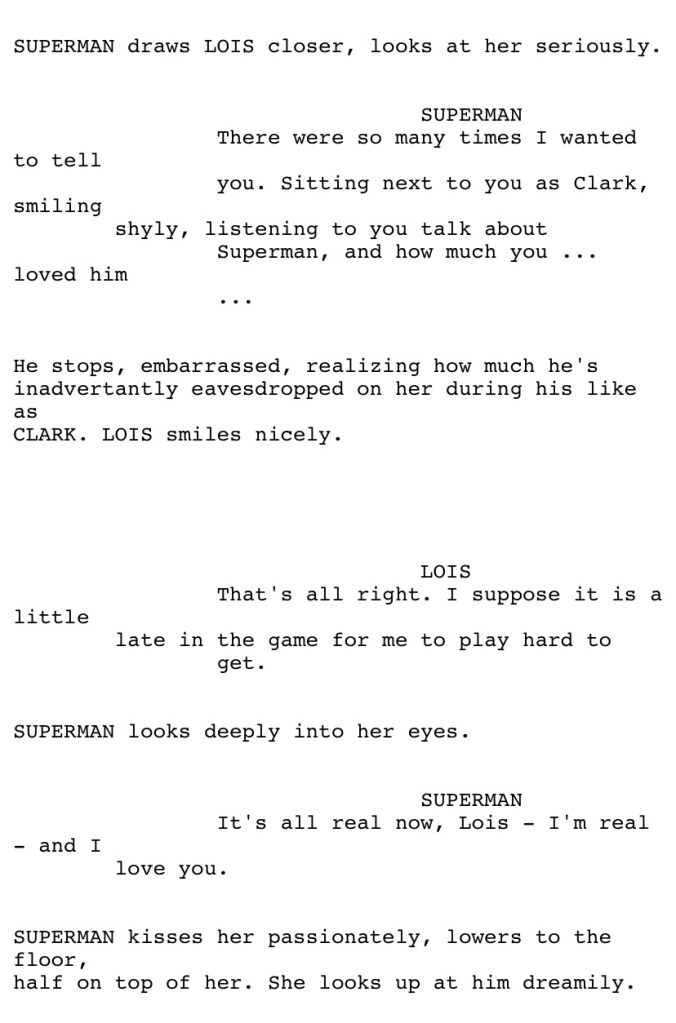
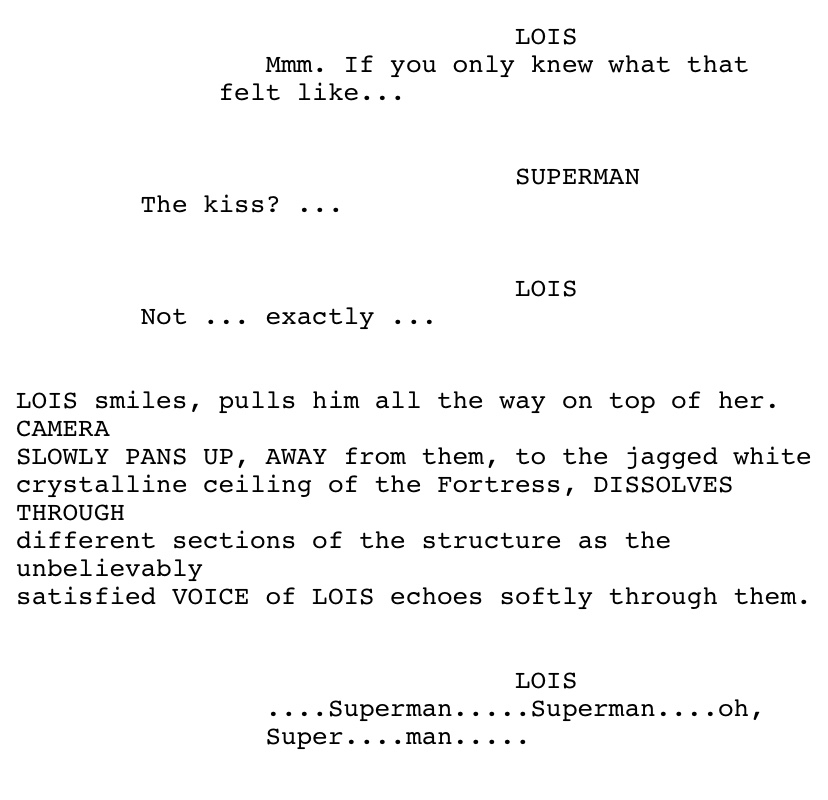
Taken from the shooting script dated April 18, 1977. According to production logs, filming on the sequence was scheduled for October 20, 1977 on Pinewood’s M Stage. It is unknown if the sequence was ever filmed, though, according to a 2006 interview with Michael Thau, all of the footage for Superman II had been located and identified. In the Wizard Magazine Superman special edition from 1993, the scene had been particularly hot and heavy and would have given Superman II an R rating. Still, it is inconclusive whether or not the scene exists in the Warner film vaults or was even filmed to begin with. Because so much time has passed and we have nothing to show for it, I am inclined to conclude that it was not filmed.
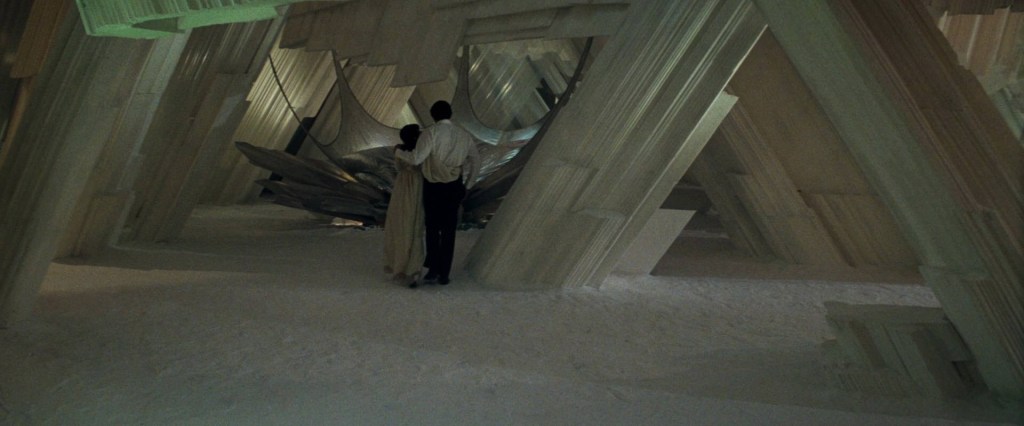
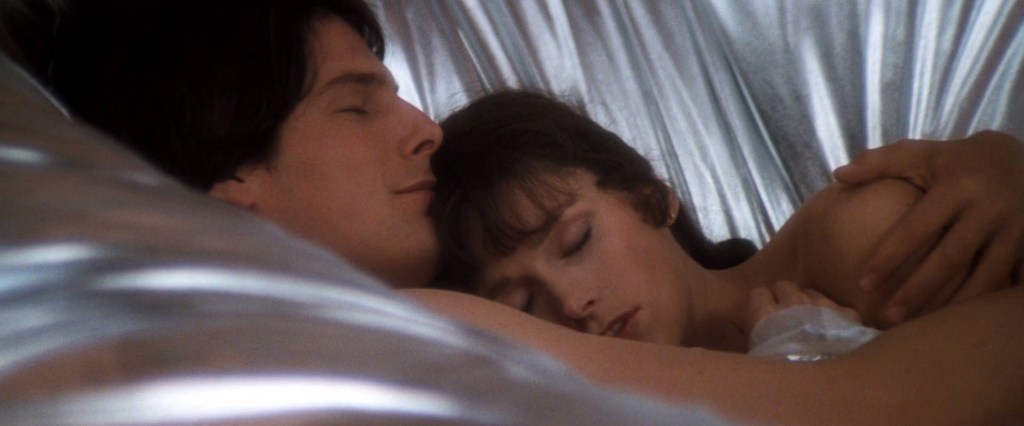
This entire sequence was tastefully handled by Richard Lester in October 1979 for the theatrical version of Superman II. Next is the sequence of Jor-El appearing before a beaten Clark Kent and restoring his powers to him. This crucial moment was filmed on April 12, 1977, and marked Christopher Reeve’s first day of filming on the Superman films in this scene toward the end of Marlon Brando’s tenure on the film. It would not be until 2006 before the scene would be completed and shown in its entirety in Superman II: The Richard Donner Cut.
For years I referred to this moment as the lynchpin scene of the two Superman films. Then we would have seen the moment of a powerless Clark Kent being beaten up by the malicious bully Rocky in Don’s Diner. This scene was filmed on Pinewood’s North Lot on November 1, 1977, with Christopher Reeve, Margot Kidder, former pro wrestler turned actor Pepper Martin, and numerous other actors and extras.
This scene is hard to watch even to this day. From there we would have seen shots of Zod and Ursa causing destruction around the world. Their rampage would have occurred in various places including, but not limited to, Washington, D.C., Paris, Tokyo, and Mount Rushmore. Of these moments, only the model of the destruction of Mount Rushmore was filmed for Superman II, though it was originally intended for Ursa to cause the destruction. This was changed during Richard Lester’s tenure to all three villains using their heat vision to destroy the monument.
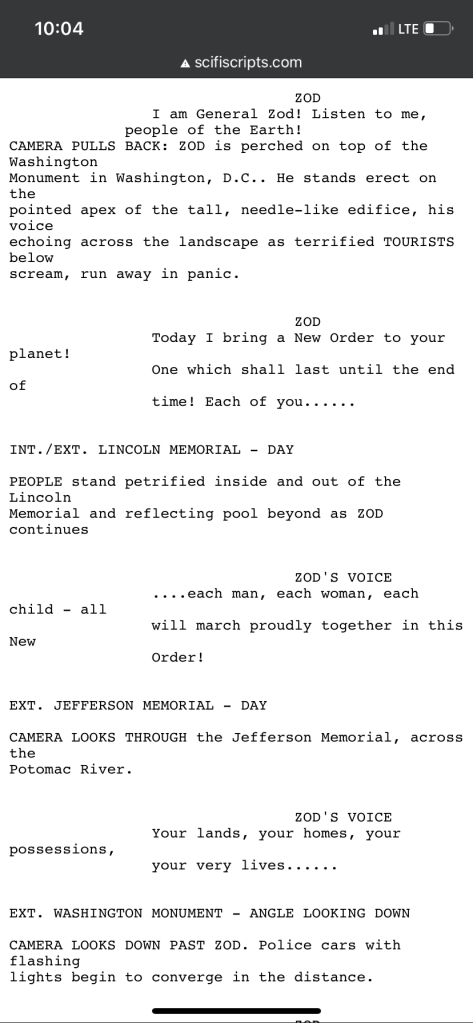
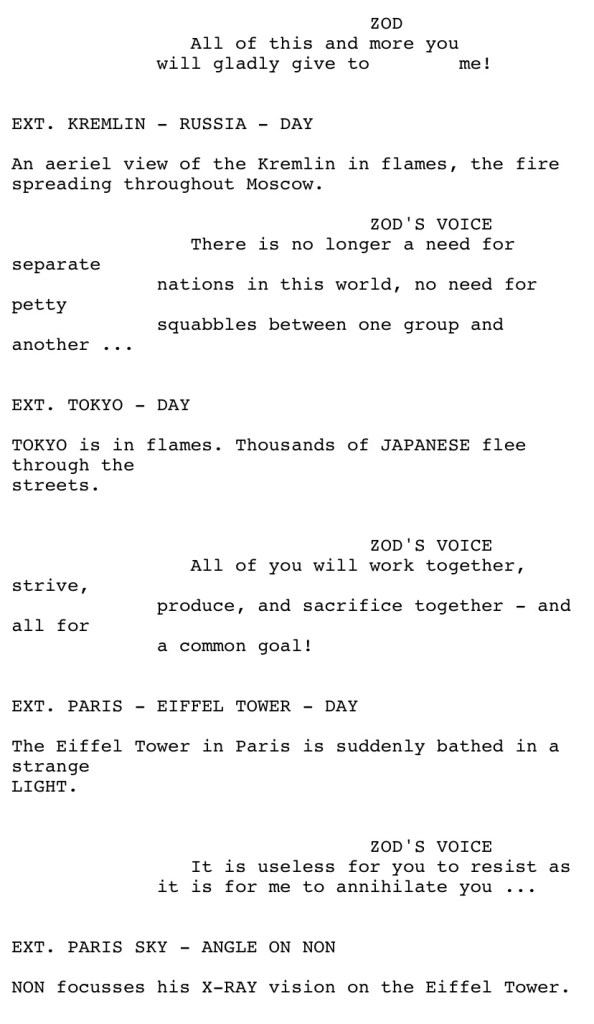
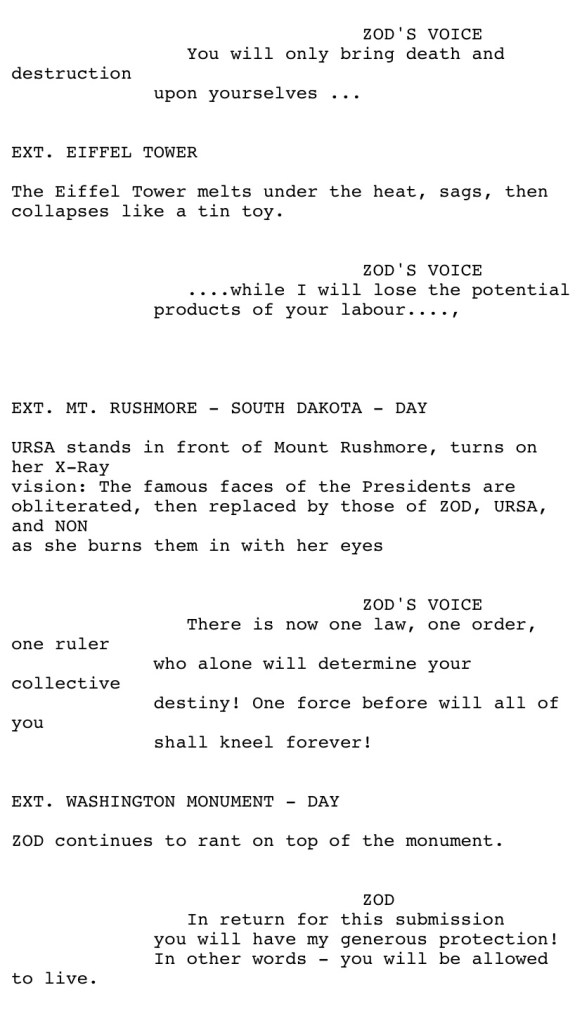
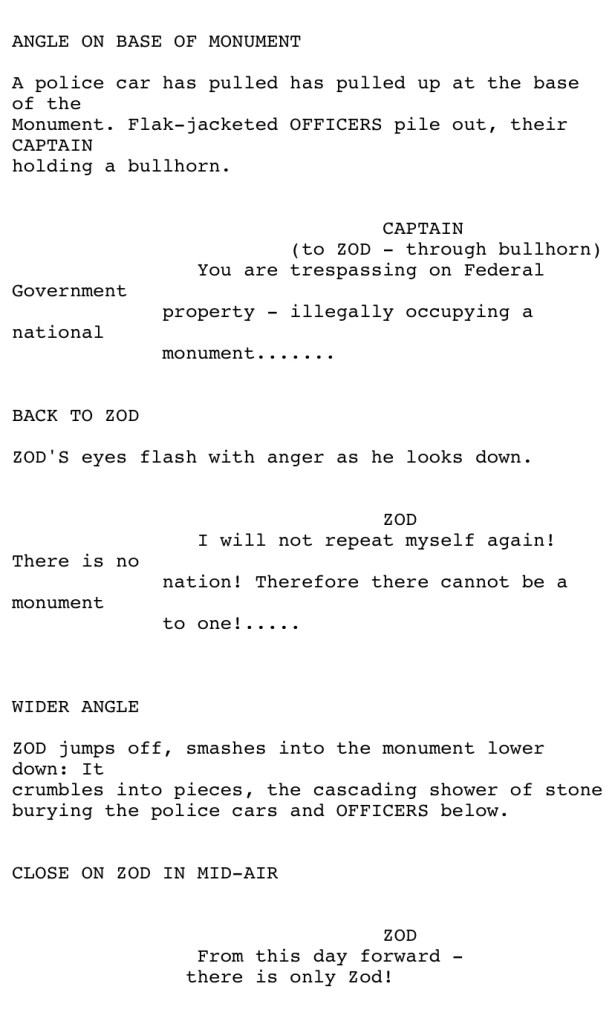
The montage as it appeared in the Tom Mankiewicz script… 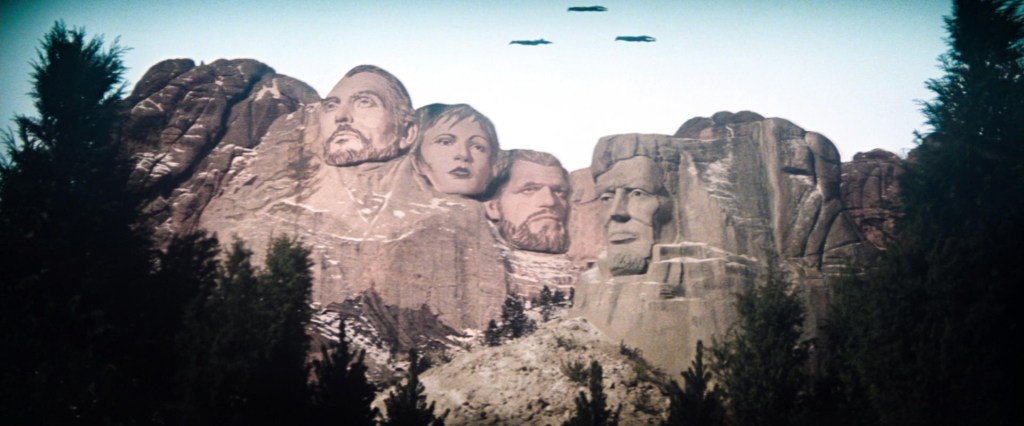
The destruction of Mount Rushmore as seen in the final theatrical version. The flying models of the villains using their heat vision were filmed during Richard Lester’s tenure. For the 2006 release of Superman II: The Richard Donner Cut, this entire sequence was replaced with a composite shot of the villains destroying the Washington Monument. This was achieved by using flying shots of the villains composited over a background plate of Washington, D.C., which was referenced from Rob Reiner’s 1993 film A Few Good Men. Digital manipulation of the crumbling Washington Monument was added to complete the effect.
In addition to this montage of scenes, footage of Superman fighting Non was filmed on October 26, 1977, on Pinewood’s A Stage, with Christopher Reeve and Jack O’Halloran filmed against a blue screen. This shot was also intended to be included in the teaser.
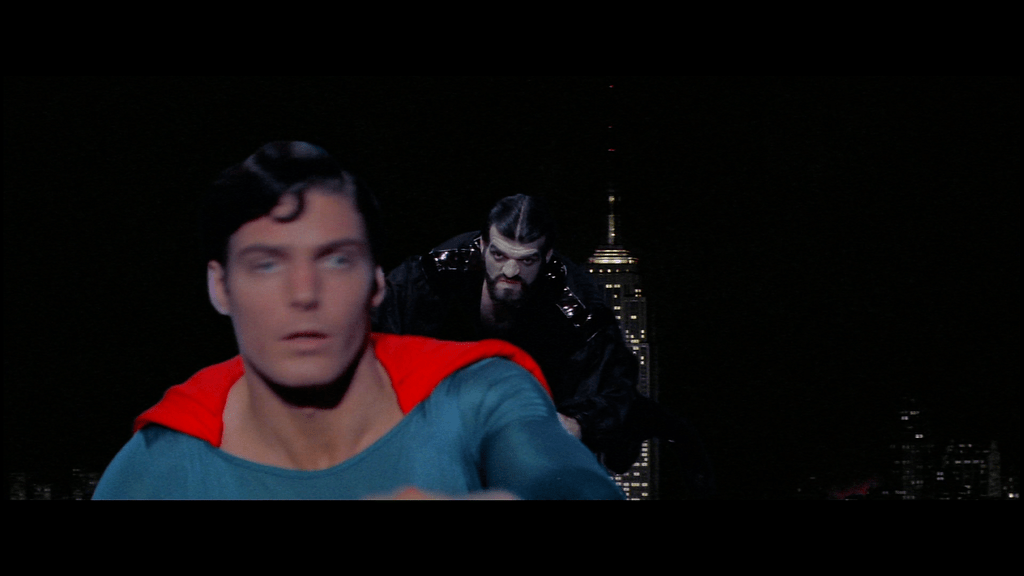
Another likely candidate for the montage was the shot of Zod kicking Superman into the Statue of Liberty.
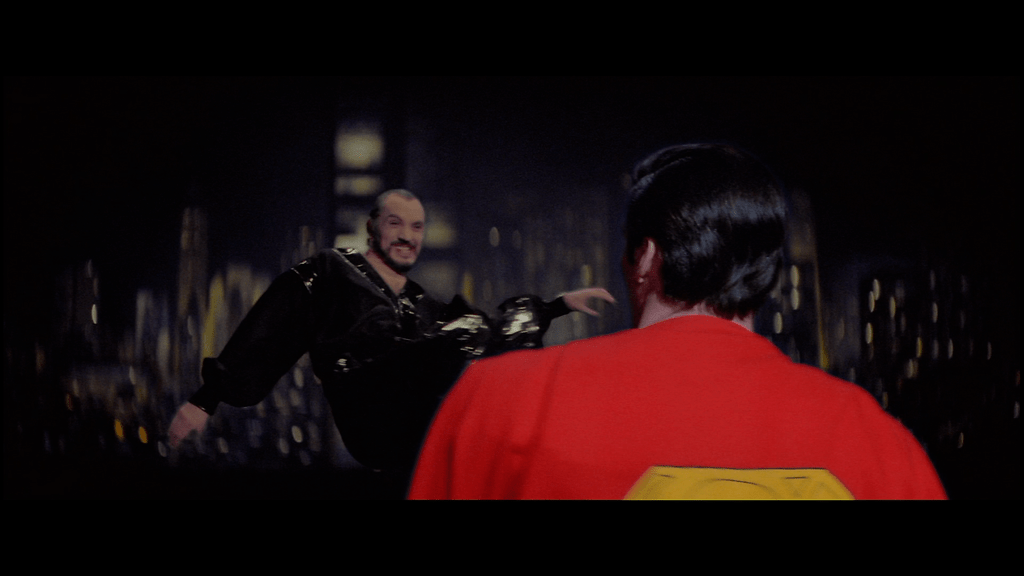
Footage was also shot on November 7, 1977, and again on November 9, 1977, on Pinewood’s A Stage with Christopher Reeve filmed against a blue screen background for the ending montage, along with an exterior shot of the Fortress of Solitude.
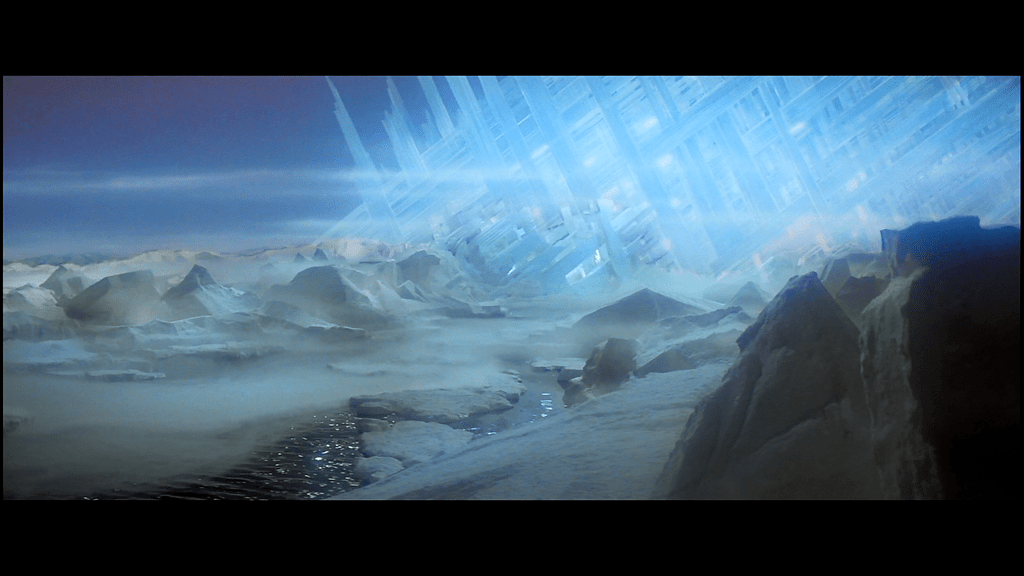
The montage would have ended in a similar way that the film began, with the child closing the comic book and a caption on the back proclaiming, “Don’t miss the further adventures of Superman! Coming soon!”
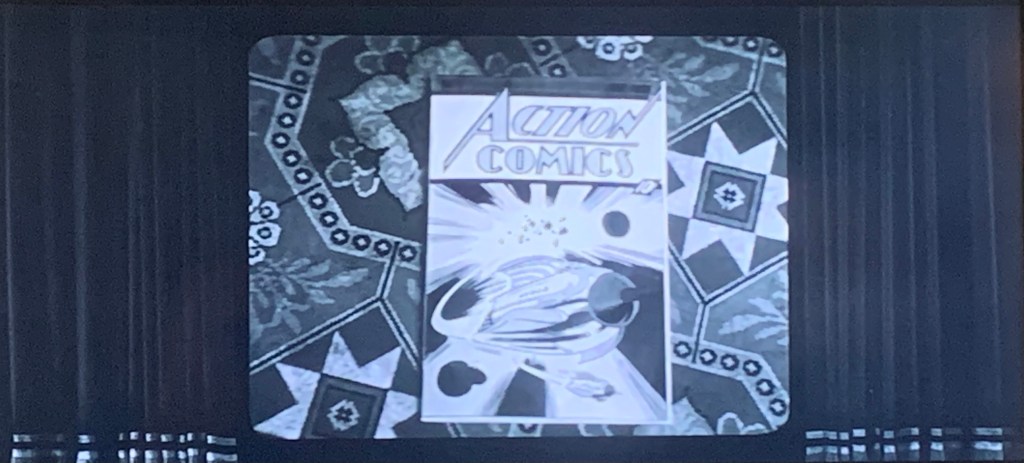
Ending right back where it started. Any other scenes that would have been included in the post-credits montage, we simply do not know, but I believe it would have been left up to Richard Donner and editor Stuart Baird to come up with. But what a post-credits ending to Superman we would have had!
(Some of the screenshots in this blog are used courtesy of CapedWonder.com.)
-
The Lost Scenes of “Superman: The Movie”
Every film has its share of lost scenes. The original version of Fritz Lang’s Metropolis, which went from 155 minutes in its first screening in 1927 to around 90 minutes for decades until restoration occurred in the late 1990s, resulting in a 120-minute cut in 2002, followed by the discovery of a surviving print in Buenos Aires that brought 25 more minutes of footage thought lost forever that brought the film to near completion in 2010. Even then, there is still some five to ten minutes of footage that could not be salvaged from that print simply due to the age of the Buenos Aires print.
The grandfather of all science fiction films that continues to inspire to this day. There are international prologues to films that were filmed but never included in the U.S. releases. One is the international prologue to Gone With the Wind, which offered a brief text summary of the historical context of the American Civil War to foreign viewers. Another is the international prologue to Star Trek IV: The Voyage Home, which featured narration by William Shatner and gave viewers a recap of the events of the second and third films. That prologue was seen in theaters in the United Kingdom and Brazil and on some overseas VHS and DVD releases, but it has never been released in the United States in any format.
There are tons of films and television series with deleted scenes that have appeared on DVD and Blu-ray, some integrated back into the context of the films and others that are not. We think of Peter Jackson’s Lord of the Rings and Hobbit trilogies, the recent Blu-ray version of the 1970s remake of King Kong, and James Cameron’s Aliens, Terminator 2, The Abyss, and Avatar, to name a few. David Lean’s epic Lawrence of Arabia was the first one I remember that saw a full restored and expanded version on VHS back in the day. The Blu-ray version of the Battlestar Galactica reboot series features several expanded versions of episodes, along with its share of deleted scenes that didn’t make the final cuts. Not to mention films shown on television that included deleted or alternate scenes that were only shown on television and have never been seen since. Hooper, Golden Girl, and Black Sunday immediately come to my mind.
There are lost cuts of films that are vastly different from what we finally saw in theaters, most notably the original cut of Star Wars, which seemed flat at first but was ultimately saved in the editing room. Such is the nature of filmmaking.
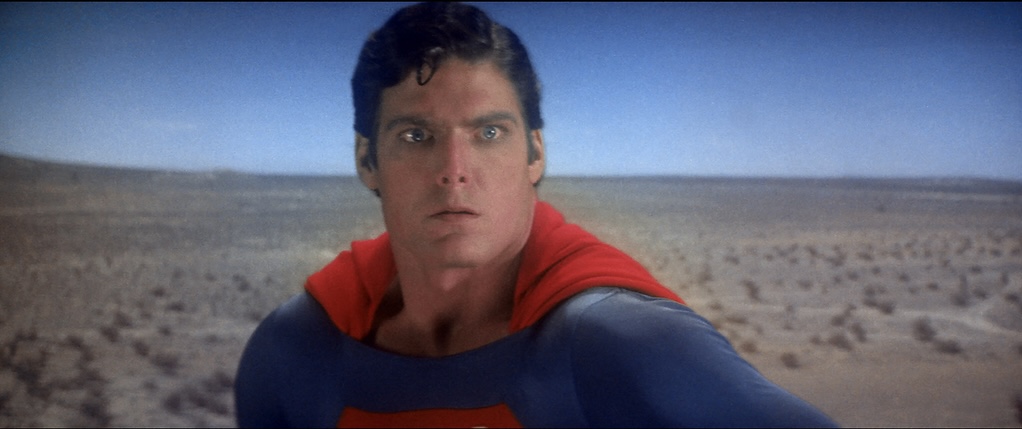
What if we’d gotten this cut of the film instead? Superman: The Movie is no exception. It has its share of cut scenes and assembly cuts. At one point in the editing process a four-hour rough cut of the film was prepared for Warner Bros. executives.
Even with all of the scenes that appear in all versions of Superman, including the original theatrical version, the 1982 extended TV broadcast, the 2001 special edition DVD release, and the 2017 extended TV cut Blu-ray, there are still some scenes which have not appeared in any of these versions of the film.
The scenes in question take place midway through the film’s story. According to the script draft by Tom Mankiewicz dated April 6, 1977, three scenes occur which feature Superman in various moments. The first features Superman flying past the Concorde. This particular sequence we know was filmed because it was first included in the extended TV broadcast of Superman II in February 1984.
One day we hope to see this scene officially released by the Warner Archive in widescreen format. Further information by David Michael Petrou in his book The Making of Superman: The Movie reveals that at one point, “Ilya (Salkind) and Pierre (Spengler) were set to play the French pilots.” Storyboards for the sequence were drawn on February 20, 1978, and filming on the Concorde sequence occurred on June 25, 1978, with actors Michael Berh and John Rees as the Concorde pilots observing Christopher Reeve flying past them.
Also, notice the background plate of the skyline as Superman spins past the Concorde. This is either the same or a similar skyline that appears in the original 1978 teaser trailer for the film.
The second of the three sequences is of Superman rescuing an oil rig from disaster. Here’s how the moment appears in the Tom Mankiewicz script:
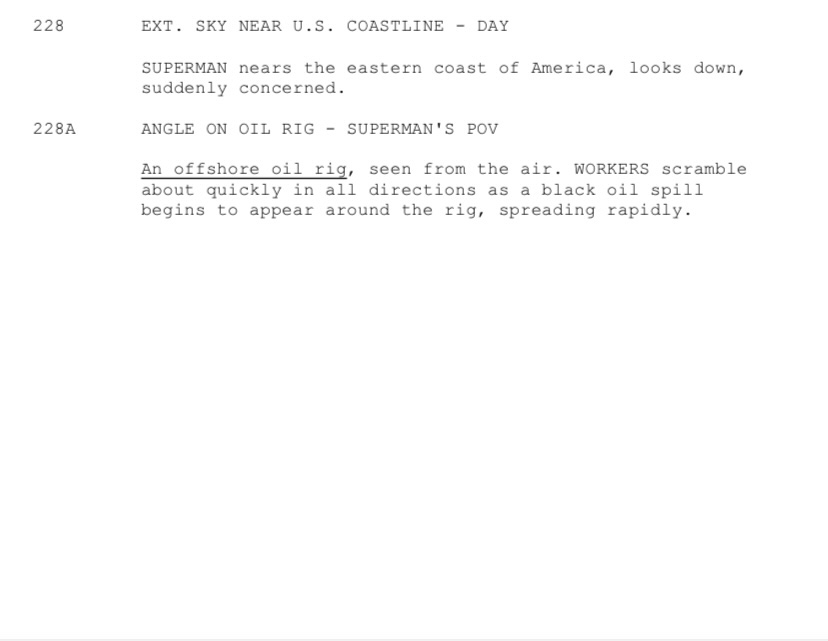
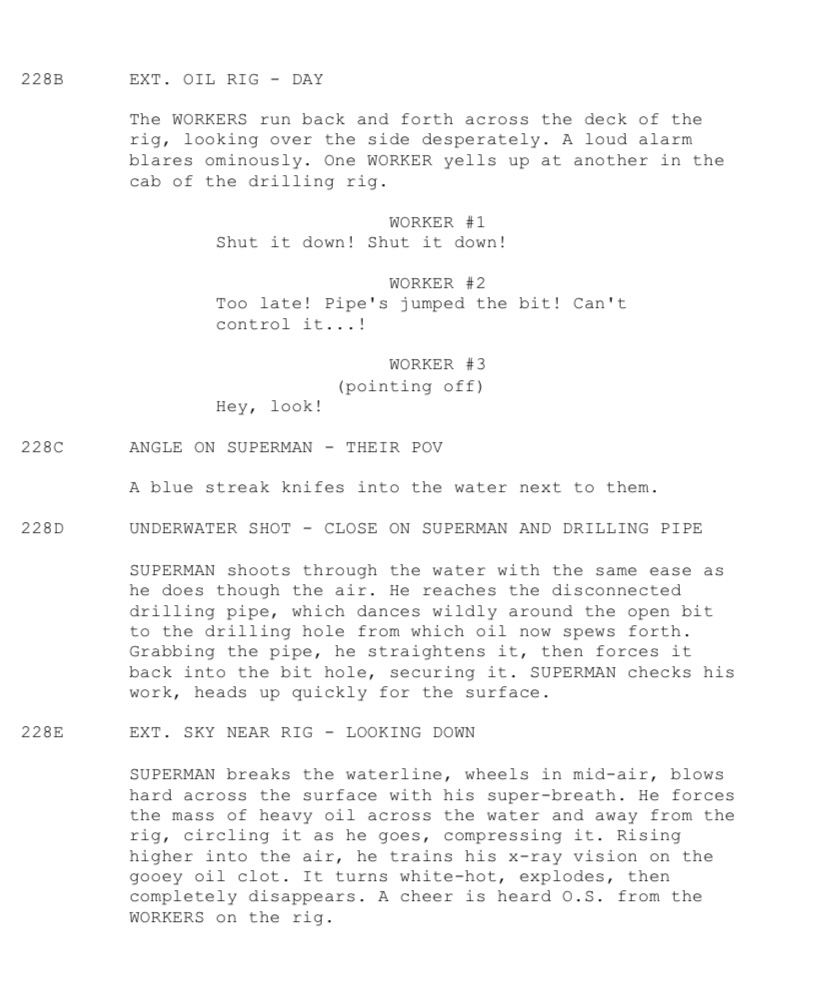
For some reason we do not know whether any elements of this sequence was filmed, though it is likely that it was not. Unless any footage is in the Warner Bros. film vaults, we can only conclude that it was not filmed at all. But it wouldn’t be the end for this sequence.
The oil rig rescue scene would later be recycled for Superman III, while a similar concept would appear in Man of Steel in 2013. The third part of this sequence involves Superman’s flight with a bald eagle. Here is the script excerpt from Tom Mankiewicz dated April 6, 1977, which outlines the moment in its entirety:
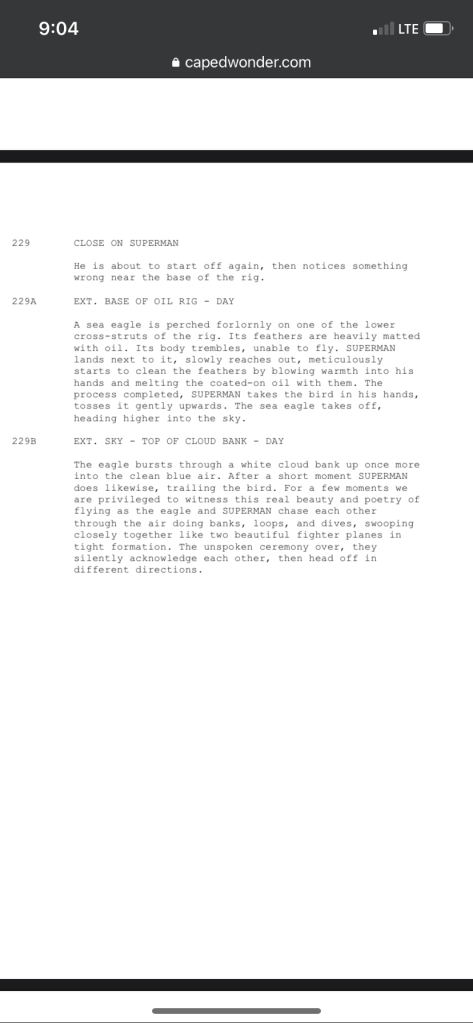
It seems like a nice little shot, almost a ballet, that would have been a great added moment for the film. In early February 1978, the flying unit conducted tests with a golden eagle, two Lanner falcons, and a Saker falcon for the sequence, ultimately going with the Saker falcon. The footage of the Saker falcon was shot, and there was very likely footage filmed with Christopher Reeve also. For some reason the elements were never brought together, and the scene was ultimately scrapped.
However, in later years, a video surfaced of a BBC interview with Zoran Perisic explaining the Zoptic filming system, and scenes from the two Superman films were referenced, including a number of deleted and alternate scenes of Superman in flight that were not previously seen in any version of the film, as well as a Zoptic element of Terence Stamp from Superman II. The sequence ended with a gag take of Superman flying alongside a stuffed bird (reminiscent of the Groucho Marx variety shows of the 1950s) and Christopher Reeve laughing and playfully punching the stuffed bird away. Even though it was a gag outtake, the clip would have given us an idea of what Superman’s flight with the Saker falcon might have looked like.

A Saker falcon in flight. It would have been a beautiful scene to see Superman flying alongside one. But that’s not all. Next time: the lost ending of Superman.
(Some screenshots in this blog are courtesy of CapedWonder.com.)
-
(Re)running the Gauntlet
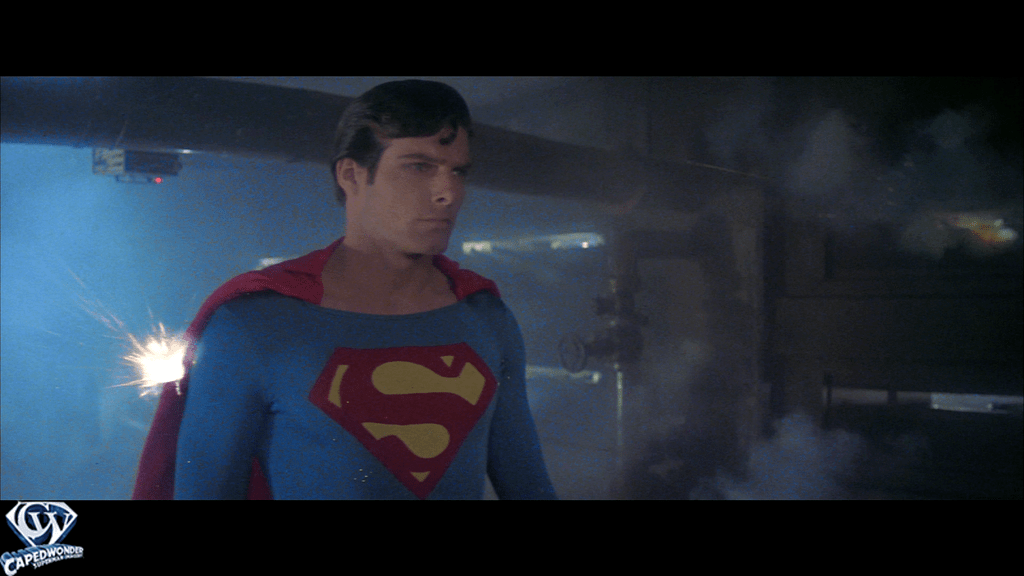
“Waitaminnit, Mr. Luthor, you mean fire and bullets can’t hurt this guy…” If you ask Superman fans which sequence is their favorite, some of them will tell you that it’s the gauntlet sequence, that part of the film when Superman has burrowed down to the inner grounds on approach to Lex Luthor’s lair and runs the gauntlet of bullets, fire, and ice. It’s one of the most interesting aspects of the film that tests Superman’s abilities, and yet ironically it does not appear in the final theatrical version. Except for still photographs appearing in various places, it would not be seen by and large until the extended TV cut in February, and then the 2001 special edition DVD release, and finally the 2017 Warner Archive Blu-ray release.
Much of the sequence had been filmed in early September 1977 with Christopher Reeve, Gene Hackman, Ned Beatty, and Valerie Perrine, but Reeve and director Richard Donner returned in the first two weeks of January 1978 to conduct a number of reshoots on the sequence. This is evident in the shots of Luthor, Otis, and Miss Teschmacher watching Superman running the gauntlet throughout the sequence, with those shots of Superman appearing on Luthor’s monitors. That meant that only Reeve was needed for the reshoots.
The reshoots began on D Stage at Pinewood Studios 45 years ago today, on January 3, 1978, beginning with the sequence of Superman emerging from the trial by bullets and heading towards the trial by fire. This was shot several times between September 1977 and January 1978.
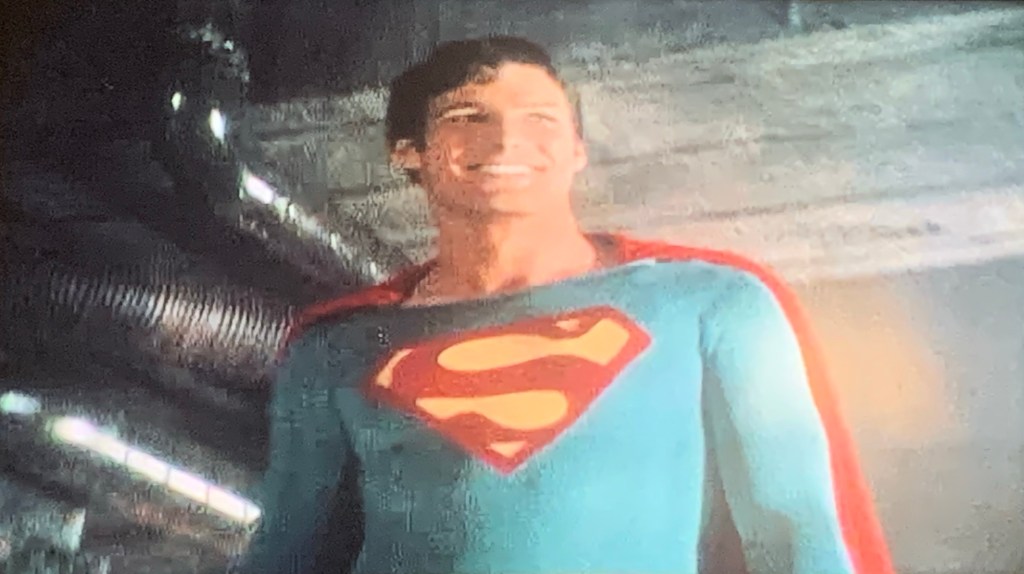
That smile… A few days later, on January 6, 1978, Donner would shoot part of Superman’s trial by ice at Pinewood’s North Tunnel with Reeve. Stuntman Alf Joint would handle the stunt work for Reeve in these shoots.
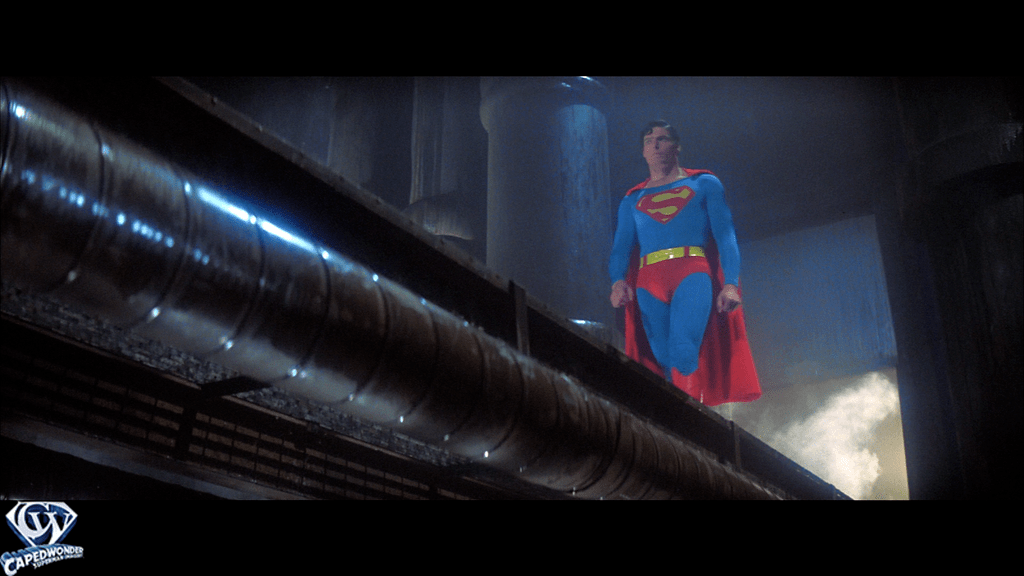
Lex Luthor underestimated Superman’s invulnerability to the cold. Then, on January 12, 1978, Donner would reshoot part of Superman’s trial by fire. While the front projection footage had already been filmed, this proved to be extremely tricky because the mannequin used for the shot had cast a shadow on the front projection plate, and the mannequin itself did not match Christopher Reeve’s own physique, which had increased over time. This forced the prop crew to construct a new mannequin from scratch to match Reeve’s current physique.
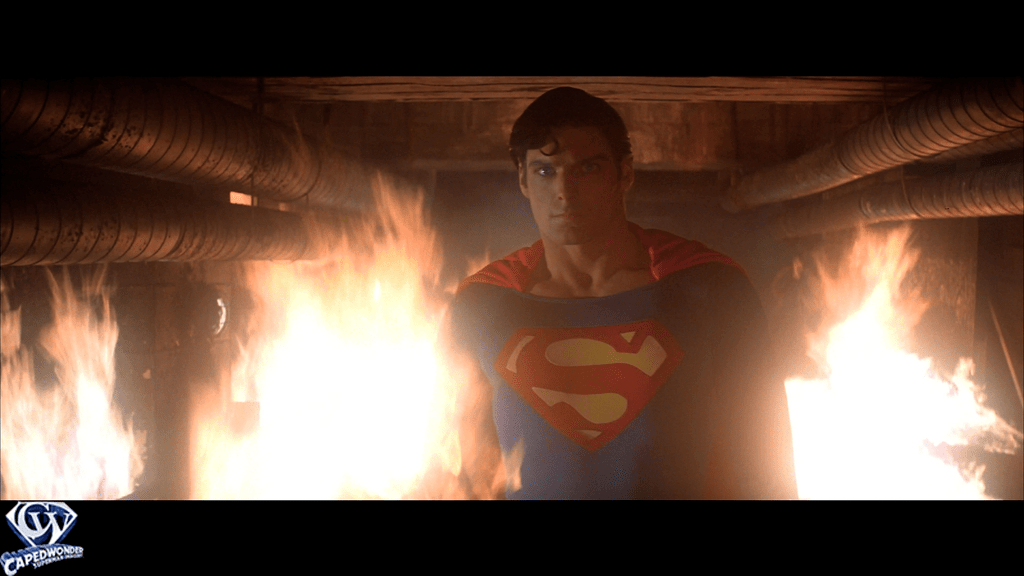
Mannequin of steel, or the real deal? The answer is up to you… A few months later, on April 17, 1978, inset filming occurred on a portion of Superman’s trial by ice. Reeve would wear a frosted wig with fake frost designed by makeup artist Stuart Freeborn for the sequence, while a life size mannequin would also be used for the insert filming.
While the entire gauntlet sequence would not be seen by fans until the first broadcast of the extended TV cut in February 1982, we would actually get brief glimpses of the trial by fire in the theatrical version of Superman II from its initial release in Australia in December 1980 through its international releases in 1981 and the U.S. theatrical release in June 1981. Those outtakes would be integrated into the sequence of Superman sacrificing his powers inside the crystal chamber.
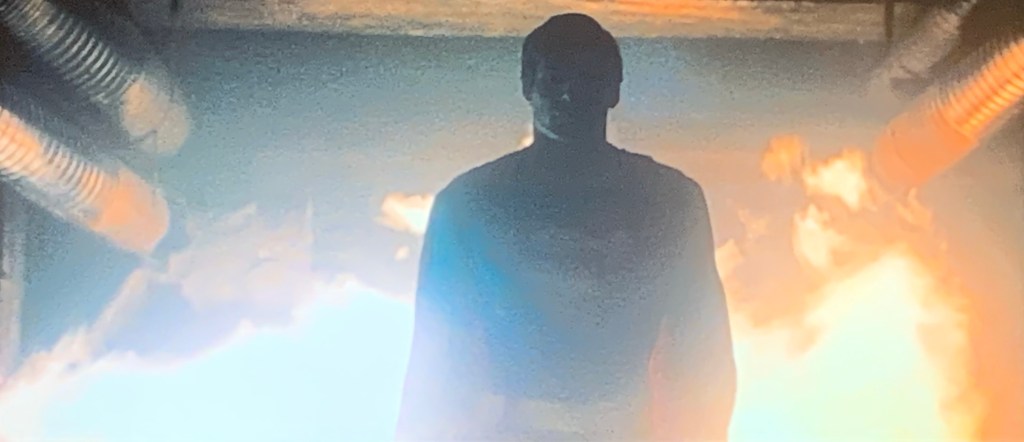
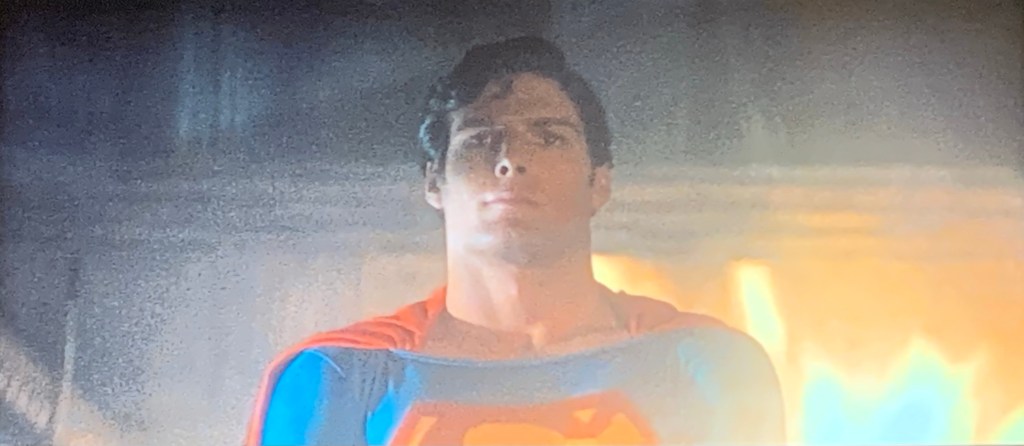
So the question is, why was the gauntlet sequence removed from the theatrical release of Superman: The Movie? Simply put, time and attention span. The final cut of the film was 143 minutes, and the film was already running longer than the average running length of 120 minutes to keep people’s interest in the film, so some footage had to go, and this was unfortunately one of the scenes that, while visually exciting, had to go. Even on the audio commentary for the 2001 special edition, Richard Donner admitted, “We should have left it in. I don’t know why we didn’t leave it in.”
Nowadays it is commonplace for films to have extended versions on DVD and Blu-ray, and in earlier formats such as VHS and laserdisc, to allow the canvas of those films to breathe more and to allow the home video buff to enjoy more of what was filmed. So we have Alexander and Ilya Salkind and Pierre Spengler to thank for restoring this sequence into the extended TV cut, and we have Richard Donner and Michael Thau to thank for restoring it into the special edition cut in 2001.
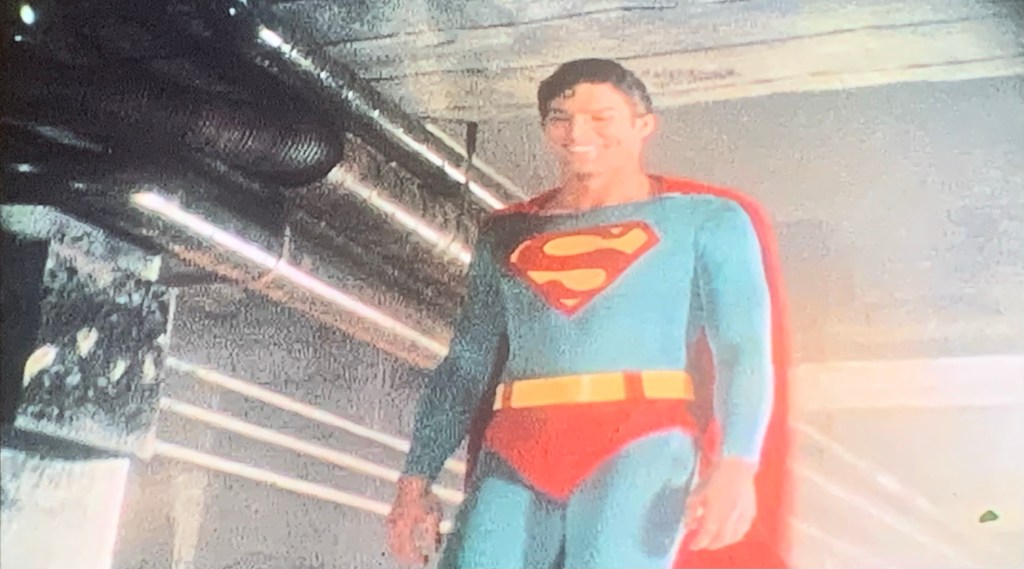
One more for the road. (Some screenshots in this blog appear courtesy of CapedWonder.com.)
-
Superman in 2023…
As we bring 2022 to a close, I just want to thank each and every one of you who have discovered and supported Superman: The Blog from its inception only two months ago. This has been a fun and fantastic ride for me in sharing my thoughts and commentaries on the Superman film series thus far, one which has left me asking that one question: why didn’t I think of this much sooner?
So what’s in store for 2023, you ask? There’s lots to talk about. For starters, we have the 4K releases of the Superman five-film collection from Warner Home Video coming in the spring of 2023, so we’ll be looking at that collection and seeing how the transfers look and sound compared to the previous 4K, Blu-ray, and DVD releases. I for one am believing that this will be the final word on these films while keeping my fingers crossed on any new features to be added to the set along with the existing legacy features from the earlier releases.
And the countdown continues… Then we will count down to some big anniversaries in 2023 for the Superman franchise, as the coming year will mark the 45th anniversary of Superman: The Movie, the 40th anniversary of Superman III, and the 20th anniversary of Christopher Reeve’s return to the franchise in the game-changing Smallville episode “Rosetta”. So we will take some special looks at these benchmarks in this next year.
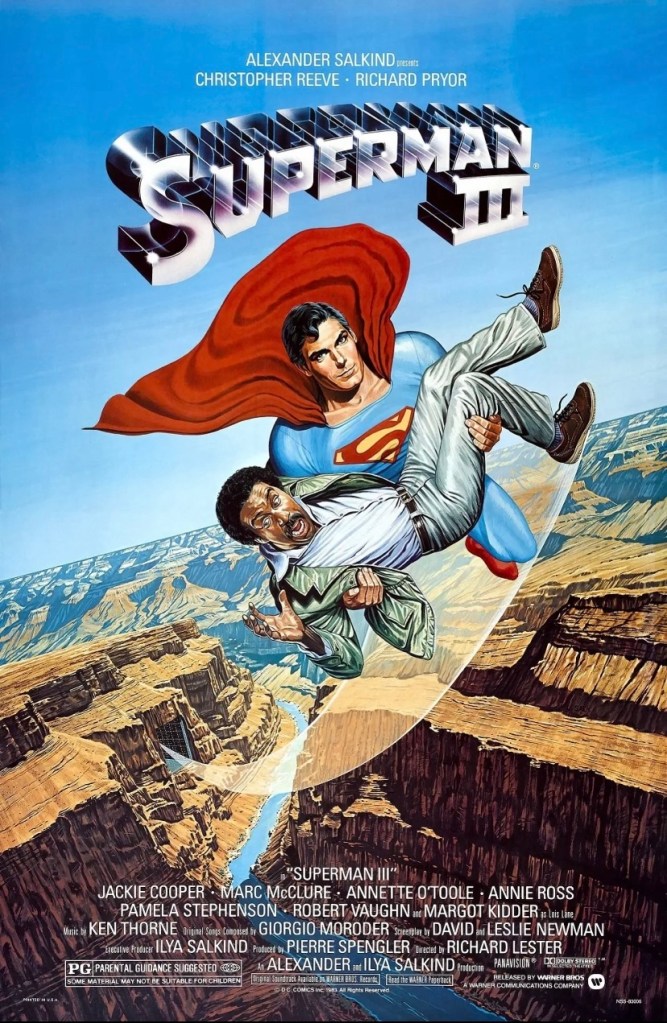
Turning 40 in 2023! Throughout the year we will also keep our eyes and ears peeled to what the Warner Archive has in store for the Superman films. Their Blu-ray releases of the extended TV cut of Superman: The Movie and the international version of Supergirl proved incredibly successful with fans, and as we know, the archive has access to the extended TV cut of Superman II and the original 134-minute pre-release version of Superman IV. So seeing those cuts (and the extended TV cut of Superman III) issued on Blu-ray is a dream for fans everywhere including me. It’s all a matter of when (not if) the Warner Archive gives the word, because with the case of the first Superman film, it came on very short notice. They are aware of the fans’ requests for these versions to be released, so just simply voice your support to them, short and sweet. The best things happen when you’re not looking.
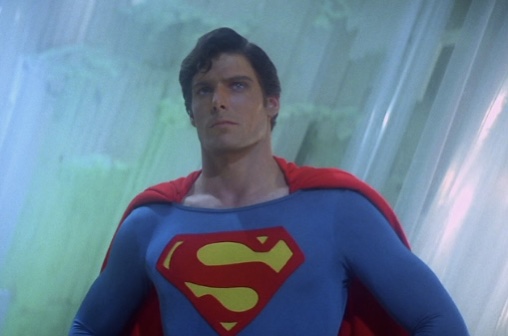
And we will continue to look at various aspects of the Superman films, with a mixture of older material and fresh content, because there’s always something to explore.
Finally, I want to hear from you, the readers. What in particular would you like to see discussed on the blog? Anything related to the original concepts for the film? The changing of the guard during pre-production? The classic John Williams film score? Feel free to message me here or on the official Facebook page with your thoughts.
With that said, I would like to wish you a safe and happy New Year, and I’ll see you all in 2023!
(Images in this blog are used courtesy of CapedWonder.com.)
-
A very special happy birthday goes out to…
We interrupt this regularly scheduled Superman blog post for a special announcement…
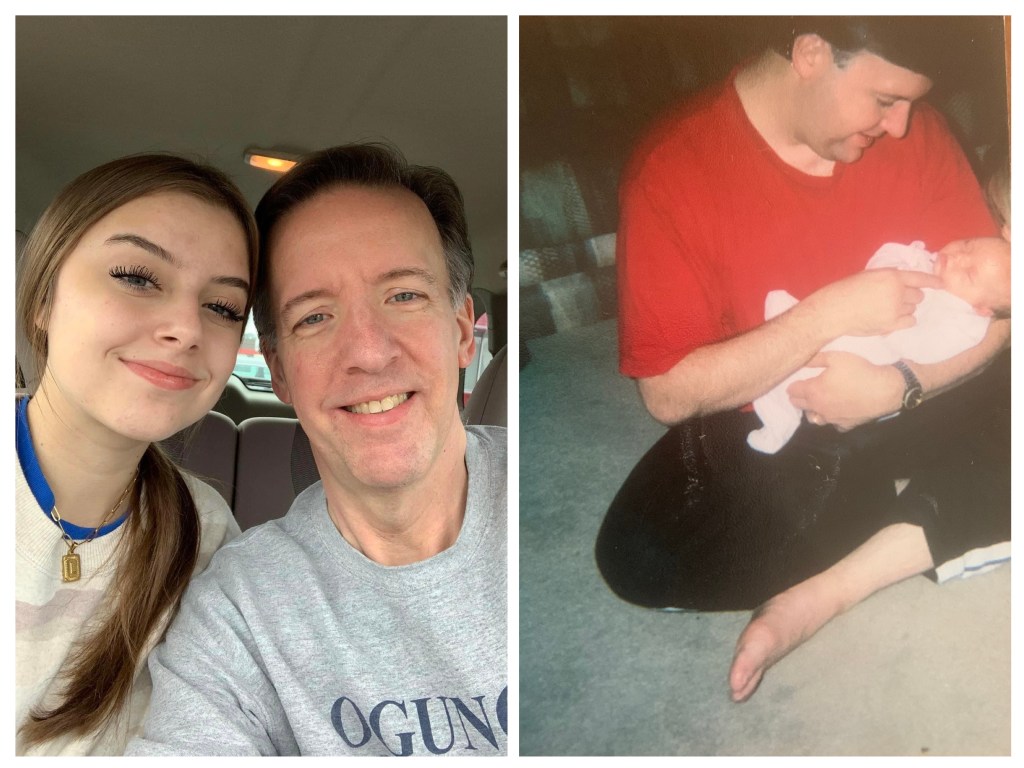
It was eighteen years ago today that this most important person entered my life. Over the years I have watched her grow from a little itty bitty to a loving daughter and to a mature young woman. I have given her all of my heart, and I continue to give her my wisdom as she has grown up and makes the decisions that she needs for the next chapter of her life.
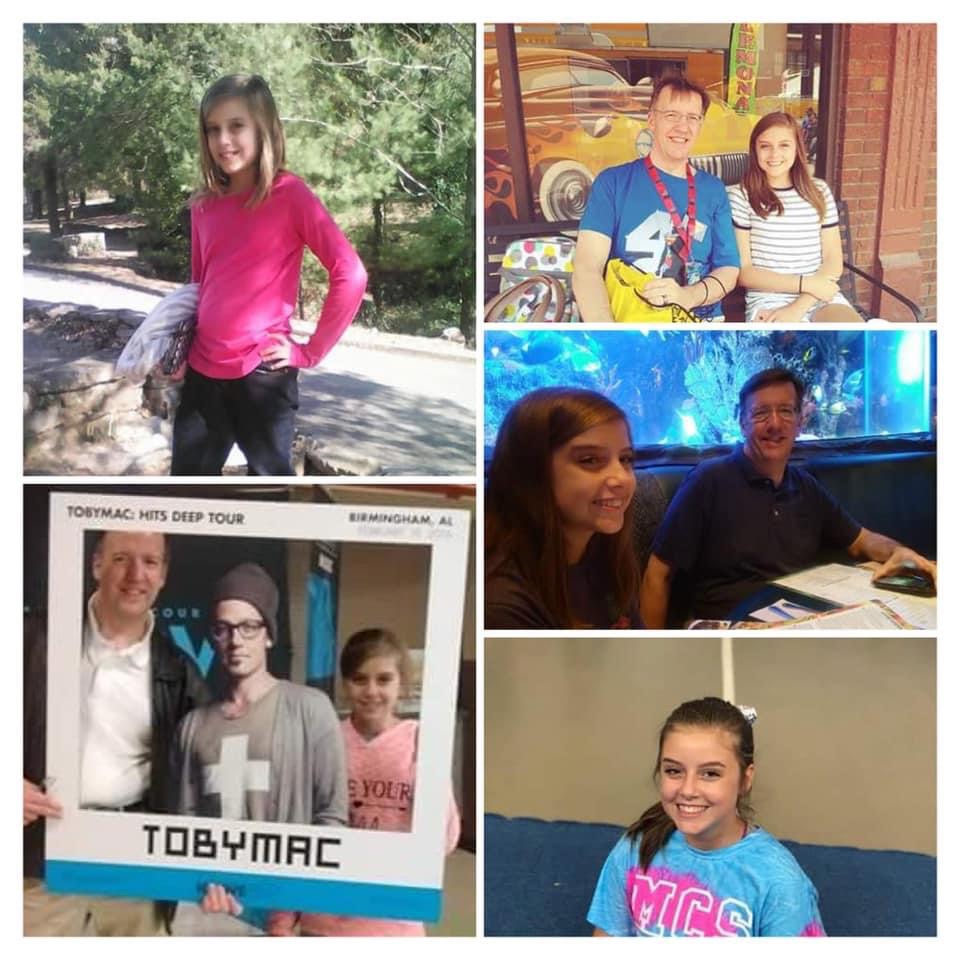

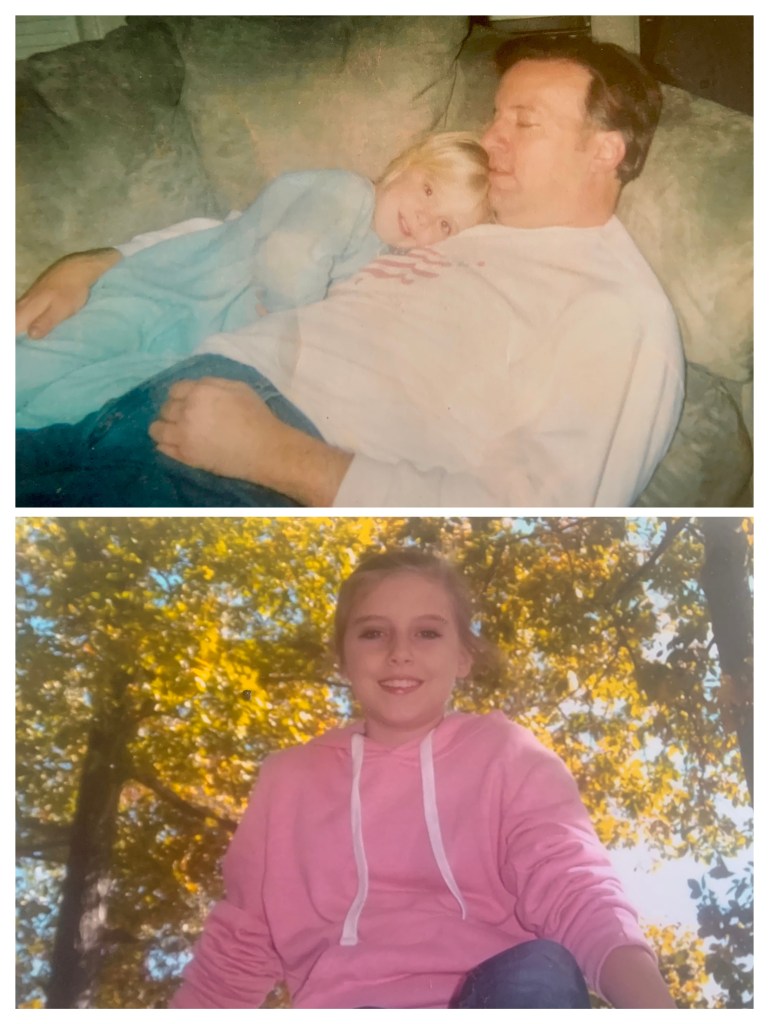
Happy birthday, Lily Grace Williams! I love you so very much! May you have a super birthday today! ❤️
-
The Marketing of “Superman” – Part 2
If the buildup in marketing and promoting a film the size and scale of Superman: The Movie didn’t already have enough history leading up to the release of the film, what came next was equally massive and strategic to the success of the film.
One of the most important marketing aspects of the film would come in the development of a new logo. Andrew Fogelson had met with Steven Frankfurt of Frankfurt Communications to handle specific advertising aspects for the film. Frankfurt and his team would design a modernized clear crystalline version of the Superman logo, one that would play a critical role in the final months leading up to the film’s release and afterwards. The logo would, of course, be modified for the three sequels to follow in the 1980s. Another development came with a new crystalline S shield, which would play an important role in the film’s theatrical poster and the later sequels. Today the crystalline logo and S shield continue to be recognized as two of the most important logos in film history.
One of the most iconic film logos of all time. From there the marketing of Superman: The Movie would come at a rapid pace. There were the books. Warner Books would release three separate mass market paperbacks at the beginning of November, a month before the film’s release. There was an original novel by Elliot S. Maggin, Superman: Last Son of Krypton, which recounted the character’s origins in a new and refreshing way. It also included eight pages of photographs from the film. (In some of the marketing advertisements for the publications, a novelization of the film by Anthony Cleary was advertised. The novelization never happened, largely due to Mario Puzo’s contract clause specifying that none of his script concepts would be adapted into any form. The exact story behind the Cleary novelization remains unknown to this date.) Maggin would pen a follow-up, Superman: Miracle Monday, released in 1981 and timed to coincide with the release of Superman II. Novelizations of the Superman films would not occur until William Kotzwinkle’s adaptation of Superman III in 1983. Another paperback book, The Great Superman Quiz Book by Bruce Nash, gathered 45 separate trivia quizzes spanning the history of the character and the franchise.
The third paperback book would prove to be the longest lasting and most influential publication on the film’s development. The Making of Superman: The Movie, written by David Michael Petrou, chronicled a three-year period from 1975 until the summer of 1978. Petrou was allowed unprecedented access to nearly every aspect of the production of the two films and interviewed all of the key players involved during the filming. To this day the book remains an essential part of the Superman saga.
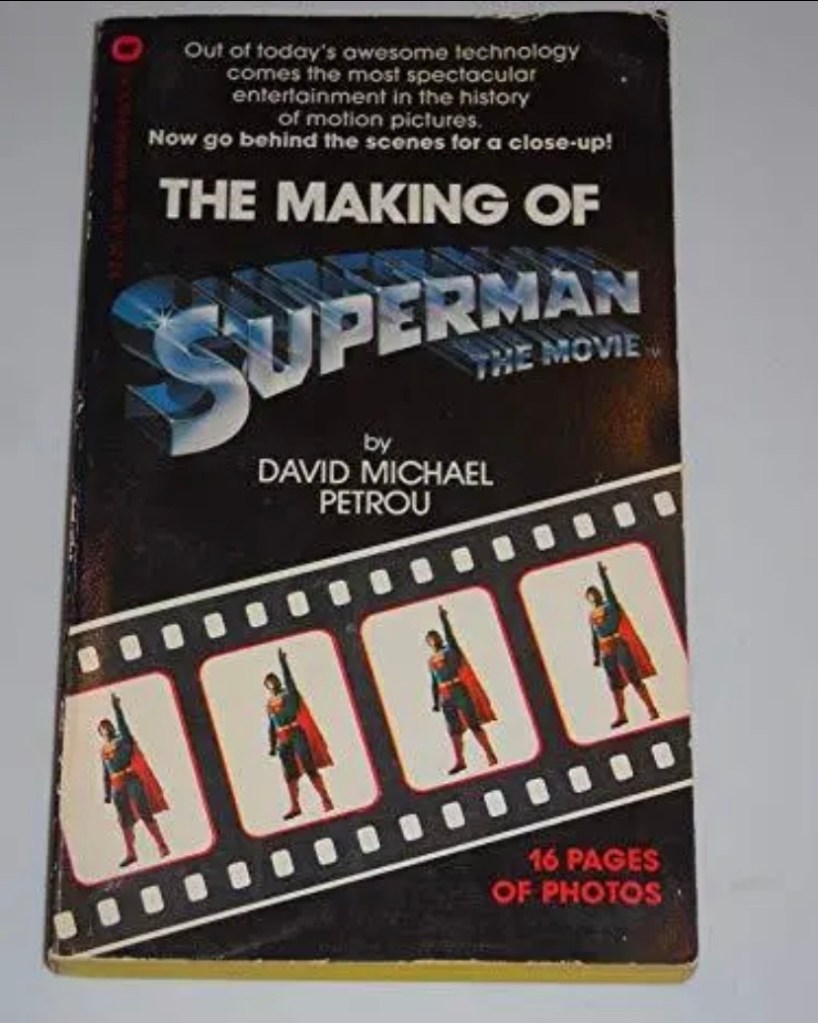
Copies of this classic book are still available to this day. Beginning in April 1978, a new comic strip, “The World’s Greatest Superheroes” ran in daily newspapers across the United States. Written by Martin Pasko, and drawn by George Tuska and Vince Colletta, the daily strip followed the adventures of Superman and the Justice League as they went up against classic villains such as Vandal Savage and Lex Luthor and original villains seen for the first time in the comic strip.
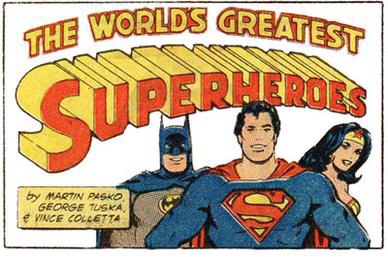
To promote the release of Superman: The Movie, a Sunday strip appearing on 10 December, shortly before the film’s release, featured the Man of Steel flying through Metropolis and thinking, “I wonder what’s been happening since my absence.” As he flies past a movie theater, the marquee announces the release of the film, an effective promotional tool. The comic strip would eventually shift its focus to just Superman and run until 1985.
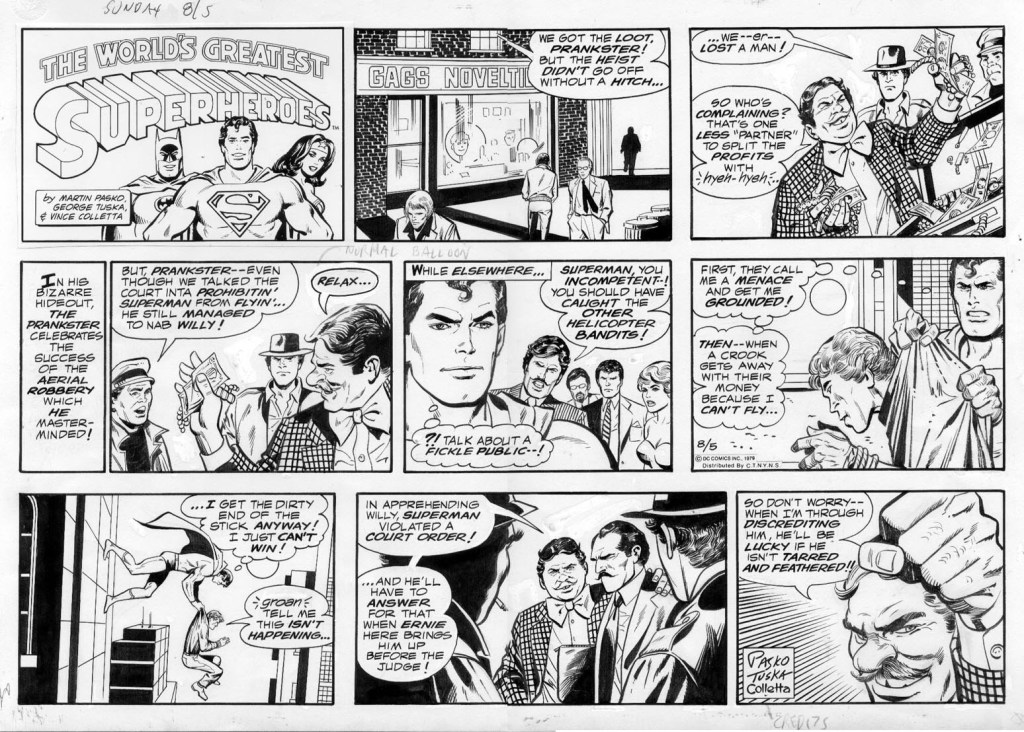
One of these days, someone has to compile all of these comic strips into a series of hardcover collections. There were T-shirts. Factors Etc., Inc., which handled T-shirt transfers at the time, paid Warner Bros. approximately $150,000 for the licensing rights for Superman shirt transfers. After the licensee topped that figure in sales, it would pay the studio an additional ten cents per T-shirt transfer.
Mego, one of the leading toy manufacturers of the 1970s, had been producing action figures based on DC Comics, Marvel Comics, Star Trek, and Planet of the Apes, to name a few. In the marketing for Superman, they would produce four 12-inch action figures based on Superman, Lex Luthor, Jor-El, and General Zod. Only the Superman figure bore any resemblance to its film counterpart. The remaining characters were costumed after their comic book versions, even though the head of the Jor-El figure was clearly modeled to resemble Marlon Brando. Estimated sales figures for the line in 1979 was projected to be around $30 million.
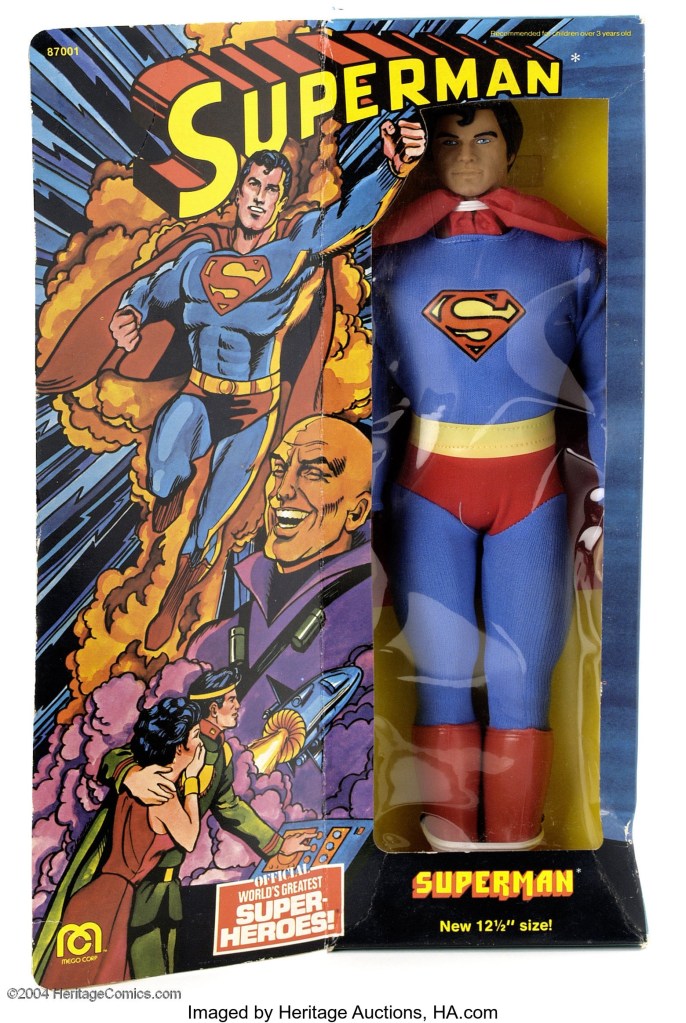
How many of you had this in your collection? I did! The other characters were extremely hard to find. One of the newest companies in the gaming field, Atari, had been in talks to produce a Superman pinball game for arcades. A few years later, Atari would release an 8-bit Superman home video game for its Atari 2600 gaming console. They would also contribute simulated video game footage for Superman III in 1983.
Ahhh, the joys of 8-bit gaming! During the 1970s, Topps had begun to branch out from its years of manufacturing sports cards and produce non-sports card lines. After scoring a major success with its five series of Star Wars trading cards and stickers, Topps would produce two lines of cards and stickers based on the first Superman film. (And how many of you were fortunate to get those uncut poster sheets?) They would return to produce additional card and stickers sets based on the second and third Superman movies.
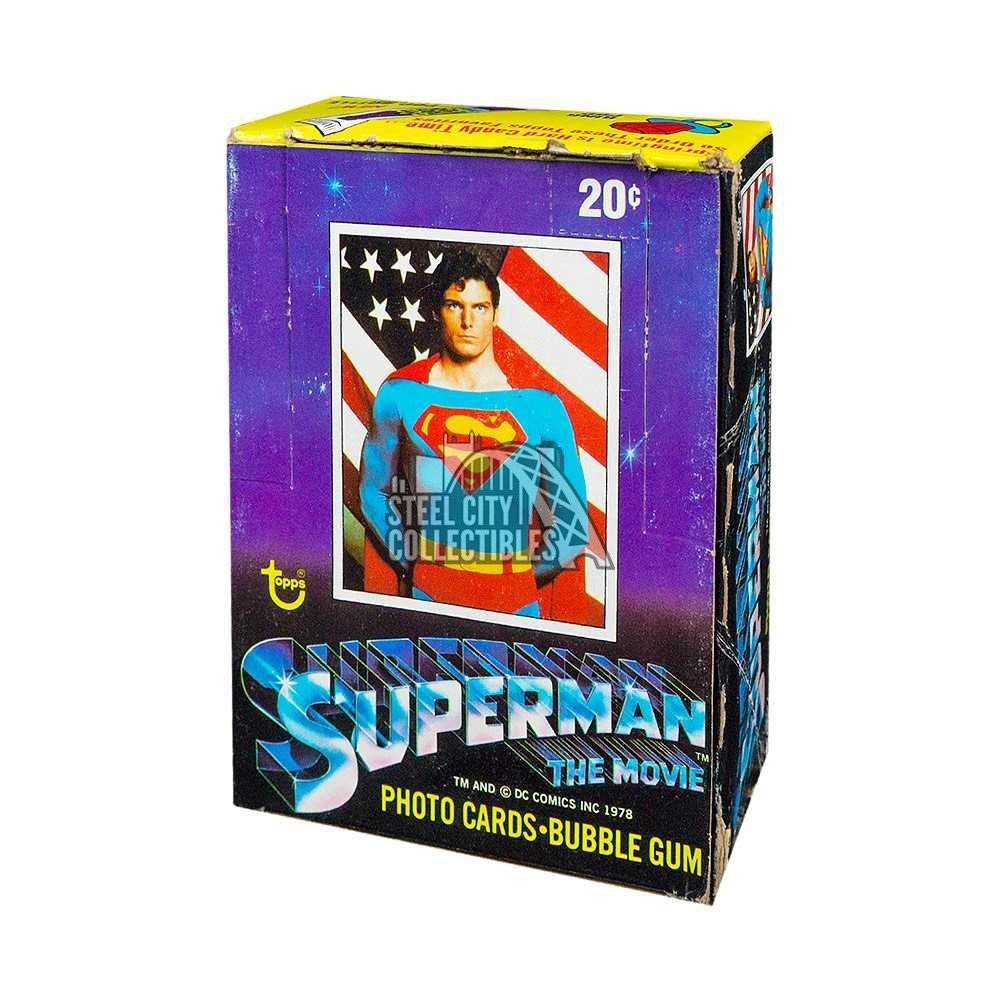
Thought Factory acquired the license to produce a series of posters based on the film. The success of the posters far exceeded the initial supply, and the company would produce an astounding 12 million posters. There was exposure in grocery stores, fashion racks, toy store counters, bookstores, sporting goods stores, and department stores, with floor display units and smaller counter units in stores. Lifelike cardboard figures of Superman were displayed in windows across the country. Everything conceivable was marketed with the Superman logo and images. Lunch boxes, cereal bowls, cups, glasses, jigsaw puzzles, kid’s costumes, peanut butter, bubble bath decanters, house slippers, underwear – you name it, they marketed it.
Licensing Corporation of America (LCA), a division of Warner Bros., regularly received at that time six percent of the wholesale price of all toys, novelties, and clothing items bearing Superman’s image. With the release of the film, it would receive an additional 2.5 percent cut of the film’s box office gross returns. They had to renegotiate with some of the licensees to use Christopher Reeve’s likeness as Superman. Marlon Brando and Gene Hackman, however, were unwilling to take part in licensing agreements. This explains why, in the Mego action figure line, for example, why the Jor-El and Lex Luthor figures did not resemble their film counterparts.
Warner Bros. executives estimated that by the time of the film’s premiere in December 1978, exposure of Superman: The Movie would have been brought to the public’s attention approximately 6.6 billion times, including the marketing from all of its subsidiaries.
But the most important and critical pieces of the marketing and advertising campaign would come back to the theatrical trailers and film posters. After the successful teaser trailer in January, more trailers would naturally have to follow. It would not be until the middle of September 1978, three months before the film’s release, that a series of proof of concept trailers were first developed. Two of them would incorporate John Williams’ musical score, some cues of which were not recorded until then, before a final decision was made which would become the final theatrical trailer released to movie theaters around the world.
This early concept trailer includes clips not seen in any version of the film and uses portions of “The Celebration” from Jerry Goldsmith’s score to Capricorn One. Pay attention to the narration in these trailers – that’s casting director Lynn Stalmaster narrating. The final theatrical trailer. From there, TV spots promoting the film were also developed. It was decided at the time that none of the TV spots would feature Superman flying, that the mystique of the film had to be preserved. Ultimately, one of the spots would feature the Man of Steel in flight (which would be included on the 2001 DVD and future video release). It was estimated that Warner Bros. spent several million dollars alone in television advertising between December 9, 1978, and New Year’s Day 1979.
This variant of the TV spot does not feature Superman in flight. At the same time, cinema artist Bob Peak designed three concept posters before one was ultimately selected: a simple poster of a streak of red, blue, and yellow through the clouds. The “less is better” approach worked, and the poster remains one of the most iconic theatrical posters in film history.
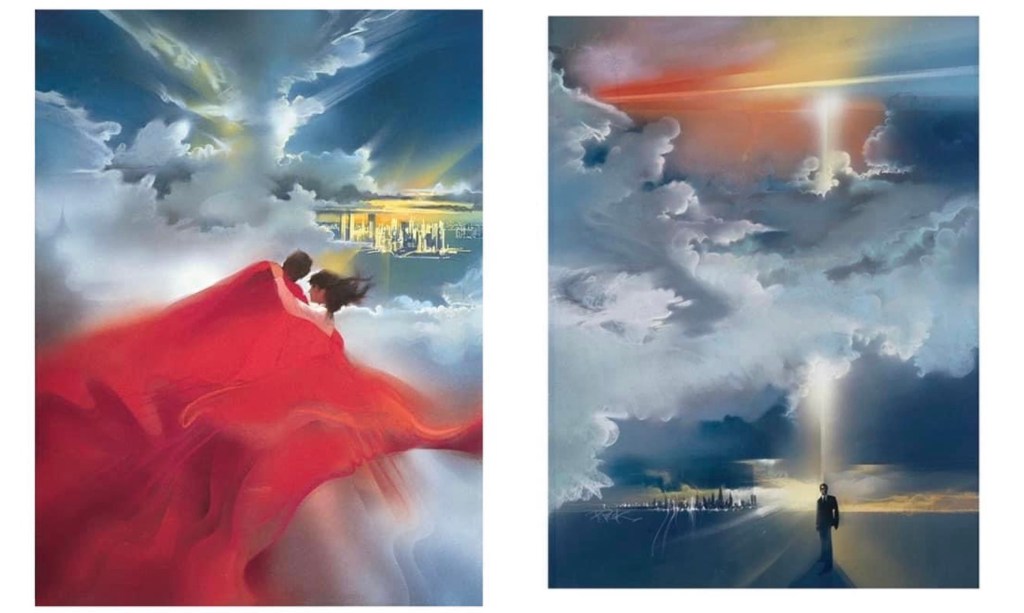
Two of Bob Peak’s unused concept posters. I first saw these in the liner notes for the John Debney recording of the film score from Varese Sarabande in 1998. 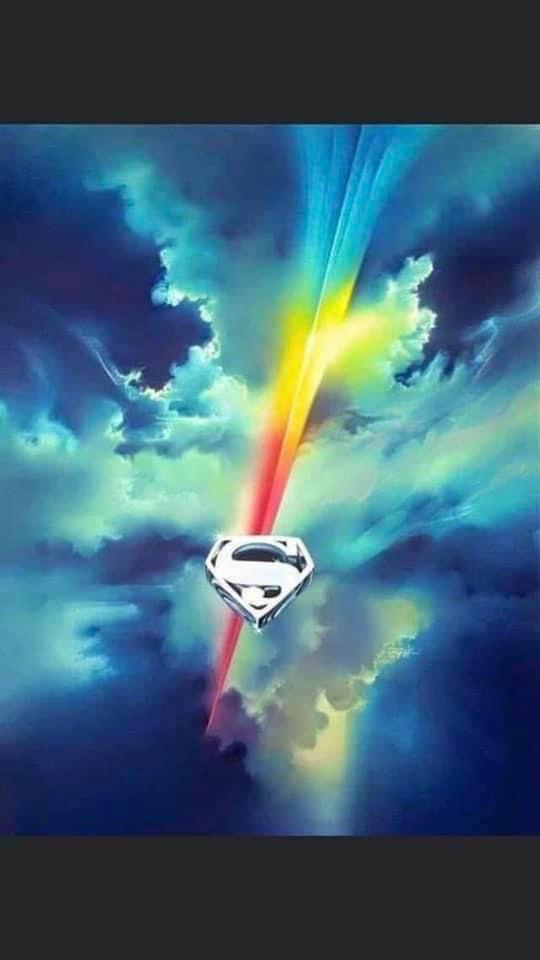
Iconic. Less is better indeed. Between the trailers and film posters, one final decision had to be made: The final tagline that would become synonymous with the film. During the film poster development process, numerous taglines were conceived, but ultimately it came to a decision, one of which was used throughout the concept trailers. According to Sid Ganis, vice president of worldwide advertising and publicity for Warner Bros., “‘This Christmas, Superman brings you the gift of flight’ – that has a certain majesty to it. And then there’s ‘The Man of Steel is real’, a little more frivolous, if you will, a little lighter. We must convince people that this is not the comic book, this is not the television show, this is a brand new and very exciting Superman.”
With only a month to go before the film’s release, it looked like “Superman brings you the gift of flight” would be the advertising theme. But it would change once again. With the blessing and approval of Allan Freeman, the vice president for advertising and publicity planning, the final tagline would become, “You’ll believe a man can fly.” By now it was too late to change the theatrical trailer, but it would be included in the TV spots and the final Bob Peak poster artwork.
One of the last pieces of the 1978 marketing campaign would come with the release of John Williams’ score in a two-disc soundtrack album, which would mirror his equally successful soundtrack to Star Wars the year before. Of the music, some 77 minutes was selected for the final album. In addition, Warner Records would release a 45 RPM single of an edited version of the film’s main title and the love theme for radio airplay and sales in stores.
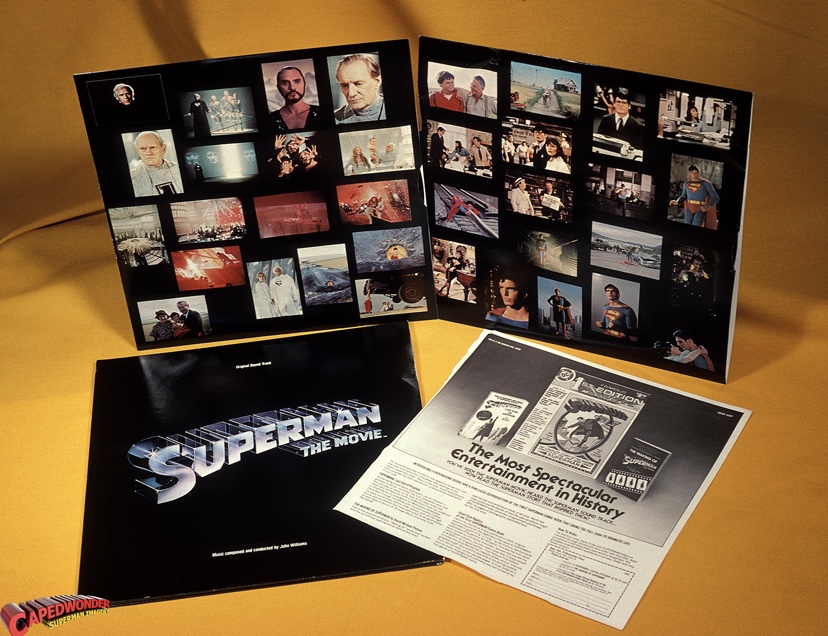
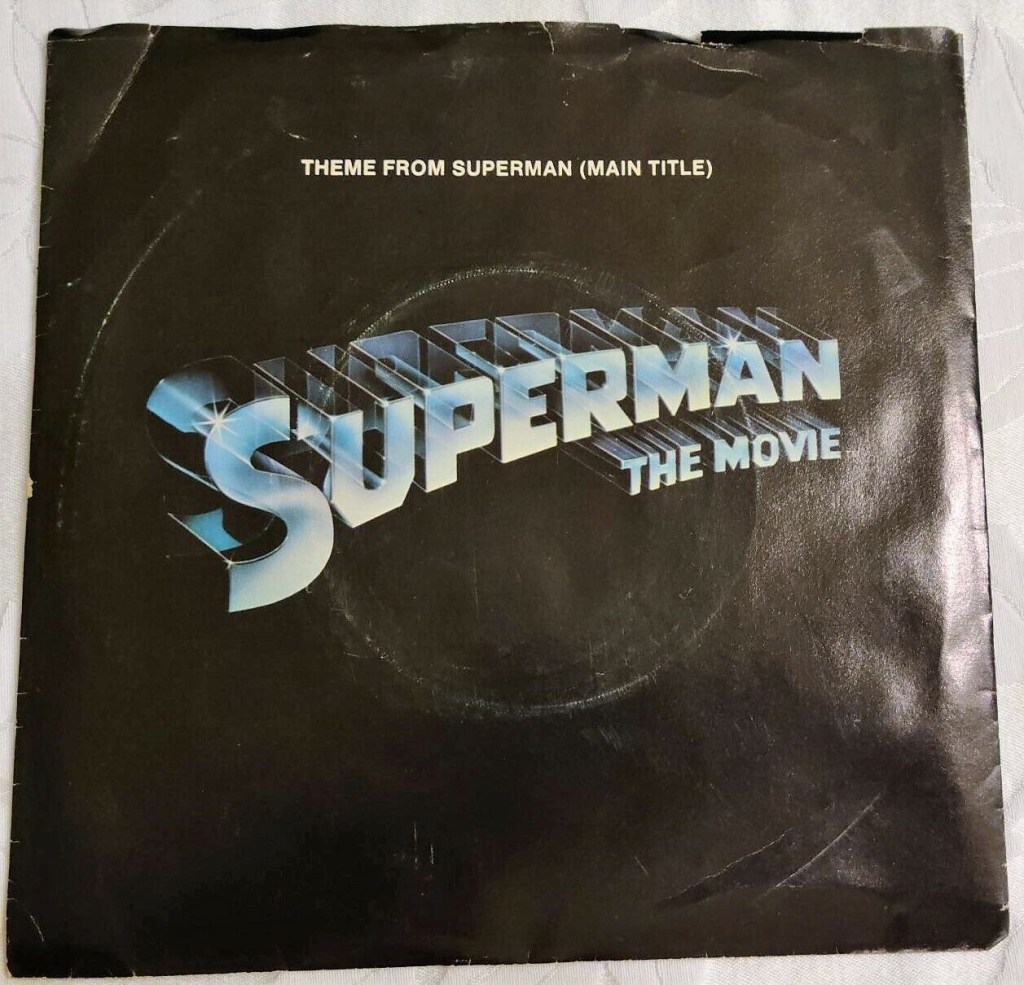
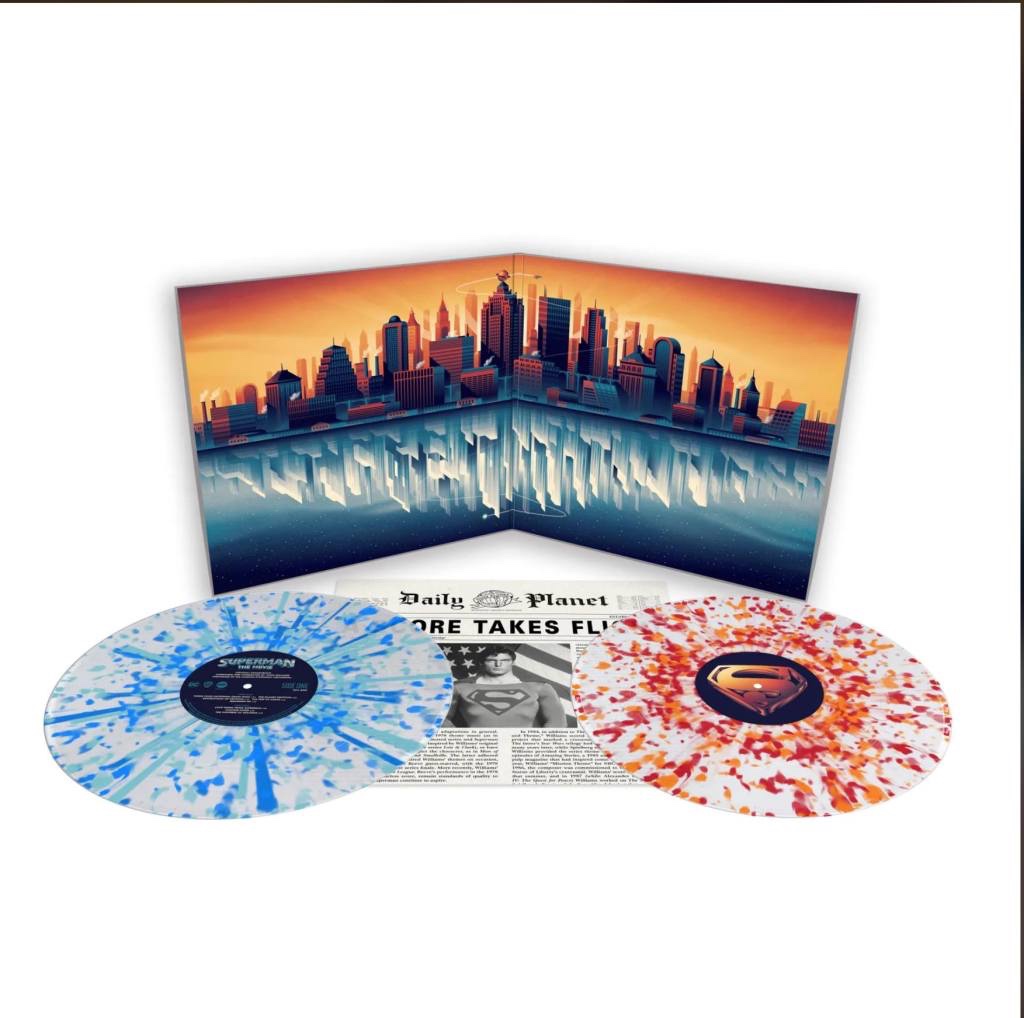
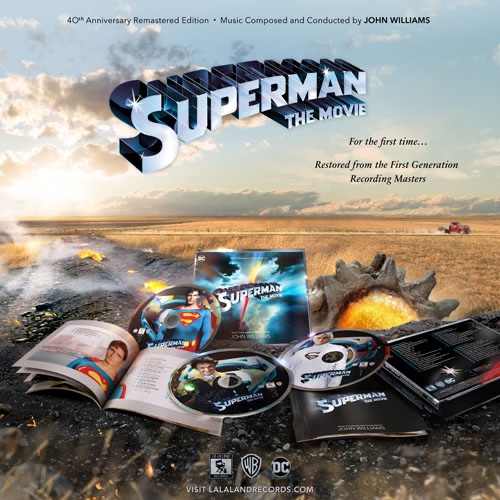
From LP to 45 RPM to cassette, to re-recordings and expanded and remastered CD releases, John Williams’ score for Superman continues to be one of the gold standards of the composer’s decades of film scoring. Upon the film’s release on December 15, 1978, the exposure to the film had proven itself successful. The film would be one of the most successful in film history, dominating the top of the box office for thirteen consecutive weeks. But the marketing of Superman: The Movie would not end with the film’s release. It was about to pick up speed in 1979.
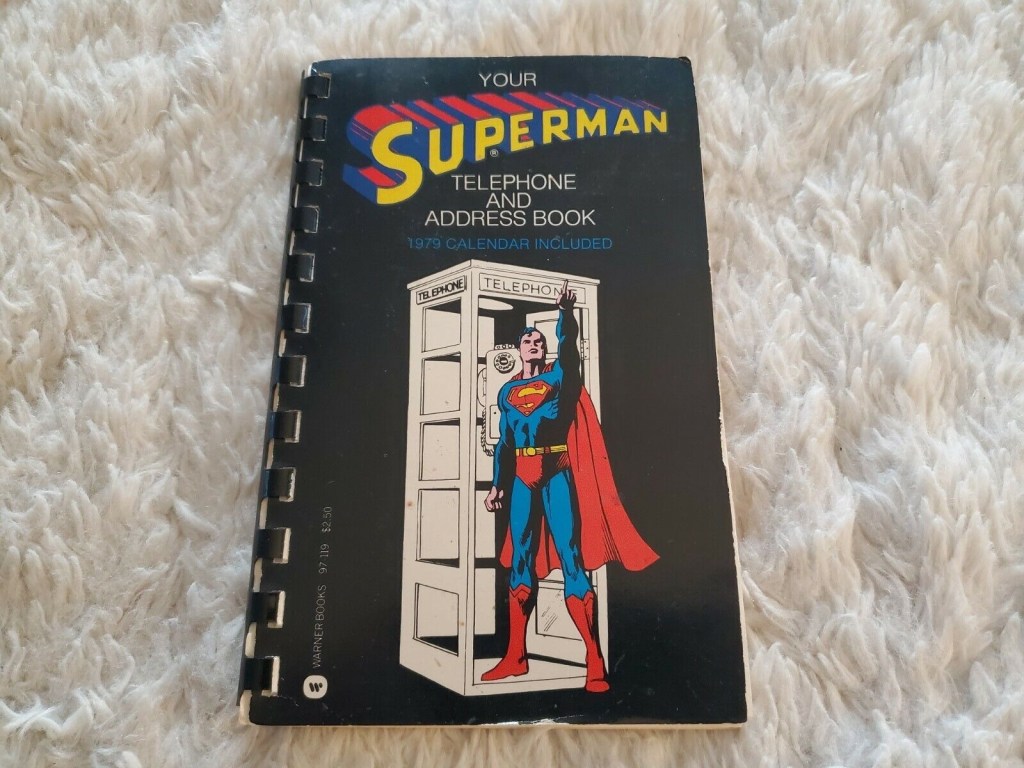
The week of January 1st saw the release of six more products from Warner Books. There was the Superman 1979 calendar, with full color images from the film. The was the Great Superman Book, an encyclopedic history of the character written by Michael Fleischer that looked at the past forty years of the character. There were the Superman Blueprints, a reproduction of blueprints of some of the amazing sets from the film. There was also the Superman Portfolio, a collection of fifteen prints painted by Jim Dietz that reproduced some of the most memorable moments from the film. There was also the Superman Cutouts, a collection of three diorama scenes which fans could color and assemble. And there was also the Superman Telephone Book, where people could collect names, addresses, and phone numbers.

Altogether, the advertising for the film’s album, books, and numerous tie-ins totaled in the millions of dollars, with Warner Bros. receiving its share of the profits. And the more successful the film, the more successful the marketing was in turn.
And there would be home movies, both in eight- and 16-millimeter silent and sound formats. In the days before home video became a household name, the only way to watch movies any time at home was on a home movie projector. There would also be the first VHS and Betamax releases of the film in an edited format, with the film sped up and some scenes and the end credits edited to fit the film onto a single videotape. This was simply the technology of the time.
As the years progressed, so did the marketing of the Superman character and movies. There would be balloons at the Macy’s Thanksgiving Day parade, breakfast cereals, Hot Wheels cars, Kryptonite candy, keychains, canned foods, socks, lounge pants, watches, greeting cards, magazines, graphic novels, hardcover and mass market paperback novels, action figures, Funko bobble head figures, multimedia websites, and many more comics to follow. There would be more movies, television series, and animated cartoons to follow. And with the progression of home video technology, the Superman movies would be issued on videotape, laserdisc, DVD, Blu-ray, 4k UHD, digital download, and multiple digital streaming services.
That film insider who was working on the Superman movies was right. They had made it beyond their wildest dreams. And the integrity of the Superman character and film franchise continues to be maintained to this day. Suffice to say, the future of the Man of Steel looks brighter than ever.
(Some of the photographs and video clips in this blog are used courtesy of CapedWonder.com.)
-
The Marketing of “Superman” – Part 1
For any film or television series, the marketing campaign is one of those key components that will determine the success of such a project. For decades such projects were limited to press interviews, theatrical trailers, and television and radiospots. The more successful the campaign, the more successful the film. Over the decades into the 1970s, this was how the formula worked.
By the time Star Wars arrived on the scene in 1977, the face of marketing campaigns for films had dramatically changed. The film was an unknown commodity and a huge risk for both 20th Century Fox and the film’s creator George Lucas, but word of mouth soon made the film the highest grossing motion picture for the next several years. Today we look at the Star Wars franchise in terms of all of the films, the different animated series, the numerous television series on Disney+, and the many books, comics, toys, and officially licensed products that have followed. This is because Lucas wisely had control of the marketing of the films and all of its ancillary products, which guaranteed him creative control of it all, and which he channeled back into the franchise and his own production facility.
At the time, however, Star Wars was caught with its proverbial pants down in terms of marketing. All it had going into the release were a novel based on the film (released the year before) and the Marvel Comics adaptation in six issues. Everything else came in the months that followed. Even the toy licensing came the following year.
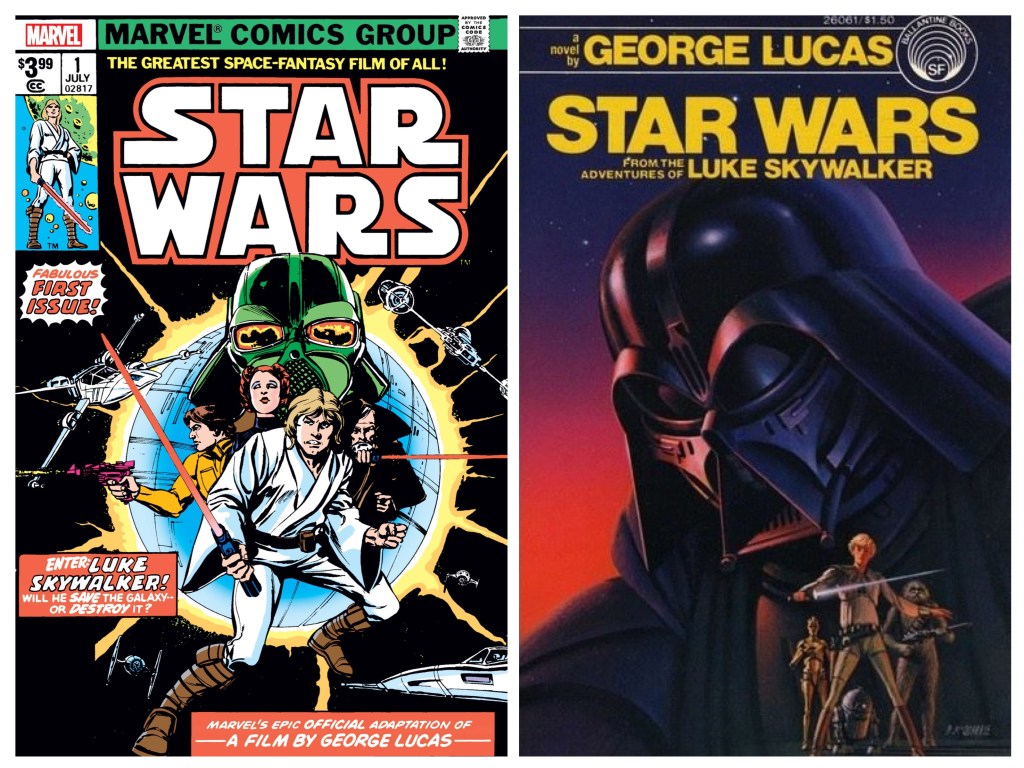
Promotion for the original Star Wars was limited at the time and had to catch up after the film’s release. We now look at Star Wars as a brand name that guarantees a certain level of quality to its products and its films. Decades before, other creative minds had similar control of their respective productions and tie-in products. Filmmakers such as David O. Selznick and Orson Welles took control of their films and the marketing campaigns, and today we look at Gone With the Wind and Citizen Kane as classics because there were no models before them. Even the announcement trailers teased something special for filmgoers. And over the decades, properties such as Mickey Mouse, Coca-Cola, and Nike, to name but a few, had to be built from the ground up and maintained with integrity to ensure their respective successes in the world.
Which brings us to Superman.
By 1978 the character had celebrated its 40th anniversary and seen its share of numerous marketing campaigns which included toys, Halloween costumes, books, clothing, balloons at the Macy’s Thanksgiving Day parade, animated series, radio shows, movie serials, television series, and thousands of comic books. Superman was clearly established in the public’s collective mind by now, and people had their own perception of who and what Superman should be.
Everything changed with the release of Superman: The Movie on December 15, 1978, which culminated the 40th anniversary of the character, and Warner Bros. was determined to pull out all of the stops to ensure that this new film version not only honored the past but also paved the way for the future of the Superman franchise itself. And that extended to the marketing of the film as well.
It all began in August 1974, when Alexander and Ilya Salkind and Pierre Spengler met with Bernard Kashdan of DC Comics to discuss their intention to make a feature film version of Superman. One of the concerns expressed during the meeting, and the weeks of negotiations that would follow with Bill Sarnoff, was character integrity. Everyone wanted to see Superman portrayed on movie screens accurately and not in the campy manner of the Batman series during the 1960s. Oddly enough, Warner Bros. could have made the film at any time. According to Ilya Salkind, “it was a miracle we could get (the rights). Warners thought Superman was dated (and) past its time.” Ultimately, Warner Bros. had faith in the Salkinds to get Superman right.
Over the next three years, it would take multiple scripts, multiple directorial prospects, and an exhaustive casting search for all of the right elements to come together before shooting officially began toward the end of March 1977. Even during the pre-production process, Variety, the leading trade publication about the Hollywood scene, began to promote Superman extensively through a series of full-page trade advertisements. Not a month didn’t go by when an advertisement appeared in print announcing writer, director, and casting choices for the film. Even at this, word was getting out to the public about what Variety called “the super-film of the 70s”.
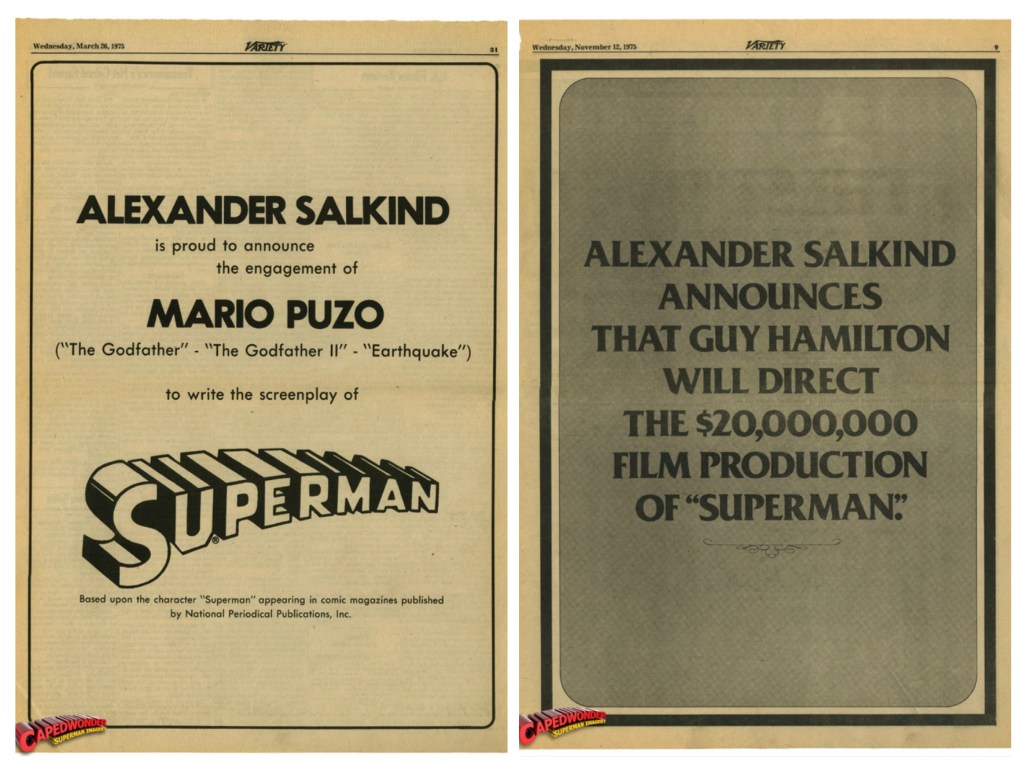
Variety trade announcements from March and November 1975, respectively. Among the most prominent Variety trade advertisements were those announcing the cast members of the film. One prominent two-page ad from 1976 announced the casting of Marlon Brando and Gene Hackman for the film. Another from March 1977 included a shot of Christopher Reeve alongside Brando and Hackman.
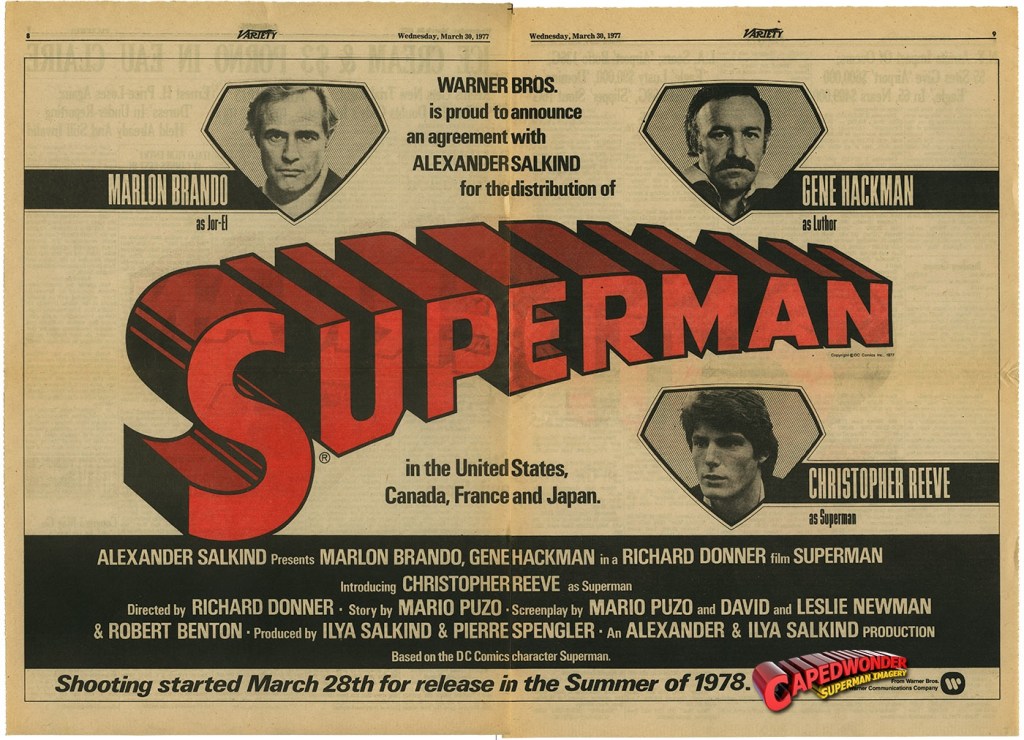
And in May 1977 readers were given a multiple page spread announcing much of the entire cast. What makes that series of ads unique is the announcement that Peter Boyle was set to portray Luthor’s henchman Otis – only later did we learn that a salary dispute resulted in his departure from the project before he shot any scenes, and that the part was recast with Ned Beatty. Also unique is that no announcement was made here of who would portray Lois Lane. By this time the film had already begun shooting, and it would not be until the start of May that Margot Kidder was selected for the role, too late to make the Variety cast announcement ads the following week. But even in those early days, Variety was serious about marketing and promoting the Superman project.
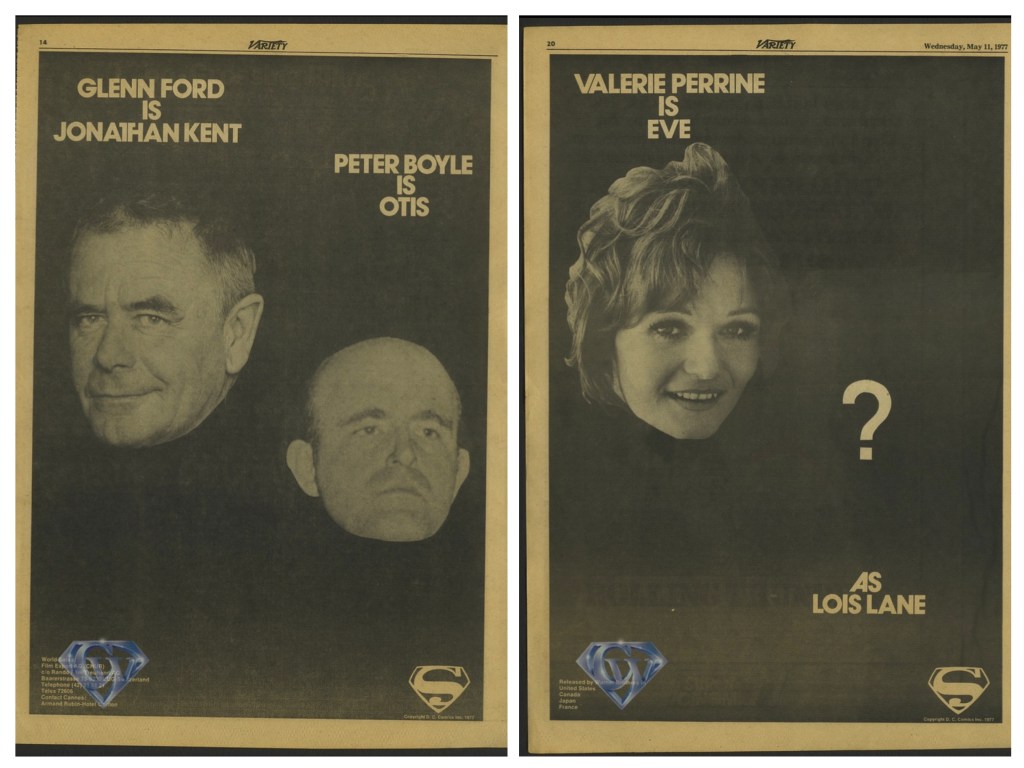
From the Variety trade announcement dated May 11, 1977. It would have been interesting to see how Peter Boyle would have portrayed Otis. But Variety was not the only source for promoting the film. Naturally, DC Comics took charge in promoting the making of the film. As filming progressed, monthly reports were published in its line of comic books. DC also sponsored the first of two contests, where two lucky readers would win a walk-on appearance in the film. Ed Finneran and Tim Hussey would win the contest, appearing in the Smallville football scrimmage practice, which was filmed in August 1977. A second contest would later follow, where fans would collect letters from specific issue in the hopes of winning an actual cape worn by Christopher Reeve in the film. Reeve was on hand at DC Comics to select the winner from hundreds of entrants, and Darvin Metzger would win a number six walking cape from the contest.
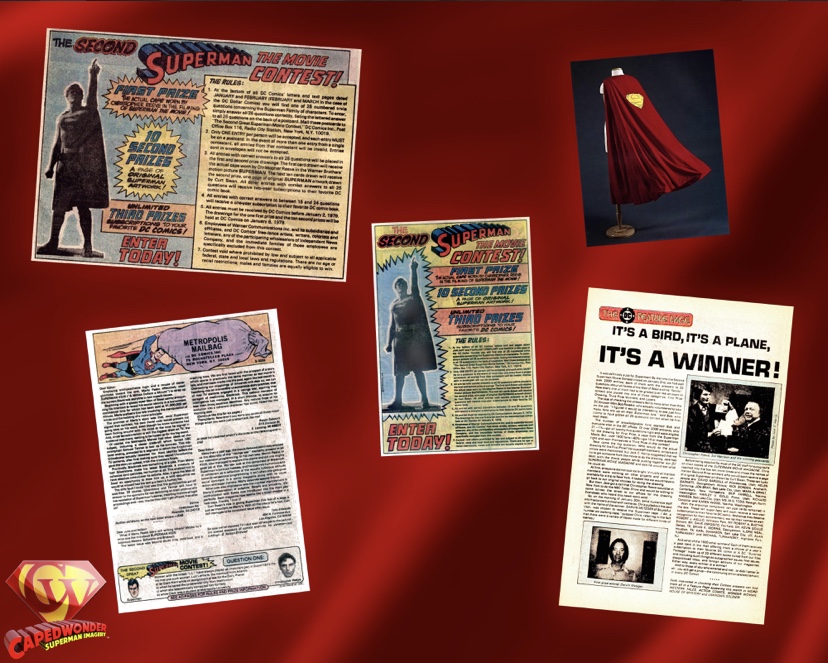
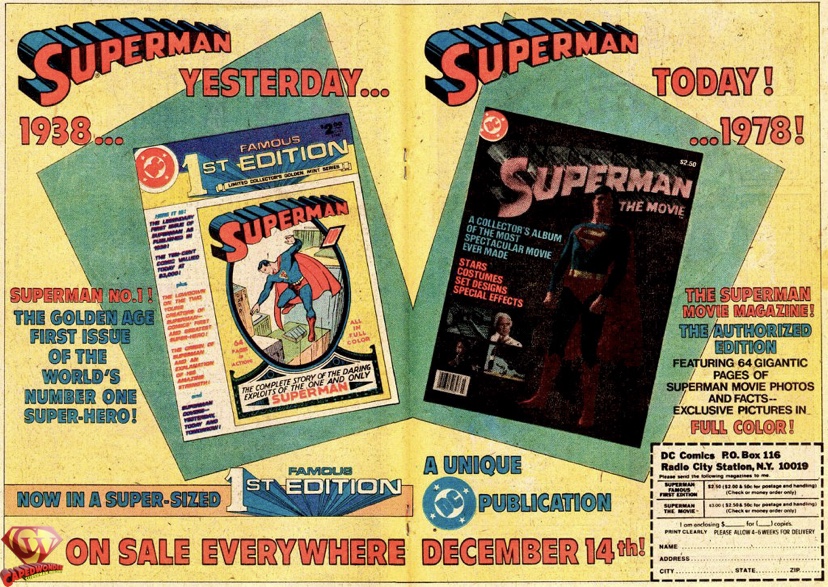
DC Comics would also publish two giant magazine specials, which were released on 14 December 1978, the day before the film’s release. One was a giant treasury edition reprinting the first issue of Superman from 1939. Over 500,000 copies would be published. The other was a special magazine promoting the making of the film, complete with interviews with the cast and crew and lots of photographs, which they would do again with Superman II in 1981.
During the middle of August 1977, while the production was on location in Alberta, Canada, shooting scenes of the infant Kal-El’s arrival on Earth, Ilya Salkind began to consider ideas for theatrical teaser trailers to promote the film. He would travel to Los Angeles and meet with the marketing department of Warner Bros. to come up with effective ways to promote the film in theaters months in advance of its release.
By November, he would meet with Richard Greenberg of R. Greenberg and Associates to discuss a theatrical trailer campaign for the film. And the question is an obvious one: how do you promote a film without revealing a single piece of footage? Greenberg would devise an initial teaser trailer using stock film footage of a skyline that had been shot from an airplane. From there, Greenberg incorporated the names of each main cast member streaking across the sky. He also used the classic S shield streaking into the stars within the context of the teaser, both of which would be used for the final main title credits at the start of the film. When the teaser trailer premiered in theaters in January 1978, audiences across the United States were enthusiastically excited about the potential of the film. For months this was the only trailer to market the film, but it would not be the last. A film of this scale needed more than just preview trailers to get the word out. It needed a full-scale marketing campaign to let everyone know that Superman was coming. It could not afford to catch up to the fans as Star Wars had done the year before. Executives were also concerned about the marketing campaign of the failed King Kong remake, which openly included footage of the creature. To catch people by surprise, it was decided not to spotlight any footage of Christopher Reeve in flight as Superman. They had to work around it in order to maintain the integrity of the film itself.
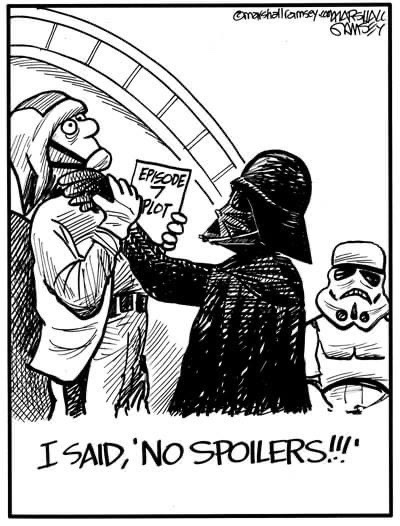
To this day the original announcement trailer for Superman stands alongside classic announcement trailers for films like Gone With the Wind and Citizen Kane as effective promotional tools for films without revealing a single piece of actual film footage to convince and interest moviegoers to see those particular films. It had come a long way since those early announcement banners flown over the skies of Cannes in the previous few years. It’s a blessing that Superman was not filmed in today’s times. Photographs shot during production, iPhone recordings of behind the scenes moments, and endless news reports would have endlessly streamed online months before the film’s release, as with the case of the newest Indiana Jones film, all of which would have resulted in spoiler-filled theories about the film. And for that we have Ilya Salkind to thank. During test filming of the Fortress of Solitude scenes in May 1977, Salkind issued a memo stating that the shooting of the elaborate visual and flying effects were to be treated as top secret, thereby eliminating the need for people to spoil the surprises to come.
Enough said. On 16 August 1978, over five hundred theater, merchandising, entertainment industry, and press representatives gathered at the New York Hilton Hotel to attend a three-hour Superman presentation and luncheon hosted by the executives of Warner Bros. Among those who attended the presentation included Ted Ashley chairman of the board of Warner Bros.; executive producer Ilya Salkind; Steve Ross, chairman of Warner Communications; Bill Sarnoff, chairman of Warner Publishing; Howard Kaminsky, president of Warner Books; Jerry Wexler, senior vice president of Warner Bros. Records; DC Comics president Sol Harrison; Joseph Grant, president of Licensing Corporation of America; Terry Semel, executive vice president and chief operating officer of Warner Bros.; and Andrew Fogelson, executive vice president for worldwide advertising and publicity for Warner Bros. Everyone was present to discuss the most ambitious marketing campaign for Superman: The Movie, one which would involve hundreds of licensees manufacturing and marketing thousands of products with the Man of Steel’s likeness. During the meeting, they announced a series of tie-ins with point of sale and theme accessories, which would include teaser trailers, audiovisual kits, slides, stills, streamers, posters, and floor display units, among others. In that meeting, something unusual happened. According to those who were there, altercations reportedly broke out over possession of the silver and black S centerpieces. Ted Ashley got so carried away by all the commotion, he divulged many of the secrets regarding the film’s highly secret ending.
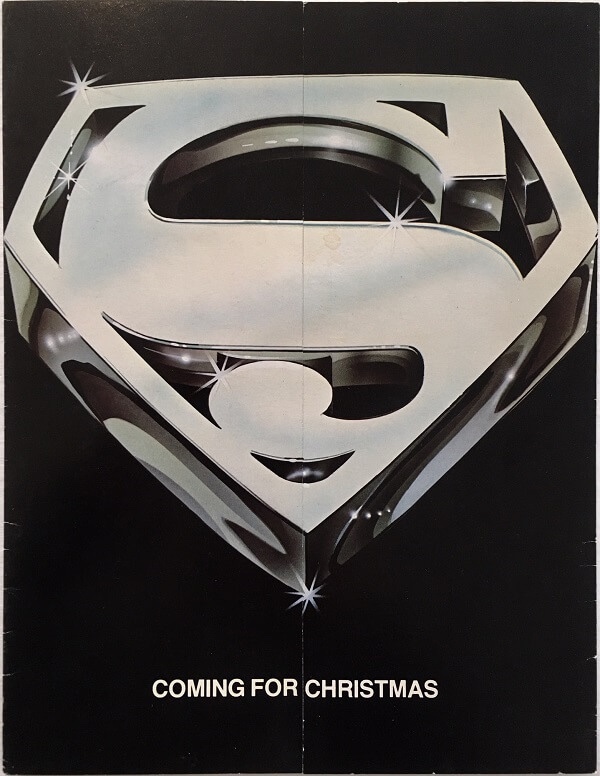
That shield logo says it all. For years Sol Harrison had been the keeper of the Superman property at DC Comics. He was very serious about how Superman was marketed to the public. For every successful licensed product there were hundreds of requests he rejected to cash in on the character. He didn’t want to see the Superman name or image slapped onto just any product. Like Ilya Salkind and Bill Sarnoff, he, too, wanted to maintain the integrity of the Superman property. “No one gets a blanket contract to go ahead and do what they want with Superman,” Harrison said. “It’s only that kind of care that has kept him alive for forty years.”
Terry Semel pointed out, “Usually when a movie catches on, merchandising catches on along the way. What we hope to do this time is to give our various divisions ample lead time to do what should be done. The difference between this and other films is that all these things are taking place up front.” And he was right. Star Wars had to catch up months after its 1977 release and into 1978. Superman had been in development for four years by this time and had decades of pre-built marketing already in place. The trick was taking it to the next level.
Those involved in the film knew the risks. Ilya Salkind commented, “It’s a question of whether it will be a medium blockbuster or an enormous blockbuster. Because of the sheer mechanics of the distribution, it can’t make less than $40-50 million, but if that’s all it does, the cost of the film would make that a catastrophe.”
Another insider who had been involved in the making of the film over the past four years pointed out, “This is a high stakes gamble business, and Superman is just the biggest roll of the dice in history. Make it, and you make it beyond your wildest dreams. Miss and it’s the pits.”
Next time, we’ll look at more of the marketing ideas for the film.
(Images in this blog appear courtesy of CapedWonder.com.)
-
Merry Christmas!
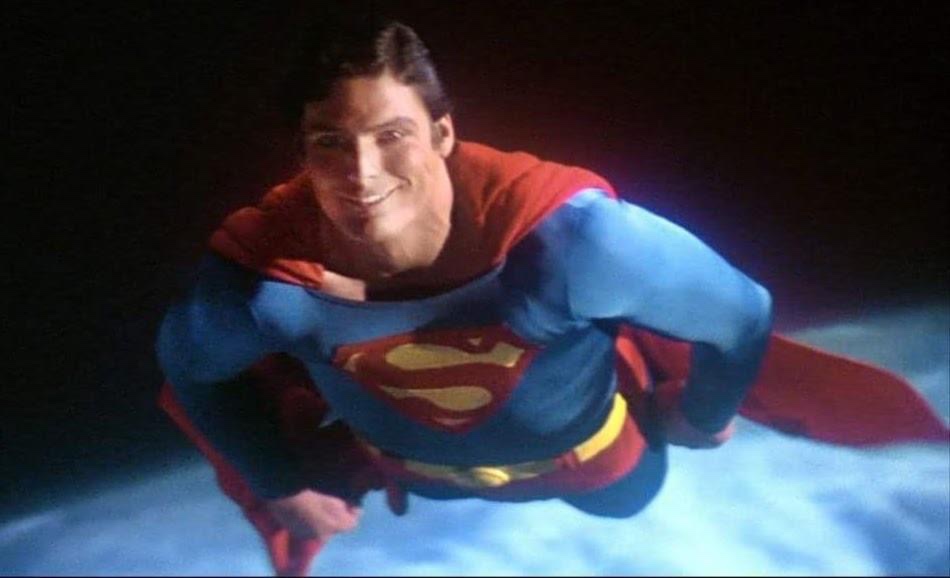
I want to wish everyone a very Merry Christmas and Happy Holidays! Thank you for your support of Superman: The Blog, and stay tuned, because there’s more to come in the days and the new year ahead!
-
For Chris…
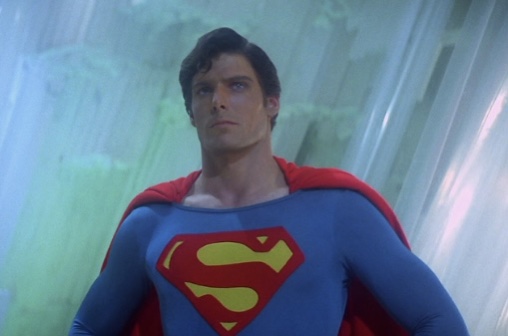
In 2016 my friend Jim Bowers asked me to write a remembrance of the life of Christopher Reeve on what would have been his 64th birthday, and I began wondering what I should say. This year he would have turned 70 had he lived. So much has already been said about his thoughts on his portrayal of Superman, and much has been equally said about his work in spinal cord research. So how do you come up with something fresh and interesting yet original?
For me, it would have to be in the form of a monologue.
I picture myself back in March 2002, when Chris came to the University of Mississippi in Oxford to receive a donation for $85,000 to his research foundation from the school’s fraternities in their annual Charity Bowl. I had been working at Mississippi Public Broadcasting at the time and mentioned that they should travel to Oxford to interview Chris for their program “Conversations”. In the back of my mind I reasoned that it would probably be their only chance to do so. Little did we know at the time it would have been their only chance, a chance soon missed. I didn’t get to go to Oxford that weekend Chris was in Mississippi. I had to go to Albuquerque, New Mexico, for a training conference instead.
But what if I could turn back time and meet my boyhood hero? What would I say to him if I could have met him? Maybe it would go something like this…
“Chris, I just wanted to say thank you for the impact you are making in this world. When you first started playing Superman on screen, you gave hope to the twelve-year-old boy in me and showed me how to grow up, be tall and strong and confident in myself. I was bullied in school, and I made it through. When other guys in my class looked up to people such as Burt Reynolds or Billy Joel or Terry Bradshaw as their role models, you were my role model. I don’t say that in a weird way or anything, but you were confident in yourself, and that’s what I wanted to be.
“And then you became my role model all over again through your injury. I just lost my dad a few weeks ago after a six-year struggle with strokes and Parkinson’s disease. I had no understanding of what he was going through. All I knew was the toil it took on my mother and me over those years, and I had nothing to relate to. We had become his caregivers.
“Then I saw your determination to fight through your injury, and your hope to give families a chance to reach out for support and encouragement, no matter what the disease or injury. What if my mother falls to strokes or Alzheimer’s disease? What if I should develop type 2 diabetes? Families need resources and information on what to do in these things, as much as they can learn.
“So I just wanted to say thank you, from the twelve-year-old boy in me who survived being bullied, and from a surviving caregiver. Keep fighting the good fight. Give voice to all of us.
“Oh, and when do you plan to write another book? I can’t wait to read it!”
That’s very likely what I would have said to him.
Thank you, Chris.
(Screenshot courtesy of CapedWonder.com.)
 Superman: The Blog